AI Tools for Behavioral Segmentation
Dec 30, 2025

Behavioral segmentation helps businesses group customers based on actions like purchases, website visits, or service usage, rather than static traits like age or location. This approach is especially useful for local service providers (e.g., HVAC, landscaping, janitorial) to improve customer retention and revenue. AI tools streamline this process by analyzing real-time data, predicting behavior, and enabling personalized outreach.
Key Takeaways:
Why it matters: 71% of U.S. consumers expect personalized experiences; businesses using behavioral data see 10-15% revenue growth.
Top tools:
Averi AI: Affordable ($45/month), tracks real-time behavior, ideal for small businesses.
Contentsquare: Focuses on website user behavior, uses heatmaps and session replays.
Audiense: Social media-driven segmentation, strong Twitter focus, starting at $199/month.
Amplitude: Predictive analytics for churn and retention, advanced features at $995/month.
Qualtrics: Combines behavioral data with sentiment analysis, custom pricing for larger organizations.
Choosing a tool: Match features to your business size, data needs, and budget.
For small businesses, Averi AI offers a cost-effective solution. Larger businesses may benefit from the advanced analytics of Amplitude or Qualtrics.
1. Averi AI
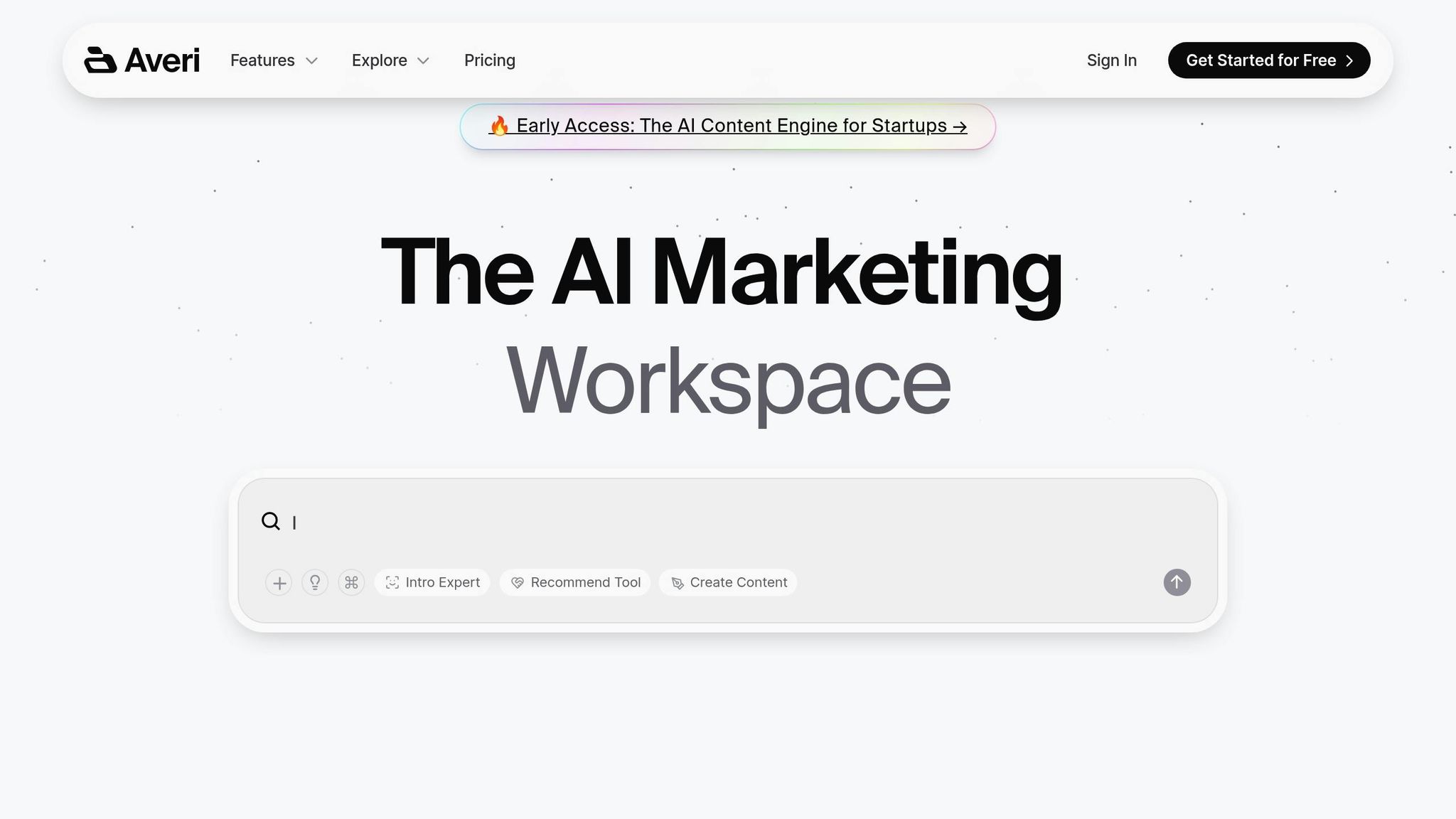
Behavioral Segmentation Features
Averi AI takes customer segmentation to the next level by categorizing individuals based on lifestyle groups such as "soccer parents", "downtown professionals", or "longtime residents." This approach allows businesses to tailor their services to specific needs. For instance, an HVAC company can differentiate between young families who might need emergency repair services and retirees focusing on preventative maintenance.
The platform’s Synapse Architecture ensures a seamless experience by retaining historical interactions and long-term behaviors across multiple channels. For example, if a landscaping client switches from email to browsing the website, Averi AI tracks this transition and adjusts the messaging accordingly. This synchronization ensures consistent communication across all touchpoints [4].
Here’s a success story: A downtown coffee shop using Averi AI increased customer retention by 33%, boosted off-peak revenue by 28%, and saw a 62% jump in social media engagement by targeting local government workers and legal professionals [1].
By combining these segmentation techniques with real-time data processing, Averi AI enhances customer engagement even further.
Real-Time Processing Capabilities
Averi AI processes real-time events like clicks, purchases, and navigation patterns, triggering immediate personalized responses [6]. Using transformer models, the platform identifies the best times to engage. For example, if a customer browses a pricing page late at night, the system might follow up with a tailored email the next morning.
The platform offers two modes: Express mode for quick predictions and Deep mode for more detailed cross-channel insights [3]. This capability has proven effective for businesses like a family-owned salon, which reduced no-shows by 45% and increased referrals by 38% [1].
These real-time insights also help businesses anticipate customer churn and develop proactive strategies to keep customers engaged.
Retention Metrics and Predictive Insights
Averi AI identifies early signs of disengagement, such as reduced activity or longer service gaps. It assigns churn risk scores and initiates proactive measures to re-engage customers before they leave entirely [3][5]. For example, a community fitness center used the platform to cut membership cancellations by 35% and increase group attendance by 43% [1].
The system also includes Adventure Cards, which provide AI-driven recommendations to simplify decision-making. These cards might suggest actions like, "Send a win-back offer to customers who haven’t booked in 90 days", or "Promote premium upgrades to clients who have used your basic package three times in two months" [3].
Integration and Usability for Local Services
Averi AI streamlines workflows with its predictive Command Bar [3]. Additionally, the platform’s Human Cortex feature connects businesses with vetted marketing specialists, offering access to expert guidance without the need for a full-time hire [1]. This fractional model of expertise makes high-level marketing support more accessible.
Pricing starts at $45 per month for advanced personalization, while full automation is available for $80 per month [4]. On top of that, Averi AI analyzes local search behavior and competitor gaps to uncover untapped customer opportunities in your area [1].
"AI doesn't replace the human elements that make local businesses special - it amplifies authentic community connections while automating the technical complexities." - Averi Academy [1]
2. Contentsquare
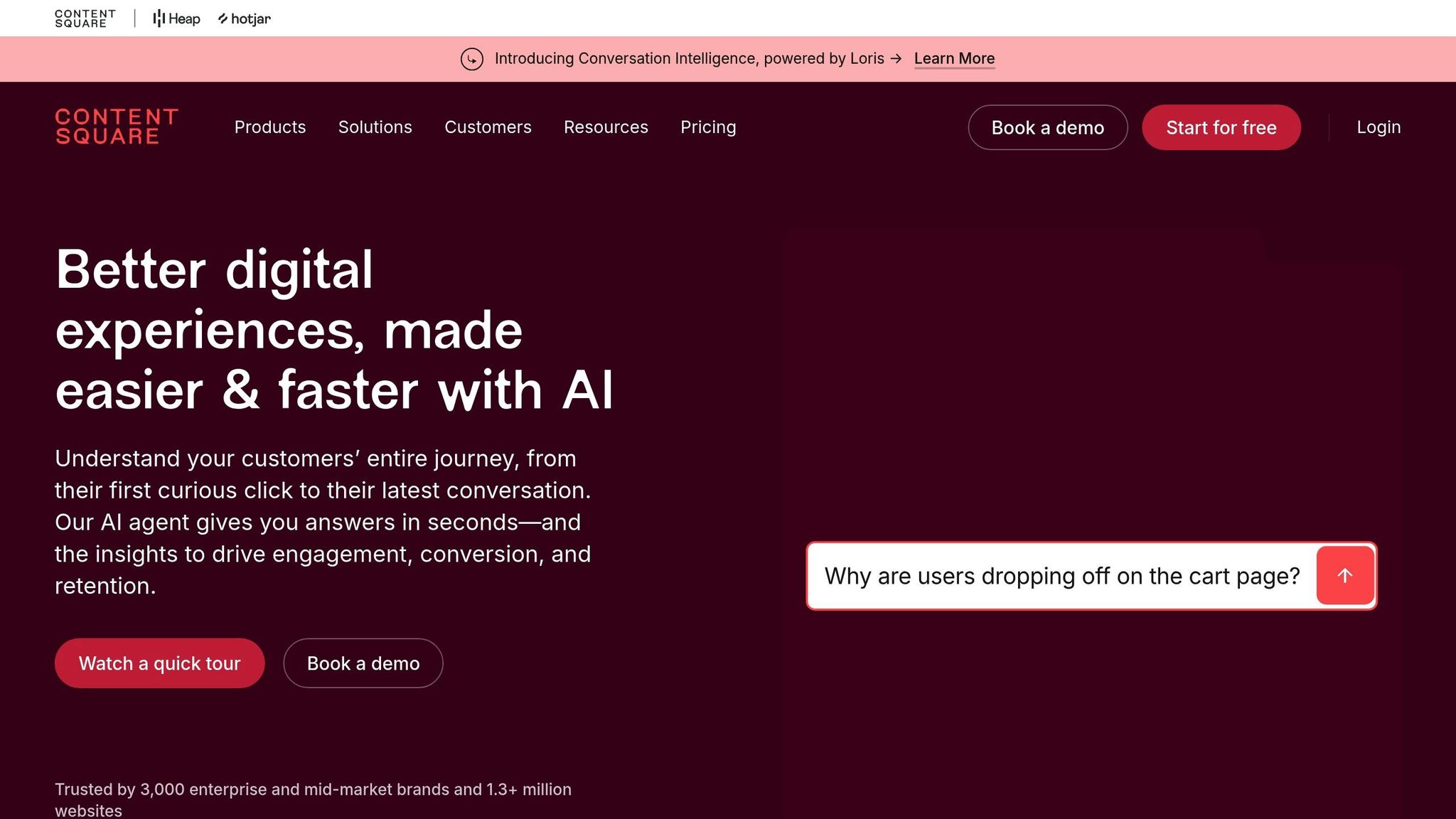
Behavioral Segmentation Features
Contentsquare stands out by leveraging AI tools like heatmaps, session replays, and journey analysis to segment users based on their real actions rather than relying on broad demographic categories. It tracks behaviors such as rage clicks, frustration scores, session duration, and navigation loops to uncover how users truly interact with your website [7][10].
For instance, Early Settler compared the performance of a shop catalog against a Black Friday carousel. Despite the carousel receiving less exposure, it drove higher conversions, leading to a homepage redesign that significantly boosted revenue. Dean Boudewyns, Head of Digital & Ecommerce at Early Settler, shared:
"Through Contentsquare, we transformed our digital space, bringing hidden gems to light, removing our internal bias on content and ultimately driving revenue for Early Settler" [10].
For local service businesses, this means you can differentiate between casual browsers and serious buyers. The platform also integrates Voice of Customer (VoC) data by combining feedback from surveys with behavioral insights to pinpoint why customers abandon their journeys [13].
Using these segmentation insights, Contentsquare facilitates quick, data-driven responses with its real-time processing capabilities.
Real-Time Processing Capabilities
Contentsquare’s AI Alerts constantly monitor user signals like hesitation or exit intent, enabling timely interventions [9][13]. For example, Wolverine Worldwide identified a surge in error page visits. By using AI Alerts, they implemented recovery measures that reduced exit rates by 32% and bounce rates by 22%, saving over $10,000 in annual revenue [9].
"Suddenly, we understood exactly how you take an insight, make a change based on that learning, and then measure the impact." - Louise Zanier, Former Ecommerce Manager, Wolverine Worldwide [9]
The platform also integrates with tools like Google Analytics 4 to send real-time behavioral data, triggering personalized responses. For example, a local HVAC company could automatically offer a discount if a user shows signs of abandoning a booking form [8].
Beyond real-time alerts, Contentsquare offers tools to track retention and predict customer behavior.
Retention Metrics and Predictive Insights
Contentsquare provides Retention Analysis, powered by Heap, to predict customer lifetime value, repeat visits, and churn risks [9][12]. PocketSuite used this feature to identify a key activation metric - processing $1,000 in payments - and adjusted their onboarding process, cutting churn by 30%. Similarly, On the Beach optimized its user experience by tailoring badges for new and returning users, generating 200 additional bookings in just two weeks [8][11].
Integration and Usability for Local Services
With support for over 150 integrations - including Salesforce, HubSpot, GA4, and Shopify - Contentsquare fits seamlessly into various tech stacks [8][10][11]. Its "Chat with Sense" feature allows non-technical users to query data in plain language, such as asking, “What differentiates bouncers from converters?” [9][13].
Pricing for Contentsquare is customized based on website traffic and desired features [15]. While it’s a powerful tool for mid-sized and enterprise businesses, smaller local service businesses with simpler needs might find it too expensive and complex [14].
3. Audiense
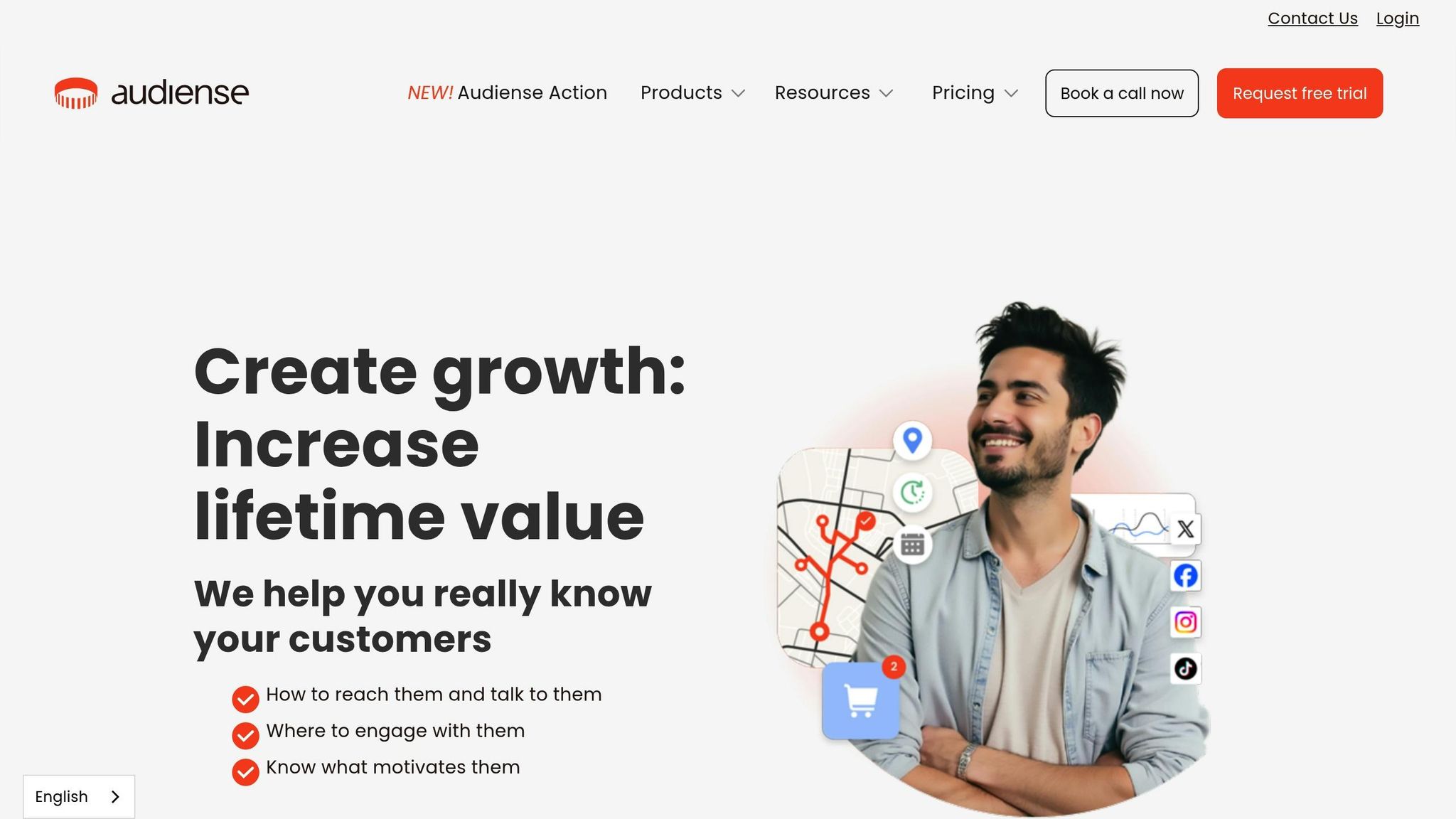
Behavioral Segmentation Features
Audiense takes behavioral segmentation into the realm of social media, leveraging machine learning to analyze data from platforms like Twitter (X), Instagram, and Facebook. This approach creates detailed psychographic and demographic profiles based on how audiences interact online [17][18].
For local service businesses, Audiense provides insights into customer identities and their key interests. It tracks tweet sentiments, hashtags, follower networks, and even the influencers your audience follows. This can help businesses build accurate audience profiles. For instance, an HVAC company might use Audiense to pinpoint homeowners in their area who frequently discuss home improvement topics or follow local real estate accounts.
Rachel May Quin from Audiense highlights the importance of real-time data, stating:
"For personas to be effective, they need to be as real-time as possible, this is where social data tools come in" [16].
Interestingly, while 77% of marketers create buyer personas, many rarely use them, and only 34% update them yearly [16]. By incorporating social signals, Audiense enhances traditional website behavior analysis, offering a richer perspective for targeting strategies.
Integration and Usability for Local Services
Audiense doesn't stop at segmentation - it integrates seamlessly with major advertising and CRM platforms. It works with tools like Facebook Ads Manager, Twitter Ads, LinkedIn Campaign Manager, Salesforce, HubSpot, Mailchimp, and Klaviyo [15]. This integration enables businesses to enrich customer profiles with social behavior insights and create highly targeted campaigns.
The platform has earned the top spot on G2's audience intelligence rankings [17], and its setup is quick, typically taking just 2 to 4 hours [19]. For small business owners, segmentation data can be exported in PDF or PowerPoint formats, making it easy to translate insights into actionable marketing strategies. Will Zimmerman from Seattle Web Search remarks:
"Small business owners can utilize the insights provided by Audiense Insights to make better marketing decisions. And smart marketing decisions equate to higher conversion rates" [17].
However, there are some drawbacks. Audiense relies heavily on Twitter data, which might limit its usefulness for businesses with a broader social media presence [18]. Pricing is another consideration - starting at $199/month, with the Standard Plan costing $8,467 per year [18][15]. For very small local businesses with tight budgets, this could be a significant expense.
4. Amplitude
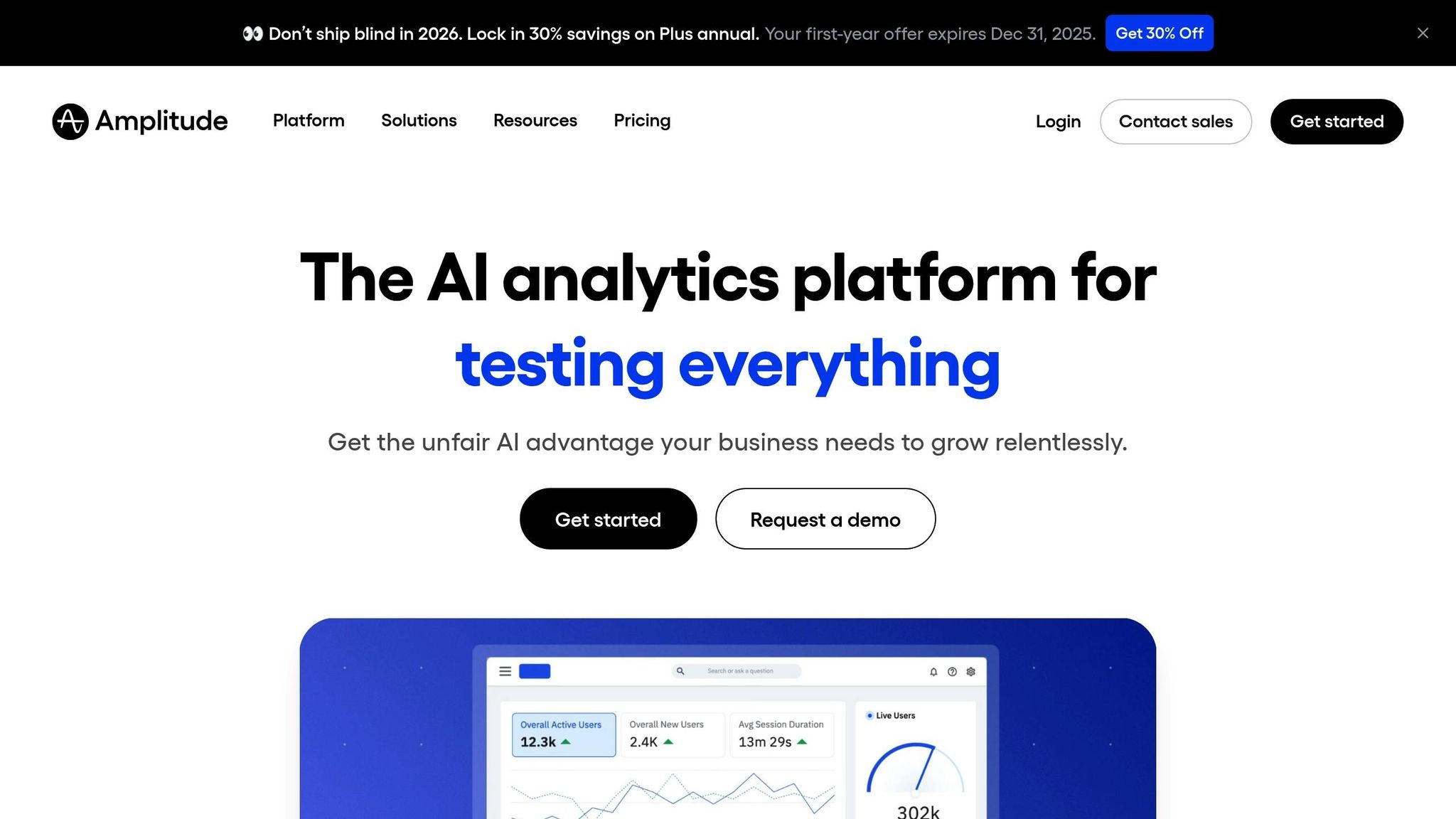
Behavioral Segmentation Features
Amplitude specializes in product analytics, focusing on tracking digital interactions to build detailed behavioral profiles. It allows businesses to create behavioral cohorts - groups of users who perform specific actions within a set timeframe, such as booking a service, enabling notifications, or abandoning a cart [20][23]. For example, a landscaping business could identify users who requested a quote but didn’t follow through with a booking.
What sets Amplitude apart is its predictive cohort capability, which doesn’t just analyze past behavior but forecasts future actions. This feature can predict, for instance, which users are likely to churn or subscribe within the next seven days [25]. Another standout tool, the Compass Chart, highlights key "a-ha" moments, such as discovering that customers who book three services within 30 days are more likely to become long-term clients [21]. Carolyn Feibleman, Principal Product Manager at Amplitude, underscores the value of this approach:
"Behavioral segmentation offers dynamic insight into customer preferences and actions, going beyond the static information provided by demographic and geographic segmentation" [23].
These predictive tools enable businesses to act quickly and decisively based on real-time insights.
Real-Time Processing Capabilities
Amplitude’s Nova 2.0 architecture processes behavioral data in real time, refreshing audience segments every minute [25]. For instance, a janitorial company could automatically send a targeted text message to a disengaged customer the moment their behavior signals a loss of interest. The platform’s Behavioral Graph ensures precise, "in-the-moment personalization", helping businesses reach the right users at the exact time they engage with a service [22].
To maintain accuracy, predictive models are updated hourly as customer behavior evolves [25]. This can lead to conversion increases of 15-30% [25]. For local businesses, this means they can act immediately - for example, offering a discount to a customer who just browsed pricing but didn’t book.
Retention Metrics and Predictive Insights
Amplitude also excels at tracking retention, measuring how often customers return for repeat services. Its lifecycle analysis divides users into categories such as New, Current, Resurrected, and Dormant, offering a clear view of customer engagement [21]. The stickiness metric further identifies which services are most effective at bringing customers back [21].
The platform’s usage segmentation helps businesses identify high-value customers, making it easier to design tiered loyalty programs. Studies show that tiered programs deliver 1.8 times higher ROI compared to non-tiered ones, and 88% of consumers are more likely to stay loyal to brands offering personalized experiences [24]. For example, an HVAC company could use these insights to identify frequent users and invite them to join a premium maintenance plan.
Integration and Usability for Local Services
Amplitude integrates seamlessly with CRMs like HubSpot and Salesforce, as well as downstream tools like Braze and Klaviyo, updating them every minute [20][15][25]. This real-time syncing ensures that behavioral insights translate into immediate marketing actions. The platform also offers pre-built analytics templates to simplify setup for marketing teams [20], making it easier for local service providers to act on the data.
However, setting up events in Amplitude requires careful planning and can be challenging for those new to the platform [14]. Pricing starts with a free basic plan, while advanced features begin at $995 per month [15][20]. While Amplitude is undeniably powerful, businesses should weigh its complexity and cost against their technical expertise and budget.
5. Qualtrics
Behavioral Segmentation Features
Qualtrics stands out with its ability to provide detailed customer segmentation and real-time feedback, designed to enhance customer engagement. The platform categorizes customers using 12 behavioral variables, such as purchasing habits, usage frequency, loyalty, satisfaction levels, spending patterns, and brand interactions. For example, a janitorial service can differentiate between regular customers and those who book only for seasonal needs [2][27].
One of its standout tools, Predict iQ, leverages deep learning to identify potential customer churn. By analyzing experience data (like satisfaction scores) alongside operational metrics (such as reduced service usage), it flags accounts that may require attention. Imagine an HVAC provider noticing a shift from quarterly maintenance visits to annual ones - this could signal the need for proactive outreach [26].
With these segmentation tools, Qualtrics equips businesses to take their customer analysis to the next level.
Real-Time Processing Capabilities
Qualtrics uses Natural Language Processing (NLP) to analyze calls, chats, and text messages. This allows the system to detect sentiment and offer live agent prompts, such as suggesting empathetic responses or offering discounts to address negative experiences. For example, the platform can guide agents to take immediate action when a customer expresses dissatisfaction [30]. Additionally, its Frontline Locations Tool provides location-specific insights, helping businesses resolve feedback faster [29]. Research shows that brands responding quickly to customer concerns are 2.4 times more likely to retain loyalty [28].
Retention Metrics and Predictive Insights
The platform tracks metrics like Customer Lifetime Value and historical Voice of the Customer data to predict future behaviors and trends. Automated alerts with actionable recommendations ensure businesses can follow up promptly. For instance, if a catering company's corporate client reports a drop in satisfaction, the system might send an alert recommending immediate outreach to address the issue [26][28].
5.2% of customers feel that agent empathy significantly improves their experience, compared to just 2.7% who prioritize short wait times [30].
These predictive insights, combined with actionable recommendations, help businesses strengthen customer relationships.
Integration and Usability for Local Services
Qualtrics integrates seamlessly with tools like CRM systems, marketing automation platforms, and analytics software. Its user-friendly survey builder and automated cluster analysis allow businesses to identify customer segments without needing advanced statistical skills. However, new users might find the platform's depth a bit challenging at first [14].
Pricing is flexible, tailored to the size and specific needs of each business [15]. For local service providers, such as HVAC companies targeting specific zip codes or seasonal demands, the platform's geographic and occasion-based segmentation capabilities are particularly useful [2].
How to Build Customer Segments with AI (Real-World Use Case)
Strengths and Weaknesses
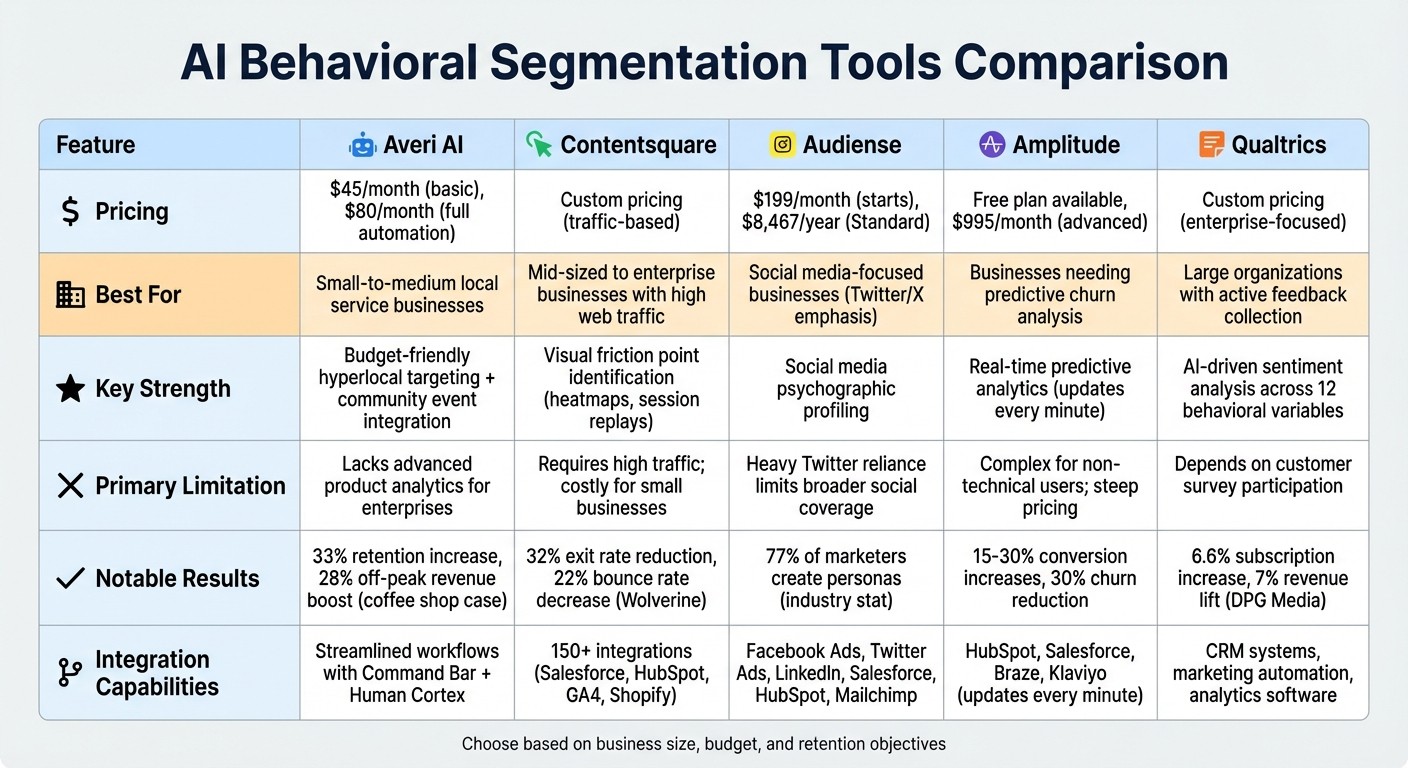
AI Behavioral Segmentation Tools Comparison: Features, Pricing, and Best Use Cases
Each tool brings its own set of advantages and trade-offs, making them suitable for different business needs and goals.
Averi AI is a great fit for local service businesses operating on modest marketing budgets ($300–$1,500 per month). Its strength lies in hyperlocal targeting and fractional expert access. For example, a downtown coffee shop using Averi saw a 41% boost in new customer acquisition by leveraging weather-based promotions and community-specific campaigns [1]. On the downside, it falls short in providing the in-depth product analytics required by larger enterprises.
For businesses focused on improving user experience through visual data, Contentsquare excels at identifying friction points. Using its heatmap tools, DPG Media achieved a 6.6% increase in subscriptions and a 7% revenue lift [8]. However, this tool demands a significant amount of web traffic to deliver actionable insights, making it less practical for smaller operations. Additionally, its cost can be a hurdle for businesses with limited budgets.
If predictive analytics is the priority, Amplitude leads the pack. Its ability to calculate customer properties in real time and forecast churn has helped businesses reduce churn rates by 30% through detailed behavioral segmentation [8]. While it offers a free plan for beginners, the advanced features come at a steep price of $995 per month [15]. The interface can also be challenging for users without technical expertise.
Finally, Qualtrics is tailored for businesses that actively collect and analyze customer feedback. Its combination of behavioral data and sentiment analysis across 12 variables allows it to flag satisfaction issues and trigger immediate follow-ups [2][27]. This makes it a powerful tool for enterprise-level experience management. However, its effectiveness depends on customers being willing to participate in surveys, and it comes with custom pricing designed for larger organizations.
Tool | Best Strength | Primary Limitation |
|---|---|---|
Averi AI | Budget-friendly hyperlocal targeting with community event integration | Lacks advanced product analytics for enterprises |
Contentsquare | Identifies friction points with heatmaps and session replays | Needs high traffic; costly for small businesses |
Amplitude | Predictive churn analysis with real-time insights | Steep pricing beyond free plan; complex for non-technical users |
Qualtrics | AI-driven sentiment analysis for experience management | Enterprise-oriented; relies on customer survey participation |
Conclusion
Choosing the right AI tool depends on your business size, data needs, and retention objectives.
For small-to-medium local service businesses, Averi AI offers an affordable and practical solution at $45 per month. It combines segmentation and campaign execution in a single platform, making it ideal for teams without dedicated data engineers. However, larger businesses with more complex data requirements may need tools with greater capabilities.
For enterprises managing large-scale customer data, platforms like Amplitude and Qualtrics stand out. These tools provide advanced predictive modeling and sentiment analysis, which are crucial for handling extensive datasets and delivering actionable retention insights. Keep in mind, though, that these come at a premium - Amplitude’s Growth plan starts at $995 per month [15].
When selecting a tool, focus on your retention goals. Whether you need predictive analytics to pinpoint at-risk customers or visual insights to refine user interactions, aligning the tool’s capabilities with your needs is key. For businesses new to behavioral segmentation, starting with basic automation - like sending review requests or follow-up emails - can provide a solid foundation for adopting more advanced predictive tools later on [31].
FAQs
How can AI tools improve customer retention through behavioral segmentation?
AI tools are changing the game when it comes to customer interactions. By analyzing real-time patterns from activities like website visits, service requests, and email engagement, they turn raw data into actionable insights. This means businesses can group customers based on their behaviors rather than relying on outdated demographic categories. The result? Marketing strategies that are more personalized and better timed. For instance, AI can predict when a customer might stop using a service and automatically initiate outreach - whether through tailored offers or friendly reminders - to keep them engaged.
For local service businesses such as janitorial services, landscaping, HVAC, catering, and business brokers, platforms like Cohesive AI take things a step further. These tools integrate behavioral data with advanced lead generation capabilities, allowing businesses to personalize communication and manage campaigns more effectively. The outcome is twofold: attracting new clients while also nurturing stronger relationships with current ones. By delivering timely and relevant interactions, these tools help reduce customer turnover and build lasting loyalty.
What should businesses look for in an AI tool for behavioral segmentation?
When choosing an AI tool for behavioral segmentation, the first step is to define your specific business goals. Are you aiming to reduce customer churn, re-engage inactive users, or turn your best customers into loyal advocates? The tool you select should align directly with these objectives. Without a clear purpose, the insights generated might not translate into meaningful actions.
Next, evaluate the tool's ability to work with relevant, high-quality data. The best platforms analyze critical behavioral signals like website visits, feature usage, purchase patterns, and email interactions. Tools that offer real-time scoring and automation can be especially useful for converting insights into tangible results.
Lastly, look at practical considerations like how well the tool integrates with your existing systems (CRM, email platforms, POS software), its ease of use for non-technical team members, scalability, and pricing transparency. For local service businesses - think janitorial services, landscaping, or HVAC - platforms like Cohesive AI stand out. They combine advanced data collection with automated outreach, simplifying segmentation while helping you grow your business.
How does real-time data processing enhance behavioral segmentation for businesses?
Real-time data processing gives businesses the power to analyze customer actions as they occur, paving the way for creating dynamic, up-to-the-minute behavioral segments. This quick turnaround makes it possible to send personalized messages that truly connect with customers, enhancing both engagement and satisfaction.
When communication is aligned with what customers are doing right now, campaigns become more relevant. This relevance can translate into stronger customer loyalty and a boost in sales. For local service businesses, real-time insights are especially valuable, allowing them to adapt quickly and respond effectively to customer needs.