How to Segment Leads for Personalized Emails
Oct 4, 2025
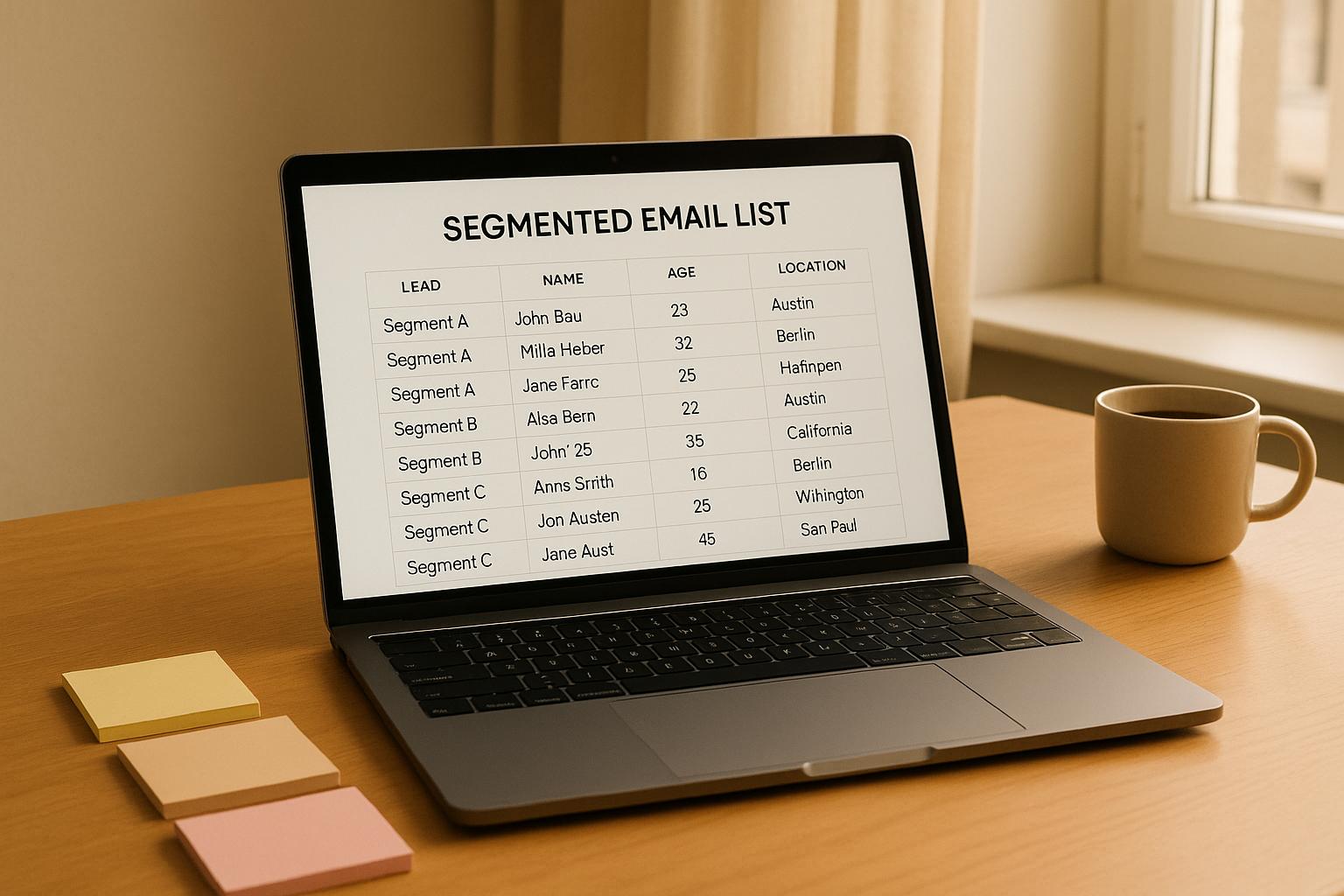
Lead segmentation helps you group prospects based on shared characteristics like demographics, behavior, or industry. This approach lets you create tailored email campaigns that resonate with your audience, boosting open rates, click-throughs, and even revenue. For example, segmented campaigns can achieve 14.31% higher open rates and 100.95% higher click-through rates compared to generic emails.
Key takeaways:
What is lead segmentation? Organizing leads by traits like location, behavior, or industry to deliver more relevant messaging.
Why it works: Personalized emails feel more relevant, increasing engagement and conversions. Some businesses see up to a 760% revenue boost using this approach.
How to segment: Use data like demographics, behavior, and business type. Automation tools can simplify this process.
Practical tips:Test campaigns for each segment, refine based on performance, and adjust messaging to match each group's needs.
For local service providers like janitorial or landscaping companies, segmentation ensures your emails address specific needs, whether it's small offices or large facilities. Tools like AI can even automate this process, saving time and improving accuracy. Ultimately, segmentation helps you connect with your audience on a deeper level while maximizing marketing results.
Main Methods for Segmenting Leads
Demographic Segmentation
Demographic segmentation breaks down leads based on personal and socio-economic factors like age, gender, income, occupation, marital status, family size, and education level. This method is especially useful for local service businesses since this type of data is relatively easy to gather through customer insights, analytics, or census data.
For instance, local service providers can use this information to better understand their target audience and what influences their decisions. Picture an HVAC contractor targeting homeowners aged 35–55 with incomes above $75,000 for premium systems. Or a landscaping company distinguishing between families who want safe lawn treatments and empty nesters looking for low-maintenance designs.
Here’s why this method works: 91% of buyers are more likely to shop with brands offering personalized experiences [5]. By customizing messages for specific demographic groups and combining different factors, businesses can create campaigns that resonate with each group’s unique needs and priorities. But demographics are just one piece of the puzzle - next, let’s look at how behavior can sharpen segmentation even further.
Behavioral Segmentation
Behavioral segmentation takes things a step deeper by focusing on how leads interact with your business. This includes tracking email engagement, website activity, service inquiries, and responses to past campaigns. For example, a landscaping company might notice that leads who engage with seasonal maintenance tips are more likely to consider full-service packages, compared to those who only browse basic service options. Similarly, an HVAC contractor might find that prospects frequently opening emails about energy efficiency are more interested in system upgrades than routine repairs.
Behavioral insights also reveal opportunities to fine-tune your approach. For instance, if leads consistently open emails but rarely click on links, it might be time to test more compelling calls-to-action. And real-time data can guide immediate responses - referrals might deserve personal follow-ups, while colder leads could benefit from a nurturing email series to build interest over time.
Business Type and Industry Segmentation
Segmenting leads by business type and industry focuses on the nature of the business, its size, and the unique challenges tied to its sector. This approach is especially effective for B2B local service providers, as industries often have distinct needs, regulations, and buying processes.
Take janitorial services, for example. A small law firm might need discreet after-hours cleaning, while a restaurant could require frequent, thorough sanitization. The size of the business also matters. Small businesses with 5–20 employees often rely on a single decision-maker who values personalized service and quick turnarounds. On the other hand, larger organizations with 200+ employees typically involve multiple stakeholders, requiring detailed proposals and long-term agreements.
Industry-specific regulations further shape these needs. Healthcare facilities may require cleaning services that comply with HIPAA standards and proper medical waste disposal, while restaurants need staff trained in food safety protocols. Schools, with budgets tied to academic calendars, often need services scheduled around the school year.
Blending business type with geographic factors can refine segmentation even more. A landscaping company serving both residential and commercial clients might note that urban office buildings have very different maintenance demands compared to suburban business parks. Plus, knowing how industries make decisions - restaurants often need quick solutions, while professional services may take longer to evaluate options - can help tailor follow-up communications. This level of understanding makes email campaigns more precise and personalized, increasing their effectiveness.
Personalization Strategy: Segmentation, Tags & Email Marketing Automation [Examples]
Step-by-Step Guide to Segmenting Leads
Let’s dive into the practical steps for gathering, automating, and fine-tuning your lead data to create effective segments.
Collect and Organize Data
The first step in lead segmentation is gathering the right information. Focus on collecting the most relevant data points. For instance, behavioral data - like email open rates or website activity - can be tracked using your marketing tools and customer interactions.
For local service businesses, additional details about the leads' business attributes may be necessary. Think about factors like company size, industry type, or compliance needs. For example, a janitorial service might want to distinguish between prospects in highly regulated industries and those with fewer operational requirements.
To make this process efficient, design a structured approach to data collection. Identify what information is essential for each segment you want to create. If you’re targeting both residential and commercial clients, you’ll need different data for each group. Residential leads might require details such as household income or family size, while commercial leads could be categorized by industry type or employee count.
Once you’ve collected the data, organize it in a way that makes segmentation easy. Group related data points together and ensure consistency in how they’re recorded. For example, a landscaping company might sort leads by property type (residential, commercial, municipal), service needs (like maintenance or installation), and even seasonal preferences. To handle growing amounts of data, consider automating this process.
Use Tools for Automation
When your lead volume grows, automation becomes a game-changer. Automation tools can simplify data collection and organization, saving you time and effort. Platforms like Cohesive AI, for example, can automate the entire lead generation process for local service businesses. It can scrape sources like Google Maps or government filings to identify leads and organize them into actionable segments[6].
These tools not only speed up data collection but also capture detailed information - such as business size, licensing, or compliance requirements - that might be missed with manual research. With this automated segmentation in place, you can create more targeted email campaigns, ensuring that each lead receives messaging tailored to their specific needs.
Test and Refine Segments
To ensure your segments are effective, testing is key. Launch small test campaigns for each segment and track important metrics like open rates, click-through rates, and conversions.
Pay close attention to how each segment responds. The feedback you gather will help you refine your segment definitions and adjust your messaging. For example, you might notice that a certain segment prefers shorter, more direct emails, while another responds better to in-depth content.
Regularly review and tweak your segments to keep them relevant as your business and market evolve. Monitor performance to spot trends, such as seasonal shifts or consistently underperforming groups. You might also want to experiment with geographic factors or timing - testing whether leads in different locations or segments engage better with specific messaging or send times.
If a segment consistently underperforms, consider merging it with another or redefining its criteria. Continuous refinement will help you maintain strong engagement and higher conversion rates over time.
Creating Personalized Email Campaigns for Each Segment
Once you've segmented your leads, it's time to craft emails that speak directly to each group's specific needs. Why? Because personalized email campaigns deliver six times higher transaction rates compared to generic emails. That’s a compelling reason to invest in customization. Let’s dive into how you can create content that resonates with each segment.
Writing Content That Speaks to Each Segment
Tailor every part of your email - subject lines, body copy, and calls-to-action - to reflect the unique characteristics of your audience.
Start with subject lines that grab attention. For instance, a janitorial service targeting healthcare facilities might use, "Maintain Hospital-Grade Cleanliness Standards." Meanwhile, the same company reaching out to small offices might go with, "Keep Your Workspace Spotless Without the Hassle." These subtle shifts in language address the specific priorities of each segment.
In the email body, focus on what matters most to your audience. Enterprise clients often care about scalability and comprehensive solutions, while residential customers might value quick service and affordability. For example, a landscaping company could emphasize fast turnaround times for homeowners but highlight project management expertise when targeting commercial properties.
Your call-to-action (CTA) should also reflect the audience's mindset. Residential leads might respond to, "Get Your Free Estimate Today," while commercial prospects might prefer, "Schedule a Consultation to Discuss Your Needs." Segmented campaigns achieve a 14.31% higher open rate than generic ones, proving how effective this approach can be[1].
Timing and Tone: The Keys to Better Engagement
When you send your emails matters just as much as what you say. Different segments have different habits when it comes to checking their inboxes. For example, business owners are more likely to review emails during standard business hours, while residential customers might be more responsive in the evening or on weekends.
Sending emails during local business hours can boost open rates by as much as 20%[3]. Seasonal trends also play a role - think about HVAC companies seeing higher engagement when homeowners start planning for seasonal maintenance.
Tone is another critical factor. Enterprise clients usually expect a professional, polished tone that conveys expertise and reliability. On the other hand, small business owners or residential customers might appreciate a friendlier, more conversational style that builds trust and rapport.
Scaling Personalization with AI
Here’s where AI steps in to make personalization manageable. Tools like Cohesive AI can analyze lead data and create tailored emails for each recipient. These tools are especially useful for local service businesses, helping them generate messages that feel personal even at scale.
AI can take personalization to the next level by using behavioral data. For example, emails triggered by past interactions or browsing history can increase revenue by up to 760%[4]. AI tools can optimize send times based on user behavior, tweak subject lines to match what similar audiences respond to, and even adjust formats for mobile or desktop users.
This level of customization would be nearly impossible to achieve manually for large lead lists. But with AI, you can maintain the personal touch that drives conversions - without sacrificing efficiency.
Conclusion: Key Points for Lead Segmentation
Lead segmentation is a game-changer for how local service businesses connect with their prospects. Segmented email campaigns have been shown to deliver 14.31% higher open rates, 100.95% higher click-through rates, and up to 760% more revenue compared to non-segmented campaigns[2][4][7].
Why Segmentation Matters
For local service providers - think janitorial services, landscaping companies, or HVAC contractors - segmentation offers a clear edge by addressing the unique needs of different customer groups. By grouping leads based on factors like company size, industry-specific requirements, or behavioral patterns, you can craft messages that speak directly to their pain points.
For example, a small office and a large hospital have vastly different needs. Segmentation allows you to tailor your messaging to reflect those differences, creating a sense of trust and credibility. When prospects feel understood, they’re far more likely to engage with your business.
But it’s not just about better engagement. Segmentation also helps you use your marketing budget more effectively. Instead of casting a wide net and hoping for results, you can focus your efforts on the leads most likely to convert - giving you a better return on investment.
Taking Action
Ready to implement lead segmentation? Start by reviewing your current lead database. Look for demographic, behavioral, and firmographic data points that can help you create meaningful segments. For local service businesses, grouping leads by company size, location, or specific service needs is a great place to begin[3].
If you’re new to segmentation, keep it simple at first. Begin with basic categories like demographics or firmographics, and as you gather more data, incorporate behavioral insights - such as how leads interact with your emails or website.
For businesses looking to scale their efforts without adding extra workload, automation tools like Cohesive AI can be a game-changer. These tools can handle tasks like scraping Google Maps or government filings to identify local prospects and even create AI-personalized emails for each segment. This makes advanced targeting achievable, even for smaller teams.
The key is to get started and refine your approach over time. Keep an eye on performance metrics like open rates, click-through rates, and conversion rates for each segment. Use this data to tweak your strategies and improve results. Segmentation isn’t a one-and-done task - it’s an ongoing process that grows with your business and your understanding of your customers.
FAQs
How can local service businesses gather and organize lead data for better email segmentation?
Local service businesses can streamline how they gather and organize lead data by turning to tools like customer relationship management (CRM) systems. These systems make it easy to sort leads based on factors such as demographics, location, behavior, or business type. Once the data is organized, businesses can analyze it to uncover trends and create well-defined customer segments.
Another effective approach involves pulling contact details from local directories or government filings. By building detailed lead profiles and sorting them into clear categories, businesses can craft more targeted and personalized email campaigns. This level of precision often leads to higher engagement and better conversion rates.
What challenges do businesses face with behavioral segmentation, and how can they address them?
Businesses often face hurdles when it comes to behavioral segmentation. Collecting precise and detailed data is no small feat, especially when dealing with massive datasets. On top of that, analyzing customer behavior can be both time-intensive and resource-heavy.
Another sticking point is merging data from various sources - think website activity, email interactions, and purchase records - into one seamless system. And let’s not forget: customer behaviors don’t stay the same. They shift over time, making it crucial to regularly tweak and refine segmentation strategies to stay relevant.
So, how do you tackle these challenges? Start by investing in powerful data management tools that simplify the process. Consistently monitor your data to catch trends as they happen, and stay flexible to adapt to changing customer needs. AI-powered tools, especially those built for lead generation and personalized marketing, can make the entire process smoother and more effective.
How can AI help create personalized email campaigns for different lead groups?
AI takes the guesswork out of email personalization by automatically grouping leads based on details like demographics, behavior, and industry type. This means you can create messages tailored to each segment, making your emails more relevant and engaging for your audience.
It doesn't stop there - AI can also anticipate customer preferences and actions. This insight allows you to fine-tune content, choose the best times to send emails, and design promotions that feel personalized. The result? Higher open rates, more clicks, and better overall conversions, making your email campaigns work smarter, not harder.