Google Maps Scraping vs. Competitor Analysis
Aug 11, 2025
Google Maps scraping and competitor analysis are powerful methods for generating leads and understanding market dynamics for local service businesses. Here's a quick breakdown:
Google Maps Scraping: Automates the collection of business details like names, addresses, phone numbers, and reviews from Google Maps. It's fast, cost-effective (under $0.01 per API call), and ideal for generating large volumes of leads quickly. However, data accuracy can vary, and manual cleaning may be required.
Competitor Analysis: Focuses on studying your competitors' offerings, customer feedback, pricing, and strategies. It provides deeper insights into market gaps and customer needs but is more time-intensive and often requires continuous monitoring.
Key Takeaway: Use Google Maps scraping for rapid lead generation and competitor analysis for refining strategies and identifying market opportunities. Combining both methods creates a balanced approach for immediate and long-term growth.
Quick Comparison
Aspect | Google Maps Scraping | Competitor Analysis |
|---|---|---|
Speed | Fast data collection | Time-intensive research |
Data Volume | High volume | Lower, focused insights |
Lead Quality | Varies, may need filtering | More refined |
Market Insights | Basic business data | Deeper trends and positioning |
Cost | Low (automation) | Higher (manual effort or tools) |
Best For | Quick lead generation | Long-term strategy |
Both methods shine when used together: competitor analysis identifies gaps, and Google Maps scraping targets prospects within those gaps. This dual approach ensures a steady pipeline of leads and better market positioning.
What Are These Methods?
Google Maps Scraping Explained
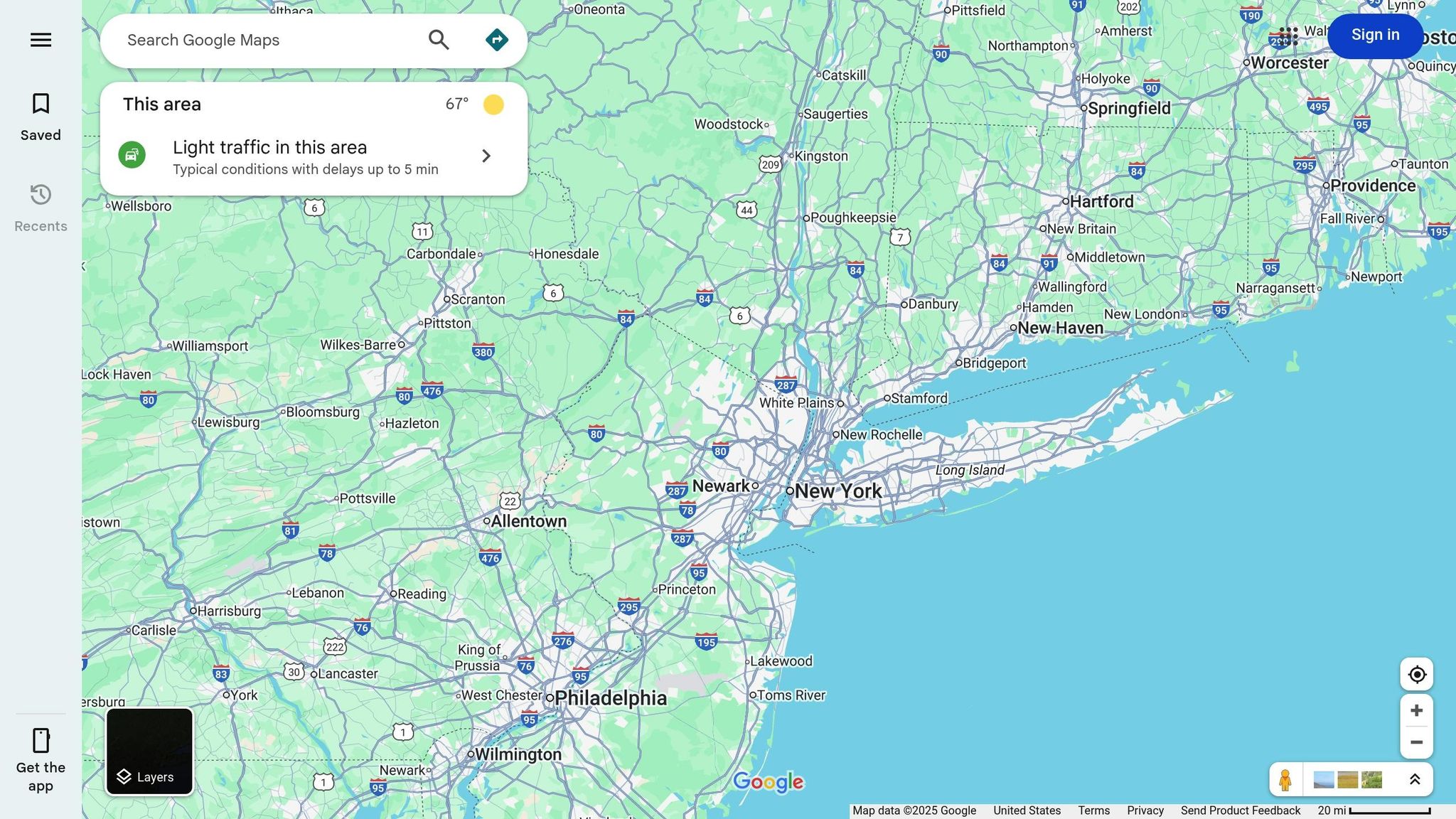
Google Maps scraping is all about automating the collection of business information directly from Google Maps listings. Think of it as a digital assistant that quickly pulls together essential details like company names, addresses, phone numbers, websites, customer ratings, and the number of reviews.
This process relies on specialized software or APIs to extract data from Google’s massive database. And when we say massive, we mean it - Google Maps covers over 250 countries and holds more than twenty petabytes of localized data [1].
For local service businesses, this is like having a treasure map to potential clients. Imagine a landscaping company in Phoenix. By scraping data within a 15-mile radius, they can pinpoint commercial properties, complete with contact details and customer satisfaction metrics - all formatted to standard U.S. conventions.
But that’s just one piece of the puzzle. Let’s dive into competitor analysis, which adds another layer of insight to automated data collection.
Competitor Analysis Explained
Competitor analysis takes a closer look at your local rivals, examining their strengths, weaknesses, pricing, and customer feedback. While Google Maps scraping casts a wide net, competitor analysis zeroes in on businesses directly competing for the same customers.
This method digs into details like service offerings, pricing strategies, customer reviews, and even response times. For example, an HVAC company might study how competitors handle emergency calls, what they charge for furnace repairs, or which neighborhoods they prioritize. The goal? To identify gaps in the market that your business can fill.
David Stodder, a Business Intelligence Analyst at TDWI, highlights the importance of location in analytics:
"Location is powerful for analytics. Location intelligence - answering spatial analysis questions - can lead to new insights and provide new perspectives on things."
David Stodder [1]
Real-world examples show just how useful these methods can be. Researchers used Google Maps scraping to analyze 5,427 restaurant reviews, breaking down feedback into categories like taste, service, ambience, and pricing. This helped restaurant owners make smarter decisions about menu changes, pricing, and staff training [1].
Why Local Service Businesses Need These Methods
Local service businesses face unique hurdles, and these techniques are tailored to tackle them. With about 30% of Google searches being location-based and Google Maps commanding a 67% market share as the go-to navigation app [2], it’s clear that potential customers are already using these platforms to find services.
Traditional lead generation methods - like cold calling, buying generic lead lists, or manually researching prospects - are often inefficient, outdated, and time-consuming. Automated tools like Google Maps scraping and competitor analysis solve these problems by delivering accurate, up-to-date data quickly and efficiently.
Take Starbucks as an example. They use location data to decide where to open new stores and which grocery chains should carry their pre-prepared drinks [1]. This kind of data-driven decision-making is becoming more accessible to smaller businesses, too.
With the global Location Intelligence Market expected to hit $66.5 billion by 2032 [1], local service providers - whether they’re in janitorial services, landscaping, HVAC, catering, or business brokerage - have a chance to stand out by leveraging smarter data strategies. Automated tools can generate thousands of accurate leads in just minutes, far outpacing the weeks it might take to gather the same information manually. For a local service business, this speed and accuracy can be a game-changer, setting the stage for growth and success.
Data You Can Collect
Data from Google Maps Scraping
For businesses focused on serving specific local areas, Google Maps scraping can be a goldmine for lead generation. It provides essential details like company names, full addresses, phone numbers, websites, and email addresses (when listed), making direct outreach much easier.
You can also gather GPS coordinates, service areas, operating hours, and proximity to landmarks or competitors. For instance, an HVAC company could pinpoint businesses within a 20-mile radius of their service area, complete with exact distances and estimated travel times.
Customer feedback data is another valuable resource. Metrics such as the number of reviews, average star ratings, and trends in customer feedback can highlight opportunities. For example, a janitorial service might target office buildings with consistently poor cleanliness ratings, signaling a need for better cleaning services.
Google's business categorization system further refines targeting. It classifies businesses by primary and secondary categories, establishment types, and industry codes. This could help a landscaping company differentiate between retail centers, office complexes, and industrial facilities - each requiring tailored service approaches.
Additional data like photo counts, verification status, peak visiting times, and seasonal activity patterns can provide a snapshot of how active a business is. For example, a catering company might identify restaurants with high traffic during peak hours that could benefit from additional kitchen support.
Data from Competitor Analysis
Analyzing competitors can reveal their service offerings, specializations, and gaps in their portfolios. This might include pricing clues from service descriptions, promotions, or package deals mentioned in reviews or business profiles.
You can also gain insights into how competitors position themselves in the market. This includes their unique selling points, target audiences, and messaging strategies. For example, an HVAC contractor might discover that local competitors emphasize emergency repairs but overlook preventive maintenance contracts, opening up an opportunity.
Customer reviews can uncover satisfaction patterns. Recurring complaints, common praises, and how competitors respond to feedback can highlight their strengths and weaknesses. These patterns may reveal underserved market segments or areas where you can outperform competitors.
Operational insights, like response times to inquiries, service area coverage, and seasonal activity trends, can also be valuable. For example, a business broker could analyze how competitors communicate with their clients and find ways to deliver better customer service.
Geographic coverage analysis helps identify where competitors are most active and spot areas with less competition. This data can inform your expansion strategies and guide you toward markets with untapped potential.
Data Limitations
While these methods provide valuable insights, they come with limitations that can affect the quality of your leads and market analysis.
Google Maps scraping often struggles with incomplete data. Many businesses don’t keep their listings updated, and some don’t even have Google My Business profiles. Contact information can be outdated, with changed phone numbers or inactive websites. Small businesses frequently have incomplete profiles, missing key details like specific services or accurate operating hours.
Data accuracy can also be a concern. Businesses might list incorrect service areas, outdated pricing, or seasonal services as if they’re available year-round. Reviews might not reflect current service quality, especially for businesses that have recently changed owners or management.
Competitor analysis also has its challenges. You can only analyze competitors you know about, which means you might miss new players or those operating under different categories. The depth of available information varies too - some competitors have detailed online profiles, while others barely maintain a digital presence.
Both methods face timing issues. Google Maps data is essentially a snapshot, and business conditions can change quickly. Competitor strategies, pricing, and market positions shift over time, so data that’s accurate today might be outdated in a few months. Regular updates are essential to keep your insights relevant.
Finally, privacy and access restrictions can limit the data you can collect. Some businesses restrict access to detailed information, and platform policies may limit how much data you can extract. These gaps can leave blind spots in your market analysis and lead generation efforts.
Strengths of Each Method
Benefits of Google Maps Scraping
Google Maps scraping is a powerful tool for generating leads quickly. By automating data collection, it provides a fast and efficient way to gather extensive local business information, making it ideal for immediate outreach efforts.
It also excels in geographic accuracy, offering precise details like addresses, coordinates, and distance measurements. For example, an HVAC contractor can pinpoint businesses within a defined service area, ensuring efficient resource allocation.
Another advantage is the ability to stay updated with new opportunities, such as recently opened businesses or status changes. The comprehensive data available - like business categories and operational details - makes it easier to tailor your outreach efforts. Plus, insights into verification status help you identify active and credible leads, streamlining your targeting process.
Benefits of Competitor Analysis
Competitor analysis provides a deeper understanding of your market by revealing how competitors position themselves. By examining their messaging, service focus, and unique selling points, you can refine your own strategies to stand out.
This method also highlights market gaps - areas where competitors fall short - which can lead to untapped opportunities. For example, if competitors overlook a specific customer need, you can step in to fill the void.
Additionally, competitor analysis sheds light on pricing trends by analyzing customer reviews, promotional materials, and other clues. While it may not provide exact figures, it offers a general sense of pricing strategies. It also uncovers customer satisfaction trends, helping you identify where competitors may be underperforming and where you can excel.
Geographic insights are another benefit, as this analysis can reveal underserved areas, offering guidance for potential expansion. Finally, benchmarking practices like response times and customer engagement can inspire improvements in your own operations.
Both methods bring unique strengths to the table, making them valuable tools for a comprehensive lead generation strategy.
Side-by-Side Comparison
Aspect | Google Maps Scraping | Competitor Analysis |
|---|---|---|
Speed | Fast data collection for immediate outreach | More time-intensive due to detailed research |
Data Volume | High volume with broad coverage | Lower volume, focused on specific insights |
Lead Quality | Can vary - may need filtering | More refined, based on market positioning |
Market Insights | Basic business and location data | Deeper strategic trends and positioning |
Geographic Scope | Covers large areas beyond competitors | Focused on competitors' service zones |
Cost Efficiency | Generally low cost due to automation | Higher cost due to manual analysis |
Actionability | Ready for quick outreach | Requires strategic planning |
Data Freshness | Regular updates, though some lag may occur | Reflects current competitive intelligence |
Competitive Edge | Speed and volume advantage | Strategic differentiation advantage |
Best for | Quick lead generation and market entry | Long-term strategy and market understanding |
The choice between these methods depends on your business priorities. Google Maps scraping is ideal when speed and lead volume are crucial, while competitor analysis is better suited for strategic planning and understanding the competitive landscape.
Many businesses find success by combining both approaches. Start with competitor analysis to map out the market, then use Google Maps scraping to target leads based on those insights. This combination ensures a balanced approach to both immediate and long-term goals, setting the stage for discussions about resources and costs.
How To Scrape Local Business Leads Using Google Maps for FREE (2025 UPDATE)
Resources and Costs Required
Knowing the resources and costs involved in each lead generation method is essential for shaping an effective strategy. Whether you're using Google Maps scraping or competitor analysis, each approach demands a unique mix of tools, time, and expertise. Let’s break down what’s required for both methods.
What Google Maps Scraping Requires
Google Maps scraping relies heavily on technical tools and data-handling skills. To extract business listings, you’ll need scraping software or coding expertise. Options range from simple browser extensions to more advanced APIs, depending on your needs.
The time commitment varies based on your method. Manual scraping can be labor-intensive, while automated tools can speed things up significantly. However, collecting the data is just the start - the real challenge often lies in cleaning and verifying it.
Scraped data is typically messy, with duplicates, outdated entries, and formatting issues. You'll need to dedicate time and resources to standardize and validate the information to ensure it’s usable. As your database grows, managing storage and maintaining accurate data will also require ongoing effort.
What Competitor Analysis Requires
Competitor analysis, on the other hand, leans more on research and analytical skills than technical know-how. It involves studying competitors’ websites, social media activity, customer feedback, and overall market behavior.
Because the competitive landscape is always changing, monitoring needs to be a continuous effort. Organizing and documenting insights is another critical step. While spreadsheets are a common starting point, more advanced tools designed for competitive intelligence can make it easier to track, analyze, and share findings with your sales and marketing teams.
Each method comes with its own set of costs, which we’ll explore next.
Cost Breakdown
The costs for Google Maps scraping typically include software subscriptions, technical infrastructure, and personnel for data processing. Additional expenses may arise for cloud storage and database management as your data grows.
For competitor analysis, the primary costs are tied to labor - whether you’re using in-house staff or hiring external consultants. Investing in competitive intelligence tools can also add to the budget, though these tools often provide significant efficiency gains.
Monthly expenses depend on the scale of your efforts and the resources you allocate. For instance, Cohesive AI offers a flat-rate solution at $500 per month with a $75 setup fee. This service automates Google Maps scraping, AI-driven email personalization, and campaign management, potentially streamlining the process and reducing internal workload.
Ultimately, the decision between building internal capabilities or outsourcing to specialized services will depend on your volume requirements, technical expertise, and long-term goals. Be sure to weigh both the direct costs and the potential trade-offs of diverting internal resources from other core business priorities.
Legal and Ethical Guidelines
Navigating the legal and ethical aspects of gathering public data for lead generation is crucial. Whether you're scraping Google Maps or analyzing competitors, understanding the rules and best practices helps protect your business from legal trouble and builds trust with potential clients.
Using Google Maps Data Responsibly
Google's Terms of Service strictly forbid automated data extraction from their platforms, including Google Maps. While the information displayed on Google Maps is often shared voluntarily by businesses, the way you collect it matters. Violating these terms can lead to blocked IP addresses or even legal consequences.
If you use data from Google Maps, ensure its accuracy and obtain consent when necessary. Publicly available data can sometimes be outdated or unsolicited, so verify the information before reaching out. Also, respect any businesses that have opted out of marketing communications.
When storing and handling scraped data, be mindful of privacy laws in the United States. Regulations vary by state, with stricter rules in places like California and Virginia. Personal information, such as business owner names, email addresses, and phone numbers, requires proper safeguards to comply with these laws.
Ethical Competitor Research
Competitor research largely involves reviewing publicly available materials, such as websites, marketing campaigns, and service offerings. While this falls under a different legal category, ethical practices are still essential. Overstepping boundaries can harm your business reputation and lead to legal issues.
Avoid deceptive tactics like creating fake customer accounts to access competitor pricing, impersonating clients to gather confidential information, or spreading false claims about competitors. These actions may violate consumer protection laws and undermine your credibility.
Respect for intellectual property is equally important. While you can study competitors' strategies and services, directly copying their copyrighted content, trademarks, or proprietary processes is illegal. Drawing inspiration is fine, but outright duplication crosses the line.
Stick to legitimate sources for information, such as public websites, social media profiles, press releases, and customer reviews. Avoid attempting to access private data, internal documents, or restricted areas of competitor websites. Focus on what competitors willingly share with the public instead of trying to uncover confidential details.
To maintain transparency and consistency, document your research sources and methods. This not only demonstrates that your practices align with ethical guidelines but also creates a clear record for your team to follow. It ensures everyone understands the boundaries and adheres to the same standards.
Being open with your customers about how you use competitive insights can also build trust. While you don’t need to disclose specific methods, showing that you stay informed about market trends and competitor offerings in a professional and ethical way highlights your integrity.
When to Use Each Method
Understanding when to apply each method can sharpen your lead generation strategy, helping you align your efforts with specific business goals and market dynamics. Each approach serves distinct purposes, depending on the situation.
Best Times for Google Maps Scraping
Google Maps scraping is a powerhouse for large-scale lead generation, especially when targeting multiple geographic areas. For example, if you're expanding your HVAC services from one county to several others, scraping can quickly identify thousands of potential commercial properties. It’s especially effective when you already have a proven service and want to scale rapidly.
This method is ideal for entering new ZIP codes. Instead of spending weeks on manual research, scraping gives you instant access to a pool of potential clients.
It’s also perfect for time-sensitive campaigns or businesses reliant on high lead volumes. For instance, janitorial services often need a steady influx of clients. Scraping ensures a continuous sales pipeline by targeting various business types across multiple locations, especially during peak seasons.
Best Times for Competitor Analysis
Competitor analysis becomes crucial in highly competitive markets where understanding your rivals can make or break your strategy. Say you’re launching a catering business in a bustling downtown area. Examining competitors can uncover their pricing models, service gaps, and positioning, offering insights to refine your approach.
A decline in market share is another signal to dive into competitor analysis. If your HVAC company notices a drop in website traffic, investigating competitors’ Google Business Profiles, review strategies, or promotional efforts might reveal why customers are shifting their focus [3].
Starting a local SEO strategy? Competitor analysis provides essential benchmarks. By studying their keyword strategies, Google Business Profile layouts, and content types, you can identify areas for improvement [3].
The arrival of a new, well-funded competitor in your market calls for immediate action. Analyzing their tactics can help you counter their strengths and highlight your unique advantages [3].
Competitor analysis is also invaluable for spotting underserved opportunities. Mapping where competitors focus their efforts can reveal geographic areas or service niches with limited coverage - prime targets for your lead generation efforts [4].
Using Both Methods Together
For the best results, combine both methods into a cohesive workflow. Start with competitor analysis to identify market trends and gaps, then use Google Maps scraping to zero in on specific prospects within those opportunities.
For example, competitor analysis might show that local HVAC companies are targeting residential clients while ignoring small commercial properties. You can then use Google Maps scraping to focus on businesses like small retail stores, restaurants, or offices that others have overlooked.
This combined approach is especially useful for geographic expansion. First, analyze competitors in your target areas to understand their pricing, services, and positioning. Then, use scraping to compile a list of prospects in ZIP codes where competition is weaker.
By pairing the strategic insights of competitor analysis with the tactical precision of scraping, you can build a robust lead generation system. Use competitor analysis during slower periods to uncover market gaps, and when peak season hits, deploy Google Maps scraping to act on those insights with targeted prospect lists.
Keep an eye on competitor activity and adjust your scraping parameters as needed to stay ahead. Together, these methods create a dynamic system that adapts to market shifts, ensuring a steady flow of qualified leads.
How Cohesive AI Fits In
Cohesive AI combines competitor insights with Google Maps data scraping to simplify lead generation for local service businesses. By automating the process of scraping Google Maps across various geographic regions, the platform makes it easier to identify prospects in new ZIP codes or service areas. Whether you're expanding an HVAC business into nearby counties or targeting specific neighborhoods, Cohesive AI collects business data from multiple locations with ease.
What makes Cohesive AI stand out is its integration of government filings alongside Google Maps information. This approach offers a fuller view of potential clients by combining location-based data with verified government records - details that standard competitor research might miss. This blend of data sources provides deeper insights to help businesses make more informed decisions.
Once the data is collected, Cohesive AI takes outreach to the next level with smart automation. Its AI-powered email personalization crafts messages tailored to individual businesses, referencing specific details and local nuances. Instead of sending generic cold emails, each message is designed to connect with the recipient on a more personal level.
The platform also manages the technical side of email deliverability, ensuring your messages land where they’re supposed to. Plus, it supports up to three campaigns at the same time, allowing businesses to test different strategies or focus on multiple service areas simultaneously.
For a flat $500 monthly fee with no long-term contracts, Cohesive AI aligns with the financial needs of local businesses. And with a guarantee of at least four interested responses per month - or a free month of service - it’s a risk-free way to enhance your lead generation efforts.
Conclusion
Google Maps scraping and competitor analysis each play a unique role in shaping a winning lead generation strategy for local service businesses. Google Maps scraping is all about speed and efficiency - it can gather thousands of verified business records in just minutes. This makes it perfect for entering new markets, launching seasonal campaigns, or refreshing your CRM with fresh prospects.
On the other hand, competitor analysis adds a layer of strategy that raw data alone can't provide. By diving into review trends, identifying service gaps, and studying competitor positioning, you can craft outreach campaigns that directly address the real challenges your prospects are facing.
When you combine these two approaches, the results can be game-changing. Use scraping to build detailed lead lists across your target ZIP codes, and then apply insights from competitor analysis to segment those leads and tailor your messaging. For instance, if competitor reviews consistently mention slow response times in your area, you can emphasize your guaranteed two-hour response time in personalized emails to the leads you've identified.
This combined strategy creates a powerful synergy. Scraping keeps costs low by automating lead collection, while competitor analysis increases conversion rates by making your messaging more relevant. Together, they help you generate the volume of leads needed to fill your pipeline while maintaining the quality required to grow profitably.
Whether you're an HVAC company expanding into new counties or a janitorial service targeting specific business districts, this dual approach sets you up for scalable growth. Start small: scrape leads from one metro area in two relevant business categories, analyze the top 100 competitor reviews for recurring pain points, and use those insights to personalize your outreach. This targeted method can improve reply rates within the first week while keeping your costs in check.
FAQs
How can local service businesses use Google Maps scraping and competitor analysis together to boost lead generation?
Local service businesses can take their lead generation to the next level by combining Google Maps scraping with competitor analysis. Here's how it works:
Start by using scraping tools to gather key details about local businesses, like their locations, services, and customer reviews. This information not only helps you pinpoint potential leads but also gives you a clearer picture of the local market dynamics.
Once you have this data, shift your focus to analyzing competitors. Look for gaps in the market, understand customer preferences, and identify areas where your business can shine. These insights allow you to craft more focused outreach campaigns, prioritize leads that bring the most value, and tailor your messaging to resonate with your audience.
This methodical approach doesn't just boost engagement - it positions your business to thrive in a competitive local market.
What legal and ethical factors should businesses consider when scraping data from Google Maps?
When gathering data from Google Maps, it's crucial to stay within the bounds of legal and ethical guidelines. From a legal standpoint, focus solely on collecting publicly accessible information and steer clear of violating intellectual property laws. Keep in mind that scraping Google Maps could breach Google’s terms of service, so it’s wise to proceed cautiously to avoid any potential issues.
On the ethical side, make privacy a priority by refraining from collecting sensitive or private data. Also, ensure your methods don’t overwhelm servers or interfere with the platform’s functionality. Adopting responsible practices, like using proxies carefully, can help you reduce risks while maintaining ethical integrity.
What kind of data can businesses gather from Google Maps scraping, and how can it help them stand out locally?
Businesses can gather a wealth of information through Google Maps scraping, including business names, addresses, contact details, customer reviews, ratings, and operational hours. This data provides insights that can help identify local competitors, understand what customers value, and uncover opportunities to address unmet needs in the market.
When analyzed effectively, this information allows businesses to fine-tune their marketing efforts, customize their services to align with local demand, and strengthen their position in the market. It’s a smart way to stay ahead in local lead generation and expand your customer base.