How AI Enhances Privacy Compliance in Lead Generation
Sep 18, 2025

AI is reshaping lead generation by balancing precise targeting with privacy compliance. Businesses can now use AI to identify leads, personalize outreach, and manage campaigns while adhering to regulations like GDPR and CCPA. However, this requires careful attention to data collection, consent, and storage practices to avoid hefty fines and build trust with customers.
Here’s what you need to know:
AI-driven tools streamline lead generation by analyzing public data (e.g., Google Maps, government records) to create targeted outreach strategies.
Privacy laws such as GDPR and CCPA demand transparency, consent, and strict data handling practices.
Businesses must address challenges like algorithm transparency, data minimization, and honoring deletion requests.
AI solutions simplify compliance with features like automated consent management, data anonymization, and real-time monitoring.
Key takeaway: Respecting privacy not only ensures compliance but strengthens customer trust, which is crucial for long-term success.
Ethical AI in Marketing: Marketers' Guide to Privacy, Policy, and Regulatory Compliance - Ruth Carter
Privacy Laws That Affect Lead Generation
Navigating the legal world is a must for any business using AI-driven lead generation tools. Laws around data privacy are constantly changing, with new rules popping up at both federal and state levels. These regulations shape how businesses collect, handle, and use customer data in their marketing strategies, making compliance a critical piece of the puzzle.
When AI enters the picture, things get even trickier. AI systems can process data in ways that traditional methods can’t, like through automated data collection, algorithmic decision-making, and integrating data across platforms. These capabilities bring extra compliance challenges that businesses need to address head-on.
Major Regulations: GDPR, CCPA, and State Laws
The General Data Protection Regulation (GDPR) is one of the strictest privacy laws globally. It applies to any business handling data from European Union residents, even if the business is based elsewhere. For U.S. companies targeting EU customers, GDPR compliance is non-negotiable. The regulation requires clear consent for data use, gives individuals the right to access or delete their data, and imposes steep penalties - up to 4% of annual global revenue or €20 million, whichever is higher.
In the U.S., the California Consumer Privacy Act (CCPA) and its successor, the California Privacy Rights Act (CPRA), set the standard for privacy laws. These laws affect businesses collecting data from California residents if they meet certain criteria, like having annual gross revenues over $25 million, handling data from 50,000 or more consumers, or earning 50% or more of annual revenue from selling personal information. Under these laws, consumers can know what data is collected, request its deletion, and opt out of its sale - all without losing access to services or facing price discrimination.
Beyond California, other states are stepping up with their own privacy laws. Virginia’s Consumer Data Protection Act (VCDPA), Colorado’s Privacy Act (CPA), Connecticut’s Data Privacy Act (CTDPA), and Utah’s Consumer Privacy Act (UCPA) all introduce similar rules, each with unique twists. Together, these regulations create new challenges for businesses using AI systems.
AI Compliance Requirements
AI-powered lead generation systems bring unique compliance demands. One key requirement is explicit consent and data minimization. Businesses must clearly explain what data is being collected, how AI will use it, and for what purpose. They should also limit data collection to what’s absolutely necessary and only keep it for as long as needed.
Another big focus is algorithmic transparency. While companies don’t need to share their proprietary algorithms, they must be able to explain how their AI systems work - like how leads are scored, targeted, or personalized - if asked.
The right to deletion poses challenges for AI systems that rely on historical data. Businesses need to ensure they can honor deletion requests without compromising compliance, often requiring technical solutions to remove data from AI models.
Automated decision-making restrictions also come into play when AI systems significantly impact individuals. While lead generation often involves human review, businesses should avoid fully automating processes that could fall under these restrictions in emerging laws.
Cross-border data transfers add another layer of complexity. Many AI systems rely on cloud platforms that store and process data across multiple jurisdictions. For businesses handling international data, especially under GDPR, ensuring proper safeguards for cross-border transfers is a must.
Lastly, audit trails and documentation are critical. Keeping detailed records of data processing activities, consent collection, and AI decision-making processes is essential for regulatory reviews or responding to consumer requests. These records help demonstrate compliance and build trust with both regulators and customers.
AI Tools for Privacy Compliance
AI tools have become essential in ensuring privacy compliance during lead generation. These tools work seamlessly in the background, making sure every step of the process aligns with privacy regulations without sacrificing efficiency. Their strength lies in actively managing compliance while adapting to evolving standards.
Automated Consent Management
AI-driven consent management systems have revolutionized how businesses handle user permissions. Using machine learning algorithms, these systems analyze user behavior to determine the best way to present consent options, ensuring compliance while minimizing disruptions.
For instance, consent platforms automatically tailor requests based on a user's location - applying GDPR standards for EU visitors and CCPA rules for Californians. They also track consent withdrawal rates, tweaking how privacy options are displayed to make the process smoother and more transparent.
These systems unify consent records across all digital touchpoints. Whether a lead interacts with a website form or an email campaign, the AI ensures that consent data is consistent and up-to-date, avoiding unauthorized communications.
Another significant advancement is dynamic consent management. AI systems can detect regulatory changes or shifts in a business's data use practices. When needed, they update consent requirements automatically and even contact existing leads to renew permissions. Additionally, these tools verify consent status in real time, ensuring only compliant leads are engaged.
Data Minimization and Anonymization
AI excels at identifying what data is truly necessary for lead generation and discarding the rest. With intelligent data filtering, these systems analyze campaign performance to pinpoint which data points drive success, reducing the collection of nonessential information.
To protect individual privacy, differential privacy techniques introduce mathematical noise into datasets. This allows AI to identify trends and patterns without revealing personal details. Even if the data were compromised, it would be nearly impossible to trace it back to individuals.
Another powerful method is federated learning, where AI models improve by learning from decentralized data sources. Instead of pooling sensitive data in one place, the AI processes it locally, significantly reducing privacy risks while still enabling personalized insights.
AI also enforces automatic data expiration, tracking how long data has been stored and deleting it once it's no longer necessary for business or legal purposes. Additionally, pseudonymization techniques replace personal identifiers with artificial ones, making it possible to work with anonymized data while still allowing re-identification when legally required. These pseudonymization keys are securely managed by the AI, ensuring compliance with individual rights requests.
To complement these efforts, real-time monitoring tools continuously oversee all compliance measures, adding an extra layer of security.
Real-Time Monitoring and Audit Trails
AI-powered monitoring systems provide constant oversight of lead generation activities. They track data processing in real time, flagging potential compliance issues before they escalate. Using anomaly detection algorithms, these systems can identify unusual patterns that might signal privacy breaches or unauthorized access.
Automated audit trail generation is another key feature. These tools create detailed records of every interaction with personal data, documenting who accessed it, when, what actions were taken, and the justification for each activity. These records are formatted for easy review by regulatory authorities.
Monitoring doesn't stop there. AI evaluates campaign performance from a privacy standpoint and ensures compliance across all platforms and tools involved in lead generation. This cross-system compliance tracking provides a unified view, even when data flows through multiple systems.
Real-time regulatory change monitoring keeps businesses ahead of new privacy laws. AI scans legal updates and regulatory databases, flagging changes that could impact lead generation practices and recommending adjustments to stay compliant.
Lastly, predictive compliance analytics use historical data to anticipate potential privacy risks and suggest proactive measures. This approach not only helps businesses stay compliant but also optimizes lead generation strategies within the boundaries of privacy regulations.
Cohesive AI: Privacy-First Lead Generation
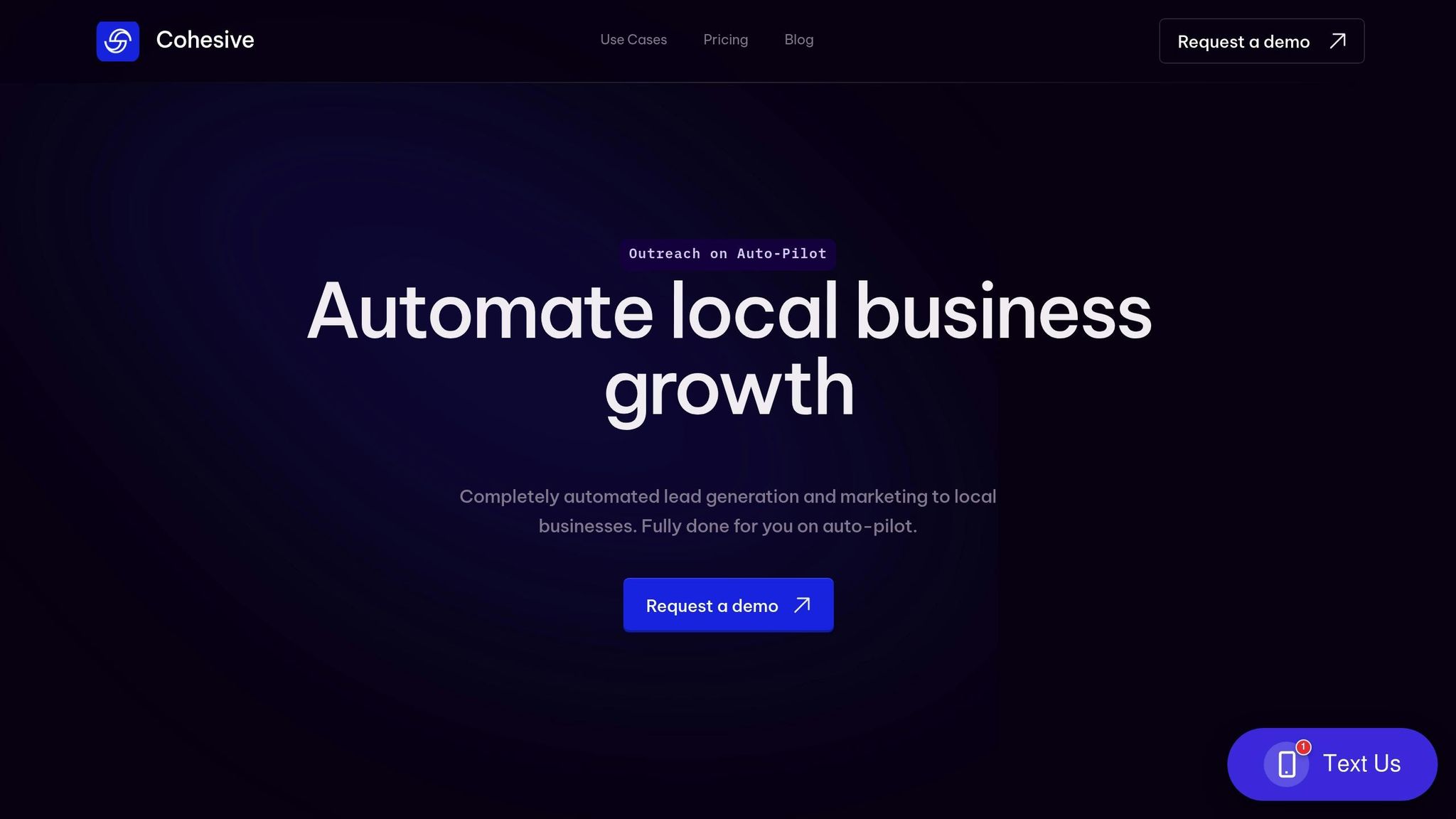
Cohesive AI helps local service businesses generate leads by working with public data sources like Google Maps and government filings. The platform focuses on gathering only the necessary, publicly available information, aligning with a strong commitment to privacy. Let’s break down how this approach works.
Ethical Data Collection and Personalization
Cohesive AI’s engine creates tailored outreach messages using only essential public data. This ensures businesses can connect with potential clients effectively without compromising on privacy standards.
Secure Campaign Management
The platform also simplifies email campaign management. With built-in tools for privacy compliance and responsible data handling, businesses can focus on their outreach without worrying about navigating complex regulations.
A Boost for Local Service Businesses
For companies like janitorial, landscaping, and HVAC services, Cohesive AI offers a straightforward and affordable solution. At a flat rate of $500 per month, businesses get access without being locked into long-term contracts. Plus, there’s a guarantee of at least four interested responses each month. The platform also makes it easier to manage multiple campaigns while staying compliant and cutting down on the need for extra third-party tools.
Best Practices and Future Trends
The world of privacy-first AI in lead generation is changing fast. Local service businesses need to adopt smart strategies to stay compliant with privacy laws while also keeping pace with new technologies that enhance data protection.
Privacy Compliance Best Practices
To keep your business on the right side of privacy regulations, consider these practical steps:
Regular AI audits: Conduct quarterly reviews of your AI tools to ensure your data collection, processing, and storage practices align with current privacy laws and your internal policies. Document the findings and address any gaps immediately.
Human oversight: Even with advanced AI, it's essential to have a person review AI-generated communications before they go out. This step helps catch privacy issues that automated systems might miss and ensures your messaging feels personal - something crucial for building trust with potential clients.
Updated privacy policies: Revise your privacy policies within 30 days of implementing new tools or features. These updates should clearly explain how your AI systems handle data, avoiding generic language. Transparency helps customers understand what you're doing and why.
Automated data retention: Set clear rules for how long you keep data and automate the deletion process when data expires. Many AI tools can handle this automatically, reducing the risk of human error.
Staff training: Provide biannual training sessions for your team, focusing on real-world privacy scenarios like handling opt-out requests. This ensures everyone understands both the legal requirements and your company's specific commitments to privacy.
While these practices lay a strong foundation, new technologies are pushing privacy compliance to the next level.
Emerging Trends in Privacy-First AI
The future of privacy-first AI is packed with innovations that can help businesses enhance data protection and build trust.
Privacy-enhancing technologies: Tools like differential privacy add mathematical noise to datasets, allowing AI to identify patterns without revealing individual data. Federated learning, on the other hand, enables AI to train on decentralized data, avoiding the need to centralize sensitive information.
Explainable AI: Modern AI systems are becoming better at explaining their decisions - whether it’s why a lead was selected or how a message was crafted. This transparency is key for earning the trust of both prospects and regulators.
Synthetic data generation: By creating artificial datasets that mimic real ones, businesses can train AI models without exposing actual customer data. This approach improves AI performance while keeping sensitive information secure.
Real-time consent management: AI is moving beyond basic opt-in checkboxes. Advanced systems can now track and respect detailed consent preferences, such as allowing email outreach but not phone calls, or limiting contact to specific times of day. This ensures campaigns honor individual preferences automatically.
Blockchain-based audit trails: Blockchain technology offers tamper-proof records of how data is accessed, modified, or deleted. Every interaction with prospect data gets logged in an unchangeable ledger, providing businesses with solid documentation for compliance and earning trust from privacy-conscious clients.
As privacy regulations grow stricter, these emerging technologies are becoming essential for businesses that want to stay compliant while maintaining effective lead generation strategies. By embracing these tools, local service businesses can navigate the evolving landscape with confidence and integrity.
Conclusion and Key Takeaways
AI is transforming how businesses handle lead generation and privacy compliance, turning what was once a manual, resource-heavy process into an automated and efficient system. By streamlining data protection and boosting campaign performance, AI is reshaping the way businesses approach these challenges.
The regulatory landscape, shaped by frameworks like GDPR, California's CCPA, and other emerging state laws, demands a level of sophistication that traditional methods can't sustain at scale. AI-powered solutions step in to fill this gap, offering tools that help businesses stay ahead of shifting regulations and ensure compliance without sacrificing efficiency.
This shift isn't just about meeting legal requirements - it's about gaining a competitive edge. Cohesive AI exemplifies this with its privacy-first approach, using ethical data collection from sources like Google Maps and government filings. By combining this with AI-driven personalization, businesses can achieve better outcomes while upholding strict privacy standards. Secure campaign management ensures that companies can prioritize growth without the constant fear of compliance missteps or data breaches.
In an era where trust is paramount, emerging technologies are becoming indispensable for businesses navigating the complexities of privacy regulations. These tools empower companies to build meaningful, lasting relationships with their prospects, turning privacy into an asset rather than a challenge.
The businesses that succeed in this environment are those that view privacy as a competitive advantage, not just a regulatory obligation. As highlighted throughout this article, regular AI audits, human oversight, and staying up-to-date with privacy-focused technologies can transform compliance into a trust-building strategy that sets businesses apart in crowded markets.
Ultimately, the future belongs to those who recognize this fundamental truth: respecting privacy isn't just about following the law - it's about building trust, and that trust is the foundation for long-term success.
FAQs
How do AI tools help businesses comply with privacy laws like GDPR and CCPA in lead generation?
AI tools make it easier for businesses to comply with privacy regulations like GDPR and CCPA by automating crucial tasks. These include data minimization, purpose restriction, and obtaining explicit user consent before collecting or processing any data. By streamlining these processes, companies can manage sensitive information securely, maintain transparency, and ensure they meet legal standards.
When used in lead generation, AI can also help businesses lower the risk of non-compliance, steer clear of hefty fines, and strengthen consumer trust. This approach not only protects data privacy but also promotes a more ethical and efficient way to identify and target potential leads.
What challenges do businesses face when using AI for lead generation, and how can they overcome them?
Businesses face several hurdles when leveraging AI for lead generation, including issues with data quality, system integration, and pinpointing the right decision-makers. On top of that, concerns about bias, ethical practices, and a lack of transparency can erode trust in AI-driven methods.
To tackle these challenges, companies need to focus on keeping their data accurate and reliable, ensuring AI tools integrate smoothly with current systems, and adopting transparent practices to build trust. These actions can enhance precision, strengthen confidence, and make lead generation efforts more effective.
How can AI-powered consent management systems improve privacy compliance and user experience?
AI-powered consent management systems take the hassle out of privacy compliance while improving the user experience. By automating how user preferences are collected and managed, these systems provide clear, straightforward options that make it easy for users to control their data. At the same time, they ensure transparency, building trust along the way.
With the ability to analyze user behavior and automate compliance checks, AI can predict consent preferences, adjust interfaces in real time, and ensure all actions align with privacy laws like GDPR and CCPA. This not only simplifies the process but also reduces legal risks and creates a seamless, user-friendly experience.