Ultimate Guide to Drip Campaign A/B Testing
Aug 27, 2025
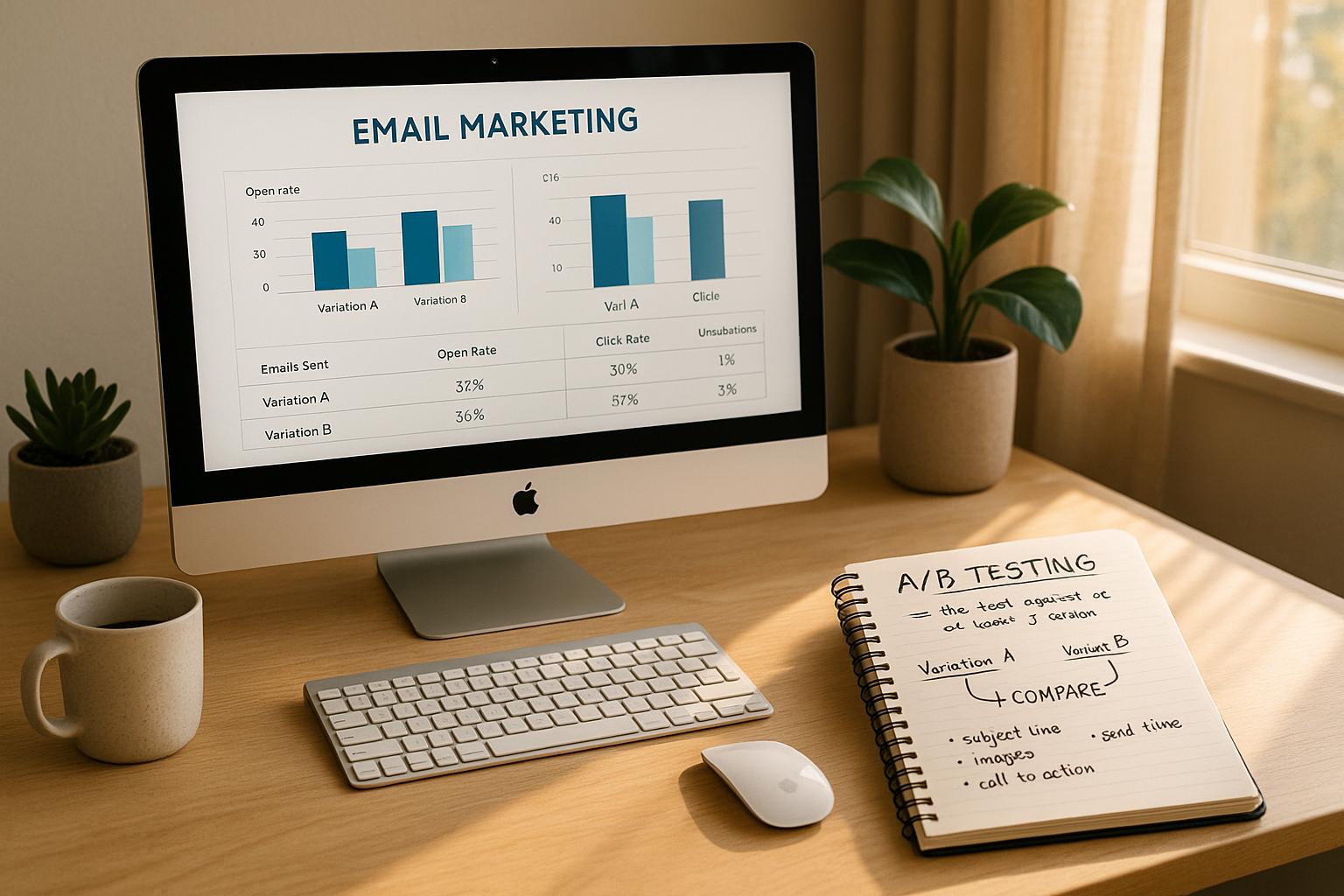
A/B testing in drip email campaigns is a methodical way to improve your email performance using real data. By testing elements like subject lines, email content, or send times, you can identify what resonates best with your audience. This approach is especially useful for local service businesses like HVAC contractors, landscaping companies, and janitorial services, where small improvements can lead to more leads and higher revenue.
Key Takeaways:
What is A/B Testing? Create variations of emails, send them to different groups, and measure performance (e.g., open rates, click-through rates).
Why It Matters: Helps build trust, refine messaging, and tailor campaigns to specific local markets.
What to Test: Subject lines, timing, call-to-action buttons, email length, and value propositions.
How to Start: Set clear goals, test one variable at a time, and analyze metrics like open rates and conversions.
Tools: Use email platforms to automate testing and track results.
By continuously testing and refining your strategy, you can create more effective campaigns that drive better engagement and results.
What Is AB Testing in Email Marketing? Complete Tutorial 2025
Planning and Setting Up A/B Tests
A well-executed A/B test starts with clear objectives and a precise setup. For local service businesses, having a structured plan ensures that testing efforts lead to meaningful improvements in generating leads and acquiring customers. Let’s dive into how to define goals and set up experiments for reliable, actionable results.
Setting Clear Goals and Hypotheses
Every A/B test should begin with a specific and measurable goal - like increasing email open rates by 15% or boosting click-through rates from 3.2% to 4.5%. Without a clear target, it’s impossible to measure success.
Your hypothesis should directly link a change to an expected outcome. For example, “Adding ‘Licensed & Bonded’ to subject lines will increase open rates by addressing key concerns among commercial property managers.” This clarity helps you interpret results without bias.
Common goals for local service businesses include:
Improving open rates: Experimenting with subject lines to capture attention.
Boosting click-through rates: Refining email content and call-to-action buttons.
Enhancing response rates: Testing the message tone and timing.
Attracting higher-quality leads: Trying out different value propositions to appeal to better prospects.
Documenting your hypothesis is crucial. It keeps interpretations consistent and prevents altering conclusions after the test is complete.
Choosing Variables to Test
Focus on elements that have the most significant potential to impact engagement. Start with variables that directly influence whether recipients open, read, or act on your emails.
Subject lines: These are critical since they determine whether an email gets opened. Test different approaches, such as emphasizing urgency, credibility, or curiosity.
Email timing: When you send an email can greatly affect open rates. Compare Tuesday mornings to Thursday afternoons, or test different times of day, like 9:00 AM versus 2:00 PM. Local service businesses may find unique patterns compared to B2B companies, with some seeing better results during lunch hours.
Call-to-action buttons: The wording, color, and placement of buttons like “Get Free Quote” versus “Schedule Consultation” can influence click-through rates. Test one element at a time to isolate its impact.
Email length and format: Some audiences respond better to concise messages under 100 words, while others prefer detailed explanations with testimonials or service descriptions.
Value propositions: Tailor these to your audience. A landscaping company, for instance, might test “20+ Years Experience” against “Fully Insured & Bonded” or “Same-Day Service Available” to see which resonates most.
If your email list is small, avoid testing multiple variables at once. Focus on one change per test to ensure you get clear, actionable insights. Once key variables are identified, refine your audience segmentation to validate findings further.
Segmenting and Sampling Audiences
To account for the unique preferences of local customers, segment your audience thoughtfully. Divide your email list randomly so each group gets a different version of the test.
Sample size is critical for meaningful results. If your list is under 1,000 contacts, extend your test duration to 2–3 weeks to gather sufficient data. Larger lists can yield statistically significant results more quickly.
Random distribution is essential to avoid bias. Use your email platform’s randomization tools to ensure factors like sign-up date or engagement history don’t skew results. This ensures both groups are comparable.
Local preferences and industry trends should guide your segmentation. For example, if your list includes both commercial and residential prospects, run separate tests for each segment to see how they respond differently.
Timing matters when splitting your audience. Send both variations within the same time window - ideally just minutes apart. This minimizes the impact of external factors like news events or weather, which could affect one group more than the other.
Keep detailed records of how you segmented and executed each test. This documentation will help you replicate successful strategies and avoid repeating ineffective ones. Over time, you’ll build a knowledge base of which segments respond best to specific messages.
For businesses using tools like Cohesive AI, automated lead generation delivers a steady stream of new prospects. This larger, continuously updated audience allows for more frequent testing cycles and faster optimization of your email campaigns.
Running A/B Tests for Drip Campaigns
Executing A/B tests in your drip campaigns involves careful planning and attention to detail. The goal is to maintain consistency while collecting reliable data that can drive improvements in email performance.
Building and Deploying Test Variations
Start by creating identical email sequences, changing only the specific element you’re testing. For instance, if you’re testing subject lines, everything else - like the email content, images, call-to-action buttons, and send times - must stay exactly the same.
Take a landscaping company as an example. One subject line might read, "Spring Cleanup Services Available", while the other says, "Get Your Property Ready for Spring." Both versions should have the same content and schedule to ensure a fair comparison.
Use your email platform’s tools to divide your audience evenly - ideally a true 50/50 split. If you’re testing a bold new approach and want to minimize risk, you could opt for an 80/20 split instead. Make sure both variations are sent at the same time to avoid external factors skewing the results. For example, sending one version on a Monday and the other on a Wednesday could introduce variables like local news or weather that have nothing to do with your test.
Before sending, test both versions on multiple devices to confirm that links, personalization, and mobile displays work perfectly. A broken link in one version could invalidate the entire test.
Keep a simple spreadsheet to track test dates, variables, and audience sizes. This will help you stay organized, especially if you’re running multiple tests, and provide a reference for future campaigns.
Once the variations are live, focus on determining the right test duration to gather meaningful data.
Timing and Duration of Tests
If your email list is on the smaller side, you’ll need to run tests for a longer period. A good rule of thumb is to wait until each variation has at least 100 opens, which could take anywhere from two to four weeks depending on your list size.
Avoid ending tests too soon. Early results can be misleading due to factors like the time of day or day of the week the emails were sent. For example, a subject line that performs well on a Tuesday morning may not hold up over an entire week.
External factors can also skew results. Major holidays, severe weather, or local emergencies can change email engagement patterns. For example, a snow removal company’s email performance during a blizzard won’t reflect typical behavior.
When planning test durations, consider your drip sequence timing. If your sequence sends emails every three days over two weeks, the test needs to run long enough for both variations to complete the entire sequence. Stopping mid-sequence will leave you with incomplete data about the campaign’s overall effectiveness.
Set a practical performance threshold. For instance, if one variation consistently outperforms the other by 20% over several weeks, it’s worth implementing - even if your sample size is modest.
Monitor results weekly instead of daily to avoid reacting to short-term fluctuations. For local service businesses, engagement patterns often vary between weekdays and weekends, so your test period should cover multiple weeks to capture these differences.
Once the timing is set, automation tools can help streamline your analysis.
Using Automation Tools for A/B Testing
Email automation platforms can simplify the A/B testing process. Tools like Cohesive AI integrate testing directly into workflows, automatically experimenting with different approaches for new leads sourced from places like Google Maps or public filings.
For example, Cohesive AI can generate email variations tailored to a business type and location, such as testing "emergency repair services" against "preventive maintenance" for HVAC companies.
Set minimum thresholds - such as 200 opens or one week - before automating the selection of a winning variation. This prevents premature decisions based on insufficient data.
Automation also makes personalization easier. Advanced platforms can test whether including a recipient’s company name in the subject line improves open rates compared to a more generic approach, all without requiring manual effort.
Track key metrics like open rates, click-through rates, and conversion rates. While open rates are important, they’re not the whole story. For example, a subject line that boosts open rates but lowers response rates may not be the best choice.
For local service businesses, integration with your CRM is crucial. Choose tools that can track which email variations generate the highest-quality leads. This way, you’re optimizing not just for engagement but for actual business outcomes.
Set up automated reporting to receive weekly performance summaries. This keeps you informed without needing to monitor results daily. Weekly reports help you identify trends and determine when a test has run long enough to make confident decisions about implementing changes.
Analyzing A/B Test Results and Improving Campaigns
Once your A/B tests are complete, it’s time to dig into the data and use it to refine your email drip campaigns. By focusing on the right metrics and interpreting results carefully, you can identify what works, improve performance, and avoid common pitfalls.
Key Metrics to Measure Success
To gauge the success of your campaigns, keep an eye on these metrics:
Open rates: How many recipients are opening your emails?
Click-through rates (CTR): Are people engaging with the content and clicking on links?
Conversion rates: How many recipients are taking the desired action?
Revenue per email: What’s the financial return on each email sent?
Unsubscribe rates: Are your emails driving people away?
Response times: How quickly are customers engaging after receiving your email?
These metrics provide a well-rounded view of your campaign's performance and highlight areas for improvement.
Interpreting Data and Avoiding Common Mistakes
When analyzing your results, ensure your findings are statistically significant. This means the differences you observe are unlikely to be due to random chance. For smaller email lists, you may need to extend the testing period to gather enough data for reliable conclusions.
Be cautious about jumping to conclusions too soon. Short-term data can be misleading, especially if external factors like seasonal trends or unexpected events influence results. Always consider these variables before making changes to your campaigns.
Tailoring your messages to specific audience segments can lead to better outcomes, but ensure your sample sizes are large enough to provide meaningful insights. Small groups can produce unreliable data, so focus on tests that yield actionable results across multiple metrics.
Rather than isolating individual metrics, evaluate them together to get a complete picture of your campaign’s effectiveness.
Continuous Testing for Long-Term Improvements
Use the successful elements of your tests to inform future strategies, but don’t rush to apply changes across the board. Test any updates in other campaigns first to confirm their effectiveness. A testing calendar can help you plan experiments around your business cycles and seasonal trends, making it easier to evaluate results without interference.
Keep a detailed log of your tests - what you tested, when you ran the test, the results, and whether you implemented changes. This documentation prevents repeated mistakes and highlights patterns over time.
As customer preferences and market conditions evolve, retesting is essential. Start with simple, high-impact tests, like adjusting subject lines or send times, before diving into more complex changes. Over time, you can scale successful strategies to other areas of your marketing efforts. For example, Cohesive AI has found that email strategies often translate well to other channels, creating a unified approach across platforms.
Finally, focus on long-term trends rather than fixating on individual test results. Use your historical data to set realistic benchmarks, and let those guide your ongoing improvements. By continuously analyzing and iterating, you’ll build a stronger foundation for lasting campaign success.
A/B Testing Strategies for Local Service Businesses
Local service businesses face unique hurdles in email marketing. Unlike larger companies, they need to focus on building trust and showing value through clear, relatable messaging. To succeed, it's essential to understand what resonates with your audience and use systematic testing to find the right combination of elements. Building on the basics of A/B testing, here are strategies tailored to local service markets.
Testing Subject Lines for Higher Open Rates
The subject line is your first chance to grab attention - it often determines whether your email gets opened or ignored. For local service businesses, this is especially critical, as you're competing with existing relationships and word-of-mouth referrals.
Using location-specific personalization can make a big difference. For example, mentioning a neighborhood or local landmark in the subject line can create a sense of familiarity and urgency. A subject like "Springfield Residents: Is Your Lawn Ready for Summer?" might catch more eyes than a generic one.
Another effective approach is to highlight a specific problem. For instance, a question like "Is Your Carpet Ready for Guests?" can spark curiosity and engagement more than a simple mention of your cleaning services. Test subject lines that focus on addressing pain points versus those that emphasize benefits to see which resonates more.
Urgency also plays a role, but it needs to be handled carefully. A subject line like "Only 3 Slots Left for February HVAC Maintenance" conveys scarcity without feeling overly aggressive. Test time-sensitive offers against more evergreen messaging to see what strikes the right balance with your audience.
Lastly, curiosity-driven questions can be powerful. Posing a question that makes recipients think about a potential issue they hadn’t considered can lead to higher open rates.
Testing Value Propositions for Different Industries
Each service industry has its own challenges and customer priorities, so value propositions need to be tailored accordingly. What works for an HVAC business might not work for a landscaping company or janitorial service.
For HVAC companies, you could test messages that focus on comfort and reliability against those emphasizing cost savings. For example, compare "Stay Comfortable Year-Round with Reliable HVAC Service" with "Cut Energy Costs with Our Efficient HVAC Solutions." Testing both emotional appeals and practical benefits can help pinpoint what drives engagement.
Landscaping businesses can take advantage of seasonal trends. A spring cleanup promotion might perform well in March or April, while messaging about long-term property improvement could work better during slower seasons. Try testing maintenance-focused messages against those that emphasize transformation, like "Turn Your Backyard into an Oasis."
Social proof is another key element to test. For example, compare a detailed testimonial from a local customer with a broader statement of satisfaction. Local endorsements often resonate more, so using testimonials from nearby businesses or individuals can provide a stronger connection with your audience.
AI tools like Cohesive AI can help refine these tests further by identifying which messaging angles generate the best response rates.
Testing Send Times and Sequence Length
Timing is everything - especially for local service businesses. Unlike retail customers who might casually browse emails, your audience is usually focused on solving specific problems or planning improvements. This means send times and email sequences need to align with their schedules and priorities.
While many service-related emails perform well during mid-morning to early afternoon on weekdays, it's important to test this with your audience. Compare early morning (8:00–10:00 AM) sends with early afternoon (1:00–3:00 PM) to see which gets better engagement. Avoid busy times like Monday mornings or late Friday afternoons, as these are often less effective.
The length of your email sequence also matters. Some businesses see success with a short series of emails that quickly move from introduction to offer. Others might need a longer, more nurturing sequence to build trust over weeks. Test both approaches to find out what works best for your audience.
Frequency is another factor to consider. Daily emails might work well for time-sensitive promotions, while weekly emails are often better for campaigns aimed at building relationships. Experiment with more frequent follow-ups versus a slower, measured approach to see which keeps your audience engaged.
Finally, think about the content flow within your sequence. Some audiences respond well to a traditional progression - starting with an introduction, moving into benefits and social proof, and ending with a strong call to action. Others might prefer a sequence that begins by addressing their specific pain points before gradually introducing solutions. Since many local service businesses have longer sales cycles, it's important to track both short-term responses and long-term engagement when evaluating your A/B tests.
Conclusion and Key Takeaways
A/B testing takes the uncertainty out of decision-making and transforms it into measurable growth. By following the steps outlined in this guide, you can turn raw data into actionable insights - whether you're aiming to improve open rates, boost conversions, or increase overall revenue.
Focus on one variable at a time. It might be tempting to tweak multiple elements at once, but isolating variables is the only way to pinpoint what’s driving performance changes. This method ensures your findings are accurate and gives you a clear understanding of what resonates with your audience[3][5]. Having a clear hypothesis about what will work - and why - makes the process more strategic and less random.
For local service businesses, A/B testing is especially valuable. It allows you to tailor messaging to meet specific community needs while maximizing returns from tighter marketing budgets. Take the HVAC company example: their experiment comparing discount-focused messaging with response-time messaging led to better open rates and more bookings. This highlights how targeted testing can directly influence business outcomes[2].
A/B testing isn’t a one-and-done effort - it’s an ongoing strategy. Audience preferences and market conditions evolve, and regular testing helps you stay ahead of these changes. This iterative process not only encourages fresh ideas but also reduces risks, as only the top-performing variations are rolled out to the larger audience[5].
To ensure valid results, use random assignment and distribute test emails simultaneously. Automation tools can simplify everything from setting up tests to automatically selecting the winning variation[1][4].
Platforms like Cohesive AI take this a step further by automating lead generation, customizing outreach, and managing campaign variations. When combined with systematic A/B testing, these tools create a powerful growth engine for industries like janitorial services, landscaping, and HVAC.
Over time, A/B testing builds momentum. Each test reveals new insights about your audience, and these learnings stack up to create more effective campaigns. Businesses that embrace regular testing and optimization consistently outperform those relying on gut instincts alone.
Start with a clear hypothesis, test systematically, and let the data guide your decisions. Begin your next A/B test today and see measurable growth with every campaign.
FAQs
What are the benefits of A/B testing drip email campaigns for local service businesses?
A/B testing is a game-changer for local service businesses - think janitorial services or HVAC companies - looking to fine-tune their drip email campaigns. By experimenting with different subject lines, email content, and calls-to-action, businesses can uncover what clicks with their audience the most.
This method allows businesses to make decisions backed by data, which can lead to higher engagement, improved customer retention, and a stronger return on investment. Plus, it helps create more tailored communication with potential clients. Over time, A/B testing becomes a smart way to sharpen your strategy and get the most out of your email campaigns.
What are the best practices for choosing and testing variables in email drip campaign A/B tests?
To make the most of A/B testing in your email drip campaigns, it’s crucial to test one variable at a time. Whether it’s the subject line, the call-to-action (CTA) button, or the body content, isolating a single element ensures you can clearly see how it impacts performance. For example, you might hypothesize that a shorter subject line will lead to higher open rates, and then test that specific idea.
Run your tests simultaneously to eliminate any timing-related biases, and ensure your sample size is large enough to achieve statistical significance - this is key to drawing reliable conclusions. Always include a control version of your email to serve as a baseline for comparison, and resist the temptation to test too many changes at once. Keeping it simple allows you to turn insights into actionable steps. By sticking to these principles, you’ll be able to refine your campaigns and make smarter, data-backed decisions that drive better results.
How do automation tools improve A/B testing for email drip campaigns?
Automation tools simplify and improve A/B testing for email drip campaigns by taking care of time-consuming tasks and reducing errors. They let you experiment with various email elements - such as subject lines, content, or call-to-action buttons - in real time, while automatically tracking performance metrics to pinpoint what works best.
These tools also help maintain consistent delivery schedules and enable tailored messaging, which can increase engagement and drive more conversions. By handling repetitive tasks, they free up your time to fine-tune strategies and expand your campaigns with ease.