Ultimate Guide to A/B Testing Follow-Up Emails
Aug 5, 2025
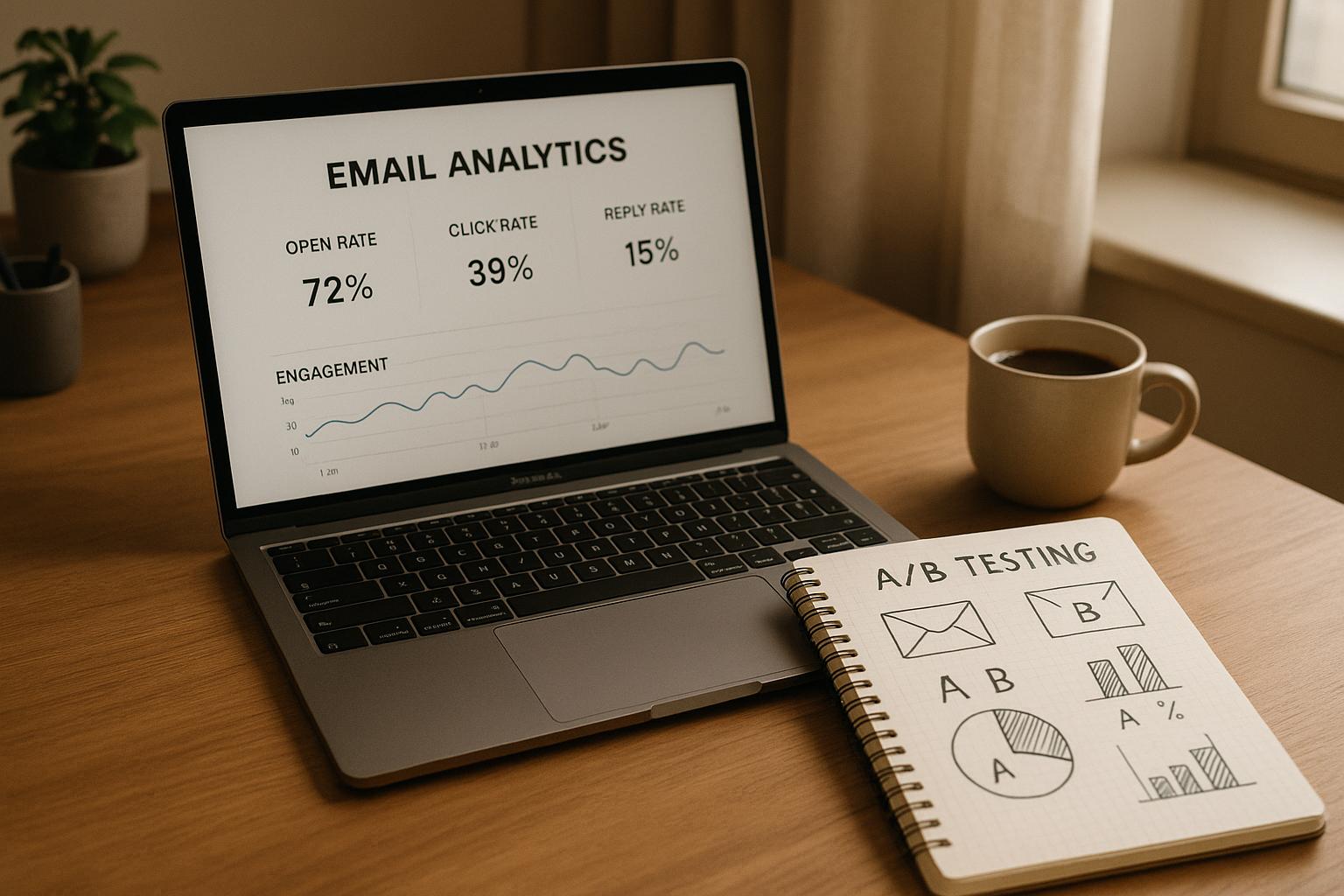
A/B testing your follow-up emails is a simple way to improve open rates, clicks, and conversions. By testing subject lines, email content, CTAs, and timing, you can find what works best for your audience and turn prospects into customers. Here’s what you need to know:
Why it matters: A/B testing helps local service businesses like HVAC or landscaping companies compete in crowded markets. Data shows email marketing can generate up to $40 for every $1 spent, but 40% of brands skip testing their emails, leaving opportunities on the table.
What to test: Focus on subject lines (e.g., "Save 20% today" vs. "Quick question"), email body tone and structure, CTAs (e.g., "Get a quote" vs. "Book now"), and timing (e.g., 2 days vs. 5 days after the first email).
How to do it: Start with clear goals, a large enough sample size (at least 1,000 recipients), and tools that automate testing. Use metrics like open rates, click-through rates, and conversions to measure success.
Avoid mistakes: Don’t test too many variables at once, use small sample sizes, or end tests early. Focus on meaningful metrics like conversions, not vanity stats like open rates.
Setting Up A/B Tests for Email Campaigns
Setting Goals and Test Ideas
Before diving into A/B testing, it’s crucial to know exactly what you want to achieve. Without a clear goal, your testing efforts can end up being a waste of time and resources [4]. For local service businesses, this means pinpointing what success looks like - whether it’s more quote requests, increased consultation bookings, or better response rates.
Start by identifying your biggest challenges. Are your emails being ignored? Are people opening them but not clicking through? Or are they clicking but not converting? Each problem calls for a different approach to testing.
To prioritize your ideas, try the ICE framework: Impact (how much can this change improve results?), Confidence (how likely is this to work?), and Ease (how simple is it to implement?). For instance, testing subject lines is often a great starting point since it scores well across all three areas. HubSpot’s experiment comparing personalized sender names to generic ones resulted in a 0.53% higher open rate and 0.23% higher click-through rate, leading to 131 extra leads [1].
Focus your efforts on emails you send often, as these provide the most room for improvement. For example, a landscaping company might test variations in their weekly follow-up emails, while an HVAC contractor could tweak seasonal maintenance reminders.
Once you’ve set your goals, make sure you have a solid sample size to back up your findings.
Getting Enough Test Recipients
The size of your sample is critical - it determines whether your results are meaningful or just random noise. To get reliable A/B test results, you’ll need at least 1,000 recipients [5]. Anything less, and you risk basing decisions on data that isn’t statistically sound.
A sample size calculator can help you figure out how many recipients you need, factoring in your current conversion rate, the improvement you’re aiming for, and your desired confidence level. Most businesses aim for 95% confidence, meaning there’s only a 5% chance that the results are due to chance [5].
Audience segmentation is another key step. By grouping recipients based on demographics or behavior, you can make your tests more accurate [3]. For example, a janitorial company might create separate segments for small offices and large commercial properties to test messaging tailored to each group. This kind of segmentation ensures you’re comparing similar audiences and can apply insights more effectively.
It’s worth noting that 24% of marketers rank email segmentation as the most effective way to improve performance [6]. Pairing proper sample sizes with smart segmentation will give you data you can actually use.
Once your sample is ready, the next step is choosing the right tools to streamline your testing process.
Picking the Right Email Automation Tools
The right email platform can make A/B testing much easier. Look for one that allows you to test multiple variables - like subject lines, CTAs, headlines, and visuals - all in one place [7].
A good platform will also automate the process of identifying winners and deploying them to the rest of your audience [9]. This ensures your best-performing content reaches more people without requiring extra effort on your part.
For local service businesses, tools like Cohesive AI can take things a step further. Its AI-powered personalization features can create content variations tailored to factors like business type and location, giving you more options to test beyond generic templates.
Modern email tools handle much of the heavy lifting for you, from splitting your list randomly to calculating statistical significance and tracking results [8]. This means you can run multiple tests at once without worrying about technical details.
Don’t forget to account for external factors - like seasonal trends, industry events, or economic conditions - that could impact your email performance. Some automation tools can even help you track and factor these variables into your analysis.
"If you aren't testing, you don't know how effective your changes are. You might have correlation but no causation." – Kyle Rush, VP of Engineering at Casper [2]
For example, testing buttons versus text links or using action-oriented copy has been shown to boost click-through rates by 27% [1]. As you gain experience, start with simple tests like subject lines, and gradually move to more complex experiments like timing, content variations, and advanced personalization. The key is to choose a platform that grows with your testing needs.
How To Get Actionable Insights From Email A/B Tests? - Modern Marketing Moves
What to Test in Follow-Up Emails
Fine-tuning your follow-up emails can significantly impact their effectiveness. By systematically testing each component, you can uncover insights that drive better results.
Subject Lines: Getting Emails Opened
The subject line is the first impression your email makes, and it plays a huge role in whether someone bothers to open it. In fact, research shows that 47% of email recipients open emails based on the subject line alone. On the flip side, 69% mark emails as spam for the same reason[12].
Personalization is a game-changer. Emails with personalized subject lines see 26% higher open rates[10]. Length matters too - subject lines with around 7 words or 41 characters tend to perform best[11]. For example, a webinar reminder email with the subject line "Steve, where are you?" achieved a 43% open rate and a 15% click-through rate, far surpassing industry averages of 24% and 4%, respectively[12]. Another example: a recruitment email titled "Your AMAZING photos" hit a 70% open rate and a 25% conversion rate by being specific about where the photos were found[12].
You can also experiment with tone and creativity. For instance, Sperry Van Ness used "Were we boring you?" to re-engage recipients, achieving over a 50% open rate[12].
"When it comes to email marketing, the best subject lines tell what's inside, and the worst subject lines sell what's inside." - MailChimp[12]
Try testing different approaches:
Questions vs. Statements: "Can your HVAC system handle winter?" vs. "Winter HVAC maintenance tips"
Positive vs. Negative Phrasing: "How to avoid costly repairs" vs. "How to save on maintenance"
Urgency vs. Value: "3 days left for 20% off" vs. "Save 20% on landscaping services"
Email Body: Message and Content
The email body is where you connect with your audience and convey your message. It’s not just about selling - it’s about delivering value in a way that resonates.
Start by testing tone. For example, a formal tone might work better for larger corporate clients, while a conversational style could appeal to small business owners. You can also experiment with structure - compare short, bullet-pointed emails to longer, story-driven formats.
Your value proposition is another key area to test. Focus on benefits like cost savings, efficiency, or peace of mind. Placement matters too; try featuring testimonials or social proof at the beginning of the email versus the end to see what builds trust more effectively.
Finally, test email length. Some audiences prefer concise, to-the-point messages, while others may respond better to detailed explanations.
Call-to-Action: Getting Responses
The call-to-action (CTA) is where you turn interest into action. Its wording, placement, and design can make or break your email’s performance.
Experiment with placement:
At the beginning of the email
After outlining the value
At the end, as a natural conclusion
For longer emails, you might even try including multiple CTAs throughout the message.
The wording of your CTA is critical. Compare specific phrases like "Schedule your free estimate" to more general ones like "Learn more." For local service businesses, test options like "Get your quote in 24 hours" versus "Contact us today" to create a sense of urgency.
You can also play around with design elements. Test buttons against text links, try different colors and sizes, and see how these tweaks affect click-through rates. Adding urgency or scarcity, such as "Book this week for 15% off," can further boost conversions. Offering multiple CTAs, like "Get a quote," "Schedule a consultation," or "See our work," can reveal which actions resonate most with your audience.
Timing and Frequency of Follow-Ups
Timing is everything when it comes to follow-ups. Studies show that sending follow-ups can increase response rates by up to 40%, and 80% of sales require at least five follow-ups[13][14].
Here’s a general guideline:
Send your first follow-up 2–3 days after the initial email.
If there’s no response, follow up again 5–7 days later.
Gradually extend intervals to 1–2 weeks for subsequent attempts[14].
Timing can vary by industry. For instance, HVAC companies might benefit from shorter intervals during peak seasons, while landscaping businesses may find longer gaps more effective during off-seasons. Consider the recipient’s role too - executives might prefer longer gaps (5–7 days), while team members often respond better to shorter intervals (3–5 days)[13][14].
Seasonal and industry-specific factors also play a role. Technology companies may respond well to shorter intervals (2–3 days), while healthcare might require longer follow-ups (5–7 days)[13]. Adjust your timing during busy seasons versus slower periods to see what works best.
"Timing is everything. A structured yet flexible follow-up cadence keeps you top-of-mind without being intrusive." - [13]
Finally, test different days and times. For example, compare Tuesday mornings to Thursday afternoons, or even try weekend follow-ups to identify when your audience is most receptive.
With AI-driven insights, local service businesses can refine these variables even further, ensuring every follow-up is as effective as possible.
Reading A/B Test Results
After running A/B tests, the next step is to dive into the data and refine your follow-up email strategy. This is where you separate useful insights from wasted effort.
Tracking and Comparing Performance
Most email platforms make it straightforward to track and compare results. Their analytics dashboards typically separate test data for easy analysis. For example, if you're using a platform like Omeda, your test data will appear as two deployments: the main one sent to most of your audience and a sample deployment, marked with an "S" in the tracking ID and "-sample" in the deployment name[15].
Focus on key performance metrics like open rates, click-through rates, conversions, and revenue. Open rates reflect how effective your subject lines are, with a typical benchmark of 20–30%[16]. Click-through rates show how engaging your content and calls-to-action are; 5% is considered good, and anything above 8% is excellent[16]. Conversion rates and revenue tie directly to your bottom line.
When comparing results, don’t just look at the numbers on the surface. For example, a variation with a lower open rate but a higher conversion rate might be more valuable in achieving your goals. To get the full picture, follow the customer journey from the moment they open the email to their final action.
Once you've reviewed the metrics, it’s crucial to confirm the reliability of your findings through statistical significance.
Understanding Statistical Significance
Statistical significance helps you determine if the differences between your email variations are real or just random chance[17].
The standard threshold is 95% statistical significance (or sometimes 90%), which corresponds to a p-value below 0.05[17][18]. However, research indicates that only 20% of experiments reach this level, so patience is key[19].
To ensure accurate results, use a large sample size and let your test run for at least seven days - or a complete business cycle - to account for weekly patterns[18]. Keep in mind that external factors, like seasonal trends or major events, can influence outcomes.
It’s also important to differentiate between statistical and practical significance. For example, a statistically significant 0.1% increase in open rates might not justify overhauling your email strategy. Always weigh the scale of the improvement against its potential impact on your business[17].
Common A/B Testing Mistakes
Even seasoned marketers can fall into pitfalls that compromise test results. Here are a few common mistakes to avoid:
Testing too many variables at once. If you change the subject line, email body, and send time simultaneously, it’s nearly impossible to identify which change influenced the results[20].
Using small test groups. Small sample sizes can lead to unreliable conclusions. Make sure your test groups are large enough to deliver meaningful insights[20].
Ending tests too early. It’s tempting to call a winner as soon as positive results appear, but doing so can invalidate your findings. Let the test run its full course to achieve statistical significance[21].
Ignoring external factors. For example, a landscaping company testing emails during an unexpected storm might see skewed results, just as an HVAC contractor testing during a heatwave might not get typical performance data[20].
Focusing on vanity metrics. Before starting a test, define a clear hypothesis and specify which metric you’re aiming to improve - and why. This keeps your focus on meaningful changes rather than surface-level stats[21].
Failing to document results. Without proper documentation, it’s hard to build on what you’ve learned. Use a template to record your hypotheses, results, and insights so each test informs the next - even if the results don’t match your expectations[21].
Improving and Scaling Your Email Follow-Up Strategy
Once you've gathered solid data from your A/B tests, the next step is turning those insights into meaningful improvements and scaling your email strategy. This process requires more than just implementing the winning variations - it’s about creating a structured plan to refine and grow your approach.
Using Winning Test Results
When you’ve identified what works best, apply those winning elements across your email campaigns. This could mean updating templates, tweaking subject lines, or adjusting the timing of your messages. The goal is to apply these insights consistently and strategically.
Document the key features that made your winning variations successful - whether it’s personalization, a sense of urgency, or a specific question format. This understanding allows you to adapt those principles to future campaigns instead of simply reusing the same content. For example, an HVAC company might discover that urgency-based subject lines perform better during extreme weather, while a landscaping business could see increased engagement with visually appealing emails in the spring.
Create a “testing playbook” to keep track of these insights. Record what worked for different audience segments, seasons, or campaign types. This playbook becomes a valuable resource for planning future campaigns.
When rolling out changes, start small. Even the best-performing test results might not translate perfectly to your entire audience. Begin by applying the changes to a subset of your email list, then gradually scale up as you confirm the results hold steady. This cautious approach ensures your optimizations are effective at a larger scale.
Continuous Testing for Better Results
Email marketing isn’t a one-and-done effort. As audience behaviors shift, ongoing testing is essential to keep your campaigns effective. Businesses that consistently use data to refine their strategies can achieve 5–8 times higher ROI compared to those that don’t[22].
Set up a regular testing schedule to evaluate different elements of your emails throughout the year. Focus on one variable at a time - such as subject lines, content, send times, or call-to-action buttons - so you can clearly identify what drives improvements without overcomplicating the process.
Keep an eye on long-term trends in your key metrics. If a format that once performed well starts to show diminishing returns, it’s time to experiment with new ideas. Consider setting up alerts to flag performance drops early. This way, you can adjust your strategy before results decline too much.
Using AI for Automation and Personalization
Once your email strategy is fine-tuned, AI can take it to the next level by enhancing personalization and timing. Personalized emails generate 6x more transactions than generic ones[23], and AI makes it possible to achieve this level of customization - even for smaller businesses.
AI tools analyze data like prospect behavior, company size, and past interactions to tailor messages for each recipient. For instance, platforms like Cohesive AI automate everything from lead generation to personalized follow-up emails. These tools can pull data from sources like Google Maps or government filings to identify local prospects, then craft emails that address each lead’s specific needs. This level of automation allows businesses to manage multiple campaigns while still maintaining a personal touch.
AI also helps identify the best content for each recipient. Companies that personalize their emails see 40% higher revenue compared to their competitors[23]. By analyzing email history, website activity, and demographic information, AI can predict which value propositions will resonate most with individual recipients.
Timing is another area where AI excels. Instead of sending emails at a fixed time, AI can determine the optimal moment for each recipient based on their engagement patterns. Emails triggered at the right time achieve a 70.5% higher open rate and a 152% higher click-through rate than standard newsletters[23].
However, automation shouldn’t come at the expense of authenticity. While AI-generated subject lines can boost open rates by up to 10%[23], maintaining a human touch is crucial for building genuine relationships. Use AI to handle tasks like research, personalization, and scheduling, but keep control over tone, brand voice, and relationship management.
To strike the right balance, start with clear guidelines for personalization that align with your brand’s voice and goals. When AI operates within these parameters, your automated messages will still feel relevant and authentic to your audience.
Conclusion and Key Takeaways
A/B testing follow-up emails can significantly boost lead generation for local service businesses. The numbers don’t lie: companies that make A/B testing a regular part of their email strategy see up to a 28% higher return on investment compared to those that skip it[25].
Why A/B Testing Matters
The advantages of A/B testing go beyond just improving open rates. Local service businesses that rely on data-driven decisions see real progress across key performance metrics.
For instance, testing subject lines can lead to noticeable improvements in open rates. Even minor changes - like adding an emoji or tweaking the wording - can make a difference[24]. Seasonal messaging works well for industries like HVAC, which can test subject lines tailored to peak demand times, or landscaping companies that might emphasize urgency during spring preparation.
Optimizing email body content and calls-to-action (CTAs) can also drive better click-through rates and conversions. Timing plays a crucial role too. Testing when to send follow-up emails, such as 24 hours versus three days after initial contact, can reveal what works best for your audience. Just make sure to allow enough time - around 4-5 days - for recipients to respond before analyzing results[24][26].
By testing one variable at a time, you ensure that any improvements are directly tied to specific changes. This data-driven approach removes guesswork and lets you focus on strategies that deliver results.
How to Move Forward with A/B Testing
Ready to apply these insights? Here’s how to get started:
Start simple: Focus your initial tests on one variable, such as subject lines. These are crucial since they determine whether your emails get opened in the first place.
Set clear goals: Avoid vague objectives like "improve email performance." Instead, aim for measurable targets, like increasing open rates by 5% with shorter subject lines or boosting reply rates by 10% through personalized greetings[24][25][27].
Leverage automation tools: Platforms like Cohesive AI can help streamline lead generation and create personalized follow-up campaigns that are easy to test.
Be patient and scale gradually: Even successful tests need time to confirm their effectiveness. Give your audience enough time to engage before making decisions.
Document your findings: Keep track of what works for different audiences, seasonal campaigns, or specific services. A detailed playbook becomes a valuable resource for future campaigns and team training.
Top-performing local service businesses don’t just stop at one successful test - they continuously refine and evolve their email strategies with A/B testing. By consistently applying what you learn, you can build an email approach that not only meets but exceeds your goals - and outshines the competition[24][25].
FAQs
What’s the best way to determine the right sample size for A/B testing follow-up emails?
When determining the right sample size for A/B testing follow-up emails, it all comes down to the size of your audience and how precise you want your results to be. For smaller tests, aim for at least 1,000 contacts per variant. If you're working with a larger audience, you’ll need to calculate your sample size based on your conversion goals and the level of confidence you’re aiming for - this could mean testing with tens of thousands of contacts for more reliable insights.
The key is to use a sample size that represents a significant portion of your email list. This ensures your results are statistically sound, giving you the confidence to make informed, data-backed decisions to fine-tune your follow-up email campaigns.
What mistakes should I avoid when A/B testing follow-up emails?
Avoid These Mistakes When A/B Testing Follow-Up Emails
When running A/B tests on follow-up emails, it's easy to fall into some common traps that can skew your results. Here are a few to watch out for:
Testing too many variables at once: Stick to changing just one element at a time, like the subject line or the call-to-action. This way, you’ll know exactly what caused the difference in performance.
Not giving tests enough time: Rushing the process can lead to incomplete data. Make sure your test runs long enough to collect enough responses for reliable insights.
Stopping tests too early: If you pull the plug before reaching statistical significance, you risk basing decisions on incomplete or misleading information.
Also, don’t overlook the importance of audience size. Testing with too small a sample can skew your results, making them less reliable. By planning carefully and avoiding these missteps, you’ll set yourself up for more accurate and actionable insights to improve your email campaigns.
How can AI improve the personalization and timing of follow-up email campaigns?
AI takes follow-up email campaigns to the next level by analyzing recipient behavior - like open rates, click patterns, and past interactions - to pinpoint the optimal time for sending emails. This means your messages land in inboxes when recipients are most likely to engage, giving open and response rates a noticeable boost.
On top of that, AI streamlines personalization by crafting email content tailored to each recipient's preferences, demographics, or past interactions. This kind of customization doesn’t just save you time - it makes your emails feel more relevant and engaging, which can significantly improve your chances of turning recipients into loyal customers.