AI Competitive Analysis for Local Service Providers
Oct 16, 2025
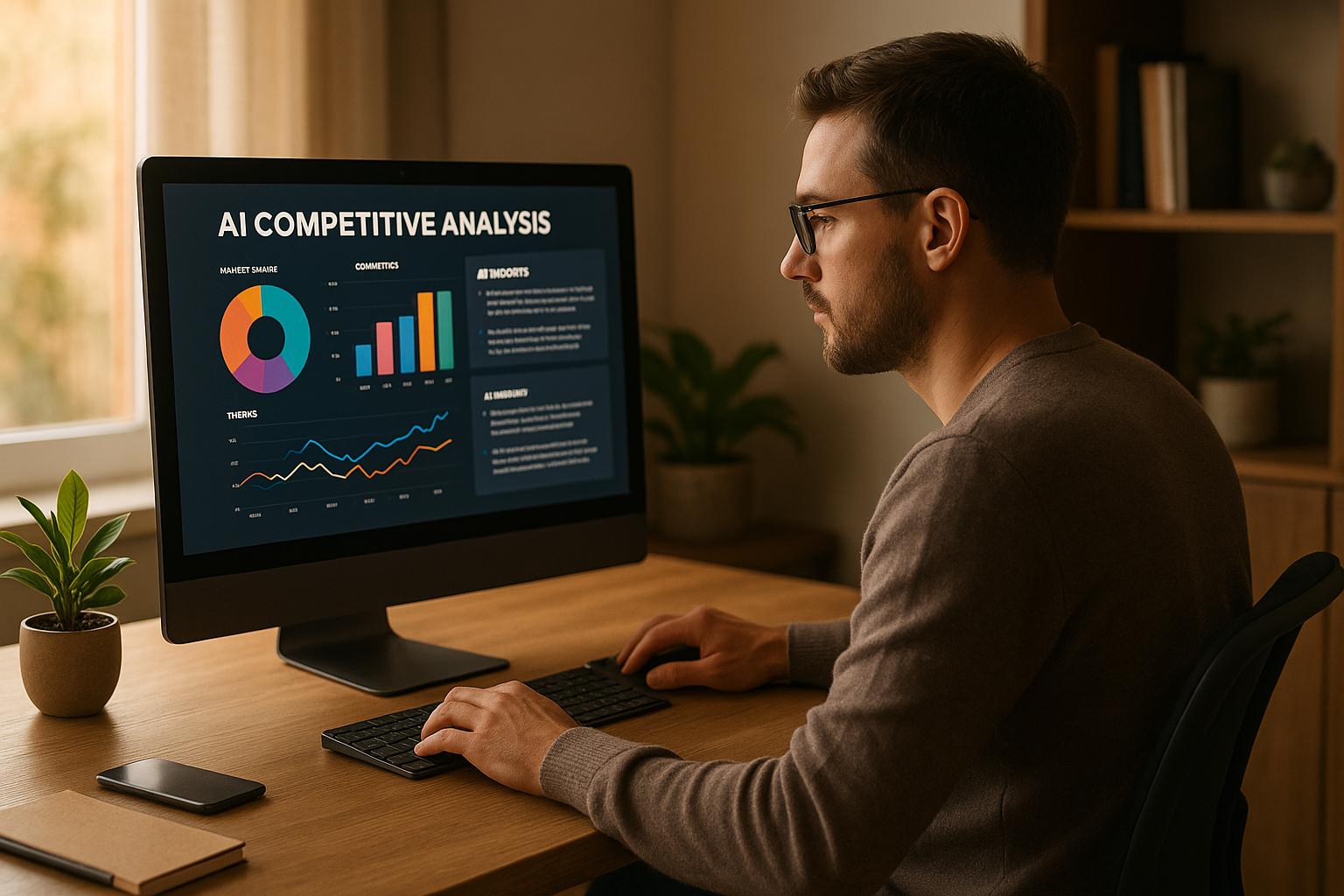
AI is changing how local service providers - like janitorial, landscaping, and HVAC companies - analyze their competition. Instead of spending hours manually researching competitors, businesses can now use AI tools to gather and analyze data in minutes. These tools pull information from sources like Google Maps, online directories, and customer reviews, helping businesses identify competitors, track market trends, and improve customer outreach.
Here’s what AI can do for local service providers:
Find competitors automatically: AI scans multiple sources to identify local competitors and provides insights into their services, pricing, and customer reviews.
Track market changes in real time: AI monitors competitor activities, such as pricing updates or new service launches, and alerts businesses to market shifts.
Automate customer outreach: AI creates personalized emails and manages follow-ups, saving time and improving lead generation.
For example, platforms like Cohesive AI offer tools to streamline competitive analysis and lead generation for $500/month, with a performance guarantee of at least four interested responses each month. Businesses using AI tools are 48% more likely to see a return on investment and can reduce the time it takes to improve their local rankings by up to 60%.
Beat your competitors using Google Maps and AI!
Common Problems with Competitive Analysis for Local Service Providers
Local service providers across the U.S. often face significant hurdles when it comes to understanding their competitive landscape. These challenges are especially tough for small and medium-sized businesses that don't have the same resources as larger corporations but still need to compete effectively in their local markets. This creates a perfect storm where better tools and strategies become essential.
Hard to Find Complete Local Business Data
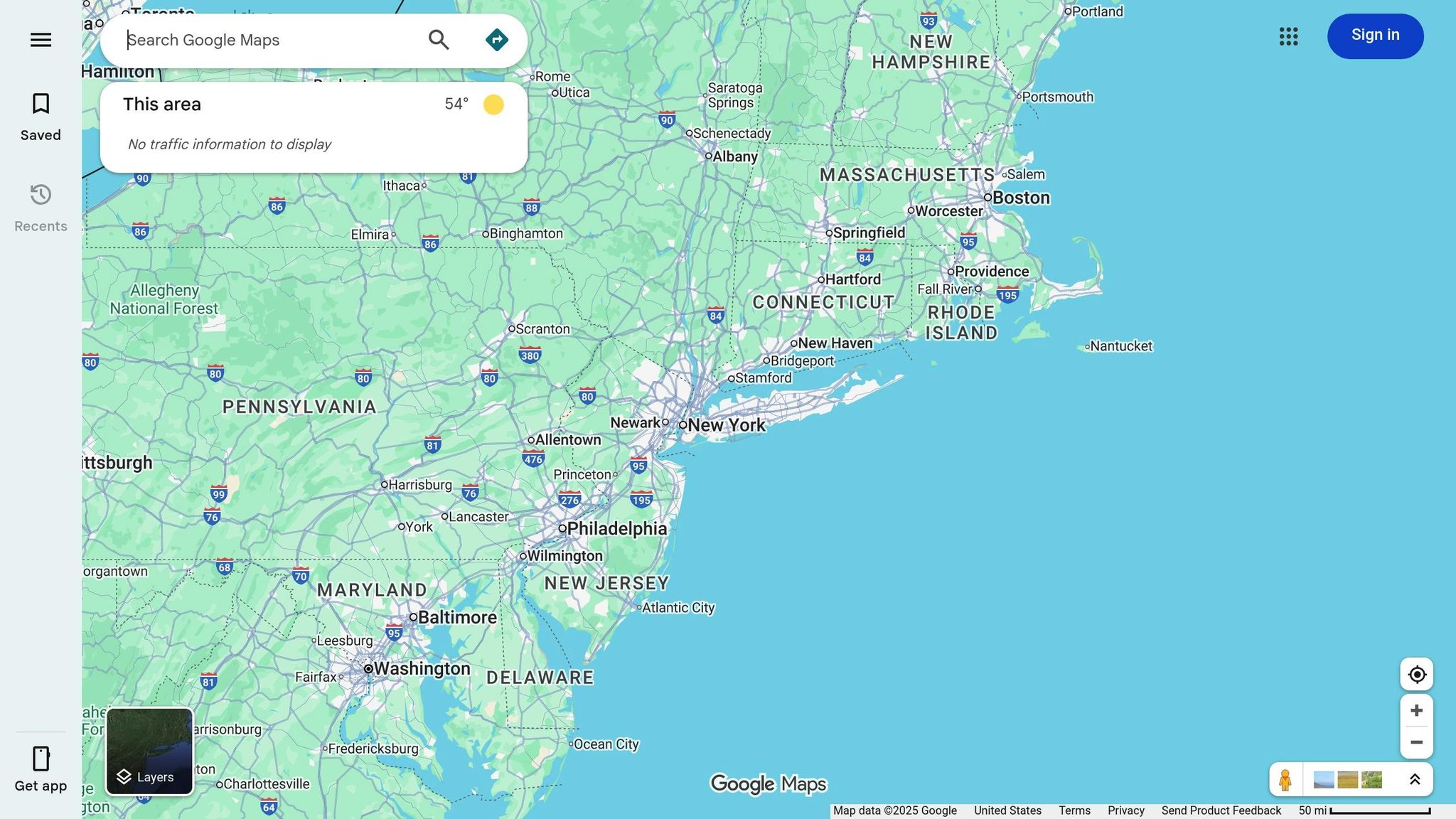
Local business data is scattered across a variety of platforms - Google Maps, local directories, government filings, and review sites, to name a few. Take a landscaping company in Denver, for example. They might find some competitors on Yelp, others on Angie's List, and even more through city business registrations. This fragmented data makes it nearly impossible to get a full picture of the competitive landscape. Modern local search engines rely on hundreds of factors[8], which small teams simply don't have the capacity to track without automation.
Adding to the complexity, competition in local markets is highly variable and hyper-specific[6][8]. For instance, a janitorial service operating in both downtown Atlanta and suburban Marietta might face entirely different competitors in each location, requiring separate analyses. Outdated or incomplete data makes matters worse. Business listings are constantly changing - new companies open, others close, and service areas shift - leaving providers with information that's no longer relevant.
This scattered data problem is only worsened by outdated research methods.
Manual Research Takes Too Much Time
Relying on manual research drains precious time and resources. For example, a small plumbing company in Phoenix might spend hours gathering data, only to end up with incomplete information. And since customer demands and market dynamics shift quickly[7][8], the data they collect might already be outdated by the time they finish analyzing it. These inefficiencies highlight why automated tools are becoming a necessity, not a luxury.
Small Teams Don't Have Enough Resources
Small local businesses often operate with limited staff, tight budgets, and outdated tools[4][10]. This leaves them stuck with inefficient methods that don't provide the insights they need. Without proper competitive analysis, these businesses struggle to stand out, identify new opportunities, or adapt to market changes. It creates a vicious cycle: missed opportunities lead to slower growth, which then limits their ability to invest in better tools and strategies.
On top of that, small teams often lack the expertise or resources to conduct thorough competitor assessments. This can lead to biased insights, where business owners focus only on the most obvious competitors while ignoring indirect threats or emerging opportunities[11]. Without the right tools or training, it's tough to get a clear and accurate picture of the competition.
How AI Solves Competitive Analysis Problems for Local Service Providers
AI-powered tools are transforming how local service providers tackle competitive analysis. Instead of spending countless hours manually researching competitors, businesses can now use automated systems that operate 24/7. These tools gather, analyze, and provide actionable competitive insights, saving time and improving efficiency. Here's how these innovations work in practice.
Automatic Competitor Discovery and Analysis
AI tools have completely changed the way local service providers identify and study their competition. These systems can simultaneously scan multiple data sources, such as Google Maps, government filings, and business directories, using advanced algorithms to uncover valuable insights[3][2].
A great example of this is Cohesive AI, which gathers data from these sources to compile detailed lists of nearby competitors across industries like janitorial, landscaping, and HVAC services[3]. Not only does it identify the obvious competitors, but it also highlights those that might have otherwise slipped under the radar.
The data collected goes well beyond just names and addresses. AI systems can provide details like service categories, pricing structures, customer ratings, and even recent changes such as new service launches or ownership transfers[3][1][2]. This level of detail allows local service providers to understand their competitors' offerings and how customers perceive them.
What used to take days or even weeks to research can now be done in minutes. Plus, these AI systems continuously update their findings as market conditions shift, keeping businesses informed in real-time[3].
Live Market Trend Tracking
One of AI's standout features is its ability to monitor market trends in real time. These tools track competitor activities, including price changes, new service rollouts, and shifts in customer sentiment through online reviews. This allows businesses to respond quickly and even anticipate market changes[3][4].
For example, if a competing HVAC company lowers its prices for maintenance contracts, AI tools can immediately notify other businesses. This gives them the chance to adjust their strategies on the fly. AI also helps identify patterns in customer feedback, giving companies a clearer picture of what’s working and what’s not in the market.
Bryan Dohmen of Hero Digital explains, "AI answers key market questions faster and more efficiently, helping businesses innovate and differentiate themselves"[4]. This real-time data ensures that local service providers stay nimble and ready to adapt to evolving market conditions[3].
Custom and Automated Outreach
AI doesn’t just stop at collecting and analyzing data - it also takes customer engagement to the next level. By leveraging competitor insights, AI automates the traditionally time-consuming process of lead generation, making outreach both targeted and personalized. Platforms like Cohesive AI use this data to craft cold emails that address specific market challenges[3].
For instance, if a janitorial service wants to target office buildings, the AI can tailor messages to highlight cleaning solutions for common issues faced by such facilities. This level of personalization helps businesses connect more effectively with potential clients.
Cohesive AI offers a service called "Outreach on Auto-Pilot," which automates lead generation and marketing workflows. For $500 per month plus a $75 setup fee, the platform guarantees at least four interested responses per month - or provides a free month credit if it doesn’t deliver. This demonstrates the platform’s confidence in its AI-driven capabilities.
AI also handles follow-up sequences, managing the timing and content based on recipient behavior. This is especially valuable for industries like janitorial or HVAC services, where high-volume outreach is common and manual follow-ups would be overwhelming[3].
The impact is clear: businesses that regularly conduct competitor analysis are 48% more likely to see a return on investment[9]. Additionally, strategic competitor analysis can boost qualified leads by 35–50%[8]. With AI, even small teams can now access the kind of competitive intelligence that was once out of reach.
Cohesive AI: Lead Generation and Competitive Analysis for Local Services
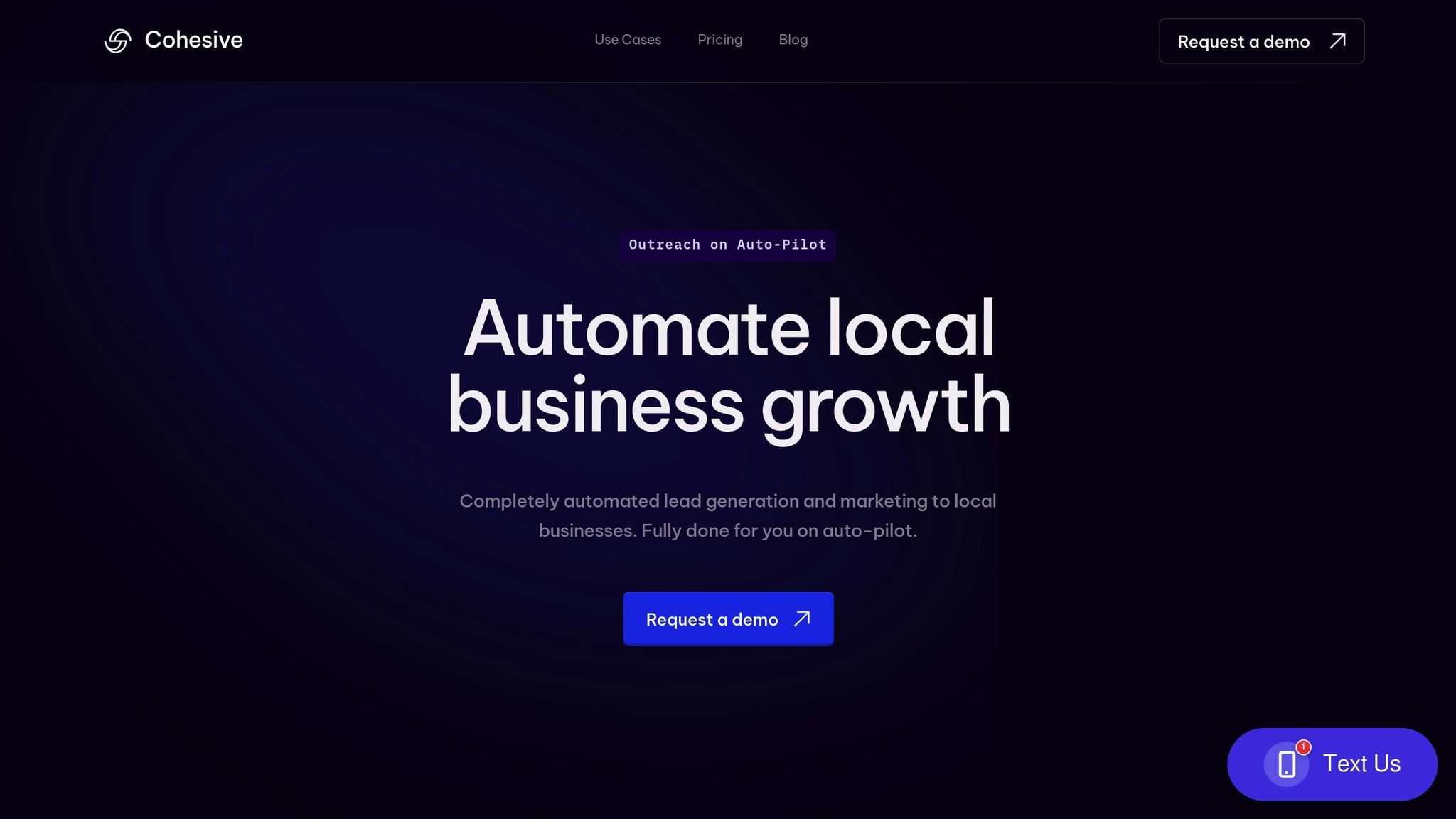
Cohesive AI combines lead generation and competitive intelligence into one automated platform, eliminating the hassle of juggling multiple tools or hiring costly agencies. Designed for industries like janitorial, landscaping, HVAC, catering, and business brokerage, it tackles the common challenges of fragmented local data and limited marketing resources. Below, we’ll dive into its features, pricing model, and how it serves specific industries.
Main Features of Cohesive AI
Cohesive AI streamlines outreach by automating data collection from sources like Google Maps and government filings. This ensures businesses have access to up-to-date, locally relevant information, replacing outdated contact lists with fresh leads.
The platform takes personalization to the next level by crafting cold emails tailored to local data insights. It supports up to three campaigns simultaneously, with fully managed deliverability to ensure smooth operations for businesses targeting multiple markets. Instead of sending generic emails, it analyzes collected data to create messages that address specific business needs and local market conditions.
Email deliverability is fully managed, covering sender reputation and inbox placement. This eliminates technical headaches, ensuring that high-volume email campaigns reliably land in recipients' inboxes. With these tools, local service providers can overcome inefficiencies and gaps in competitive data.
Cost and Performance Guarantees
Cohesive AI offers a simple pricing structure: $500 per month plus a $75 setup fee. With flexible month-to-month contracts, businesses can scale their marketing spend as needed without worrying about long-term commitments.
The platform also provides a performance guarantee of at least four interested responses per month. If this benchmark isn’t met, businesses receive a free month of service. This guarantee highlights the confidence Cohesive AI has in its AI-driven approach, offering accountability that’s rare among traditional marketing solutions. For small local service providers, this pricing model makes advanced lead generation both accessible and risk-free.
Industries That Use Cohesive AI
Cohesive AI tailors its tools to meet the unique challenges of specific industries, including:
Janitorial: Helps companies target commercial properties and office buildings in need of cleaning services by connecting them with property managers and business owners.
Landscaping: Identifies residential developments and commercial properties requiring grounds maintenance, making it easier for landscapers to seize seasonal opportunities and keep an eye on competitors.
HVAC: Tracks new construction and changes in property ownership to help contractors find businesses in need of heating and cooling services, especially during peak seasons.
Catering: Enables service providers to connect with event venues, corporate offices, and businesses hosting regular meetings, boosting response rates for catering proposals.
Business Brokers: Analyzes government filings and local business data to identify business owners who may be considering a sale, giving brokers a head start over competitors.
Old Methods vs. AI-Powered Competitive Analysis
Comparing traditional methods to AI-driven analysis reveals stark differences, particularly when tackling the challenges of local service markets. Traditional approaches often feel outdated in today’s fast-paced and complex competitive environments.
Take manual competitive analysis, for example - it can take days or even weeks to complete. AI, on the other hand, delivers detailed results in just minutes or hours. This speed allows local service providers using AI to react to market changes and competitor actions almost instantly, rather than missing out on opportunities that have already passed.
The scope of data collection is another area where the gap becomes clear. Traditional methods depend on small, hand-picked samples, limited by human capacity. This often leads to missed insights, such as indirect competitors or emerging trends. In contrast, AI tools can scan and process enormous amounts of data from multiple sources at the same time, offering a much broader and deeper view of the market. Manual research simply can’t keep up.
Bryan Dohmen, Senior Director of Strategy at Hero Digital, points out that AI provides a real-time, panoramic view of the industry, enabling sharper strategic decisions[4].
For small service teams, the resource demands of traditional methods can be overwhelming. Manual analysis requires significant staff hours and often depends on outside expertise, which can strain limited budgets. AI-powered solutions, however, automate much of the process, giving even small teams access to insights that rival those of larger organizations - all with minimal effort.
Main Comparison Areas
The advantages of AI-powered analysis become even more apparent when you break them down into specific performance areas:
Area | Traditional Methods | AI-Powered Methods |
|---|---|---|
Speed | Basic analysis takes days or weeks | Comprehensive results in minutes or hours |
Data Scale | Small, fragmented samples | Large-scale, detailed market data |
Pattern Recognition | Manual, prone to human error | Algorithms spot subtle trends automatically |
Resource Needs | High staff hours, reliance on consultants | Automated processes with little oversight |
Actionable Insights | Static, often outdated reports | Real-time, predictive recommendations |
These differences highlight why AI-powered tools have become essential for local service providers looking to stay competitive.
Cost is another factor where AI has the edge. Traditional methods depend on ongoing investments in staff time or expensive consultants, often leading to unpredictable expenses. In contrast, AI tools typically operate on a subscription model, offering predictable and often lower costs. Research shows that companies conducting regular competitor analysis are 48% more likely to see a return on investment[9], making AI solutions not only efficient but also cost-effective.
Another drawback of traditional methods is the static nature of their reports. These reports quickly become outdated, leaving businesses behind as the market evolves. AI tools, however, provide dynamic, real-time insights and recommendations that adapt to changing conditions. For example, AI tools uncover over 60% more keyword opportunities and enable real-time competitor monitoring[8], ensuring local service providers stay ahead of market shifts.
For industries like janitorial services, landscaping, or HVAC, these differences aren’t just theoretical - they’re practical advantages. AI-powered platforms can automatically identify competitors in a specific area, analyze their online presence and pricing, and even suggest targeted outreach strategies. These are tasks that would take weeks to complete manually and still deliver less comprehensive results. AI makes all of this possible in a fraction of the time, giving local businesses a clear edge.
Conclusion: Using AI for Better Competitive Analysis
The move from traditional methods to AI-driven competitive analysis marks a major shift for local service providers. Businesses that regularly analyze their competitors are 48% more likely to see a return on investment[9], proving the financial advantages of this approach.
For instance, a janitorial company used AI-driven gap analysis to evaluate competitors’ service offerings and pricing strategies. The result? A 20% increase in qualified leads within three months[5][1].
AI’s ability to deliver insights quickly makes it a game-changer. While traditional methods might take 4-6 hours per month, AI tools can provide detailed insights in just minutes and boost qualified leads by 35-50%[8]. This efficiency allows small teams to spend less time on analysis and more time focusing on their core services, all while staying ahead of market trends.
Take Cohesive AI as an example. For $500 per month plus a $75 setup fee, this platform automates lead generation and competitive analysis. It gathers local data, personalizes outreach, and runs automated campaigns. With a guarantee of at least four interested responses per month - or a free month credit - it simplifies the process of calculating ROI.
What’s more, its ability to scrape data from any type of local business provides tailored solutions for different industries. For example:
Janitorial companies can locate office buildings in need of cleaning services.
Landscaping businesses can target property management companies.
HVAC contractors can connect with facility managers.
Meanwhile, the platform keeps tabs on competitors, ensuring businesses stay informed and ahead. This combination of intelligence and targeted outreach makes AI a vital tool for local service providers aiming to thrive in competitive markets.
As competition heats up, adopting AI tools becomes a matter of urgency. Intelligence-driven strategies can reduce the time it takes to rank on the first page by 60-80% compared to generic optimization methods[8]. For local service providers, the real question isn’t whether to adopt AI, but how quickly it can be implemented to outpace competitors already using it.
The shift has already begun. By embracing AI-powered competitive analysis, local service providers can gain a decisive edge, leveraging insights that were once accessible only to larger companies with deep pockets. Those who act now are positioning themselves to lead their markets in the near future.
FAQs
How can AI help small local service providers with limited budgets enhance their competitive analysis?
AI has the power to transform competitive analysis for small local service providers by taking over tedious tasks and delivering useful insights. For example, it can scan local directories and public records to uncover potential business leads. On top of that, AI can personalize outreach efforts through smart, automated email campaigns. This means businesses can concentrate on growth without shelling out for pricey lead generation services.
By simplifying tasks like data collection and targeted marketing, AI tools give local service providers - think janitorial, landscaping, or HVAC companies - a chance to compete more effectively while cutting down on time and expenses.
What are the benefits of using AI for competitive analysis in local service businesses?
AI-driven competitive analysis brings a range of benefits to local service providers, making it a game-changer compared to older, manual methods. It takes over labor-intensive tasks like gathering and analyzing data, delivering insights much faster and with greater precision. This means businesses can quickly spot market trends, understand customer preferences, and keep tabs on what competitors are doing - all without the hassle of doing it manually.
On top of that, AI tools excel at tailoring outreach and generating leads, ensuring businesses connect with the right audience more effectively. By using AI, local service providers can make smarter choices, save valuable time, and concentrate on growing their business rather than getting stuck in tedious research tasks.
What does the performance guarantee offered by AI platforms like Cohesive AI mean for local service providers?
AI platforms like Cohesive AI offer performance guarantees aimed at reassuring local service providers about the value of their investment. These guarantees often promise measurable outcomes - like boosting lead generation or enhancing campaign results - within a set period.
For businesses such as janitorial services, landscaping companies, or HVAC providers, this translates to dependable AI-driven tools that simplify lead generation, tailor outreach efforts, and efficiently manage campaigns. The result? Business owners can concentrate on scaling their operations while trusting the platform to deliver tangible, results-driven solutions.