How AI-Powered CRM Boosts Cleaning Sales
Jan 28, 2026
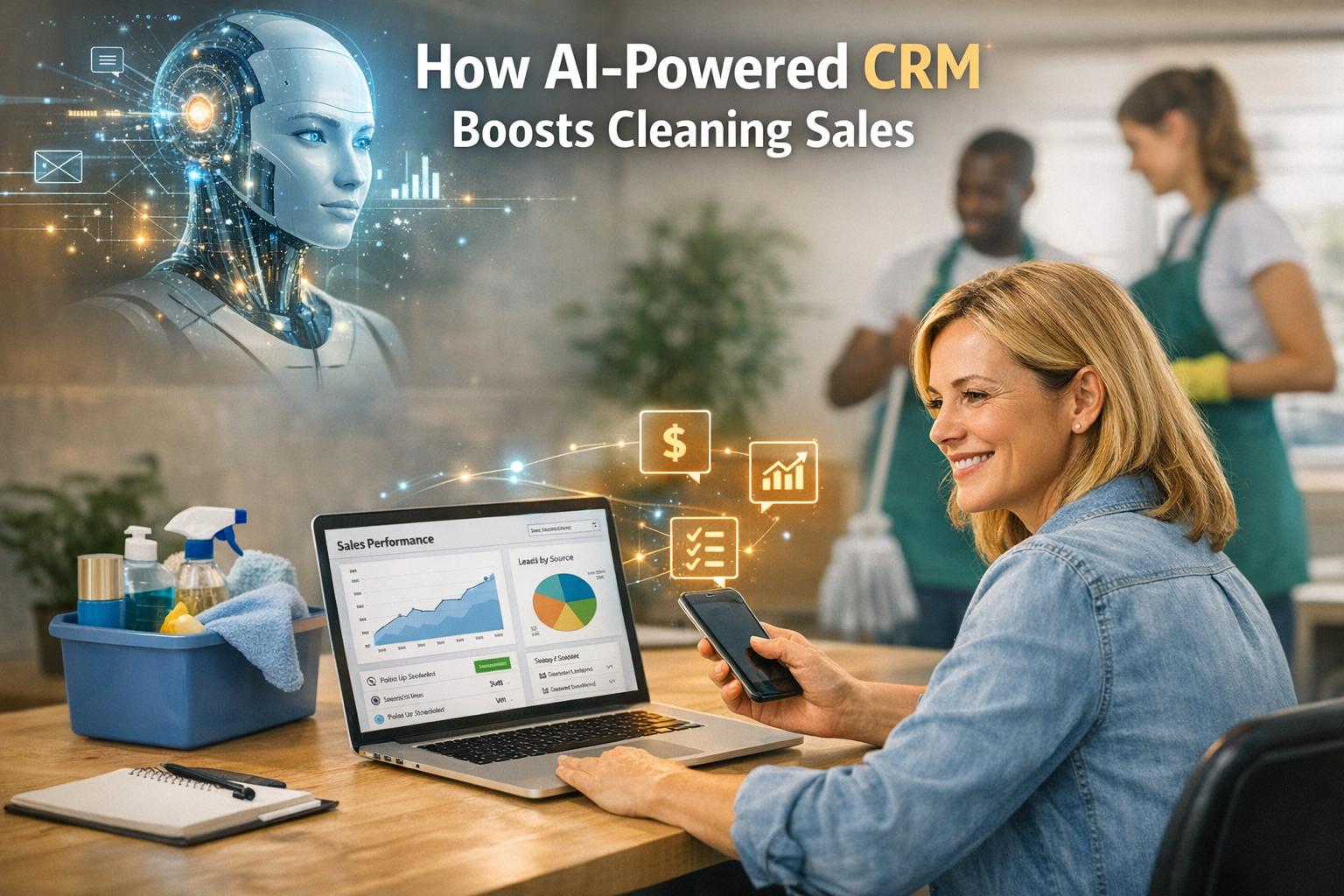
AI-powered CRM systems are transforming how cleaning businesses handle sales. These tools automate lead generation, follow-ups, scheduling, and quoting - helping you close deals faster and more efficiently.
Key Takeaways:
Time-Saving Automation: AI eliminates manual tasks like prospecting and quote preparation, giving you more time to focus on sales.
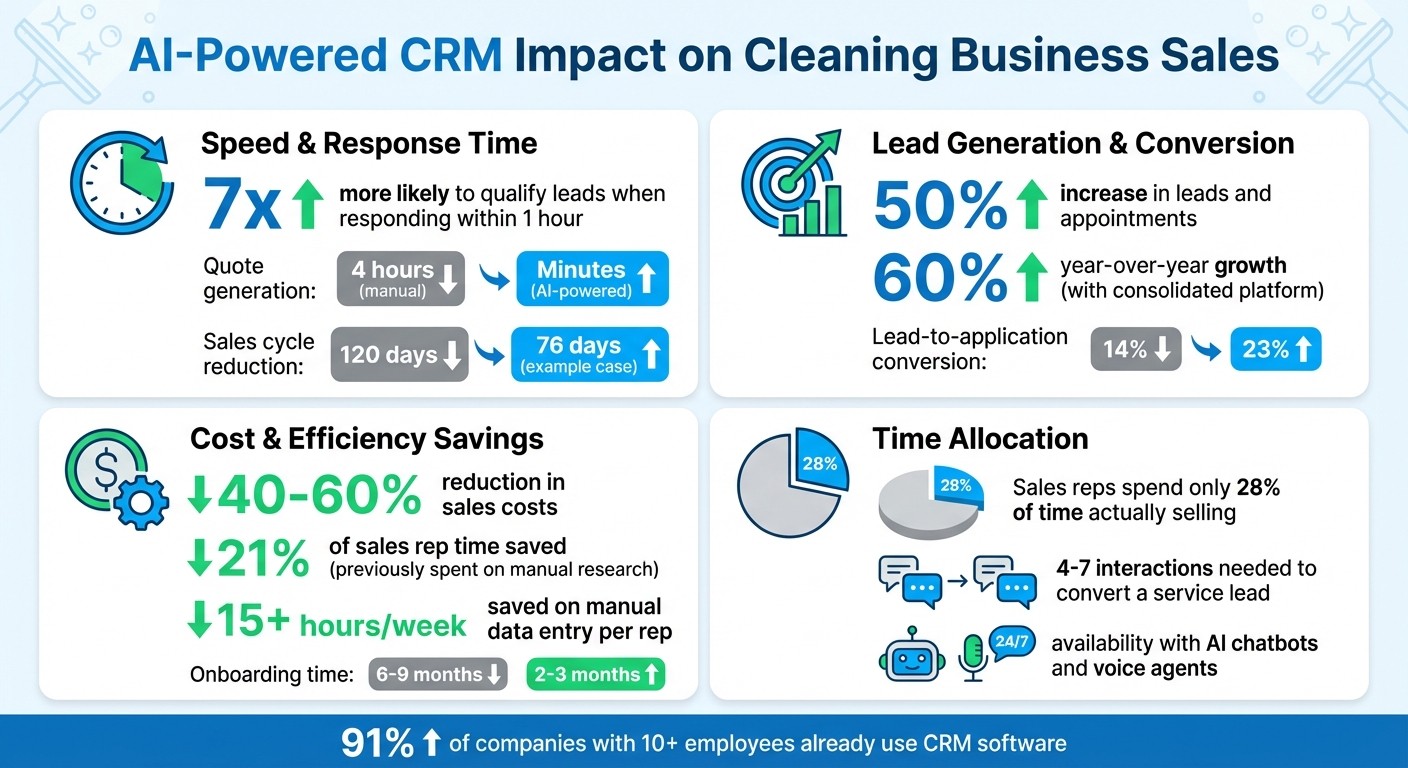
Faster Lead Response: Businesses responding to leads within an hour are 7x more likely to qualify them.
Accurate Quotes in Minutes: AI tools use pre-set pricing to deliver quick, error-free proposals.
Improved Scheduling: Clients can book appointments 24/7, reducing missed opportunities.
Higher Efficiency: Companies using AI CRMs report up to a 50% increase in leads and a 40-60% reduction in costs.
With AI tools, you can outpace competitors and ensure no leads slip through the cracks. Ready to learn how? Let’s dive in.
AI-Powered CRM Benefits for Cleaning Businesses: Key Statistics and Results
Common Sales Challenges in Cleaning Businesses
Difficulty Finding and Qualifying Leads
Many cleaning businesses still depend on old-school prospecting methods that drain time and energy. Sales teams often spend hours manually searching for property contacts, digging through outdated spreadsheets, and waiting for referrals to come through [1]. This approach isn’t just time-consuming - it stifles growth.
The bigger challenge isn’t just finding leads; it’s pinpointing the right ones. Cleaning companies often struggle to differentiate between random properties and high-potential prospects actively looking for new service providers. Without detailed property insights - like building types or recent permit applications - sales teams risk wasting time on leads that aren’t ready to commit. On top of that, outdated CRM data caused by job changes or company mergers leads to bounced emails, which can harm sender reputation [1][10]. These inefficiencies translate into missed opportunities and slower response times.
Missed Follow-Ups and Lost Sales
Timing is everything in the commercial cleaning business. Companies that respond to leads within an hour are nearly seven times more likely to qualify those leads compared to businesses that take longer [4]. But manual processes make quick responses a real challenge. For instance, generating a single quote can take up to four hours [4].
While some businesses are stuck in these time-heavy workflows, competitors using automation can send quotes in just minutes, capturing leads when their interest is highest. Relying on scattered tools like sticky notes and spreadsheets only makes things worse - leads often vanish across SMS, email, and social media channels [7][8].
Manual Tasks That Waste Time
Inefficient administrative tasks are another major roadblock. Sales reps spend 21% of their week on manual research and cold-calling [13]. Small business owners, meanwhile, often spend hours every day answering phones and creating estimates, leaving little room for focusing on growth [12].
Manual quoting processes also lead to pricing mistakes, which can either cut into profits or make services less competitive [4]. Consider Comfort Systems USA Southwest: between October 2020 and 2024, they doubled their business size by swapping manual prospecting for property intelligence tools. This change also slashed new sales rep onboarding time from 6–9 months to just 2–3 months [13].
Victoria Landsmann from monday.com sums it up well:
Your sales team's success no longer depends on how hard they work, but on how smart they work
The gap between businesses relying on manual processes and those embracing automation continues to widen, leaving traditional cleaning companies at a serious disadvantage [9]. By adopting smarter tools, businesses can reclaim time and focus on driving sales growth.
The Best Ai Automation For Cleaning Businesses
How AI-Powered CRM Systems Address These Problems
AI-powered CRM systems are transforming how cleaning businesses manage their sales processes. By automating repetitive and time-consuming tasks like lead generation, follow-ups, and quoting, these tools allow sales teams to focus on what truly matters: building relationships and closing deals. Let’s break down the key features driving this change.
Automated Lead Generation and Outreach
Modern AI platforms excel at uncovering leads from sources that often go unnoticed. For instance, Cohesive AI scans Google Maps and government filings to identify local businesses that might need janitorial services. Think of new office buildings with recent permit applications or facilities undergoing staffing changes - these are clear buying signals. The system doesn’t stop there; it analyzes data like facility size, permit details, and turnover rates to pinpoint high-intent prospects with precision.
Once leads are identified, the AI personalizes outreach at scale. Emails can be tailored with specifics like the building’s type, square footage, or recent activities, ensuring communication feels relevant and engaging. This level of automation not only increases the volume of leads but also frees up your sales team to focus on converting them into clients.
Automated Follow-Ups and Lead Nurturing
Speed is critical in the commercial cleaning industry. Businesses that respond to inquiries within an hour are nearly seven times more likely to qualify leads compared to those who take longer[4]. Yet, managing follow-ups manually can be overwhelming, especially as the number of prospects grows.
AI-powered CRMs solve this by automating follow-ups based on prospect behavior. For example, if someone opens a quote or visits your pricing page, the system can immediately send a follow-up email, SMS, or chatbot message[4][11]. Advanced tools even use sentiment analysis to gauge emotions in customer emails - flagging messages that indicate frustration or high interest so your team can step in promptly[11]. This ensures continuous engagement with prospects while letting your team focus on the most promising leads.
Instant Quote Generation
In the fast-paced world of commercial cleaning, delays in providing quotes can cost you business. Traditional quoting methods can take up to four hours per lead[4], giving competitors a chance to swoop in. AI-powered CRMs eliminate this delay by generating quotes in just minutes.
Here’s how it works: smart forms on your website collect essential details like square footage, facility type, and cleaning frequency. The system then calculates costs - factoring in labor, supplies, and location - using a pre-configured pricing matrix. This ensures quotes are accurate and ready to send almost immediately[4]. Imagine a prospect submitting an inquiry late at night and receiving a detailed proposal before morning. That kind of responsiveness not only impresses potential clients but also keeps you ahead of competitors.
Simplifying Scheduling with AI-Powered CRM
AI-powered CRM systems are not just about generating leads and managing follow-ups - they’re also transforming the way cleaning businesses handle scheduling. Managing multiple crews, juggling last-minute changes, and coordinating appointments can often feel overwhelming. With AI tools, the entire booking process - from initial requests to confirmations and rescheduling - becomes seamless and efficient.
Automated Appointment Booking
Gone are the days of endless phone calls to schedule appointments. Modern AI-driven CRMs provide 24/7 self-service booking through online portals and widgets. These tools allow clients to book recurring cleanings, check their service history, and update preferences - all without making a single call [5]. For instance, a facility manager working late at night can instantly see open time slots via an integrated calendar and book an appointment on the spot.
AI voice agents and chatbots also play a crucial role. They can handle calls, answer frequently asked questions, qualify leads, and even schedule walkthroughs directly in the CRM, no matter the time of day [7]. This immediate engagement ensures that inquiries are addressed promptly, even after business hours. The system also takes care of intelligent dispatching, assigning crews based on factors like availability, location, and expertise. For example, it can automatically match specialized teams to tasks like carpet cleaning or work in medical facilities [5].
This level of automation not only simplifies scheduling but also reduces the risk of missed appointments.
Reducing No-Shows with Automated Reminders
Missed appointments can drain both time and resources. AI-powered CRMs tackle this challenge with automated SMS and email reminders sent 24 hours before a scheduled service [5]. These reminders are more than just notifications - they enable two-way communication, allowing customers to confirm or reschedule appointments instantly.
Consider the success of Batteries Plus, which implemented Lumin.ai's AI-powered lead engagement tool in September 2024. This system handled real-time text engagement and automated scheduling, cutting their sales cycle from 120 days to 76 days and boosting their lead-to-application conversion rate from 14% to 23% [15]. While this example comes from franchise development, the same principle applies to cleaning businesses: automated reminders and easy rescheduling keep clients engaged and significantly reduce no-shows.
Measurable Benefits of AI-Powered CRM Systems
AI-powered CRM systems bring noticeable improvements, including better lead conversion, streamlined operations, and happier customers.
Higher Lead Conversion Rates
Timing is everything when it comes to potential customers. AI-driven CRMs ensure leads are captured around the clock through chatbots and AI assistants, providing instant responses[7][1]. This quick engagement is critical, as studies show it often takes 4–7 interactions to convert a service lead[16]. Automated follow-ups ensure no prospect slips through the cracks.
The numbers back this up. Companies using advanced AI sales tools report a 50% boost in leads and appointments[1][9]. One organization even achieved 60% year-over-year growth by consolidating their tools into a single platform that sped up lead response times[5]. AI also enhances personalization by using detailed data - like facility size or permit history - to craft messages that resonate with potential clients[1][6]. This kind of quick, tailored communication highlights the efficiency of automation.
Better Operational Efficiency
AI-powered CRMs don't just improve sales - they also make day-to-day operations smoother. Automation takes over repetitive tasks like capturing contact details, eliminating common bottlenecks[11]. This is a game-changer, as some reps spend more than 15 hours a week on manual data entry - time that could be better spent closing deals[11].
The cost savings are equally impressive. Automating processes with AI can reduce sales expenses by 40% to 60%[1]. Mobile apps let field teams clock in and out, upload job photos, and update statuses in real time, giving managers full visibility without endless phone calls[5]. Tools like ChatHub centralize communication across SMS, email, Facebook Messenger, and Google Business into one inbox, ensuring no customer inquiry goes unanswered[2]. By automating routine tasks, teams can focus on what matters most - serving more clients without needing extra staff.
Better Customer Satisfaction
AI-powered CRMs also shine when it comes to keeping customers happy. AI receptionists and chatbots handle inquiries instantly, answering common questions and scheduling services even after business hours[7][1]. Customer portals make life easier by letting clients book services, review service histories, and pay invoices online, cutting down on back-and-forth calls[5].
Transparency tools like GPS tracking, before/after photos, and automated quality checklists give clients peace of mind with clear proof of service and consistent results[5]. In one example, a company reduced average case handling times by 10% after adopting AI customer service tools, speeding up issue resolution[17][14]. For cleaning businesses, automated satisfaction surveys sent after job completion ensure any concerns are addressed quickly, preventing minor issues from becoming major complaints.
Conclusion
Cleaning businesses often face challenges like finding qualified leads, managing timely follow-ups, and handling repetitive manual tasks. AI-powered CRM systems tackle these issues by automating much of the workload. They can identify potential prospects, launch targeted outreach campaigns, and handle follow-ups - all without the need for constant manual input.
The move from traditional CRMs to advanced systems like Cohesive AI is reshaping how cleaning companies approach sales. These platforms don’t just help track leads - they actively generate them. As Kevin Zhang, CEO of Cohesive, explains:
Cohesive is agentic, meaning it acts on behalf of the user autonomously. Think of it like having a junior sales team built into your software. You don't just track leads - you generate them.
Businesses adopting AI sales tools report noticeable improvements in lead generation and operational efficiency. With sales representatives typically spending only 28% of their time on actual selling, these tools free them up to focus on closing deals instead of getting bogged down by administrative tasks [1]. Considering that 91% of companies with 10 or more employees already use CRM software [5], the real question isn’t whether to adopt AI-powered solutions - it’s how quickly they can be implemented. This speed and efficiency are key to delivering proposals faster, which often determines who wins the contract.
In fact, being the first vendor to send out a professional proposal can make all the difference [1]. AI-driven systems enable cleaning businesses to generate accurate quotes within minutes, respond to inquiries 24/7, and ensure no lead slips through the cracks. For cleaning companies aiming to stay competitive in their markets, these tools have become essential - not just for growth, but for survival.
FAQs
How can AI-powered CRM help cleaning businesses generate more leads?
AI-driven CRM systems simplify lead generation for cleaning businesses by automating key tasks such as identifying potential clients, tailoring outreach efforts, and managing follow-ups. These tools can tap into local business data and track external events to ensure outreach is both timely and relevant.
By cutting down on manual work and boosting overall efficiency, these systems give cleaning businesses more time to focus on building strong client relationships and closing deals - helping them grow and scale effectively.
How can AI-powered CRM systems save cleaning businesses money?
AI-powered CRM systems are a game-changer for cleaning businesses, helping them cut costs by automating tasks that typically eat up time and resources. Think about lead generation, follow-ups, or managing customer data - these are no longer manual, time-draining processes. With AI tools, businesses can automatically capture leads, send tailored emails, and even schedule appointments. This automation not only speeds up sales processes but also allows staff to dedicate their energy to more impactful work.
Another big advantage? AI ensures customer data stays accurate and up to date. It can clean, organize, and enrich data automatically, reducing the chances of errors, duplicate entries, or outdated information. Why does this matter? Messy data can lead to missed opportunities or poorly targeted marketing campaigns. By keeping their data clean and reliable, cleaning companies can better connect with potential customers, improve conversion rates, and get more out of their marketing budgets. The result? A stronger ROI and a more efficient business.
How can AI-powered CRMs help reduce missed cleaning appointments?
AI-powered CRM systems are a game-changer for reducing missed cleaning appointments. They automate follow-ups and send timely, personalized reminders via email or SMS, ensuring clients stay informed and engaged. This proactive communication significantly lowers the chances of forgotten appointments.
On top of that, AI tools can analyze patterns to pinpoint clients who are more likely to miss their appointments. This allows businesses to take action early - reaching out to confirm or reschedule as needed. By simplifying communication and maintaining consistent follow-ups, these systems not only help keep schedules on track but also improve customer satisfaction and operational efficiency.