Common Sales Pipeline Issues and AI Solutions
Sep 15, 2025
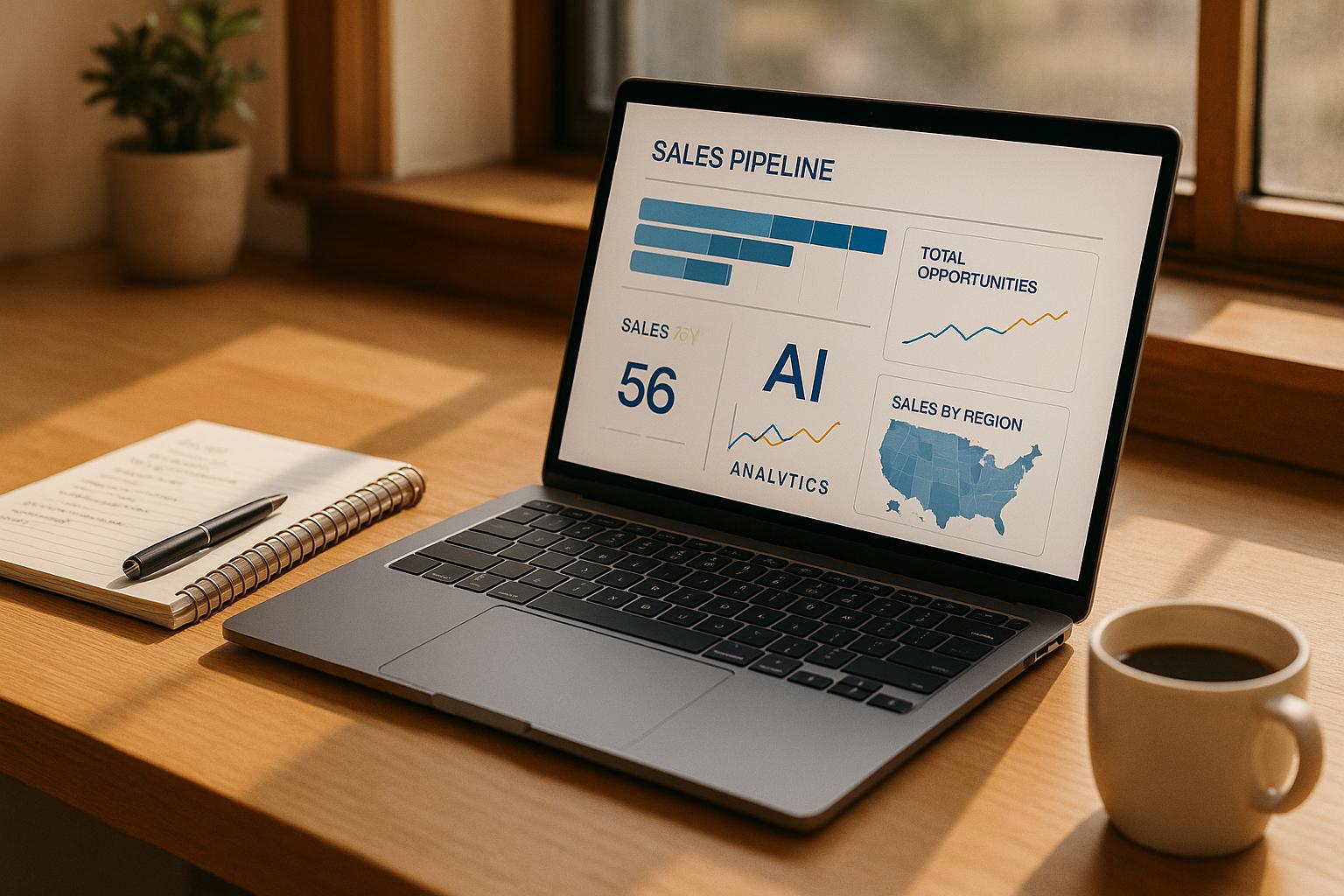
Sales pipelines are essential for tracking and converting leads, but many businesses face challenges like outdated data, missed follow-ups, and inefficient processes. These issues can lead to lost revenue and wasted time. AI tools are transforming how businesses manage pipelines by automating tasks, improving lead prioritization, and offering real-time insights.
Key Takeaways:
Common Problems: Outdated lead data, lack of visibility, manual processes, low-quality leads, and delays.
AI Solutions: Automated data updates, real-time pipeline analytics, lead scoring, and personalized email campaigns.
Example Tool: Cohesive AI simplifies lead generation for local businesses, offering tailored outreach and guaranteed results for $500/month.
Switching to AI-driven pipeline management saves time, reduces errors, and boosts revenue by helping businesses focus on high-potential leads.
Pipeline Acceleration: How AI Helps with Sales Productivity
Main Sales Pipeline Problems for Local Service Businesses
Local service businesses often face sales pipeline challenges that can directly impact their revenue. Here’s a closer look at some of the most pressing issues they encounter.
Wrong or Outdated Lead Data
One of the biggest hurdles is dealing with outdated or incorrect lead information. Studies show that about 30% of customer data becomes outdated every year [1]. Errors during manual data entry - like mistyped phone numbers, misspelled email addresses, or incorrect company names - are common culprits. Even when customers fill out online forms, typos and outdated details can sneak in.
Another issue is poor integration of leads from various sources, such as ads, websites, and referrals. This often results in duplicate entries or conflicting information. As time passes, natural changes - like contacts switching jobs, businesses moving, or phone numbers becoming inactive - worsen the situation. It’s no wonder 94% of businesses believe their customer data is inaccurate, and B2B salespeople waste over 27.3% of their time chasing bad data [1].
Lack of Pipeline Visibility and Real-Time Data
A clear view of the sales pipeline is crucial, but many local service businesses struggle with this. Without knowing how many leads are in each stage or when follow-ups are due, promising opportunities can easily be overlooked. The absence of real-time data makes it difficult to forecast revenue, prepare for seasonal trends, or pinpoint bottlenecks before they escalate. This often leaves businesses relying on outdated, manual methods to track their leads.
Reliance on Manual Lead Generation
Manual lead generation is another major challenge. Business owners spend countless hours knocking on doors, searching through online directories, and cold-calling prospects. These time-consuming methods not only drain resources but also lead to missed opportunities when follow-ups are delayed or forgotten.
Low-Quality Leads and Poor Conversion Rates
Casting too wide a net often results in a flood of low-quality leads. Without a clear strategy to prioritize high-potential prospects, businesses end up spreading their efforts too thin. Generic messaging and poorly timed outreach further weaken their chances of converting leads, ultimately lowering success rates and discouraging future marketing efforts.
Delays in the Sales Process
Speed matters when turning a prospect into a customer. Slow responses give competitors a chance to swoop in and win the business. Time-consuming tasks like creating manual proposals, navigating clunky approval processes, or scheduling site visits can cause frustrating delays. These inefficiencies often stall deals before they have the chance to close.
How AI Automation Fixes Pipeline Problems
AI is reshaping how local service businesses manage their sales pipelines, making processes smoother and offering clearer insights. Instead of relying on time-consuming manual tasks that drain resources, AI-powered tools address pipeline challenges with unmatched accuracy and efficiency.
Automated Lead Data Collection and Updates
One major advantage of AI is its ability to eliminate human errors and guesswork in lead generation. By pulling data from multiple sources - like Google Maps and government filings - AI creates detailed and up-to-date lead databases. This means businesses no longer have to deal with outdated contact lists or incomplete information.
AI also keeps data fresh by validating and updating it in real time. For example, if a business changes its location, phone number, or services, AI detects these updates and adjusts the database accordingly. This ensures sales teams are always working with accurate information, saving them from wasting time on dead leads.
Better Pipeline Visibility with AI Analytics
AI takes the guesswork out of managing sales pipelines by turning them into clear, actionable dashboards. Instead of wondering where leads are in the process or when to follow up, businesses gain real-time insights into every stage of their pipeline. AI tracks lead progress, identifies bottlenecks, and even predicts which prospects are most likely to convert.
Through automated reporting, AI highlights essential metrics like conversion rates, average deal sizes, and time-to-close stats - all without manual calculations. These insights allow sales managers to quickly adjust their strategies, whether that means reallocating resources or fine-tuning marketing efforts.
AI doesn’t stop there. By analyzing historical data and current trends, it forecasts pipeline performance. This helps businesses prepare for seasonal shifts, anticipate busy periods, and adjust lead generation efforts to maintain steady revenue throughout the year. These predictive insights naturally lead to smarter lead prioritization.
AI Lead Scoring and Segmentation
Building on the foundation of clear analytics, AI takes pipeline management to the next level by scoring and segmenting leads. Instead of treating all prospects equally, AI assigns priority scores based on their likelihood to convert. It factors in details like business size, industry, location, and engagement history, helping sales teams focus on the most promising leads first.
AI also identifies behavioral patterns that signal buying intent. For instance, it can detect when a prospect visits pricing pages, downloads service brochures, or interacts with follow-up emails. These insights allow sales teams to time their outreach for maximum impact.
Additionally, AI categorizes leads automatically, grouping them into tailored campaigns based on their unique characteristics. For example, a landscaping company might have separate segments for residential homeowners, commercial property managers, and municipal contracts. This ensures each group receives messaging that speaks directly to their needs.
Automated Email Campaigns and Follow-Ups
Crafting personalized emails for every lead can be exhausting, but AI simplifies this by generating customized messages at scale. It analyzes each lead’s business details, industry, and specific needs to create outreach that feels personal. Once sent, AI tracks email opens, clicks, and responses to determine the best timing for follow-ups.
AI also handles the technical side of email campaigns, such as monitoring sender reputation, optimizing send times, and managing domain authentication. These behind-the-scenes efforts ensure emails land in inboxes rather than spam folders.
A great example of this in action is Cohesive AI. This system automates lead generation for local service businesses by scraping Google Maps for leads, creating personalized cold emails, and managing entire email campaigns. With a flat monthly fee of $500, it guarantees at least four interested responses per month, offering a reliable and cost-effective alternative to expensive lead generation agencies. By working around the clock, Cohesive AI allows businesses to focus on closing deals rather than chasing leads.
Cohesive AI: A Solution for Local Service Businesses
Cohesive AI takes the power of AI automation and tailors it to the specific needs of local service providers. Unlike one-size-fits-all tools, this platform is built to address the unique hurdles faced by businesses operating in local markets. By focusing on the nuances of the local business landscape, Cohesive AI delivers targeted solutions that go beyond generic lead generation methods.
Main Features of Cohesive AI
Cohesive AI stands out by combining three key capabilities to streamline lead generation:
Google Maps Data Scraping: The platform identifies local businesses that align with a specific customer profile, targeting the right types of businesses based on size, location, and industry.
Government Filings Data: By pulling information from government records, it creates detailed lead profiles that include essential contact details and business insights.
AI-Powered Email Personalization: Using the collected data, the platform crafts tailored cold emails that are contextually relevant to each lead, increasing the chances of engagement.
Beyond lead generation, Cohesive AI manages email deliverability automatically and supports up to three simultaneous campaigns. This allows businesses to experiment with different strategies and messaging approaches without additional effort.
Benefits for Local Service Providers
Local service businesses often face challenges in lead generation due to limited time and expertise. Cohesive AI simplifies this process by automating the most time-consuming tasks. It eliminates the need to manually research prospects, draft individual emails, or juggle complex marketing tools. This frees up business owners to focus on serving their current clients while new leads are generated seamlessly.
Take these examples:
Janitorial Companies: With access to detailed government filings, they can reach decision-makers at facilities needing cleaning services.
Landscaping Businesses: By leveraging Google Maps data, they can pinpoint commercial properties requiring outdoor maintenance.
HVAC Contractors: The platform helps target businesses based on building size and industry, ensuring outreach to those likely to need climate control solutions.
By automating personalized outreach, Cohesive AI reduces the cost and complexity of lead generation, making it an efficient tool for small businesses.
Clear Pricing and Guaranteed Results
Cohesive AI offers straightforward pricing at $500 per month, with a $75 setup fee. There are no long-term contracts - just a simple month-to-month model. To add confidence, the platform guarantees at least four interested responses per month. If a business doesn’t hit that benchmark, they receive a free month of service as credit. This transparent pricing structure helps businesses manage their budgets while ensuring results. It’s a practical approach to streamlining the sales pipeline for local service providers.
Manual vs. AI Pipeline Management
Managing sales pipelines manually versus using AI automation isn't just about convenience - it's about reshaping how businesses operate, allocate resources, and grow revenue. Right now, sales reps spend around 30–40% of their day on repetitive tasks that could easily be automated [2]. This manual approach might work for very small teams, but it quickly becomes a bottleneck, pulling focus away from critical revenue-driving activities.
AI automation flips the script by taking over tasks like prospect research, email personalization, and response tracking. For example, sales teams using automation report saving 5 hours per week and cutting human errors by 20% [3]. This efficiency means more time for reps to focus on high-value prospects. AI-powered lead scoring alone has been shown to improve conversion rates by about 30% (from under 5% to 6.5%) and increase the proportion of qualified leads from 45.5% to 64.1% [2].
Here’s a breakdown of how manual methods compare to AI-driven approaches across key pipeline tasks:
Comparison Table: Manual vs. AI Methods
Pipeline Task | Manual Method | AI Method | Time Impact | Revenue Impact |
|---|---|---|---|---|
Lead Research | Hours spent searching directories (2–3 hours daily) | Automated data scraping from sources like Google Maps | Saves hours weekly | 3–15% revenue boost [3] |
Email Personalization | Manually creating emails with basic templates | AI generates personalized emails instantly | Saves significant time | 30% improvement in conversion rates |
Data Entry | Prone to frequent errors | Automated updates in real time | Reduces errors by 20% [3] | Improves lead quality and accuracy |
Follow-up Campaigns | Manually scheduled, often inconsistent | Automated, optimally timed sequences | Cuts manual effort | Ensures consistent engagement |
Lead Scoring | Relies on subjective judgment | Uses data-driven analysis for instant scoring | Immediate qualification | Qualified leads increase by 41% [2] |
Pipeline Reporting | Weekly reports that quickly become outdated | Real-time analytics and insights | Saves time on reporting | 25% more accurate forecasting [2] |
Now, let’s put this into perspective. A salesperson earning $50,000 annually wastes about $15,000 of that salary if 30% of their time is tied up in administrative tasks. Multiply that by a team of three, and you’re looking at $45,000 in lost productivity. By automating up to 80% of repetitive tasks [2], teams can redirect their efforts toward activities that directly drive revenue. For instance, a $500,000 business could see an additional $50,000 in revenue with just a 10% ROI improvement [3].
AI also transforms forecasting. Where manual forecasting often relies on incomplete data or gut instincts, AI systems analyze patterns across multiple data points, improving forecasting accuracy by 25% [2]. For service providers, this means smarter resource allocation and avoiding the feast-or-famine cycles that plague many businesses.
For local service businesses, the challenges of manual pipeline management are even more pronounced. Researching prospects like commercial properties needing janitorial or HVAC services demands a deep understanding of the local market and hours of effort. AI systems, on the other hand, can analyze thousands of local businesses in moments, identifying the best prospects based on factors like size and industry. This level of precision simply isn’t possible with manual methods.
Conclusion: Using AI for Pipeline Success
Switching from manual processes to AI-driven sales pipeline management isn’t just a technological upgrade - it’s a game-changer for staying competitive. By automating time-consuming tasks like prospect research and email personalization, sales teams can reclaim hours to focus on activities that directly boost revenue. The result? Better efficiency, higher accuracy, and improved conversion rates.
For local service businesses - think janitorial services, landscaping, or HVAC companies - these advancements can make a real difference. Instead of spending endless hours manually researching prospects or crafting outreach emails, AI tools can scan through large pools of local leads and generate tailored communications that grab attention and drive engagement.
Take Cohesive AI, for example. At $500 per month, it guarantees at least four interested responses every month. This platform offers automated lead generation, Google Maps scraping, and AI-powered email personalization. It’s a practical alternative to costly lead generation agencies, offering measurable results with the flexibility of month-to-month plans.
The Future of Sales Pipelines for Service Businesses
The move toward AI-powered pipeline management is gaining momentum, and businesses that hesitate risk falling behind competitors already reaping the rewards. The future belongs to companies that combine the personal touch of human relationships with the efficiency of smart automation to find, engage, and convert prospects.
To thrive in this new landscape, businesses need tools that handle the grunt work - like data collection, prospect research, and initial outreach - so their teams can focus on closing deals and building strong client relationships. As we’ve seen, transitioning from manual to AI-driven methods doesn’t just improve operations; it directly impacts revenue growth.
For local service businesses looking to break through pipeline bottlenecks and achieve steady growth, the path forward is clear: adopt AI-driven tools that handle routine tasks while empowering your team to focus on what they do best - sealing deals and fostering client trust. The question isn’t whether AI will reshape sales pipelines, but whether your business will lead the charge or play catch-up.
FAQs
How can AI help sales teams focus on the most promising leads?
AI leverages machine learning and predictive analytics to study patterns from previous successful sales. It assigns real-time scores to potential leads, enabling sales teams to pinpoint and focus on those with the highest likelihood of conversion.
This automation takes the guesswork out of the process, allowing sales teams to concentrate on high-value prospects. The result? Improved efficiency and stronger overall sales performance.
How does Cohesive AI help local service businesses manage their sales pipelines more effectively?
Cohesive AI streamlines sales pipeline management for local service businesses by automating essential tasks like lead generation, personalized email outreach, and email campaign management. The platform leverages AI to pinpoint potential leads, create customized messages, and ensure timely follow-ups, taking the hassle out of manual processes.
On top of that, it includes features like lead scoring, reminders, and smart suggestions to help businesses focus on the most promising opportunities and stay on top of their workflow. These tools are crafted to save time, enhance productivity, and drive higher conversion rates for industries such as janitorial services, landscaping, HVAC, catering, and business brokerage.
How does AI-driven pipeline management improve revenue and efficiency for local service businesses compared to traditional methods?
AI-powered pipeline management can transform how local service businesses handle their sales processes, boosting both revenue and efficiency. By automating repetitive tasks and refining lead qualification, AI enables businesses to manage large volumes of leads around the clock, tailor their outreach efforts, and create more precise sales forecasts. This leads to smarter decisions and improved conversion rates.
When compared to traditional manual approaches, AI tools offer clear advantages: they cut operational expenses, reduce the cost per lead, and enhance overall productivity. For local service providers like janitorial or landscaping companies, this means streamlining their sales pipelines, concentrating on high-value leads, and achieving steady growth in revenue. It’s a game-changer for businesses aiming to optimize their operations and thrive.