Ultimate Guide to Follow-Up Timing with AI
Nov 10, 2025
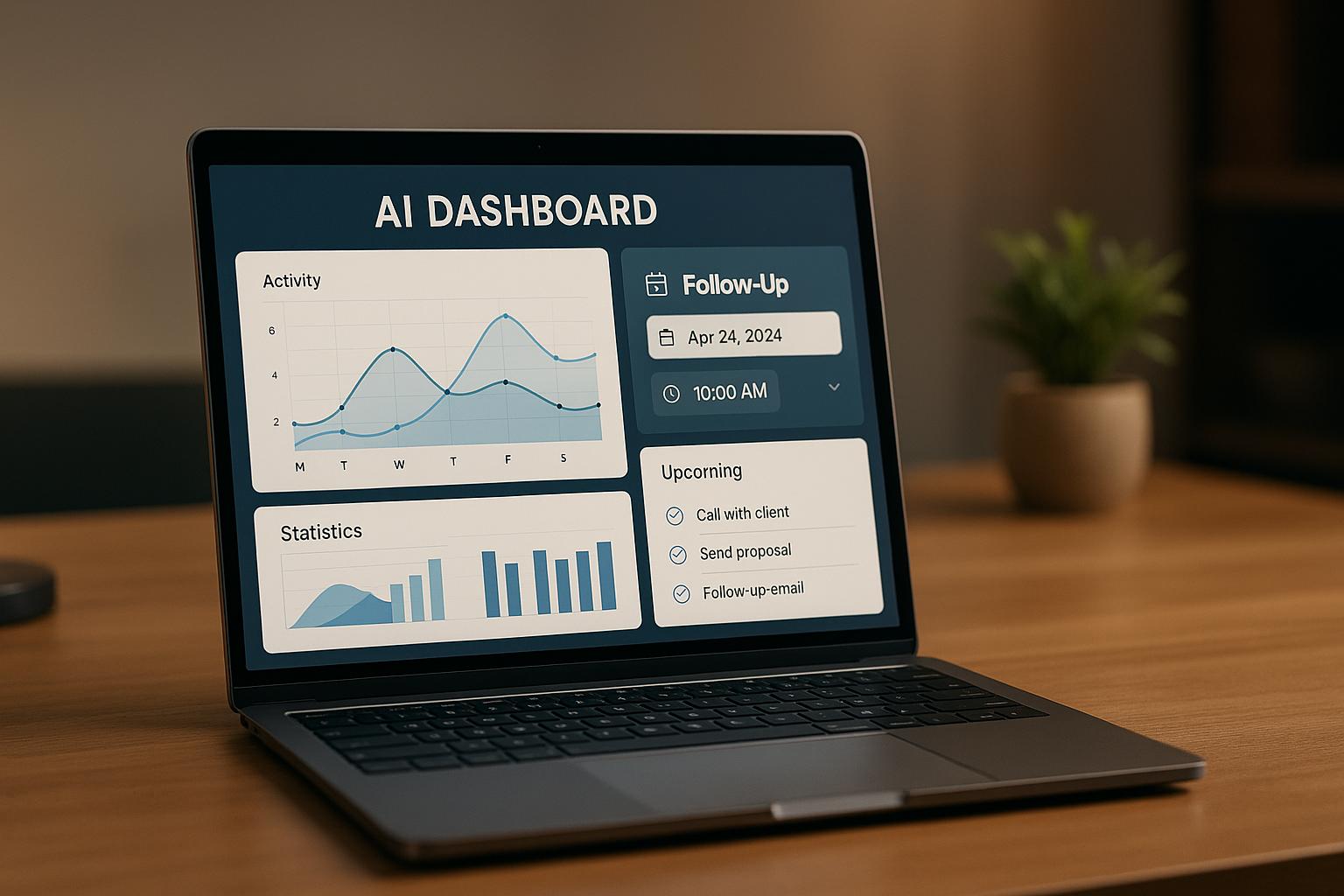
When it comes to winning customers, speed matters. 78% of customers choose the first company that responds to their inquiry, and businesses that follow up within an hour are up to 7x more likely to qualify a lead. Yet, many local service providers - like HVAC, landscaping, or janitorial businesses - struggle to respond quickly due to limited staff or after-hours inquiries. This delay often results in lost leads and missed revenue opportunities.
AI solves this problem by automating follow-ups, ensuring instant responses, personalized communication, and consistent engagement. Businesses using AI tools report 50% higher conversion rates, shorter sales cycles, and fewer missed leads. Here's how AI can help:
Behavior-based timing: AI tracks customer actions (e.g., email opens) to send follow-ups at the right moment.
Segmentation: Tailored messages for different customer types (e.g., new vs. repeat clients).
Multi-channel automation: Use email, SMS, and calls to engage leads effectively.
Lead scoring: Prioritize high-value leads based on engagement and likelihood to convert.
With tools like Cohesive AI, businesses can automate lead management, reduce manual tasks, and increase efficiency - all for $500/month. Whether you're booking estimates at midnight or sending personalized offers, AI ensures no lead is left waiting.
If you're ready to improve response times and boost conversions, AI-driven follow-ups are the answer.
How To Automate Your Sales Call Follow-up Process with AI | Google Meet + Zapier + Notta + OpenAI
How AI Improves Follow-Up Timing
AI takes the guesswork out of follow-up timing, turning it into a precise, data-driven process. Instead of relying on random schedules or gut feelings, AI analyzes customer behavior - like email opens, link clicks, and website visits - to identify the best moments for follow-ups. This approach is particularly helpful for local service businesses operating in competitive markets. Let’s explore how behavior tracking, segmentation, multi-channel automation, and lead scoring combine to refine your outreach efforts.
Behavior-Based Timing
AI uses customer actions to determine the best times to follow up. For example, if a client opens an email but doesn’t click on a scheduling link, the system flags their interest and schedules a follow-up when they’re most likely to engage. Timing follow-ups for peak engagement increases the chances of a positive response.
For local service providers like janitorial companies, AI can send follow-up messages during periods when clients have historically been most active. This ensures that outreach aligns with customer behavior patterns.
Customer Segmentation with AI
AI customizes follow-up timing and messaging by segmenting customers based on factors like purchase history, engagement trends, and service preferences. For instance, first-time inquiries might get immediate follow-ups with introductory offers, while long-term clients receive periodic updates or promotions tailored to their past interactions.
Cohesive AI integrates data from CRM systems, appointment records, website analytics, and other sources to create highly specific customer segments. For example, a landscaping company might send spring maintenance reminders to residential clients while offering budget-friendly proposals to commercial clients during their planning cycles.
Multi-Channel Automation
AI boosts engagement by managing follow-ups across multiple channels such as email, SMS, phone calls, and chat. Instead of sticking to one method, it automates a sequence of communications based on customer preferences. For example, an HVAC company might start with an email, follow up with an SMS, and then make a phone call, ensuring consistent and effective communication.
This multi-channel approach helps HVAC companies send timely service reminders using a mix of email, SMS, and chat support, keeping leads engaged around the clock.
Lead Scoring and Priority Setting
AI assigns scores to leads based on their likelihood to convert, using metrics like email open rates, click-through rates, response times, and inquiry frequency. High-scoring leads - those who frequently engage with service information or request quotes - are prioritized for faster follow-ups, enabling teams to focus on the most promising prospects.
Advanced systems also consider external factors like business size and industry relevance. For example, Cohesive AI uses business data and engagement analytics to rank leads, helping HVAC contractors prioritize high-value commercial opportunities while landscapers target property managers overseeing multiple sites.
Research shows that AI-driven lead scoring can boost sales productivity by up to 20% by ensuring teams focus on the most promising leads[6]. These strategies lay the groundwork for implementing a powerful AI-driven follow-up system, which will be discussed in the next section.
Step-by-Step Guide to Setting Up AI Follow-Up Timing
Implementing AI-driven follow-up timing can elevate outreach strategies for local service businesses. The process includes gathering high-quality lead data, setting up automated triggers, crafting personalized messages, and refining performance over time. Let’s break down how to make each step work seamlessly.
It all starts with accurate and detailed data collection.
Collecting Lead Data
The first step is to gather reliable and detailed lead information. Use sources like Google Maps and government filings [1] to compile data, including business names, contact details, service preferences, and locations. This organized information helps identify trends and fine-tune follow-up timing. For instance, government filings can highlight new business registrations, ownership changes, or expansion plans, signaling opportunities for service providers such as janitorial or HVAC companies.
Setting Up Automated Triggers
Automated triggers act as your outreach assistant, responding to customer actions in real time. These triggers can handle tasks like sending confirmation emails after an appointment is booked, reminders before the appointment, or re-engagement messages when a quote is left incomplete [3]. By automating these processes, you ensure timely and relevant follow-ups without manual intervention.
Creating Personalized Message Sequences
AI-powered tools, equipped with natural language processing and segmentation, allow you to create highly tailored follow-up messages. These messages can align with a lead's behavior and preferences [3]. For example, you can send seasonal tips to landscaping clients or educational content to early-stage leads based on their activity and lead scoring.
Tracking and Improving Performance
To measure the success of your AI follow-up efforts, track key metrics like open rates, click-through rates, response times, and conversions [3]. Use real-time dashboards and conduct A/B testing to experiment with different send times, messaging styles, and formats. This data-driven approach ensures continuous improvement.
Using Cohesive AI for Local Service Businesses
Cohesive AI simplifies lead generation and follow-up management for local service providers like janitorial services, landscaping, HVAC, catering, and business brokers. It automates tasks such as sourcing leads from Google Maps and government filings, personalizing outreach emails, and managing follow-up campaigns. The base plan, priced at $500 per month with a $75 onboarding fee, includes 3 campaigns, 12,000 research credits, and 7,200 data credits [6]. With features like managed email deliverability, CRM automation, and integrations with tools like Google Sheets, Gmail, Slack, and HubSpot, Cohesive AI streamlines workflows. One remodeling contractor even reduced manual calls and enabled 24/7 estimate bookings using this tool [4].
Best Practices for AI Follow-Up Timing
To make the most of AI-powered follow-ups, businesses need more than just automation - they need strategies that truly connect with leads. These methods can help local service businesses boost lead conversion while nurturing strong customer relationships.
Responding Fast to New Leads
Timing is everything when it comes to responding to leads. Reaching out within five minutes can make a lead 21 times more likely to convert compared to waiting 30 minutes or longer [7]. This short window is when potential customers are most engaged and ready to act.
AI-powered tools can bridge this gap by responding instantly, no matter the time of day. For example, a janitorial service can use AI to confirm appointments or answer FAQs outside regular business hours, ensuring no lead slips through the cracks [1][4]. This around-the-clock availability is a game-changer in competitive industries.
To make a better impression, replace generic responses like “we received your message” with personalized acknowledgments. AI can tailor replies to mention specific services or next steps based on the inquiry, making the interaction feel more thoughtful and engaging.
Using A/B Testing and Data Analysis
AI doesn’t just automate - it learns. By analyzing customer data, it can uncover what works best for your audience, taking the guesswork out of follow-up strategies.
For instance, a landscaping company might use A/B testing to compare morning and evening follow-ups. AI could reveal that messages sent after 6:00 PM lead to more bookings [3].
Businesses using AI for tailored outreach see up to 40% higher open rates and 25% higher response rates compared to generic campaigns [7]. This success comes from continuously tweaking messages based on real customer behavior instead of relying on assumptions.
When testing, focus on one variable at a time - like timing, tone, or subject lines - over a set period. This step-by-step approach helps identify what resonates most with your audience.
Matching Customer Preferences
AI thrives on data, and it uses customer interaction patterns to fine-tune follow-ups. If a client regularly opens emails on Saturday mornings, the system schedules future messages for that time [2][3]. This kind of tailored timing increases engagement and reduces the chances of emails being ignored or flagged as spam.
Beyond timing, AI can adjust communication channels based on preferences. For example, if a lead prefers booking appointments via text during weekday afternoons, reminders will be sent accordingly.
This personalization extends to content as well. HVAC companies might schedule maintenance reminders before high-demand seasons, while landscaping services could time their outreach to align with local weather and planting cycles. These thoughtful touches make automation feel more human.
Balancing Automation with Personal Touch
Automation ensures speed and consistency, but it’s the personal touches that build trust. AI can draft conversational messages that feel genuine, but businesses should regularly review and tweak templates to reflect their unique voice and local nuances [1][2].
Personalization can be as simple as including the customer’s name, referencing past interactions, or offering tailored recommendations. For instance, a remodeling contractor might mention a specific room discussed during a consultation, while an HVAC company could refer to a particular system model that needs servicing.
The key is making every automated message feel like it comes from a real person who understands the customer’s needs. This requires businesses to periodically review AI-generated content to ensure it stays authentic and relatable.
Following Communication Laws
Compliance isn’t optional - it’s essential. The CAN-SPAM Act mandates clear opt-out options, accurate sender information, and truthful subject lines for marketing emails. Similarly, the TCPA requires prior consent for automated calls or texts [3]. Ignoring these laws can lead to hefty penalties.
To stay compliant, always get explicit permission, honor opt-out requests promptly, and keep records of consent. Every email should include an easy-to-find unsubscribe link, and text campaigns must have documented approval from recipients.
Transparency is also crucial. For example, an HVAC company’s emails should clearly identify the sender and match the content to the subject line. This not only builds trust but also ensures legal compliance.
To avoid issues, conduct quarterly audits of your automated messages. These reviews ensure your follow-ups meet current regulations and maintain the professionalism your customers expect.
Measuring Results of AI Follow-Up Timing
Tracking the right metrics is key to evaluating how AI follow-up timing impacts your return on investment (ROI).
Key Metrics to Track
To gauge the effectiveness of AI-driven follow-ups, focus on these essential metrics:
Follow-up response rates: Measure how many leads respond to your outreach.
Conversion rates: Track the percentage of leads who turn into paying customers.
Sales cycle duration: Analyze how long it takes to close a deal, from the first contact to the final agreement.
Appointment booking rates: Monitor how often leads schedule meetings or consultations.
Together, these metrics provide a solid framework for assessing the performance of AI systems [2]. Businesses using AI for follow-ups have seen impressive results: sales cycles shortened by 20–30% due to reduced lead cooling, response rates boosted by up to 50%, and conversion rates improved by 15–25% [5]. Additionally, customer satisfaction scores reveal how well AI-generated messages resonate with recipients. By comparing these outcomes to manual methods, businesses gain a clear understanding of AI's impact.
Manual vs AI Follow-Ups Comparison
Here’s a side-by-side look at how manual follow-ups stack up against AI-driven ones:
Aspect | Manual Follow-Ups | AI-Driven Follow-Ups |
|---|---|---|
Response Speed | Hours to days | Seconds to minutes (available 24/7) |
Consistency | Subject to human error | Systematic and ensures all leads are engaged |
Personalization | Limited by staff availability | Dynamic, data-driven personalization |
Efficiency | Labor-intensive | Automated, saving over 10 hours per week |
Conversion Rate | Lower and inconsistent | Higher due to faster engagement |
Customer Satisfaction | Variable | Enhanced with instant responses |
Scalability | Limited by staff | Handles thousands of leads simultaneously |
Cost Structure | High labor costs | Predictable monthly fees |
AI follow-ups clearly outshine manual efforts in speed and scalability. For example, while manual follow-ups rely on staff availability, AI systems respond instantly, eliminating delays. This responsiveness reduces dropped conversations by 30–40% compared to manual methods [2]. The ability to engage every lead systematically makes AI a game-changer, especially for businesses with high lead volumes.
Actual Business Results
The numbers don’t lie - real-world results show how AI follow-ups make a difference. Local service businesses, such as HVAC, landscaping, and janitorial companies, have reported significant improvements. These include a 30–40% reduction in dropped conversations and over 10 hours saved each week. With less time spent on repetitive tasks, staff can focus on more strategic and high-value activities.
Leveraging Cohesive AI for Enhanced Results
Cohesive AI takes these benefits a step further by optimizing follow-up timing for local service businesses. For $500 per month (plus a $75 onboarding fee), the platform automates tasks like lead scraping, personalized outreach, and campaign management. It also tracks response and conversion metrics to fine-tune follow-up strategies. This approach ensures businesses can achieve consistent, measurable improvements in their sales processes.
Conclusion
AI is revolutionizing how local service businesses handle follow-ups, turning what used to be a time-consuming manual task into a seamless, data-driven process. By minimizing missed opportunities and maximizing efficiency, AI ensures businesses stay ahead in a competitive market.
The standout advantages come down to speed, consistency, and personalization. Unlike manual follow-ups that depend on staff availability and are prone to human error, AI delivers instant, 24/7 responses. This kind of responsiveness not only keeps prospects engaged but also accelerates sales cycles and boosts conversion rates, paving the way for smarter outreach strategies.
For industries like HVAC, landscaping, or janitorial services, the benefits go far beyond quick replies. AI-powered scheduling tools allow customers to book estimates anytime, eliminating the need for dozens of back-and-forth calls each week. This automation frees up teams to focus on what really matters - sealing deals and delivering exceptional service.
Tools like Cohesive AI take this a step further by automating lead discovery, crafting personalized campaigns, and managing deliverability, all tailored for local service businesses. By streamlining lead generation and follow-ups, these systems drive consistent growth and keep customer engagement on point.
At its core, AI brings scalability and growth to the table. While manual follow-ups are limited by the size of your team, AI can handle thousands of leads at once without compromising quality. With the ability to track key metrics like response rates, conversion rates, and sales cycle lengths, businesses can measure their ROI and fine-tune their strategies over time. By adopting AI, companies not only improve efficiency but also create stronger connections with prospects by reaching them at the moments that count the most.
FAQs
How does AI decide the best time to send follow-up messages to potential leads?
AI takes into account factors like recipient behavior, previous interactions, and current industry trends to pinpoint the best time to send follow-up messages. By using this information, it increases the chances of your messages reaching leads when they’re most likely to respond.
For local service businesses, AI tools simplify this process by automating follow-ups. This not only saves time but also boosts response rates through personalized, perfectly timed communication designed specifically for your audience.
How can AI improve follow-up timing for local service businesses?
AI can take follow-up timing to the next level by examining customer behavior and engagement trends to pinpoint the ideal moments to connect. For local service businesses, this translates to fewer lost leads and stronger connections with potential clients.
Using tools like AI-powered email personalization and campaign management, businesses can automate follow-ups without losing the personal touch. This approach not only streamlines the process but also boosts response rates, helping build stronger customer relationships and driving higher revenue.
How can businesses use AI to send personalized follow-ups while staying compliant with communication laws?
AI offers businesses a powerful tool for creating personalized follow-ups by analyzing customer data and customizing messages to fit individual preferences. To remain compliant with communication laws, businesses need to:
Adhere to regulations like the CAN-SPAM Act by providing clear opt-out options.
Refrain from sending unsolicited messages without prior consent from recipients.
Keep customer contact lists updated to ensure accuracy and respect privacy choices.
Cohesive AI streamlines this process by leveraging AI to craft tailored emails and manage campaigns, enabling businesses to maintain professionalism, efficiency, and legal compliance.