How AI Improves Cold Email Personalization for Leads
Aug 23, 2025

AI is transforming cold email outreach by making personalization faster, smarter, and more effective. Unlike generic mass emails, AI tools analyze data like business size, location, and industry trends to create tailored messages that resonate with prospects. This approach helps local service businesses save time, boost engagement, and improve lead generation.
Key Takeaways:
AI-Powered Research: Quickly gathers insights from sources like Google Maps and public records to identify potential clients.
Dynamic Personalization: Crafts emails that address specific needs, such as referencing a prospect’s recent growth or local regulations.
Automated Follow-Ups: Sends timely, relevant follow-ups based on prospect interactions and external triggers like business expansions.
Compliance Management: Ensures emails meet legal standards, including unsubscribe options and accurate sender details.
By automating tedious tasks, AI allows businesses to focus on delivering meaningful communication, improving response rates, and driving growth.
This Google Maps AI Agent Sends Personalized Cold Emails Non-Stop
How AI Improves Cold Email Personalization
AI is revolutionizing cold email campaigns by taking over tedious tasks and delivering precision that was once out of reach. For local service businesses, AI tools now make it possible to gather insights and craft messages that feel tailored to each prospect's unique situation. Here's a closer look at how AI transforms every stage of a campaign.
AI-Powered Prospect Research
Traditional prospect research often means hours of digging through websites, social media profiles, and other sources to piece together information about potential clients. AI completely changes the game by analyzing data from multiple sources in seconds.
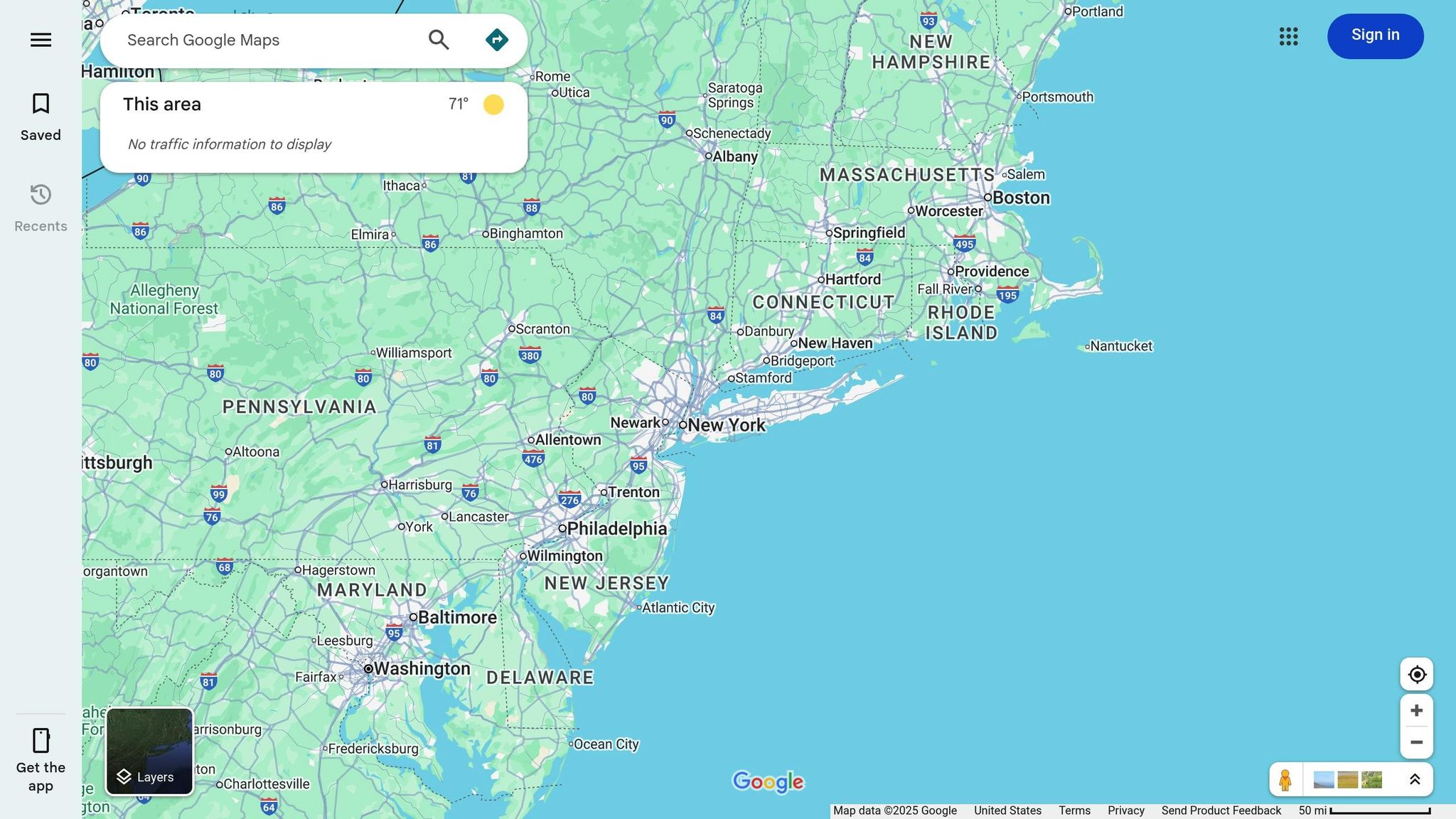
For example, AI tools can scan Google Maps listings to find businesses in your area, pulling in details like company size, years in operation, and customer reviews. They can even use public records, government filings, and business registrations to create detailed profiles of prospects.
Imagine you're running a landscaping company. AI might flag a retail plaza that recently changed ownership, signaling a potential need for new grounds maintenance services. Or, if you're an HVAC contractor, AI could identify businesses that have expanded their space, hinting at a need for upgraded climate control systems.
By examining growth trends, seasonal patterns, and industry-specific challenges, AI provides the kind of detailed insights that make personalization possible.
Dynamic Personalization with AI
Once AI gathers this data, it uses the information to create customized email content that speaks directly to each prospect's needs.
Subject lines and email body content are tailored to reflect the recipient's business situation. For instance, a janitorial service might send an email with the subject line "Supporting Your Recent Downtown Location Expansion", while the body of the email highlights after-hours cleaning services to accommodate a busy restaurant's weekend schedule.
AI also adjusts the timing and tone of emails automatically. B2B companies might receive formal emails during standard work hours, while a retail business owner might get a more conversational message that reflects their customer-focused style.
And as AI learns from responses, it fine-tunes its personalization strategies. Over time, it gets better at identifying which types of customized elements resonate most with different types of businesses.
Automated Follow-Up Campaigns
Follow-ups are essential, but managing them can quickly become overwhelming. AI steps in by creating follow-up messages that build on previous interactions.
Instead of sending the same follow-up to everyone, AI adapts based on how each prospect has engaged. For example, if someone opened your initial email but didn’t respond, the follow-up might highlight a specific service benefit. If they clicked on pricing information, the next message could address common questions about implementation.
AI also considers seasonal patterns when scheduling follow-ups. A snow removal service might ramp up outreach to property managers in early fall, while a catering business could focus on restaurants during menu planning periods.
Additionally, AI monitors external events to trigger timely follow-ups. If a prospect’s business gets featured in the news or announces an expansion, AI can send a congratulatory email that ties your services to their recent success.
This approach ensures no prospect is overlooked, while every interaction feels thoughtful and relevant. Each follow-up builds naturally on the last, creating a seamless and engaging experience that helps drive conversions.
Best Practices for AI-Powered Cold Email Campaigns
To make AI-powered cold email campaigns truly effective, you need more than just automation - you need a solid strategy. While AI can handle much of the heavy lifting, like research and personalization, local service providers should focus on smart planning and execution to maximize outreach results while staying compliant with regulations.
Segmenting Leads for Better Targeting
Lead segmentation is the key to turning generic emails into personalized, impactful messages. For instance, dividing leads geographically by ZIP codes or by business size - small (1–25 employees), medium (26–100 employees), and large (100+ employees) - allows you to tailor your messaging to reflect local needs and priorities.
Industry-specific segmentation takes personalization even further. Think about it: a restaurant might prioritize after-hours cleaning services, while a medical office would need specialized sanitization protocols. You can also use dynamic triggers, like new business registrations, relocations, or expansion permits, to identify prospects whose service needs are urgent and immediate.
Once you’ve defined your target segments, make sure your outreach respects data privacy and complies with legal requirements.
Maintaining Compliance and Data Privacy
In the United States, cold emailing is legal under the CAN-SPAM Act of 2003, but there are rules you must follow to stay compliant.[1] These include:
Using accurate sender information and subject lines.
Including a physical business address in your email.
Providing a clear and easily accessible unsubscribe link - and processing opt-out requests within ten business days.
Non-compliance can lead to fines of up to $51,744 per violation, so it’s not something you want to overlook. Regularly validating your email list and cleaning it up can also protect your sender reputation by reducing bounce rates and avoiding spam filters.
As Jay Baer, author of Youtility: Why Smart Marketing Is about Help Not Hype, wisely said:
"What if instead of trying to be amazing, you just focused on being useful? What if you decided to inform rather than promote?"[1]
Once you’ve ensured compliance, it’s time to focus on tracking your campaign’s performance.
Measuring Success Metrics
To fine-tune your campaigns, you need to track the right metrics. Here are some of the most important ones to monitor:
Open rates: Typically 15–25% for service industries, this metric shows how effective your subject lines are.
Reply rates: Falling in the 2–8% range, this measures how well your content resonates with recipients.
Click-through rates: These reveal which services or offers are sparking interest.
Conversion rates: This tracks how many inquiries or signed agreements your campaign generates.
Keep an eye on unsubscribe rates too - anything above 2–3% might mean it’s time to rethink your strategy. Deliverability metrics are also vital for ensuring your emails reach inboxes rather than spam folders.
Seasonal trends can also offer valuable insights. For example, HVAC services see demand spike before summer and winter, while landscaping services tend to peak in early spring. Tracking these patterns can help you time your campaigns better and allocate your budget more effectively.
How Cohesive AI Streamlines Lead Generation
Let’s face it - manually executing even the most effective lead generation strategies can be a huge time sink. That’s where Cohesive AI steps in, transforming how local service businesses approach lead generation. By automating complex tasks while keeping personalization and compliance intact, it creates more time for you to focus on growing your business. The result? A smoother, more scalable way to generate consistent leads.
Key Features and Benefits
Cohesive AI takes the heavy lifting out of prospecting and outreach. Here’s how:
Automated Prospect Identification: Instead of spending hours researching potential clients, the platform scrapes data from Google Maps and government filings to pinpoint local business owners who match your ideal customer profile. This works across industries like janitorial services, landscaping, HVAC, catering, and business brokerage.
AI-Powered Email Personalization: Forget cookie-cutter emails. The system goes beyond adding a name to a template - it analyzes business details, industry specifics, and location to craft tailored messages. For instance, if you’re targeting a janitorial services client, the email might reference local sanitization standards or compliance requirements that resonate with them.
Seamless Email Deliverability: Cohesive AI ensures your emails land in inboxes by managing sender reputation and reducing bounce rates. Plus, you can run up to three campaigns simultaneously, making it easy to test different messaging strategies or target multiple market segments without overwhelming your audience.
Smart Follow-Ups: The system tracks prospect engagement and automates follow-up emails, ensuring no opportunity slips through the cracks.
Pricing and Guarantee
Cohesive AI keeps things simple with a transparent pricing structure: $500 per month with a $75 setup fee. There are no long-term contracts - just a month-to-month model that lets you adapt as your business needs change.
And here’s the kicker: the platform guarantees at least four interested responses per month. If it doesn’t deliver, you get a free month of service. This shifts the risk off your shoulders and ensures you’re getting measurable results.
Replacing Lead Generation Agencies
Traditional lead generation agencies often require hefty upfront fees, long-term commitments, and a lot of manual effort. Their approach typically involves basic email templates, limited follow-ups, and time-consuming research. Cohesive AI eliminates these pain points with full campaign automation and straightforward pricing.
From prospecting to email delivery to tracking responses, the platform handles it all. This is especially useful for industries like janitorial services, landscaping, and HVAC, where understanding local markets and acting quickly can make all the difference.
What’s more, its scalable design ensures you can maintain that personal touch, even as your business grows.
Manual vs. AI-Powered Cold Email Personalization
When it comes to cold email personalization, the manual approach involves deep research and crafting unique messages for each recipient. While this can lead to highly tailored emails, it’s time-consuming, hard to scale, and often inconsistent in quality. On the other hand, AI-powered tools streamline the process by analyzing data to quickly identify personalization opportunities. This allows businesses to send customized emails to a larger audience without compromising quality.
Regulatory compliance is another area where these two methods differ. Manual processes require meticulous tracking to adhere to laws like the CAN-SPAM Act, handle unsubscribe requests, and protect sender reputation. AI systems, however, automate much of this oversight, reducing the risk of human error.
Cost is also a key factor. While manual personalization might seem cost-free upfront, it demands a significant time investment, which translates to high opportunity costs. In contrast, AI-powered solutions save time on research and writing, offering a more efficient and budget-friendly way to manage outreach.
Key Metrics Comparison Table
Here’s a side-by-side look at how manual and AI-powered approaches stack up across several critical metrics:
Metric | Manual Approach | AI-Powered Approach |
|---|---|---|
Lead Research Time | Lengthy and effort-intensive per prospect | Quick and automated for each prospect |
Daily Email Volume | Limited by human capacity | Handles significantly higher volumes |
Personalization Quality | High when done carefully but inconsistent | Consistently high with data-driven insights |
Scalability | Restricted by manual effort | Easily scalable with automation |
U.S. Compliance Management | Requires manual tracking and diligence | Automated compliance management |
Opportunity Cost | High due to time demands | Low, freeing time for other priorities |
Follow-up Consistency | Prone to delays or missed opportunities | Automated and timely follow-ups |
Response Rate | Strong but hard to sustain at scale | Stable and predictable outcomes |
This comparison highlights the efficiency and consistency AI-powered systems bring to the table, especially for businesses looking to scale their email outreach without sacrificing quality or compliance.
Conclusion: Growing Your Business with AI-Driven Personalization
AI-driven personalization has transformed how local service businesses can scale their outreach efforts without compromising quality. Where manual methods might limit you to contacting only a few prospects each day, AI systems can handle an impressive volume of outreach - while still delivering tailored and meaningful communication.
By taking over tasks like data analysis, personalization, and follow-ups, AI frees up your time to focus on what truly matters: delivering exceptional service. This shift not only saves time but also enhances productivity, making it easier for smaller businesses to compete with larger players. Traditional methods often hit a wall when scaling, but AI-powered tools break through, allowing businesses to expand their reach significantly.
Take Cohesive AI, for example. Their transparent pricing model and performance guarantee offer peace of mind, with no long-term commitments required. This flexibility ensures that businesses can explore AI-driven solutions without undue risk, while the performance guarantee adds an extra layer of accountability.
As discussed earlier, the real power of AI-driven personalization lies in its ability to drive sustainable growth. A system that consistently generates qualified leads while automating follow-ups ensures that no opportunities are missed. This not only maximizes your return on outreach efforts but also lays the groundwork for long-term expansion.
From conducting personalized research to managing efficient follow-ups, AI-powered cold email systems have become more than just tools - they’re now essential for staying ahead in today’s competitive landscape.
FAQs
How does AI help ensure cold emails comply with regulations like the CAN-SPAM Act?
AI plays a crucial role in helping businesses comply with the CAN-SPAM Act by automating essential safeguards to meet legal standards. It ensures that emails include accurate sender details, straightforward subject lines, and an easy-to-find option for recipients to unsubscribe from future messages. On top of that, AI can handle recipient preferences and prevent emails from being sent to individuals who haven’t given their consent.
With AI tools, businesses can simplify email personalization while staying compliant, making it easier to build trust and maintain a strong, professional reputation.
How do AI-powered tools make cold email personalization more scalable and efficient?
AI-powered tools are revolutionizing how businesses approach cold email personalization by taking over tedious tasks like writing custom messages and managing outreach schedules. This means companies can reach more leads faster and more efficiently, all while conserving time and resources.
With the help of machine learning algorithms, these tools analyze data to fine-tune email content and perfect the timing of delivery, resulting in higher response rates. Unlike traditional manual methods, AI ensures that communication remains both consistent and personalized, even when scaling up. For businesses looking to expand their reach while maintaining quality, these tools are a game-changer.
How does AI tailor follow-up emails based on past interactions and business events?
AI takes follow-up emails to the next level by tailoring them based on a prospect's past interactions and key business events. It pulls insights from earlier conversations, customer behavior patterns, and external factors like company achievements or industry news to create messages that feel relevant and well-timed.
For example, AI can tweak the tone, content, and timing of an email depending on how a lead has responded previously or if there’s a new development in their business. This level of personalization helps the emails stand out, making them more engaging and improving the likelihood of turning leads into customers.