How Google Maps Data Powers CRM for Local Leads
Oct 1, 2025
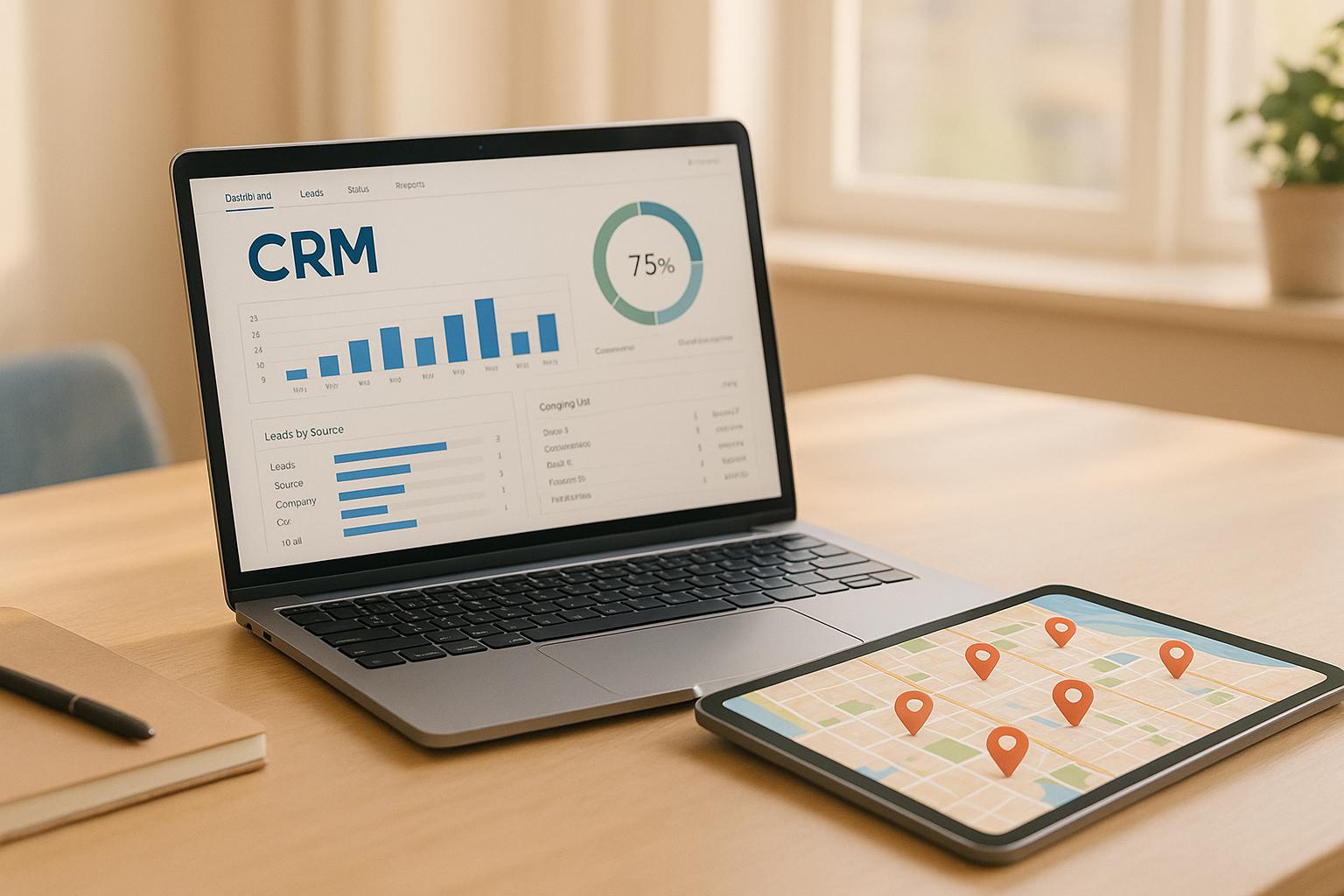
Google Maps data is transforming how businesses generate and manage local leads. By integrating its vast database of over 200 million businesses into CRM tools, companies can find, qualify, and connect with local prospects more effectively. Three platforms stand out in this space:
Cohesive AI: Automates lead generation and outreach for local service providers, offering a "done-for-you" approach for $500/month. It guarantees at least four interested responses monthly.
Zoho CRM Integrations: Enhances existing CRM data with mapping tools and AI-driven insights. Starting at $12/month, it’s ideal for businesses already using Zoho.
Clay: Offers advanced workflows for sourcing and enriching leads using Google Maps data. With flexible pricing, it’s best suited for teams with technical expertise.
Each platform caters to different needs, from fully managed solutions to highly customizable tools. Your choice depends on your budget, technical skills, and business goals.
How to Turn Your CRM Into a War Machine Using Google Maps Data?
1. Cohesive AI
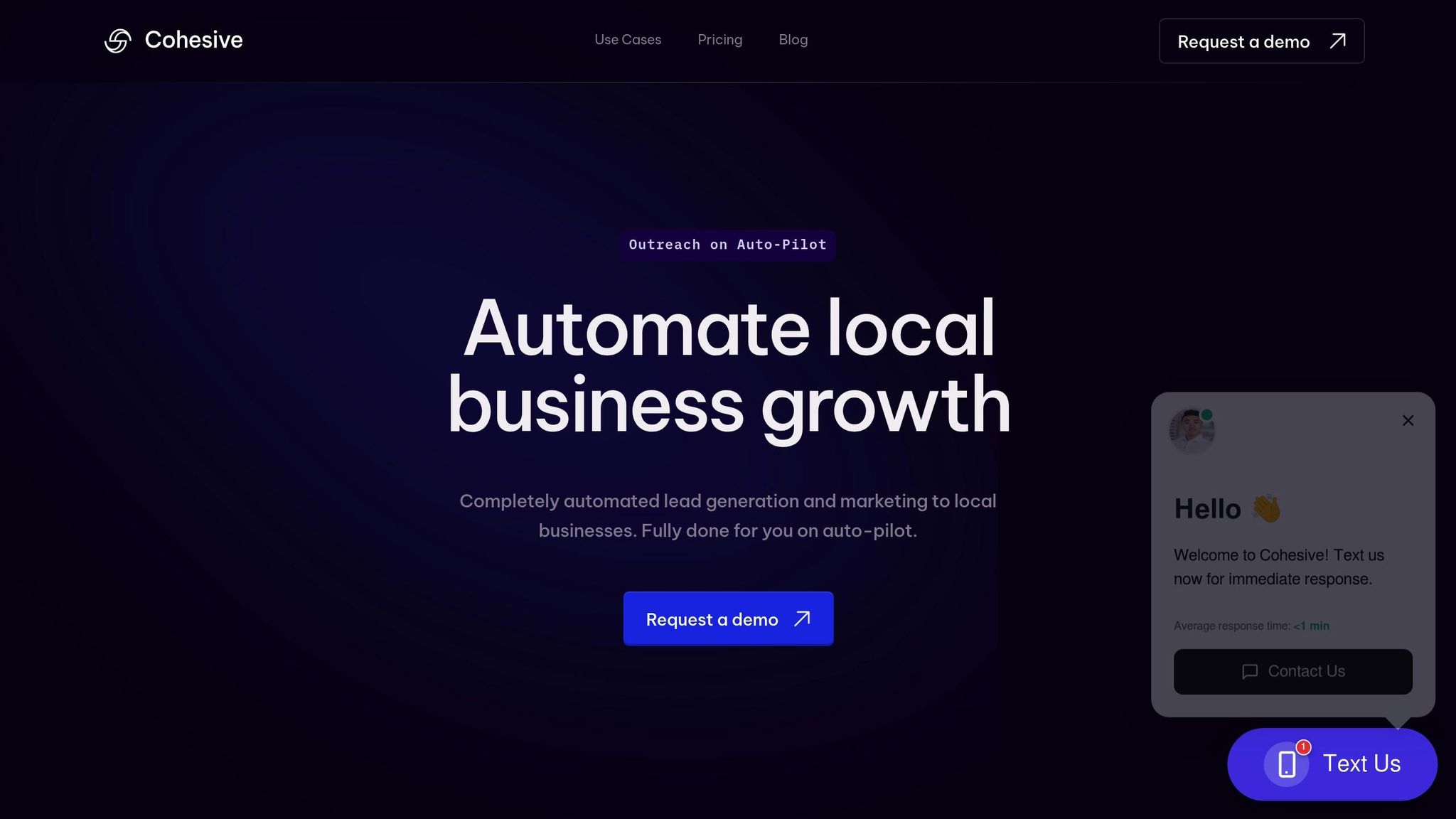
Cohesive AI is a game-changer for local service businesses in the United States, offering a fully automated way to turn raw data into actionable leads. Designed specifically for industries like janitorial services, landscaping, HVAC, catering, and business brokers, it addresses the unique challenges these sectors face in lead generation. Many of these businesses struggle with limited online visibility and scattered data, but Cohesive AI steps in to bridge the gap.
Data Coverage
What sets Cohesive AI apart is its dual-source data collection strategy. By combining Google Maps scraping with information from government filings, it builds lead databases that are both broad and detailed. This approach ensures it captures not only established businesses with Google Business Profiles but also newer ones that may lack a strong online presence. For example, a janitorial company in Dallas gained access to hundreds of local leads, including recently opened offices and retail spaces that traditional B2B databases often miss.
The platform also allows users to fine-tune their data collection parameters. Businesses can define geographic boundaries - such as a 50-mile radius around a specific ZIP code - and filter by industry categories. This customization ensures that only the most relevant prospects are targeted, which is crucial for service providers operating within specific areas. This targeted data collection feeds seamlessly into the platform’s automated outreach system.
Automation Level
Cohesive AI takes automation to the next level with its "Outreach on Auto-Pilot" feature. Once set up, the platform continuously scans for new leads and manages outreach without any manual effort. It even handles email deliverability, ensuring that campaigns maintain a strong sender reputation and avoid spam filters.
This level of automation is a time-saver for local businesses. Instead of spending hours researching leads or writing emails, owners can focus on running their operations while the platform works in the background. It can manage up to three campaigns simultaneously, making it possible to target different service areas or industries at the same time.
AI Personalization
Cohesive AI doesn’t just automate outreach - it personalizes it. By analyzing scraped business data, the platform’s AI crafts customized cold emails tailored to each prospect. It factors in details like business type, location, recent activity, and market trends to create messaging that resonates. For instance, an HVAC company targeting restaurants will receive emails with language and pain points specific to that industry, while messaging for office buildings would take a different approach.
This level of personalization delivers results. A janitorial company in Dallas saw a 30% increase in response rates compared to generic email campaigns, proving how targeted communication can drive engagement.
CRM Integration
To streamline workflows, Cohesive AI integrates directly with popular CRM systems. This means all lead data, communication history, and engagement metrics flow into existing tools, eliminating the need for manual data entry. The integration also keeps lead information up-to-date, flagging outdated entries to prevent wasted outreach efforts.
For sales teams, this integration is a game-changer. One local service provider reported a 20% boost in qualified appointments after adopting the platform. With faster response times and consistent follow-ups, their team was able to convert more leads into actual business opportunities.
Cohesive AI is available for a $500 monthly fee plus a $75 setup fee, with no long-term contracts. The platform guarantees at least four interested responses per month and offers a free month if that target isn’t met - a bold promise that reflects their confidence in delivering results for local businesses.
2. Zoho CRM Integrations
Zoho CRM approaches Google Maps integration with flexibility, offering a variety of marketplace extensions rather than a single, all-encompassing solution. This setup allows third-party developers to create specialized tools that enhance Zoho CRM’s core features, particularly in location-based lead generation.
Data Coverage
Several extensions use Google Maps data to power location-based lead generation, each with its own unique features. For instance, the Google Maps Lead Extractor by Varthak uses geographic filters to help users identify local prospects based on specific regions and industries [3].
Tiara Consulting offers an extension that enables users in the U.S. to locate nearby leads, accounts, contacts, and vendors based on their current location [4].
The Lead Finder for Zoho CRM by Zenith Innovations takes things further by gathering detailed business information directly from Google Maps. This includes reviews, ratings, email addresses, phone numbers, and GPS coordinates [7]. Users have praised its functionality:
"truly revolutionized the way I manage leads and businesses within the Zoho CRM environment... seamless import functionality... capability to scrape email addresses from websites... exceptional support" – Jeff Jackson [7]
This depth of data collection supports a range of automation features across Zoho CRM's extensions.
Automation Level
Automation plays a key role in streamlining lead management. The Google Maps Lead Extractor simplifies the process of finding and importing location-based leads directly into Zoho CRM [3]. Meanwhile, the Lead Finder extension provides semi-automated functionality, allowing users to search for businesses by keywords and location before importing results [7].
For more advanced automation, businesses can turn to Albato, a third-party integration platform. Albato connects Google Maps with Zoho CRM, enabling real-time synchronization through webhook triggers and API polling at intervals as short as one minute. This allows for automated actions like creating leads or updating records when new reviews are posted about an organization [6].
These automation capabilities integrate seamlessly with Zoho CRM's AI-driven tools for enhanced efficiency.
AI Personalization
Zoho CRM leverages its AI assistant, Zia, along with third-party tools, to personalize insights from Google Maps data. Once imported, Zia analyzes the data to predict conversion probabilities, recommend the best times to engage leads, and suggest up-selling or cross-selling opportunities [9]. It even assigns leads to sales reps with relevant local expertise [9].
Albato adds another layer of personalization by enabling users to refine and transform data using AI models like OpenAI, Claude AI, and Jasper AI [6]. Additionally, the Lead Finder extension includes features for generating AI-driven email content [7].
CRM Integration
Zoho CRM’s integration strategy is built around its extensive marketplace, which offers over 1,100 app integrations [10]. The Google Maps Lead Extractor integrates directly with Zoho CRM, allowing users to import leads and visualize them on interactive maps [3].
The Map Plotter for Zoho CRM extension uses geo-location data to map leads, contacts, accounts, and deals. It supports regions like the U.S., EU, India, Australia, Canada, and Japan by leveraging mailing and billing addresses [5].
For more advanced mapping needs, third-party tools like Mapsly use API-based bi-directional connectors. These allow users to sync data in real time, edit Zoho CRM records directly within mapping interfaces, and push updates back to the CRM seamlessly [8].
Pricing for these extensions typically ranges from $10 to $20 per month, with most offering organization-wide licenses, making them an affordable option for teams.
3. Clay
Zoho CRM relies on third-party tools for mapping and lead enrichment, but Clay takes a different route. It uses a built-in "Find Local Businesses using Google Maps" feature, which serves as the backbone of its advanced lead generation workflows.
Data Coverage
Clay’s integration with Google Maps shines when it comes to uncovering local businesses that typical B2B databases tend to overlook. Each search can yield up to 1,000 results, capturing key details like business names, Google ratings, review counts, phone numbers, websites, and addresses [2].
But Clay doesn’t stop there. The platform converts Google Maps data into detailed prospect profiles. Using its AI agents, called Claygent, it gathers even more insights - like summarizing recent Google and Yelp reviews from the past six months - and can scrape websites to find additional email addresses, verifying them through tools like Debounce [1].
For instance, Clay identified 178 potential leads for HVAC businesses in Phoenix, Arizona, automatically collecting and validating critical data [1]. It connects with over 75 premium data sources, employing a layered enrichment process to expand data coverage while keeping costs down [11]. This method addresses gaps in B2B databases for small businesses such as salons, restaurants, and HVAC technicians [1].
Automation Level
Clay streamlines the entire lead generation process, from sourcing to CRM integration, reducing manual effort by 70% [11]. The automation starts with Google Maps scraping and continues through multiple enrichment stages. It validates email addresses, identifies decision-makers, and enriches profiles with social media and company details [1].
In April 2024, Clay demonstrated its inbound lead management system. When a prospect submits a form, Clay automatically retrieves their data, scrapes company domains, calculates key metrics, and crafts personalized emails. This enriched data syncs directly with HubSpot, enrolling qualified leads into outreach campaigns without any manual input [14]. For more intricate workflows, Clay uses signal-based automation to detect intent from high-interest web pages, exclude existing customers via CRM sync, and assign leads to specific sales reps based on persona, region, or company size [12]. This level of automation ensures a smooth transition to personalized outreach and CRM updates.
AI Personalization
Clay’s AI takes personalization to another level by adapting to recent feedback, ensuring every interaction feels timely and relevant. The platform analyzes enriched data to create tailored greetings and one-liners based on unique business insights [1]. For example, when targeting coffee shops in Halifax, Nova Scotia, Clay identified payment and transaction issues through review analysis, allowing for highly specific outreach [16].
Businesses using Clay’s AI-driven personalization report significant improvements in engagement. Response rates have doubled compared to traditional methods, while email volume has been cut in half - resulting in a 5x increase in overall efficiency [15]. To balance quality and cost, Clay supports multiple AI models, suggesting GPT-4 for high-priority outreach and GPT-3.5 for less critical tasks [1]. Additionally, AI personalization is only triggered for verified contacts, ensuring resources are used effectively.
CRM Integration
Clay integrates seamlessly with popular CRM platforms like HubSpot, Salesforce, and Pipedrive, making it easy to sync enriched Google Maps data [11][12]. But it’s more than just data transfer - Clay keeps CRM records accurate by automatically updating existing entries, creating new opportunities, and removing irrelevant data [12]. This continuous refinement transforms CRMs into dynamic intelligence hubs.
Patrick Spychalski of The Kiln Agency highlights the value of this integration:
"Clay's most valuable use case across the board imo. Every company with a CRM should have this, and it solves so many data integrity problems I couldn't even fit them in the post. It converts stale CRMs into continuously updated intelligence feeds, which is what it was supposed to be in the first place." [12]
For businesses with unique workflows, Clay’s HTTP API allows for custom integrations without requiring coding expertise [13]. Its pay-per-use pricing model also makes it a cost-effective alternative to traditional flat-rate data providers [11]. Users frequently praise its simplicity, with Konrad Lercher, CEO of Elevate AI, stating:
"Enriching new or existing contacts with Clay is just the best & easiest" [12]
In short, Clay’s ability to keep data accurate while automating complex workflows makes it a powerful tool for businesses focused on local markets and Google Maps data.
Strengths and Weaknesses
When it comes to leveraging Google Maps data for local lead generation, each platform brings its own strengths and trade-offs. Understanding these differences is crucial for businesses to select the right tool that aligns with their needs and budget. Here's a closer look at how these platforms stack up.
Cohesive AI is a managed solution tailored for local service businesses. For $500 per month, it handles Google Maps scraping and AI-powered email campaigns, guaranteeing at least four interested responses monthly. Operating across 250+ countries and 30,000+ cities, it’s perfect for businesses seeking a hands-off approach. However, this convenience comes with compliance risks, as Google Maps scraping violates Google's terms of service. Additionally, its service model offers less customization compared to self-managed platforms.
Zoho CRM Integrations shines for businesses already using Zoho, offering seamless integration with over 1,100 apps. It specializes in enriching and unifying existing CRM data rather than sourcing new leads. With advanced workflow automation and AI features like Zia's predictive analytics, Zoho CRM is highly efficient and starts at just $12 per user per month. However, it’s not designed for direct Google Maps lead generation, focusing instead on optimizing data already within the CRM ecosystem.
While Zoho CRM focuses on enhancing existing data, Clay pushes the boundaries of data access and automation. It stands out for its flexibility, pulling data from over 150 providers. Recent improvements, including its Openmart integration, have increased its local leads data tenfold. OpenAI has boosted its enrichment coverage from the low 40% to high 80%, while Anthropic has tripled its enrichment rate compared to previous solutions. Despite its 4.9 rating, Clay requires technical expertise to build custom workflows and may feel overly complex for simpler use cases.
Here’s a quick comparison of how these platforms approach Google Maps data for lead generation:
Criteria | Cohesive AI | Zoho CRM Integrations | Clay |
|---|---|---|---|
Data Coverage | AI-enhanced insights across 250+ countries | 1,100+ app integrations, focuses on CRM data enrichment | Local leads data increased tenfold via Openmart |
Automation Level | Fully automated, "done-for-you" service | Customizable workflows and AI-powered automation | Flexible workflows with real-time triggers |
AI Personalization | AI-driven email campaigns | Zia AI for predictions and recommendations | Context-aware AI agents, doubled response rates |
CRM Integration | Indirect - leads imported to external CRMs | Native Zoho CRM integration with third-party options | Broad integration with 100+ platforms, requires setup |
Choosing the right platform depends on your business model, technical expertise, and budget. For local service providers needing a fully managed solution, Cohesive AI is a strong option. Zoho CRM Integrations works best for existing Zoho users looking to maximize their current data. Clay, on the other hand, is ideal for growth teams with technical skills who need flexibility and extensive data access.
As Stevie Case, CRO, emphasizes Clay's capabilities:
"Clay should be an essential pillar of every company's GTM stack, enabling outbound built on the highest quality data foundation possible." [13]
Adam Wall from Anthropic also highlights Clay’s advantages:
"Clay is a game changer for marketing, data, and operations. We have tripled our enrichment rate with Clay's combination of data providers vs. our previous solution." [13]
Ultimately, the decision comes down to balancing your technical resources, compliance considerations, and budget with the strengths and limitations of each platform.
Conclusion
Integrating Google Maps data with CRM tools is reshaping how businesses approach local lead generation. Each platform brings distinct advantages to the table, depending on your needs.
For a hands-off approach, Cohesive AI offers a managed service priced at $500 per month. It guarantees four interested responses, allowing businesses to focus entirely on delivering their services without worrying about lead generation logistics.
If you're already in the Zoho ecosystem, the Zoho CRM Lead Extractor is a budget-friendly option at $12 per month. It provides advanced filtering and interactive mapping features. Users like Bharath S have praised it for its ability to "generate maximum leads", earning it a stellar 5.0-star rating [3].
For teams with technical expertise, Clay stands out as a tool offering deep customization and detailed local lead workflows. It’s ideal for processing leads in specific regions but may feel limiting for those needing broader, simultaneous outreach.
When selecting a solution, weigh factors such as budget (ranging from $12 to $500 monthly) and your team’s technical capabilities. Industries with a strong local focus, such as field services, will benefit most from tools tailored to their operational needs.
Additionally, the Google Maps API provides a helpful starting point with its $200 monthly free credit. However, as your usage grows, keeping an eye on costs becomes essential [17].
Ultimately, aligning your lead generation tool with your business priorities ensures better results. Whether you need an automated service like Cohesive AI, seamless CRM integration with Zoho, or a highly customizable workflow through Clay, there’s a solution to match your goals.
The future of local lead generation lies in smart integrations, leveraging Google Maps data to connect businesses with the right customers in the right places.
FAQs
How does Cohesive AI stay compliant with Google's terms of service when using Google Maps data for lead generation?
Cohesive AI operates within Google's rules by carefully aligning with the Google Maps Platform Terms of Service. These rules outline specifics like licensing, data usage, and content restrictions, ensuring all actions are both ethical and lawful.
By sticking to Google's guidelines for data handling and security, Cohesive AI uses approved methods to access and process information. This approach enables the platform to provide effective lead generation solutions while staying fully compliant with Google's requirements.
How does Cohesive AI help local service businesses improve lead generation?
Cohesive AI takes the hassle out of lead generation for local service businesses such as janitorial services, landscaping, HVAC, and catering. Using advanced tools, it gathers data from sources like Google Maps and government filings to identify local business owners. Then, it leverages AI to craft personalized cold email campaigns tailored to these potential clients.
Beyond just identifying leads, the platform handles the entire email outreach process, saving businesses valuable time and effort compared to traditional, labor-intensive methods.
By combining automation and precision, Cohesive AI removes the need for manual lead generation, making it easier for businesses to connect with the right prospects efficiently.
How does Cohesive AI's AI-powered personalization boost response rates for businesses?
Cohesive AI uses its AI-driven tools to craft personalized messages that resonate with potential leads. By weaving in details like a customer's name, location, or interests, the platform makes outreach feel genuine and personal.
This level of customization has proven results - businesses have reported response rates climbing by 30.5%. When communication feels tailored, it helps build trust and a sense of connection, increasing the chances of a positive response.