How NLP Improves Email Personalization
Oct 13, 2025
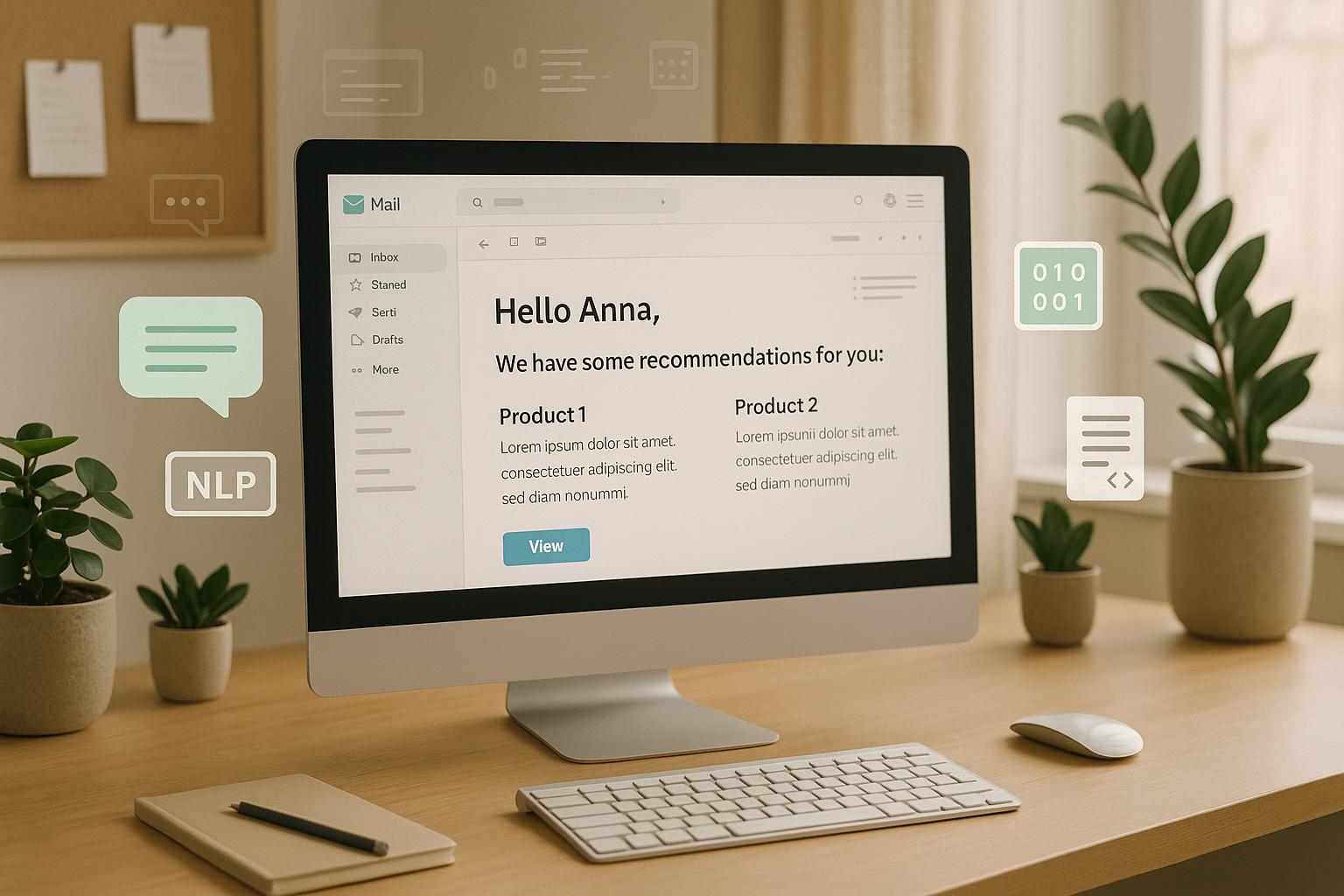
NLP (Natural Language Processing) is transforming email marketing by making messages more personalized and relevant to each recipient. Here's how it works and why it matters:
Personalized Emails Drive Results: Emails tailored to individual preferences and behaviors see higher open rates (+26%) and click rates (+13%), leading to better engagement and more sales.
How NLP Works: It analyzes customer data - like past purchases, browsing habits, and communication styles - to craft messages that resonate. It even adjusts tone and timing for maximum impact.
For Local Businesses: NLP helps small businesses target the right audience, write effective cold emails, and manage campaigns efficiently. Tools like Cohesive AI, for $500/month, promise at least four responses per campaign, making outreach more effective.
Challenges: Privacy laws, data quality, and scalability require attention, but clear strategies - like data minimization and regular audits - can address these hurdles.
NLP isn't just about automation; it's about creating emails that feel personal, boosting customer trust and driving measurable results.
How To Do Email Marketing Using AI | AI For Email Marketing | AI Tools For Email Marketing
How NLP Works with Customer Info for Personal Touches
Natural Language Processing (NLP) takes basic customer info and turns it into helpful insights for making emails that feel just for you. By looking at how customers act, NLP spots trends in how they behave, letting us craft messages that seem made just for them.
The work starts by pulling info from many places where customers connect with us. But it’s more than just gathering data - NLP picks up on small things. For example, it can tell when a customer really likes quick service or when a so-so thank you might mean they need more help. Also, NLP watches how likely people are to open emails or how their likes change, letting businesses tweak their words to fit each person's habits. This deep look lets us track feelings right and build sharp customer profiles.
Look at Feelings and Small Actions
NLP goes into detail, not just calling feedback good or bad; it sees all types of feelings. For instance, it shows why quick replies matter by seeing the difference between happy and okay reactions. This helps businesses really get how customers feel.
Plus, NLP spots small actions like clicking on certain links, showing what content folks might like. It also looks at when people connect - after a fix or during a special time. These facts help businesses not just on what to say, but when to say it. This care in timing is key for meeting unique needs and fitting messages to local ways.
Making More Complete Customer Profiles
Using these facts, NLP makes full customer profiles that tell us more than just basic stuff like job or company size. These profiles are full of details like how often people open emails, what they look at online, and how they like to talk.
These profiles show if a customer likes short, direct emails or longer, story-like messages. They also watch how customers feel about their links with the business, letting companies shift messages based on happiness levels or recent talks. This changing profile means that email talks hit home for each person.
For companies using tools like Cohesive AI, these profiles change the game. They make personal messages that grow with shifts in customer habits and main points, making sure email plans stay fitting and strong as time goes on.
How NLP Helps Email Plans
Natural Language Processing (NLP) is changing email ads by making smart, personal texts on its own. By using what the customer does and likes, NLP makes each part of an email better and hits home more.
Make Better Subject Lines
NLP removes the hard guesses in making subject lines by checking things like what they buy, look at, and basic info. For example, rather than a general "Spring Cleaning Deal!" for all, NLP makes special subject lines. A busy shop boss might get "Quick Office Fix This Week?" while one planning a party sees "Clean Well Before Your Big Bash." These right fits get more people involved.
And it keeps getting better - NLP learns more with each email sent. It keeps tweaking subject lines to make sure more people open and click them.
Tailored Message Making
Making a personal email is another thing NLP does well. It looks at feedback, chats on social media, and past messages to make emails that do more than just use a first name. For instance, a yard care firm may send full yard care tips to those who want to learn, while others who manage places might get brief, clear up-keep hints.
NLP also matches how it talks to what the reader likes. Whether they like a cool, easy chat or a strict style, the system shifts right away. This way, each message fits better as what the reader wants and does changes.
Smarter Groups and Focus
NLP looks deep into what the customer does to see trends that old ways don't catch. By seeing how they act, feel, and react, it can break users into groups well. This lets shops guess what the customer might do next and set up follow-ups in a smart way.
For users of tools like Cohesive AI, this makes better aiming at local service needs. The tool checks facts from places like government files and how well emails work to find the best plan for different shops. Like, cleaning services might learn that rule-focused texts grab some types of clients, while shops like offers that they can change.
NLP also sees trends in places, showing how town and country buyers differ. This info helps local services pin down their tactics, making email plans that feel right for each reader. By making such tight groups, NLP lets businesses reach out in ways that matter.
How NLP Helps Email Marketing Scores
NLP (Natural Language Processing) has changed email marketing by using what we know about customers to give us clear, useful tips, lifting key scores. This change helps us see and improve our plans.
More Opens and Clicks
Making personal subject lines with NLP can up open rates by 26% over plain ones [3]. Also, AI-led emails fueled by NLP raise click rates by 13% [1]. Emails sent by machines that use NLP see clicks go up by 332% over normal group emails [1], making these emails great for more user action.
NLP helps make emails that fit what each person likes. When emails hit on what users care about and talk in a way that feels right to them, people tend to read and click more.
Better Money Made and More Sales
Emails using NLP for personal touches bring in much more money. Personal emails get six times more sales than plain ones and make 3-5 times more sales than big group emails [2] [4]. On average, these focused emails make $42 for each $1 spent, while machine-run emails using NLP bring in 320% more money back compared to old ways [1].
By looking at what customers say, buy, and how they act, NLP finds the best ways to talk to them. For example, some local firms using tools like Cohesive AI can look at official records and biz data to set up very focused cold emails talking to the needs local biz owners have. These personal tries not only lift sales but also make emails work better in total.
Better Email Reach
NLP boosts email reach by using better words to skip spam signals and keep a good sender name. By checking good email ways, NLP helps us avoid style or word choices that could make emails go to spam.
Targeted email drives using NLP have a 34.7% higher open rate [2], part of it because they are more likely to go to the main inbox and not be seen as spam. Feeling checks help this too, making sure the tone of the email feels right and not too pushy. This way better reach happens, leading to more reads, a strong sender name, and steady main inbox spots.
Using NLP for Lead Generation in Local Service Businesses
Local service businesses - think janitorial services, landscaping companies, or HVAC contractors - often face a tough challenge: finding efficient ways to attract new customers. Traditional methods like cold calling or sending out generic email blasts can feel like throwing darts in the dark. That’s where Natural Language Processing (NLP) steps in, revolutionizing lead generation with precision and personalization. Here's how these businesses are using NLP to level up their outreach efforts.
Targeted Outreach Through Smarter Data Analysis
Instead of casting a wide net, NLP allows businesses to focus on high-potential leads. By analyzing data from sources like Google Maps or government filings, NLP pinpoints prospects most likely to engage. This targeted approach saves time and resources, making outreach more effective than ever.
Crafting Personalized Cold Emails That Work
We’ve all ignored one-size-fits-all emails - they’re impersonal and easy to dismiss. NLP changes the game by analyzing specific details about each prospect and generating tailored email messages. These personalized emails resonate with recipients, leading to higher response rates and better engagement.
Automating Campaign Management Without Losing the Human Touch
Managing email campaigns can be time-consuming, but NLP platforms streamline the entire process. Tools like Cohesive AI handle everything from scraping data for leads to creating and managing personalized email campaigns. The best part? Business owners can focus on their core work while the platform takes care of the outreach.
Cohesive AI offers a subscription for local service businesses in the U.S. at $500/month, covering up to three campaigns. They even guarantee at least four responses per month - or you get a free month’s credit. The platform continuously refines its performance without requiring manual adjustments, ensuring campaigns stay effective over time.
Challenges and Best Practices for Implementing NLP in Email Personalization
NLP has revolutionized email marketing by enabling advanced personalization, but adopting these technologies isn’t without hurdles. By understanding these challenges and applying thoughtful strategies, businesses can improve their chances of success while avoiding costly pitfalls.
Data Privacy and Ethical Considerations
Personalized emails powered by NLP rely heavily on customer data, which brings privacy regulations like the California Consumer Privacy Act (CCPA) into play. These laws impose strict rules on how businesses handle personal information, with serious penalties for non-compliance.
To stay compliant, businesses should prioritize privacy from the start. Data minimization - collecting only what’s truly necessary - is a good practice. For example, local service businesses might focus on details like company size or industry rather than gathering excessive personal data.
Transparency is equally important. Customers need to know how their data is being used. Including clear, simple explanations in email footers about how AI drives personalization can build trust. Offering easy opt-out options further demonstrates respect for user preferences and ensures compliance.
Managing consent is another key area. Some businesses operate under broad consent models, while others rely on legitimate business interest provisions, especially in B2B settings. Regardless of the approach, companies must have solid processes for handling data requests and keeping accurate records of data sources.
Ensuring Quality and Bias-Free AI Models
Data quality and fairness are essential for effective NLP systems. Since these models learn from the data they’re trained on, poor-quality input can result in subpar personalization. This issue is particularly relevant for local businesses, where regional nuances might be missed by generic AI models.
Creating high-quality training datasets means including diverse, representative data. For instance, relying solely on large commercial data could make it harder to personalize emails for smaller retail clients.
Bias is another challenge. AI models can unintentionally favor certain businesses or demographics, leading to uneven personalization. For example, an NLP system might adopt an overly aggressive sales tone for certain industries based on past data, even if that tone isn’t suitable. Regular audits and testing can help identify and correct these biases.
Even with automation, human oversight is critical. While AI can process vast amounts of data, periodic reviews by experts ensure that personalized emails meet quality standards and align with the company’s values. This blend of machine efficiency and human judgment helps catch issues that automated systems might overlook.
Resource Requirements and Scalability
Beyond privacy and data quality, implementing NLP for email personalization presents technical and operational challenges. These systems require robust infrastructure and ongoing maintenance, which can be daunting for smaller businesses.
NLP models need significant processing power and scalable cloud infrastructure to handle large datasets efficiently. For instance, a company managing leads across multiple cities might need to process huge volumes of data daily, requiring systems that can scale to meet peak demands.
Expertise is another hurdle. Implementing NLP involves skills in machine learning, data processing, and email marketing. Businesses without in-house expertise often turn to external consultants or specialized platforms for support.
Data integration adds another layer of complexity. Personalization requires merging information from various sources - like CRM systems, website analytics, and social media. Building reliable data pipelines to keep this information current demands ongoing technical effort.
Scalability is also a critical consideration. Systems that work well with a small number of leads may falter as the business grows. Investing in platforms and infrastructure that can handle future growth ensures smooth performance as lead volumes increase.
Finally, managing costs and monitoring performance are key to long-term success. Beyond initial setup expenses, businesses must account for ongoing costs like data storage, processing power, and system maintenance. Keeping an eye on both marketing metrics - such as open and click-through rates - and system performance indicators like processing speed can help identify and resolve bottlenecks before they impact campaigns.
Overcoming these challenges is essential for leveraging NLP’s full potential in email personalization.
Conclusion: The Potential of NLP in Email Personalization
Natural Language Processing (NLP) has the power to turn generic email campaigns into tailored messages that resonate with individual recipients. For local service businesses, this means not only better engagement but also a more meaningful connection with potential customers.
By leveraging NLP, businesses can achieve higher open rates, more clicks, and increased conversions. It’s not just about numbers, though - it’s about creating emails that address specific challenges and needs, helping to build trust and stronger relationships with customers.
Local service businesses often struggle with prospecting because generic emails fail to hit the mark. With NLP, prospect data can be analyzed to craft messages that feel personal and relevant to each recipient. This isn’t just convenient - it’s transformative. NLP automates tasks like data analysis, sentiment detection, and content optimization, allowing business owners to focus on what they do best.
A great example of this in action is Cohesive AI, a platform designed specifically for local service businesses. It uses Google Maps data and AI-driven email personalization to create highly targeted campaigns. At $500 per month, with a promise of at least four responses, it’s a solution that delivers tangible results for businesses looking to modernize their outreach.
As NLP technology continues to evolve, AI-powered personalization is shaping the future of email marketing. Businesses that adopt these tools early will gain a clear edge over competitors, as the performance gap widens with time. For local service businesses, the message is clear: now is the time to embrace NLP-powered email personalization to see better results and stay ahead in the game.
FAQs
How does NLP help ensure email personalization complies with privacy laws like the CCPA?
Natural Language Processing (NLP) plays a key role in ensuring email personalization adheres to privacy laws like the California Consumer Privacy Act (CCPA). By leveraging NLP, businesses can securely handle data while safeguarding personally identifiable information (PII). This means sensitive details are protected and only utilized within the limits of user consent.
NLP tools also streamline compliance by automating tasks like managing user preferences and opt-ins. They enhance transparency in data collection, allowing businesses to create personalized email experiences without breaching privacy regulations or legal guidelines.
What are effective ways small businesses can use NLP to improve email marketing?
Small businesses can tap into the power of natural language processing (NLP) to make email marketing more effective. One way to do this is by using NLP for sentiment analysis, which helps identify customer emotions. This insight allows businesses to create email content that feels more personal and relevant to their audience.
Another useful application is customer segmentation. NLP can group customers based on their behavior or preferences, making it easier to send tailored messages that truly connect with each segment. On top of that, NLP tools can enhance content personalization, ensuring emails speak directly to individual recipients, which can boost open and response rates.
Small businesses can also benefit from automating email responses with NLP. This saves time and ensures quick, consistent communication - especially important for teams that are stretched thin. By adopting these strategies, businesses can navigate challenges like limited resources and complex data while delivering more impactful email campaigns.
How does natural language processing (NLP) improve email subject lines and content for different customer groups?
Natural language processing (NLP) takes email marketing to the next level by analyzing customer data to craft subject lines and content that feel personal and emotionally connected. By tapping into customer preferences, behaviors, and feedback, NLP helps marketers write subject lines that stand out and create content that hits home with specific audience groups.
This technology also makes audience segmentation more precise, allowing businesses to send highly targeted emails tailored to the unique needs of different groups. The result? Higher open rates, more engaged readers, and email campaigns that deliver real results.