How To Analyze Mobile-First Funnels For Conversions
Oct 5, 2025
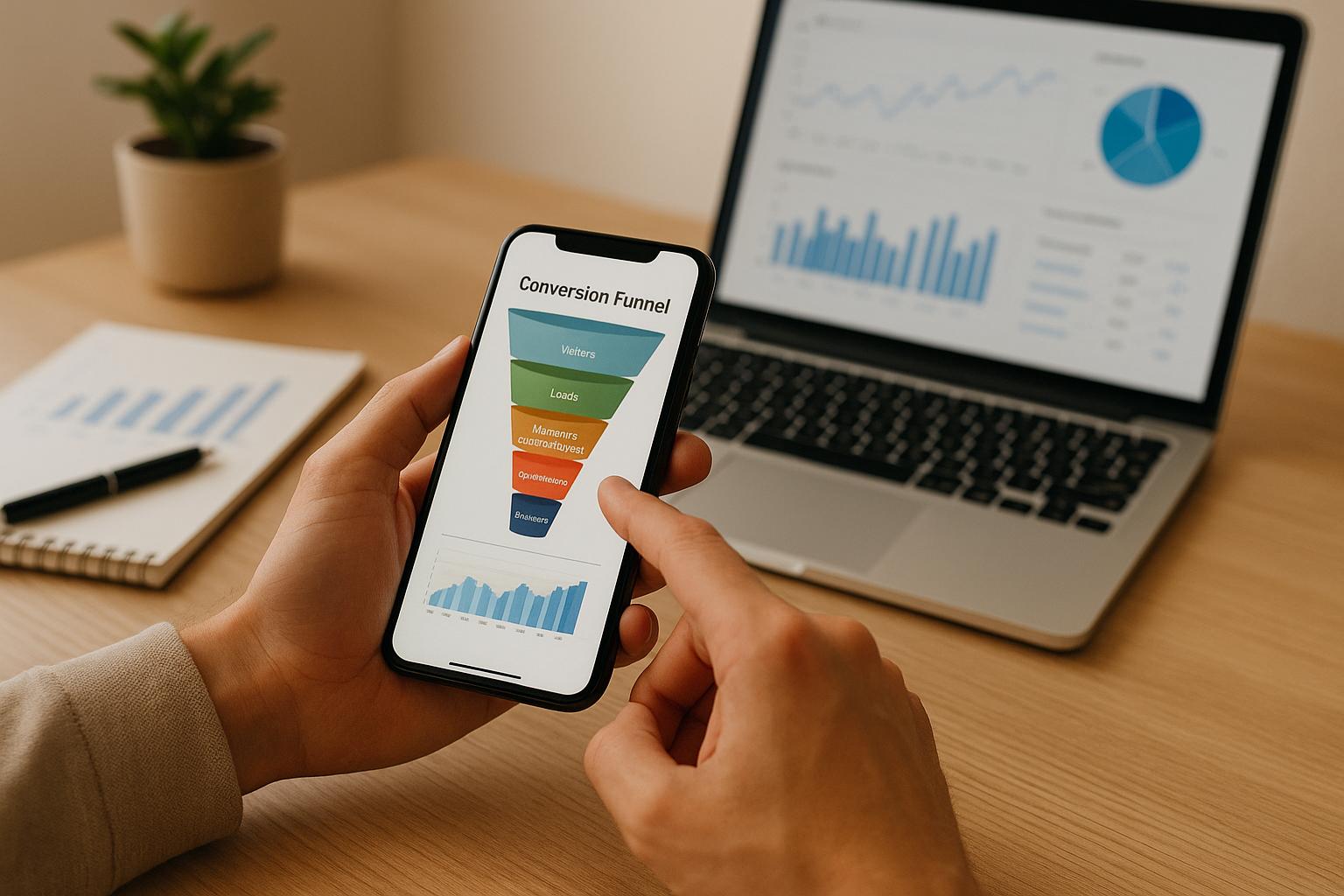
Mobile-first funnels are essential for businesses as mobile devices now drive over half of all web traffic. For local service providers like HVAC or landscaping businesses, optimizing these funnels can directly impact lead generation and conversions. A mobile-first funnel ensures smooth navigation, fast load times, and user-friendly forms, addressing the needs of on-the-go customers.
To analyze your mobile funnel effectively:
Track Key Metrics: Focus on conversion rate, drop-off points, bounce rate, and time to first conversion.
Use Mobile-Specific Metrics: Measure retention rate, touch-to-conversion ratio, and mobile page load speed.
Optimize Pages: Speed up load times, simplify forms, and design navigation for mobile users.
Segment Data: Break down performance by device type, traffic source, and time of day for deeper insights.
Leverage AI Tools: Automate lead generation, personalize outreach, and manage follow-ups efficiently.
Understanding Mobile Funnel Metrics
Key Metrics for Mobile Funnel Analysis
To understand how users interact with your mobile site and identify areas for improvement, tracking the right metrics is essential. These metrics reveal where users engage, where they encounter obstacles, and where they drop off. For local service businesses, this information can highlight pain points that prevent potential customers from requesting quotes or scheduling services.
Mobile funnel analysis requires more than standard website analytics. Mobile-specific metrics focus on the unique behaviors and challenges of users on smaller screens, helping you uncover performance issues and make improvements that truly matter.
Core Metrics to Track
Conversion rate: This shows the percentage of visitors who complete a specific action, like filling out a form or calling your business. While it offers a general measure of funnel performance, it also sets the foundation for deeper analysis.
Drop-off rate: Pinpoints the exact stages where users leave the funnel. Identifying these points allows you to target improvements effectively.
Average time in funnel: Tracks the time it takes for users to go from their first interaction to completing a desired action. Since mobile users expect quick and seamless experiences, longer times could signal confusion or technical problems.
Bounce rate: Measures the percentage of visitors who leave after viewing only one page. High bounce rates on mobile often point to issues like slow loading times or content that doesn’t meet user needs.
These core metrics help establish a general performance baseline. But to truly understand mobile user behavior, you’ll need to dig into mobile-specific metrics.
Mobile-Specific Metrics
Core metrics are useful, but mobile-specific metrics give you a clearer picture of how device-related factors impact the customer journey.
Retention rate: Tracks how many users come back to complete actions they started earlier. Since mobile users often browse in short bursts, optimizing for multi-session engagement can improve your funnel.
Time to first conversion: Measures how quickly new visitors convert into leads or customers. For local service businesses, speed is critical - especially in situations like emergency tree removal or storm damage cleanup.
Touch-to-conversion ratio: Counts the number of taps or touches it takes for a user to complete an action. Fewer steps generally mean a smoother, more user-friendly experience, which can boost conversions.
Mobile page load speed: Even small delays in loading can cause users to abandon the funnel. Fast-loading pages are key to keeping users engaged and moving toward conversion.
Form completion rate: Tracks how many users successfully complete forms on mobile devices. Since many mobile conversions happen through forms - like quote requests or contact submissions - optimizing this metric can significantly improve your funnel’s performance.
Step-by-Step Guide to Analyzing Mobile Funnels
To truly understand what's stopping your mobile users from converting, you need a structured approach. This process digs deeper than surface-level metrics, helping you pinpoint the exact friction points in your funnel.
Start with Your End Goal and Work Backward
The best way to dissect your mobile funnel? Start at the end. Identify your ultimate conversion goal - whether it’s a quote request, a phone call, or a service booking - and work backward to map out the steps users take to get there.
Be specific about your goal. For example, instead of saying "generate leads", aim for something measurable, like "get 50 contact form submissions" or "increase call-now button clicks." This clarity allows you to break down the path users follow and identify potential roadblocks.
By reverse-engineering your funnel, you can uncover each critical step - from the thank-you page all the way back to the homepage. This process often highlights unexpected friction points, like unnecessary pop-ups or confusing redirects, that might be slowing users down.
Mobile users are quick to abandon a journey when faced with surprises like mandatory account creation or overly complex navigation. By identifying these challenges at each stage, you can eliminate the barriers that prevent conversions.
Once your reverse funnel is mapped out, dive into each stage to see where users are dropping off.
Analyzing Each Funnel Stage
With your funnel mapped, it’s time to analyze each stage using both numbers and user feedback. Combining quantitative and qualitative data gives you a complete picture of what’s happening - and why.
Start with tools like Google Analytics 4 to track where users leave the funnel. Funnel reports can reveal drop-off rates between stages. For instance, if 1,000 users land on your service page but only 300 proceed to the quote form, you’ve got a 70% drop-off rate begging for attention.
Pay close attention to mobile-specific behaviors. Mobile users interact differently than desktop users - they scroll more, skim faster, and often miss elements buried too far down the page. Heatmaps can show where users are tapping, scrolling, or pausing, helping you spot issues like misplaced call-to-action buttons or hidden key information.
Don’t overlook page load times. A delay of just two seconds can send users packing. Test your pages across different devices and networks to ensure a smooth experience. A page that loads fine on WiFi might perform poorly on cellular connections.
Gather feedback directly from users through exit-intent surveys or post-conversion questionnaires. Ask questions like, “What almost stopped you from completing this form?” or “Which part of the process was confusing?” This input sheds light on the reasons behind the numbers.
If forms play a role in your funnel, dig into their performance. Check completion rates for individual fields. Long forms or those with too many required fields can frustrate users, especially on mobile devices where typing is more challenging.
Once you’ve reviewed each stage, segment your data for even deeper insights.
Segmenting Data for Deeper Insights
To refine your analysis, break down your data into specific segments. Broad mobile data only scratches the surface - segmentation uncovers patterns that can guide your optimization efforts.
Device type segmentation: Look at how different devices - smartphones versus tablets, iPhones versus Androids - perform in your funnel. Differences in screen sizes, operating systems, or user demographics can impact conversion rates.
Operating system versions: Older OS versions might struggle with your forms or fail to load certain elements. If you notice lower conversions from older systems, you may need to address compatibility issues.
Traffic source segmentation: Traffic from social media often behaves differently than traffic from search engines. For example, social media users might make quicker decisions but also have higher bounce rates, while search users may research more before converting.
Geographic segmentation: Regional differences can influence behavior. Urban users with faster internet might navigate your funnel faster than rural users with slower connections. These insights can help you tailor loading speeds or simplify forms for specific areas.
Time-based segmentation: Mobile conversion patterns often shift depending on the time of day or week. For example, weekdays might show higher conversions during business hours, while weekends could have a different rhythm altogether.
You can also create custom segments to combine multiple factors. For instance, compare "iOS users from Google Ads during business hours" with "Android users from Facebook on weekends." These detailed views often reveal opportunities you might otherwise miss.
Optimizing Mobile Funnels for Better Conversions
Once you’ve pinpointed where users are dropping off in your mobile funnel, it’s time to smooth out the rough patches. Mobile optimization isn’t just about shrinking things down - it’s about creating an effortless flow that naturally leads users toward taking action.
Improving Each Funnel Stage
Speed up your page load times. On mobile, every second counts. Users expect pages to load in under three seconds, and anything longer can seriously hurt your conversions. Compress images, clean up your code, and use content delivery networks (CDNs) to keep things running fast. Even a one-second delay could cost you valuable leads.
Keep forms short and simple. Long forms are a major turn-off for mobile users. Start by asking for just the essentials - like a name, phone number, and service type. You can always collect more details later. Use features like smart defaults, auto-fill, and large, thumb-friendly input fields to make filling out forms quick and easy.
Make your call-to-action (CTA) buttons stand out. Use bold, contrasting colors and clear text like “Get Free Quote” or “Call Now.” Ensure buttons are big enough for easy tapping - at least 44 pixels high - and place your main CTA above the fold. For longer pages, repeat the CTA strategically to keep it top of mind.
Design for thumbs. Most mobile users navigate with their thumbs, so place key elements within the “thumb zone,” typically the bottom third of the screen. Sticky navigation bars can also help by keeping important actions - like calling or requesting a quote - easily accessible.
Cut out unnecessary steps. Every extra click or page is a chance for users to drop off. Combine steps where you can. For instance, instead of separate pages for selecting a service and entering contact info, merge them into one with progressive disclosure.
Show quick, clear social proof. Mobile screens are small, so keep testimonials short and impactful. A simple line like “4.8 stars from 127 local customers” is more effective than a long-winded review. Trust badges and local recognition can also reinforce credibility near key conversion points.
Next, let’s explore how AI can take these optimizations even further.
Using AI for Funnel Optimization
AI tools can transform your mobile funnel by turning data into actionable improvements. For example, Cohesive AI offers a platform that simplifies lead generation and follow-up for local service providers like HVAC, landscaping, and janitorial companies.
The platform automates lead discovery by scraping sources like Google Maps and public records to identify local business owners who might need your services. This eliminates the time-consuming manual research process, allowing you to focus on connecting with highly relevant prospects.
Personalized outreach at scale becomes a breeze with AI. Instead of sending generic emails that get ignored, AI analyzes a prospect’s business details to craft tailored messages. This approach often results in better response rates compared to one-size-fits-all campaigns.
Never miss a lead with automated follow-ups. AI can manage the timing and content of your follow-up emails, adapting based on how recipients engage. This ensures every lead gets the attention it deserves without adding to your workload.
AI also takes care of technical details like email deliverability, campaign tracking, and response management. For local service businesses, this level of automation can replace traditional lead generation services while giving you more control over the process.
A/B Testing for Mobile Funnels
Once you’ve made changes to your funnel - whether through design tweaks or AI enhancements - it’s time to test their effectiveness. A/B testing lets you measure what’s working and what’s not.
Test one thing at a time. Whether it’s a headline, button color, form length, or layout, focus on one element per test. Run each test for at least two weeks to account for daily and weekly traffic patterns.
Start with high-impact areas. Your landing page headline, primary CTA button, and contact form often have the biggest influence on conversions. For instance, swapping a generic headline like “Professional HVAC Services” for something more action-oriented like “Fix Your AC Today - Free Estimate” can make a big difference.
Prioritize mobile-specific elements. Testing on desktop won’t always translate to mobile. Focus on things like thumb-friendly button sizes, swipe gestures, and scrolling behavior. Mobile users interact differently, so separate your mobile tests from desktop ones.
Use data to guide decisions. Statistical significance calculators can help you determine when you’ve gathered enough data to make a confident call. Avoid ending tests too early, as mobile traffic can vary by time of day and day of the week.
Take a holistic view of your funnel. A change that improves one step might hurt another. For example, shortening a form might increase submissions but lower lead quality. Always consider the overall impact on your conversion rate.
Document and scale what works. If a specific headline, button style, or layout performs well, apply those insights to other parts of your funnel. Build a playbook of techniques that resonate with your mobile audience.
Account for seasonal trends. Mobile behavior can shift with the seasons. HVAC companies, for example, may see different patterns in summer versus winter, while landscaping businesses might notice changes between spring and fall. Plan your testing schedule to align with these cycles for the best results.
Benchmarking and Continuous Funnel Improvement
Building on the metrics and strategies already discussed, benchmarking your mobile funnel is a key step to staying competitive. By comparing your performance to industry standards, you can gauge whether your conversion rates and other indicators are on track.
Industry Benchmarks for Mobile Funnels
Conversion rates and user behaviors can vary widely across industries. To get a clear picture of your performance, compare your key metrics - like conversion rates, form completion rates, and email campaign results - to industry benchmarks. These benchmarks can often be found through market research or industry associations. With mobile devices accounting for a significant share of website traffic, having these benchmarks in place helps you set realistic goals and pinpoint areas that need attention. This comparison provides a solid foundation for improving your funnel's effectiveness over time.
Setting Up a Continuous Optimization Process
Once you know where you stand, the focus shifts to creating a process for ongoing improvement. A monthly review cycle is a practical way to assess your key metrics and identify areas for growth.
Use tools like Google Analytics to monitor important metrics and segment data by traffic source, device type, and time of day. Observing patterns - such as differences in weekday versus weekend traffic - can help you make targeted adjustments.
When deciding what to tackle first, an effort-impact analysis can be helpful. For instance, quick fixes like simplifying a mobile form can deliver immediate results, while bigger projects, such as revamping your mobile site, might bring more substantial long-term gains.
Automated alerts for performance changes can keep you informed in real-time, and documenting your experiments ensures that successful strategies can be replicated in the future.
Don’t overlook the value of team input. Insights from sales staff or service technicians - who interact directly with customers - can reveal pain points that might not be obvious in the data. Staying informed about mobile trends is also crucial. Follow industry publications, attend local business events, and consider seasonal factors when planning optimizations to align with shifts in market demand.
Conclusion
Understanding and improving mobile-first funnels is crucial for local service businesses aiming to stay ahead in a competitive market. With mobile e-commerce now making up 68% of all e-commerce traffic, your customers are already using their phones to search for and evaluate your services[2]. The real challenge? Making sure your funnel is ready to convert those searches into sales.
The data is clear: a smooth mobile experience leads to better results. While the average funnel conversion rate across industries is around 2.35%, the top-performing funnels hit rates of 5.31% or even 11.45%[2]. Speed matters, too - pages that load in 0–3 seconds see the best conversion rates, and a site loading in just 1 second can achieve conversion rates 2.5 times higher than one that takes 5 seconds[2].
To improve your funnel, focus on tracking key metrics like conversion rates, drop-off points, average time spent in the funnel, and cost per acquisition. These numbers help you pinpoint where things are going wrong and guide you in testing solutions. For context, B2B funnel benchmarks show lead-to-MQL conversion rates of 25–35%, MQL-to-SQL rates of 13–26%, and opportunity-to-close rates of 15–30%[1]. These benchmarks can serve as realistic goals for your funnel’s performance.
For local service businesses - like HVAC, landscaping, or janitorial services - the stakes are even higher. Customers expect quick and hassle-free mobile interactions when they need help. Features like a simple quote request form or a streamlined contact process can make all the difference in securing new jobs.
To tackle these challenges, AI tools are stepping in to transform funnel management. Platforms like Cohesive AI are reshaping how local service providers handle lead generation. These tools automate lead discovery, personalize outreach, and manage campaigns, allowing you to focus on delivering excellent service. For $500 a month, Cohesive AI guarantees at least four interested responses, helping fill your funnel with qualified leads.
Think of funnel optimization as an ongoing effort. Schedule monthly reviews, document what’s working, and stay updated on mobile trends. Your competitors are already refining their mobile strategies - don’t let them leave you behind. By continually fine-tuning your approach, you’ll ensure your mobile funnel remains effective and competitive in today’s fast-paced market.
FAQs
What’s the difference between traditional website analytics and mobile-specific metrics when analyzing conversion funnels?
Traditional website analytics typically revolve around metrics like page views, session duration, and bounce rates. These numbers help paint a picture of overall website traffic and how users interact with desktop or browser-based platforms.
When it comes to mobile, the focus shifts to in-app behavior. Metrics here include tracking feature usage, app launches, and user retention. Mobile analytics also factor in unique elements like device performance, load times, and location data - all of which play a big role in shaping how users experience and engage with mobile apps. These insights are key to fine-tuning mobile funnels and boosting conversion rates.
How can AI improve mobile-first funnels for local service businesses?
AI has the potential to reshape mobile-first funnels for local service businesses by automating essential tasks like lead generation, customer targeting, and campaign management. This not only cuts down on manual effort but also creates a smoother, more personalized experience for customers.
With AI, businesses can dive into customer behavior, pinpoint problem areas, and make data-driven tweaks to boost conversion rates. Tools such as AI-powered chatbots and personalized outreach allow companies to connect with leads in real time, enhancing efficiency and driving growth.
What are the common mistakes in mobile funnel design that cause users to drop off, and how can you fix them?
High drop-off rates in mobile funnels usually stem from a few common issues: overly complex steps, confusing navigation or design, slow-loading pages, and technical errors. These obstacles can leave users feeling frustrated, often causing them to abandon the process before reaching the end.
To tackle these challenges, focus on streamlining the user journey. Cut down unnecessary steps, design an interface that's easy to navigate, and ensure pages load quickly. Regularly analyzing your funnel data can reveal problem areas where users are dropping off. By setting clear objectives for each stage of the funnel, you can better understand where improvements are needed, making it easier to boost conversions.