Dynamic Email Content for Cleaning Services: Examples
Aug 14, 2025
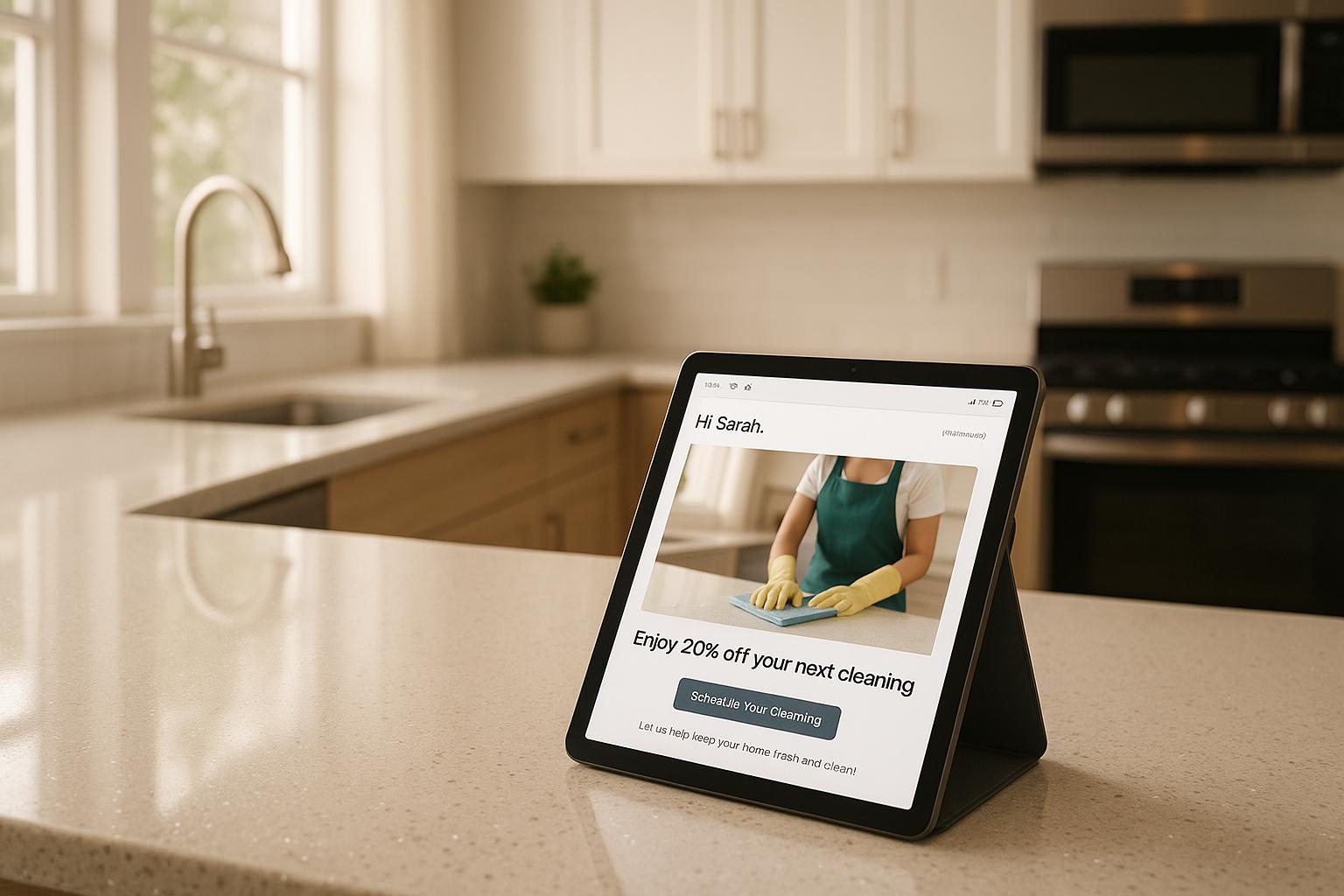
Dynamic email content lets cleaning service providers send personalized messages tailored to each recipient's preferences, behavior, and past interactions. This approach boosts engagement by replacing generic emails with targeted content, such as customized service descriptions, testimonials, or location-based offers. AI tools further simplify this process by automating email creation, segmentation, and follow-ups, saving time while improving results.
Key Takeaways:
Why It Matters: Generic emails frustrate 76% of consumers. Dynamic content addresses this by tailoring messages to specific needs, increasing engagement and ROI (up to $36 per $1 spent).
How It Works: AI platforms like Cohesive AI gather data and create emails tailored to industries, locations, or behaviors, ensuring relevance.
Examples: Behavioral triggers (e.g., follow-ups after abandoned bookings), lifecycle messages (e.g., reminders or reactivation campaigns), and location-based offers (e.g., seasonal cleaning promotions).
Visuals & Interaction: Use before-and-after photos, booking widgets, or polls to grab attention and drive action.
Dynamic emails are a simple yet powerful way for cleaning businesses to stand out in crowded inboxes and build stronger connections with clients.
Segmentation and Personalization in Cleaning Service Emails
Audience Segmentation for Targeted Messaging
Breaking your email list into smaller, focused groups can make your messages far more effective. By segmenting based on factors like industry type, service frequency, location, and engagement levels, you can send content that truly speaks to your audience [1]. For example, healthcare facilities might appreciate emails highlighting compliance with strict cleaning protocols, while restaurants would likely value content centered on food service sanitation. Office buildings, on the other hand, may respond better to messages about maintaining a polished, professional environment. Geographic segmentation is another smart move - it lets you tailor emails around local weather, regulations, or seasonal cleaning needs. This kind of segmentation sets the stage for crafting even more personalized emails down the line.
Personalization Methods for Cleaning Emails
Personalization takes your emails from generic to engaging by leveraging subscriber data and behavioral insights [1]. On the simpler side, you can include a recipient’s name in the email. More advanced personalization taps into details like service history or specific customer pain points. Behavioral triggers are another goldmine. For instance, if someone abandons an online booking, you can send a follow-up email offering a discount to reignite their interest. Similarly, a customer who recently booked gutter cleaning might get an email suggesting complementary services like window cleaning [1].
A real-world example? EcoClean Services, a Seattle-based company, used targeted emails featuring monthly subscription plans, anniversary discounts, and referral bonuses tailored to individual customer histories. The result? A 50% boost in customer retention and a surge in referrals [2]. These kinds of personalized tactics can make your email campaigns more dynamic and deliver measurable results.
Dynamic Content Fields for Cleaning Campaigns
Dynamic content fields take personalization to the next level by customizing emails even further. With tools like merge tags and conditional content blocks, you can create a single email template that adapts to each recipient [1]. For example, you could tailor service recommendations based on past bookings, highlight location-specific offers, or include testimonials relevant to the recipient’s industry. An email to a business client might feature office cleaning testimonials, while one to a residential customer could showcase before-and-after photos. You can even suggest complementary services - like carpet cleaning after an office cleaning - or offer seasonal services based on location and time of year [1].
Clean & Shine, a mid-sized cleaning service in New York City, nailed this approach. Their monthly newsletters included seasonal tips, exclusive offers tied to prior purchases, and testimonials from similar businesses. This strategy led to a 40% increase in repeat business [2]. Frequency-based personalization is another effective method: weekly clients might get maintenance tips and appreciation messages, while occasional customers receive special offers to encourage more frequent bookings. To make dynamic content work, robust data management is key. By tracking customer preferences, service history, and engagement patterns, you can craft emails that feel genuinely tailored to each recipient.
Real Examples of Dynamic Email Content in Cleaning Campaigns
Behavioral Trigger Emails
Behavioral trigger emails are automated messages sent when prospects perform specific actions. These emails are designed to engage potential customers at just the right moment.
Take an Inquiry Follow-Up Campaign as an example. When someone fills out a contact form or requests a quote, an automated email can immediately acknowledge their interest and initiate a follow-up sequence to keep the conversation going. Similarly, if a prospect starts but doesn’t complete an online booking, a trigger email can be sent within 30 minutes, perhaps offering a limited-time discount to encourage them to finish the booking.
Another common approach is Service Request Abandonment Emails. These messages target prospects who leave a booking incomplete. They might include an offer like, “Complete your booking in the next 24 hours and save 15% on your first cleaning,” or provide direct contact details for quick assistance.
For prospects showing repeated interest - like visiting pricing pages multiple times - Engagement-Based Triggers can be effective. Automated emails in these cases might offer a free consultation or highlight customer testimonials addressing common pricing questions. Similarly, if someone downloads a cleaning checklist or guide, follow-up emails can introduce related services that align with their interests.
The secret to making these triggers work? Timing and relevance. Quick responses show professionalism, while thoughtful follow-ups provide value to those who need more time to decide.
Once these immediate triggers are in place, lifecycle-based messaging can take over to nurture relationships over the long term.
Lifecycle-Based Messaging
Lifecycle messaging customizes content based on where customers are in their journey with your service. This ensures that every email feels timely and relevant.
For instance, a Welcome Series for new customers might start with an immediate confirmation email detailing their service and contact information. A second email, sent 24 hours later, could share preparation tips for their upcoming cleaning. A week after the service, a third email might ask for feedback and introduce additional service options.
Renewal and Reminder Campaigns are perfect for regular clients. Weekly or monthly customers might receive appointment reminders or easy rescheduling options. Seasonal clients, on the other hand, might get renewal emails - say, 30 days before spring cleaning season - offering early-bird pricing.
For customers who haven’t booked in a while, Reactivation Sequences can help. These might start with a friendly “We miss you” email, followed by special offers or updates on new services. The final email could include a discount to re-engage them.
Don’t forget Milestone Recognition Emails. These celebrate key moments, like a one-year anniversary with your service, by offering a loyalty discount. Or, for a customer’s tenth cleaning, you could include a complimentary add-on as a thank-you.
Lifecycle campaigns can also adjust based on customer behavior. For instance, if emails go unopened, switching to SMS can ensure the message still gets through.
To complement these strategies, location-based offers add another layer of personalization.
Location-Based Offers
Location-based emails use geographic data to tailor messages for local conditions, making them more relevant and engaging.
Weather-Triggered Campaigns are a great example. If a storm is forecasted, customers in affected areas might receive offers for post-storm cleanup or window cleaning after heavy rain. Seasonal promotions also work well - northern customers could get snow removal tips in October, while southern clients might receive hurricane preparedness advice.
Another idea is Local Event Integration. Before major events like festivals or business conferences, cleaning companies can send emails to nearby businesses offering pre-event cleaning services. After the event, follow-up emails promoting post-event cleanup can be equally effective.
For businesses in regulated industries, Regulatory Compliance Messaging ensures they stay informed. Healthcare facilities, for instance, might get emails about meeting local sanitation standards, while restaurants could receive updates on health department guidelines and inspection tips.
Accurate segmentation is crucial for these campaigns. Many email platforms can automatically adjust content based on a recipient’s location at the time of engagement. This ensures that details like pricing, service availability, and contact information are always current and relevant, which helps build trust and minimizes abandoned bookings.
3 Highly Successful Email Marketing Examples For Cleaning Services
Visual and Interactive Elements in Cleaning Service Emails
Incorporating eye-catching visuals and interactive features into your email campaigns can significantly increase engagement and drive action. These elements not only grab attention but also help demonstrate the quality of your cleaning services in a way that's hard to ignore.
Using Before-and-After Images
Before-and-after images are a powerful way to showcase the results of your cleaning services. By presenting side-by-side comparisons, you can visually communicate your expertise and give potential clients a clear sense of what you can achieve. These images often speak louder than words or testimonials.
Placing these visuals near the top of your email ensures they catch the recipient's eye immediately - even if they're just skimming. The dramatic contrast of a cluttered or dirty space transformed into a spotless one creates an instant connection.
For maximum impact, tailor your images to your audience. For example:
Office cleaning services could feature a messy conference room turned into a pristine, professional space.
Carpet cleaning companies might show heavily stained carpets restored to like-new condition.
Restaurant cleaning services could highlight greasy kitchen equipment transformed into sparkling, hygienic tools.
To maintain credibility, avoid using blurry or poorly lit photos. Consistent lighting and angles for your before-and-after shots are key to clearly showcasing the transformation. Additionally, optimize your images for email by compressing files to ensure fast loading across all devices.
Adding seasonal themes to your visuals can also help your emails resonate. For instance, highlight ice removal results in winter or deep cleaning services in the spring after heavy seasonal use.
Interactive Features for Engagement
Static visuals are great, but adding interactive elements takes your emails to the next level. These features actively involve your audience, making the experience more engaging and personal. They also provide valuable insights into customer needs and preferences.
Here are a few interactive ideas to consider:
Assessment Sliders: Ask recipients questions like, "How satisfied are you with your current cleaning service?" and use the responses to segment your audience for targeted follow-ups.
Service Calculators: Offer calculators that provide estimates based on office size, cleaning frequency, or specific needs. These tools offer immediate value while collecting useful lead information.
Quick Polls: Include clickable options like "Time Constraints", "Quality Concerns", or "Cost Management" to identify the biggest challenges your prospects face.
Booking Widgets: Allow recipients to schedule appointments directly from the email, reducing friction and speeding up conversions.
Interactive Before-and-After Images: Add hover effects or clickable hotspots to your images, letting recipients explore detailed information about your services.
Best Practices for Visuals in Emails
To make the most of your visuals, pay attention to technical details and user experience:
Mobile Optimization: Ensure your images look great on mobile devices, with clear visuals and readable text across all screen sizes. Test your emails on different devices and platforms to ensure consistency.
Alt Text Descriptions: Use descriptive alt text, such as "Conference room before cleaning, showing cluttered desks and dusty surfaces", so your message is still clear if images fail to load.
Loading Speed: Compress images to balance quality and file size, ensuring quick loading times. Use web-friendly formats like JPEG for photos and PNG for graphics with text.
Brand Consistency: Stick to your brand’s color scheme, fonts, and design style to create a cohesive experience and reinforce your identity.
Legal Compliance: Always get written permission before using customer photos or images of private spaces. Formal photo release forms can protect your business and maintain ethical marketing practices.
A/B Testing: Experiment with different image placements, sizes, and designs to see what resonates most with your audience.
Accessibility: Use high-contrast colors for text overlays and avoid relying solely on color to convey important information, ensuring your emails are accessible to all users, including those with visual impairments.
AI-Powered Automation for Cleaning Email Campaigns
AI-powered automation is changing the game for cleaning service email campaigns. Instead of manually crafting emails, automation allows businesses to deliver personalized content on a large scale with minimal effort.
Automated Follow-Up Sequences
Consistent follow-ups are essential for effective cleaning service marketing, but manually keeping track of every lead can become overwhelming as your client base grows. This is where automated sequences step in, nurturing leads at just the right time without constant manual work.
These sequences are triggered by recipient behavior. For instance, if a potential client opens your first email but doesn’t reply, the system can automatically send a follow-up three days later with more details about your services or a special discount. If someone shows interest in a specific service - like carpet cleaning - they might receive tailored emails with maintenance tips or seasonal promotions.
Many cleaning businesses use multi-step sequences for outreach. They might start with an introductory email, follow up with a message that highlights key benefits, and finish with a final email offering a limited-time deal. This structured approach keeps prospects engaged without overwhelming them.
By automating follow-ups, cleaning service owners can focus on other aspects of their business while ensuring consistent communication with potential clients.
Campaign Metrics and Performance Optimization
AI tools don’t just send emails - they also analyze how well your campaigns perform. They track metrics like open rates, click-through rates, and response patterns to figure out which messages work best for different audience segments.
This data helps fine-tune your strategy over time. For example, if office managers respond better to emails sent on Tuesday mornings, the system will adjust the schedule for that group. Or, if restaurant owners are more likely to open emails with certain subject lines, the AI will prioritize similar messaging for future campaigns.
These platforms also determine the best frequency and content types for each audience, ensuring your messages stay effective without overwhelming recipients. The result? Better engagement and a higher return on investment for your email marketing efforts.
Simplifying Campaign Management with AI
AI integration takes the hassle out of managing email campaigns, from finding leads to executing outreach. Running a cleaning business is demanding, and juggling multiple campaigns can feel like too much. That’s where tools like Cohesive AI come in.
Cohesive AI automates lead generation by scraping Google Maps and government filings to find local business owners who might need cleaning services. Instead of spending hours on research, you’ll receive a list of qualified leads ready for outreach.
But it doesn’t stop at basic personalization. The platform analyzes details like business type and location to create messages that resonate with each recipient. For example, a small café might get an email about affordable daily cleaning, while a large office building receives tips on maintaining high-traffic areas.
Cohesive AI’s pricing starts at $500 per month with a $75 setup fee. The service guarantees at least four interested responses each month, making it a low-risk investment. Other perks include managed email deliverability to keep your messages out of spam folders and a month-to-month plan for flexibility.
With tools like these, cleaning service owners can streamline their marketing efforts while focusing on growing their business. AI truly simplifies the process, making email campaigns more effective and less time-consuming.
Key Takeaways for Dynamic Email Content in Cleaning Services
Why Dynamic Emails Matter
Dynamic emails have transformed how cleaning services connect with potential clients. By combining audience segmentation, personalization, and AI-powered automation, these emails deliver tailored messages that resonate more deeply than generic campaigns ever could.
For example, office managers receive messages that address their specific needs, while restaurant owners get content that speaks directly to their industry challenges. This targeted approach, coupled with visual elements like before-and-after photos, instantly showcases service quality. Add interactive features, and you’ve got a recipe for keeping recipients engaged and building trust even before the first conversation.
Automation adds another layer of efficiency. With automated follow-ups, cleaning businesses can maintain consistent communication with prospects while focusing on delivering their services. This hands-off system ensures opportunities are never missed while saving time and resources.
Actionable Steps for Cleaning Businesses
Now is the time for cleaning businesses to embrace dynamic email campaigns. With competition in the industry growing, sticking to manual outreach methods puts businesses at a disadvantage against competitors leveraging AI-driven tools.
Platforms like Cohesive AI simplify the process of launching dynamic email campaigns. From lead generation to campaign management, this all-in-one solution ensures your emails reach the right inboxes. Plus, with a low-risk, month-to-month subscription model, it’s easy to get started without a major commitment.
FAQs
How can cleaning service businesses use AI to create personalized and effective email campaigns?
Cleaning service businesses can use AI-powered tools to design email campaigns that truly speak to their audience. By examining customer behavior, preferences, and engagement trends, AI helps craft messages that feel both timely and relevant.
Take Cohesive AI, for instance. This platform streamlines lead generation and tailors outreach specifically for industries like janitorial services. It identifies potential clients, personalizes email content, and even manages campaigns - saving businesses valuable time while increasing response rates. With AI, cleaning companies can send messages that connect on a deeper level, strengthen customer relationships, and enhance overall engagement.
What are the best ways to add interactive elements to cleaning service emails to boost engagement?
To make your cleaning service emails stand out, try incorporating interactive features that encourage recipients to engage directly. For example, use accordions or dropdown menus to present information in a clean, organized way, keeping the email visually appealing without feeling cluttered. Adding clickable images, polls, or even embedded videos can grab attention and create a more personalized experience. These small, interactive elements can boost engagement, drive higher click-through rates, and ultimately make your email campaigns more effective.
How can audience segmentation make email marketing more effective for cleaning services?
Audience segmentation allows cleaning services to craft email campaigns that resonate with specific customer groups. By organizing customers based on factors such as location, services they prefer, or previous interactions, businesses can deliver emails that feel tailored and relevant.
This kind of targeted messaging boosts both engagement and conversion rates since people are more likely to respond to emails that address their specific needs. For instance, a customer who recently scheduled a deep cleaning might find value in a follow-up email offering a discount on recurring cleanings. By personalizing your emails in this way, you ensure your message connects with your audience, ultimately driving better results for your campaigns.