Scaling IT Outreach with Multi-Channel Tactics
Aug 30, 2025

In IT, relying on one outreach method isn’t enough anymore. Multi-channel outreach - combining email, LinkedIn, phone calls, direct mail, and social ads - is now key for standing out and driving leads. But managing multiple channels manually is overwhelming and inefficient. AI-powered tools like Cohesive AI simplify the process by automating personalization, scaling efforts, and improving ROI with minimal resources.
Key Takeaways:
Multi-channel outreach involves engaging clients across platforms for consistent messaging.
Manual methods struggle with coordination, scalability, and tracking ROI.
Cohesive AI automates outreach, offers targeted messaging, and reduces costs.
Pricing: $500/month + $75 setup fee, with a guarantee of four interested responses monthly.
Quick Comparison:
Aspect | Manual Methods | Cohesive AI |
|---|---|---|
Setup | Complex, requires multiple tools | Simple, single platform |
Cost | High (tools + staff) | $500/month (+$75 setup fee) |
Scalability | Limited by manual effort | Scales automatically |
Personalization | Time-intensive, inconsistent | AI-driven, tailored messages |
Performance Tracking | Manual, fragmented | Built-in analytics |
For IT teams targeting local businesses, Cohesive AI is a game-changer, automating outreach while keeping costs low. Larger teams with broader audiences may still benefit from manual multi-channel strategies, but smaller teams can save time and resources by switching to AI solutions.
The Outreach Fix: Multi-channel B2B outreach: the right way in 2025
1. Standard Multi-Channel Outreach Frameworks
IT companies often rely on multi-channel outreach strategies that blend email, LinkedIn, cold calls, and even direct mail. These approaches typically follow a step-by-step process, where prospects are engaged across various platforms over several weeks. The tricky part? Coordinating these channels in a way that keeps messaging consistent while also tracking performance effectively. Without the right tools in place, it’s easy for things to get messy, which is why many companies are turning to more integrated and automated solutions.
Automation and Personalization
One of the biggest struggles with traditional outreach frameworks is finding the sweet spot between automation and personalization. Companies often juggle multiple tools - like HubSpot for email, Sales Navigator for LinkedIn, and CRMs for managing calls - which leads to fragmented workflows. The result? Inconsistent messaging and overly generic templates that fail to grab attention. This lack of cohesion can seriously undermine the effectiveness of outreach efforts.
Scalability
Scalability is another major pain point, especially when trying to expand target lists. As teams grow their outreach efforts, manual coordination becomes a bottleneck, making it harder to maintain quality. Each new audience segment comes with its own set of needs - customized messaging, adjusted timing, and tailored value propositions. Traditional frameworks struggle to keep up, requiring significant manual input to adapt, which slows down the process and limits growth.
ROI Impact
Efficiency issues directly impact ROI, making it a critical area of concern. While multi-channel outreach typically outperforms single-channel tactics in terms of response rates, it also comes with higher costs. Tracking which touchpoints are driving results can be a logistical nightmare, especially when attribution is unclear. This lack of clarity can lead to wasted resources, inflated costs per lead, and difficulty optimizing budgets. For IT companies, these challenges make it harder to justify investments without better tools to measure and refine their strategies.
Integration Capabilities
Finally, there’s the issue of integration - or rather, the lack of it. Most traditional frameworks depend on manual data syncing across platforms, which creates delays and inconsistencies. For example, if a prospect expresses interest on LinkedIn but the sales team isn’t notified in real time, that opportunity could slip away. These integration gaps are especially problematic for IT companies targeting local businesses, where prospects often have minimal online footprints. Without seamless communication between platforms, valuable leads can be lost.
2. Cohesive AI
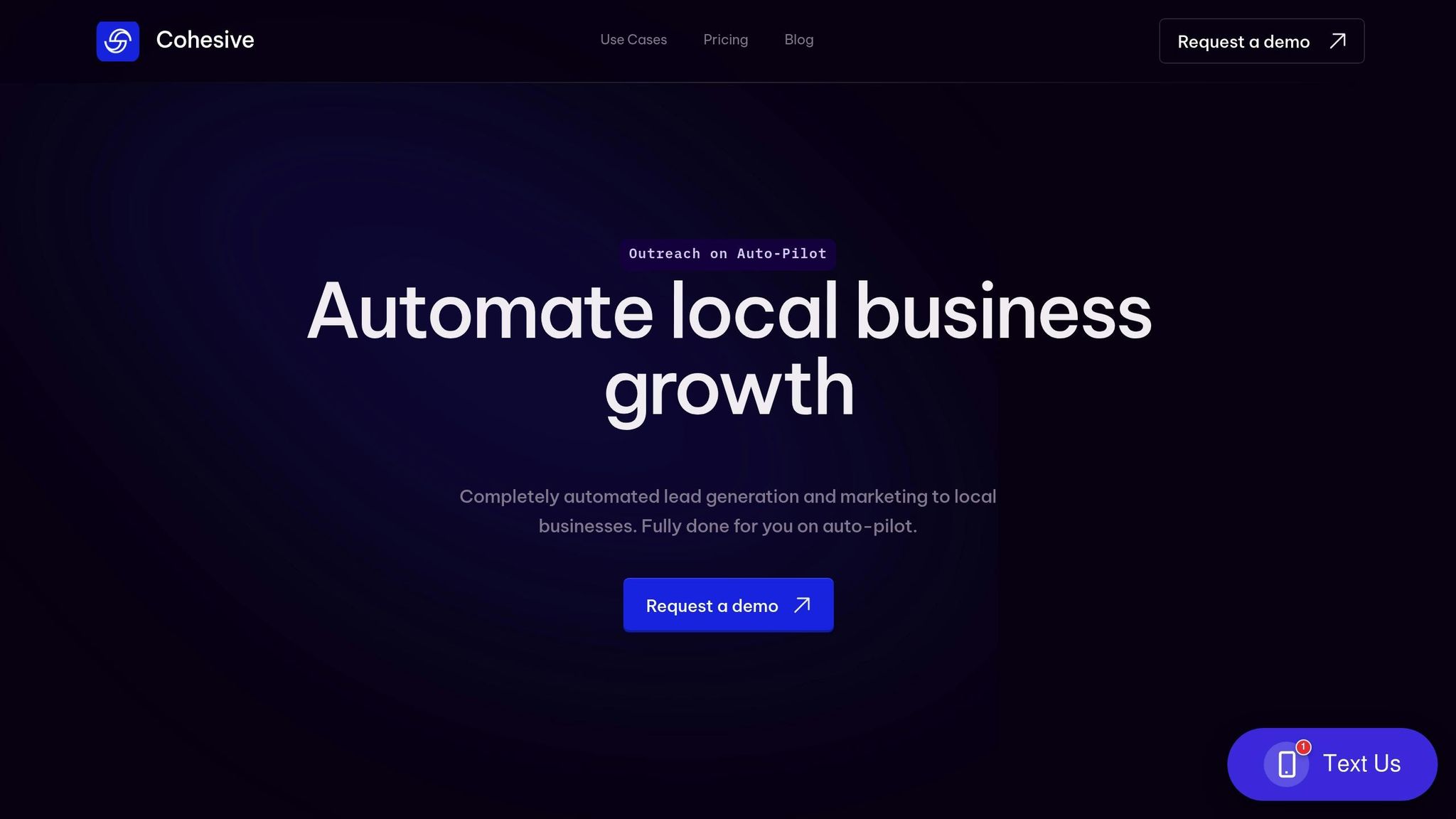
Traditional multi-channel frameworks often face hurdles when it comes to coordination and efficiency. Cohesive AI steps in with a streamlined solution, offering IT and software service providers an effective way to target local markets through its AI-powered lead generation tools.
Automation and Personalization
Cohesive AI simplifies lead generation by merging lead identification and personalized outreach into one platform. It automatically gathers data from sources like Google Maps and government filings to pinpoint local business owners. Then, it uses AI to craft tailored cold emails for each prospect, saving significant research time.
But this goes beyond just plugging in a name. The platform customizes messages based on factors like business type, location, and publicly available details. For IT companies, this means reaching out to businesses that may need software solutions or technical support, with messages that directly address their challenges. This level of precision sets the foundation for effective multi-channel campaigns.
Scalability
One of the standout features is how Cohesive AI enables IT firms to scale their outreach without adding extra staff. The platform can handle outreach to hundreds of prospects while maintaining consistent messaging. It supports up to three simultaneous campaigns, allowing companies to run tailored outreach sequences for different services. This efficiency aligns perfectly with the integrated strategies discussed earlier.
ROI Impact
Cohesive AI delivers measurable results, with automation reducing the cost-per-lead and improving conversion rates. Companies using AI-driven multi-channel outreach have seen meeting bookings increase by as much as 40% when combining email, LinkedIn, and phone calls in structured campaigns [1][2]. The pricing model is straightforward - $500 per month with a $75 setup fee - and includes a performance guarantee: users are promised at least four interested responses each month, or they receive a free month credit. This clear benchmark underscores the platform's focus on delivering value.
Integration Capabilities
Cohesive AI replaces the need for traditional agencies by integrating seamlessly with popular CRM systems and marketing automation tools. This ensures smooth data transfer, campaign tracking, and follow-up management. The result? Sales teams can continue conversations without missing a beat, enhancing the overall effectiveness of multi-channel outreach efforts.
Advantages and Disadvantages
When considering multi-channel outreach strategies for IT companies, it's essential to weigh the pros and cons of traditional frameworks against Cohesive AI. Each option has its own strengths and challenges, influencing factors like efficiency, cost, and scalability.
Standard multi-channel frameworks give IT teams the flexibility to run tailored campaigns across platforms like email, social media, phone calls, and content marketing. This is ideal for companies with robust marketing teams that can handle the complexity of managing multiple tools and coordinating messages across various channels. However, as campaigns grow, managing these efforts manually can become a resource-heavy process, requiring significant time and administrative oversight.
Cohesive AI, on the other hand, simplifies the process by consolidating lead generation and outreach into one streamlined platform. It offers a predictable pricing model - $500 per month with a one-time $75 setup fee - and guarantees at least four interested responses per month. This reduces manual effort while enabling scalable, personalized outreach.
The platform is particularly effective for IT providers targeting small to medium-sized local businesses. This makes it a strong fit for managed service providers or regional system integrators focused on local markets.
Here's a side-by-side comparison of the two approaches:
Aspect | Standard Multi-Channel | Cohesive AI |
|---|---|---|
Setup Complexity | Higher – requires integrating multiple tools | Lower – single-platform setup |
Monthly Investment | Higher – due to varied tool and staff costs | $500 monthly fee (+ $75 one-time setup fee) |
Personalization Scale | Limited by manual effort | AI-driven automation scales effectively |
Target Market | Broad range of businesses | Local service businesses (e.g., HVAC, catering) |
Performance Tracking | Manual reporting | Built-in analytics with performance guarantees |
Staff Requirements | Requires a dedicated marketing team | Minimal ongoing management |
Traditional frameworks often hit a point where scaling outreach - whether by adding channels or reaching more prospects - demands more staff and management resources. In contrast, Cohesive AI automates outreach to potentially hundreds of prospects, maintaining consistent and personalized messaging. It also supports up to three simultaneous campaigns without requiring additional team members.
For IT companies focusing on local markets - like managed service providers or small business software consultants - Cohesive AI offers a valuable edge. Its ability to source local business data and craft targeted messages helps connect with decision-makers who may not be actively searching for IT services. Plus, the platform's unified system reduces operational headaches, allowing teams to concentrate on closing deals.
Final Thoughts
Deciding between standard multi-channel frameworks and Cohesive AI hinges on your IT company's unique needs and growth goals. Each approach has its strengths, and your decision should align with your company's scale, resources, and market focus.
Standard multi-channel frameworks work well for larger IT companies with dedicated marketing teams and broad, diverse audiences. These frameworks offer the flexibility to tailor campaigns across multiple platforms, making them ideal for businesses targeting enterprise clients or operating in multiple regions. However, this approach often requires more resources and management to maintain its effectiveness.
On the other hand, Cohesive AI is a simpler, more efficient choice for IT companies focused on local markets or those seeking streamlined operations. By automating personalization and campaign management, it minimizes the resource demands typically associated with traditional methods. This makes it a great fit for lean teams aiming to achieve high ROI without increasing staffing needs. Plus, it scales outreach without the added costs and complexities of expanding a traditional framework.
When deciding, consider your company's capacity and growth trajectory. If managing multiple tools and maintaining personalized outreach feels overwhelming, Cohesive AI could provide a more efficient and manageable solution. However, if your strategy involves reaching a wide or varied audience, the broader capabilities of a multi-channel framework might be a better match.
Ultimately, the right choice is the one that aligns with your operational capacity and market strategy.
FAQs
How does Cohesive AI create personalized messages for multi-channel outreach?
Cohesive AI takes advantage of advanced data analysis to create deeply personalized messages designed specifically for each recipient. By tapping into customer insights - like business specifics and individual preferences - it ensures that every interaction feels meaningful and relevant.
This tailored strategy works seamlessly across various channels, helping businesses increase both engagement rates and conversion opportunities, all while streamlining their efforts.
What benefits does Cohesive AI provide for IT companies reaching out to local businesses?
Cohesive AI supports IT companies in optimizing their outreach efforts to local businesses through automated lead generation, AI-driven personalized cold emails, and efficient email campaign management. These tools help businesses cut down on time spent on manual tasks, lower expenses, and concentrate on activities that drive results.
The platform also keeps IT companies agile, allowing them to adjust to market trends and maintain effective, up-to-date outreach strategies. This approach not only boosts ROI but also levels the playing field, giving smaller businesses a chance to compete with larger industry players.
What is Cohesive AI's performance guarantee, and what happens if the expected results aren't achieved?
Cohesive AI provides a performance guarantee to establish clear expectations and prioritize customer satisfaction. This guarantee includes well-defined terms aimed at addressing outcomes and reducing risks if the AI falls short of delivering as expected.
Should the expected results not be achieved, Cohesive AI specifies follow-up actions or solutions as outlined in the guarantee's terms. Customers can find detailed information in the warranty terms shared during onboarding or by contacting customer support for further clarification.