Top AI Lead Scoring Features for HVAC
Oct 11, 2025
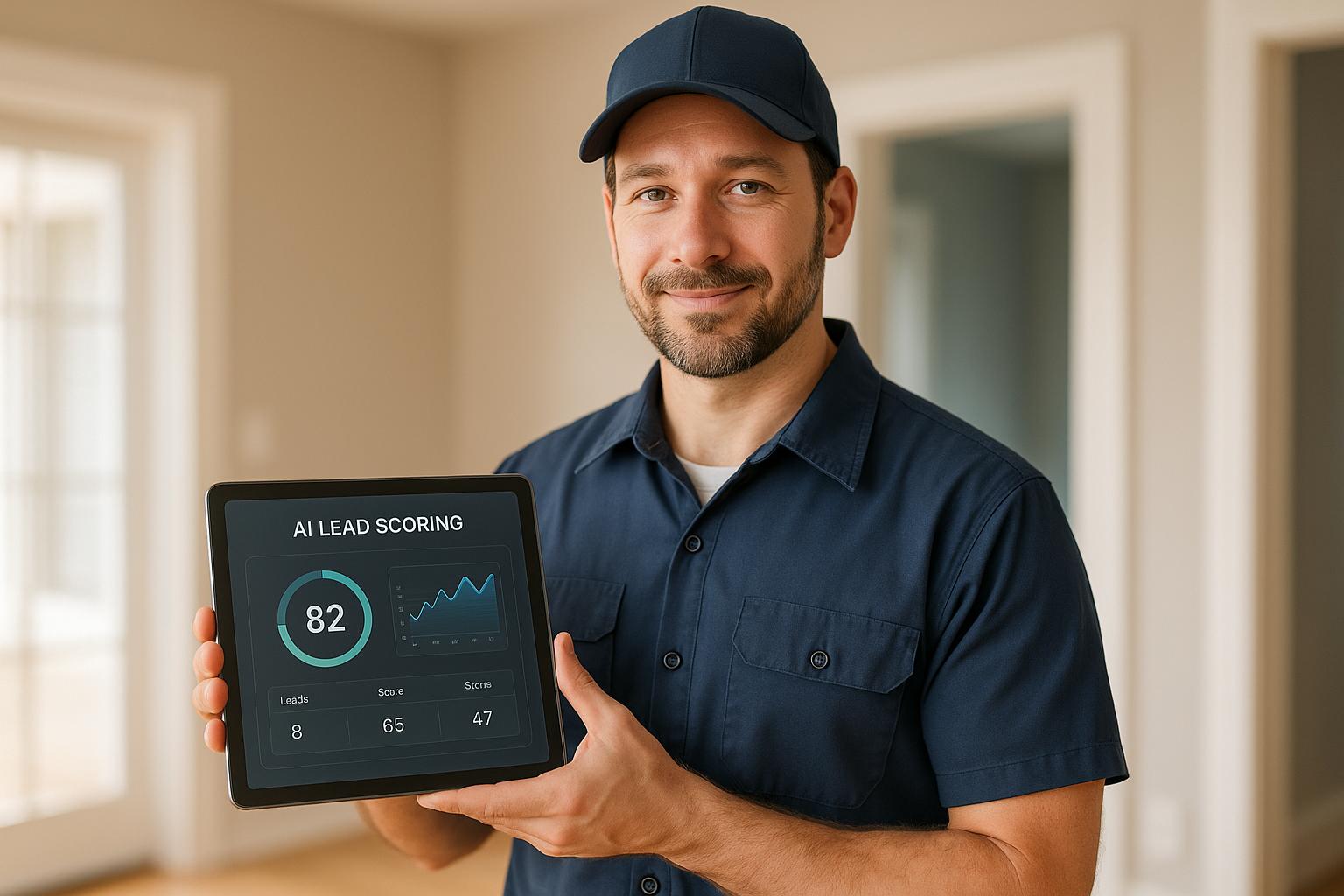
AI lead scoring is transforming how HVAC businesses find and prioritize potential customers. Instead of relying on manual methods, it uses data like property details, demographics, and engagement patterns to identify leads most likely to convert. This approach saves time, improves accuracy, and boosts sales efficiency.
Here’s how AI helps HVAC companies:
Predictive Analytics: Uses property and demographic data to identify high-value leads.
Real-Time Tracking: Monitors actions like email opens and website visits to update lead scores instantly.
Personalized Messaging: Creates tailored outreach based on customer behavior and local trends.
Automated Lead Management: Sorts, scores, and routes leads to the right team members for faster follow-ups.
Cost Efficiency: Offers flat pricing (e.g., $500/month) for unlimited lead scoring, unlike labor-intensive manual methods.
AI-powered systems outperform manual scoring by being faster, more accurate, and scalable. They operate 24/7, ensuring no leads are missed, even during emergencies or high-demand periods. For HVAC businesses, AI lead scoring means focusing on the right prospects at the right time, leading to better results and higher ROI.
Smart Intake Form for an HVAC Company
Top AI Features That Improve Lead Scoring for HVAC
AI-powered lead scoring systems are transforming how HVAC businesses identify and prioritize potential customers. By combining advanced analytics, real-time behavior tracking, and hyper-personalized communication, these tools go far beyond basic contact details to uncover genuine buying intent. Let’s dive into how predictive insights and tailored engagement make this possible.
Predictive Analytics Using Property and Demographic Data
The foundation of effective lead scoring lies in using public data to paint a detailed picture of potential customers. By pulling information from sources like government filings and Google Maps, AI can create comprehensive property profiles that highlight local market trends. For example, changes in business licenses or construction permits might signal growing demand for HVAC services.
AI tools such as Cohesive AI compile this data to build detailed profiles of local businesses, pinpointing those most likely to need HVAC upgrades. Factors like geographic trends and market conditions further refine these scores, enabling sales teams to zero in on prospects who not only need HVAC services but also have the resources to invest.
Real-Time Tracking of Lead Behavior and Engagement
AI takes lead scoring to the next level by continuously monitoring how prospects interact with your business. By tracking actions like email opens, website visits, and content downloads, AI systems can update lead scores in real time as interest levels change.
This real-time tracking helps sales teams act quickly. For instance, if a prospect suddenly starts visiting your pricing page or downloading HVAC-related guides, the system can flag this as a sign of increased interest. Armed with these insights, sales teams can follow up at just the right moment, making outreach far more effective.
Personalized Outreach via AI-Generated Messaging
Personalization is key to successful outreach, and AI makes it incredibly precise. Instead of relying on generic templates, AI uses CRM data, past interactions, and local market insights to craft messages tailored to each prospect. For instance, the system might adjust messaging to address seasonal HVAC needs or specific regional challenges.
Cohesive AI is particularly adept at generating customized cold emails. These emails reference unique business characteristics and local conditions, ensuring every message feels relevant and timely. Over time, the AI refines its approach based on response rates, continually improving the effectiveness of your communication strategy.
Automated Workflow and Lead Qualification for HVAC Businesses
AI-powered lead qualification is changing the game for HVAC businesses by automatically sorting, scoring, and routing leads based on their likelihood to convert. This streamlined process takes the guesswork out of lead management, allowing sales teams to focus their energy on the most promising opportunities.
The process kicks off as soon as a lead enters your system. AI algorithms dive into multiple data points - like property details, business size, industry type, and engagement history - to assign a score. High-scoring leads get immediate attention, while lower-priority ones are placed into targeted nurturing campaigns.
Smart routing ensures every lead lands with the right team member. Factors like geographic location, service specialization, or deal size determine where a lead goes. For example, commercial HVAC leads might be routed to specialists handling large-scale installations, while residential service requests are sent to technicians in the appropriate area. This precise routing ensures no lead is overlooked or stuck in a generic inbox.
Automation doesn’t stop at lead qualification. It extends to follow-up scheduling and task assignments. For instance, if a lead shows increased interest - like repeatedly opening emails or visiting your pricing page - the system can automatically schedule reminders for sales reps to make contact. These workflows significantly improve response times, keeping your team ahead in competitive HVAC markets where quick follow-ups can make all the difference.
Speed is a major advantage of automated workflows. Instead of waiting hours or even days for manual reviews, qualified prospects receive personalized follow-ups within minutes. This rapid response is essential in markets where multiple contractors often compete for the same job. Plus, AI continuously refines its criteria, learning from every interaction to improve its accuracy.
Platforms like Cohesive AI simplify the entire process, managing lead qualification from the first touchpoint to conversion. Whether it’s identifying high-potential prospects using Google Maps data or sending tailored outreach messages, the system ensures no qualified lead falls through the cracks while maintaining consistent communication.
Over time, lead scoring becomes even more precise. AI systems learn from successful conversions, identifying patterns among your best customers and adjusting qualification criteria. This means leads that initially scored low might later be upgraded as new data comes in, while others might be deprioritized if they align with profiles that historically don’t convert well. This adaptability ensures your team is always focused on the most promising opportunities.
AI-Powered vs Manual Lead Scoring Methods
When it comes to lead scoring, there’s a stark contrast between AI-powered systems and manual methods. AI tools provide fast, data-driven insights, while manual approaches rely heavily on human judgment. Both aim to evaluate leads, but their speed, accuracy, and scalability differ significantly.
Manual lead scoring relies on sales teams or managers to evaluate prospects based on their experience and intuition. This process often uses a limited set of subjective criteria, which opens the door to inconsistencies and human bias. Beyond that, it’s time-intensive, making it harder to keep up as lead volumes grow.
On the other hand, AI-powered lead scoring processes leads almost instantly. By analyzing a wide array of data - like property records, business filings, engagement patterns, seasonal trends, and prior conversion results - AI systems deliver fast and consistent evaluations. Leads are scored as soon as they’re received, enabling quicker follow-ups and ensuring uniform accuracy. This expansive data analysis also makes AI solutions more adaptable to challenges like scaling operations or controlling costs.
As lead volumes rise, manual scoring becomes less practical. Backlogs can build up, delaying responses and potentially missing opportunities. AI-powered systems, however, handle high volumes seamlessly, maintaining speed and precision no matter the workload.
From a cost perspective, manual scoring becomes more expensive as the workload increases, with rising labor costs tied to the number of leads. In contrast, AI solutions like Cohesive AI offer a flat monthly fee (e.g., $500/month), allowing unlimited lead scoring and integrated management without additional costs.
Comparison Table: AI-Powered vs Manual Lead Scoring
Factor | AI-Powered Lead Scoring | Manual Lead Scoring |
|---|---|---|
Processing Time | Instant evaluations | Time-consuming evaluations |
Data Points Analyzed | Analyzes dozens of variables simultaneously | Considers only a limited set of factors |
Availability | Operates 24/7 | Limited to regular business hours |
Consistency | Applies uniform criteria across all leads | Subject to variability in individual judgment |
Learning Capability | Continuously improves with new data | Relies on static, experiential insights |
Scalability | Easily manages high lead volumes | Struggles with increasing lead volumes |
Cost Efficiency | Flat monthly fee (e.g., $500/month) | Labor costs increase with lead volume |
Accuracy | Optimized through extensive data analysis | Prone to human bias and limited data |
Why AI Lead Scoring Changes the Game for HVAC
AI lead scoring is reshaping how HVAC businesses tackle customer acquisition and drive revenue. By replacing manual processes with intelligent automation, companies can achieve noticeable improvements in how they manage leads.
This shift isn’t just about streamlining processes - it’s also about speed. Speed as a Competitive Advantage
AI systems can evaluate and score prospects instantly, unlike manual reviews, which can take valuable time. This allows HVAC businesses to quickly spot high-value opportunities and act on them in real time.
Cost Efficiency with Predictable Pricing
Cohesive AI offers a flat monthly rate of $500, eliminating the uncertainty of per-lead fees. This predictable pricing helps businesses better manage their budgets while maximizing their return on investment.
Precision Through Data
AI removes the guesswork from lead scoring, ensuring that outreach efforts are directed toward prospects most likely to need HVAC services. This data-driven approach increases efficiency and improves results.
Always-On Lead Management
HVAC businesses often deal with emergency calls or sudden demand spikes outside regular working hours. AI systems operate 24/7, continuously evaluating and prioritizing leads. This ensures no opportunities are missed, even during busy or off-peak times.
Scaling Personalization
AI makes it possible to craft outreach messages tailored to individual business needs. Instead of sending out generic emails or calls, HVAC companies can deliver personalized messages that build trust and resonate with potential customers, leading to higher conversion rates.
These advantages highlight how AI lead scoring can transform the way HVAC businesses approach customer acquisition. For companies looking to modernize their lead management, AI offers a smarter, faster, and more precise path to growth.
FAQs
What are the benefits of using AI lead scoring for HVAC businesses compared to traditional methods?
AI-powered lead scoring brings a range of benefits to HVAC businesses, giving them an edge over traditional methods. One standout advantage is its ability to quickly identify and prioritize high-value leads. This means businesses can respond more swiftly and with greater precision, leading to more timely and relevant follow-ups. The result? Better close rates and more effective customer engagement.
What sets AI apart from older approaches is its capacity to process vast amounts of data in real-time. This ensures lead evaluations are not only faster but also far more accurate. By automating these processes, sales teams are freed from the burden of manual tasks, improving overall efficiency. With a smoother workflow, HVAC companies can channel their efforts into the leads that truly matter, driving higher conversion rates and making the most of every opportunity.
What data does AI use to score HVAC leads, and how is it gathered?
AI-powered lead scoring for HVAC businesses works by gathering data from various customer interactions - such as phone calls, online chats, web forms, and ad engagement. Advanced tools process this information in real time, evaluating factors like the customer’s intent, sense of urgency, and their preferred booking methods.
This analysis enables businesses to pinpoint the most promising leads, prioritize them effectively, and channel their follow-up efforts where they matter most. The result? A sharper focus on high-potential opportunities and better conversion rates.
What steps can HVAC companies take to get the most out of AI-powered lead scoring systems?
To get the best results from AI-driven lead scoring systems, HVAC companies need to start with clean, accurate, and up-to-date customer data. Pay special attention to collecting critical information like property details, service history, and customer interactions. These elements play a big role in making lead scores more precise and actionable.
It's also important to regularly evaluate and adjust your scoring models. Market conditions and customer behaviors change, so your system should evolve too. Clearly outline what makes a lead high-quality to ensure the scoring system aligns with your business objectives. By refining these steps, you can prioritize leads more effectively and boost your chances of turning them into customers.