Ultimate Guide to AI Email Personalization 2025
Jan 4, 2026
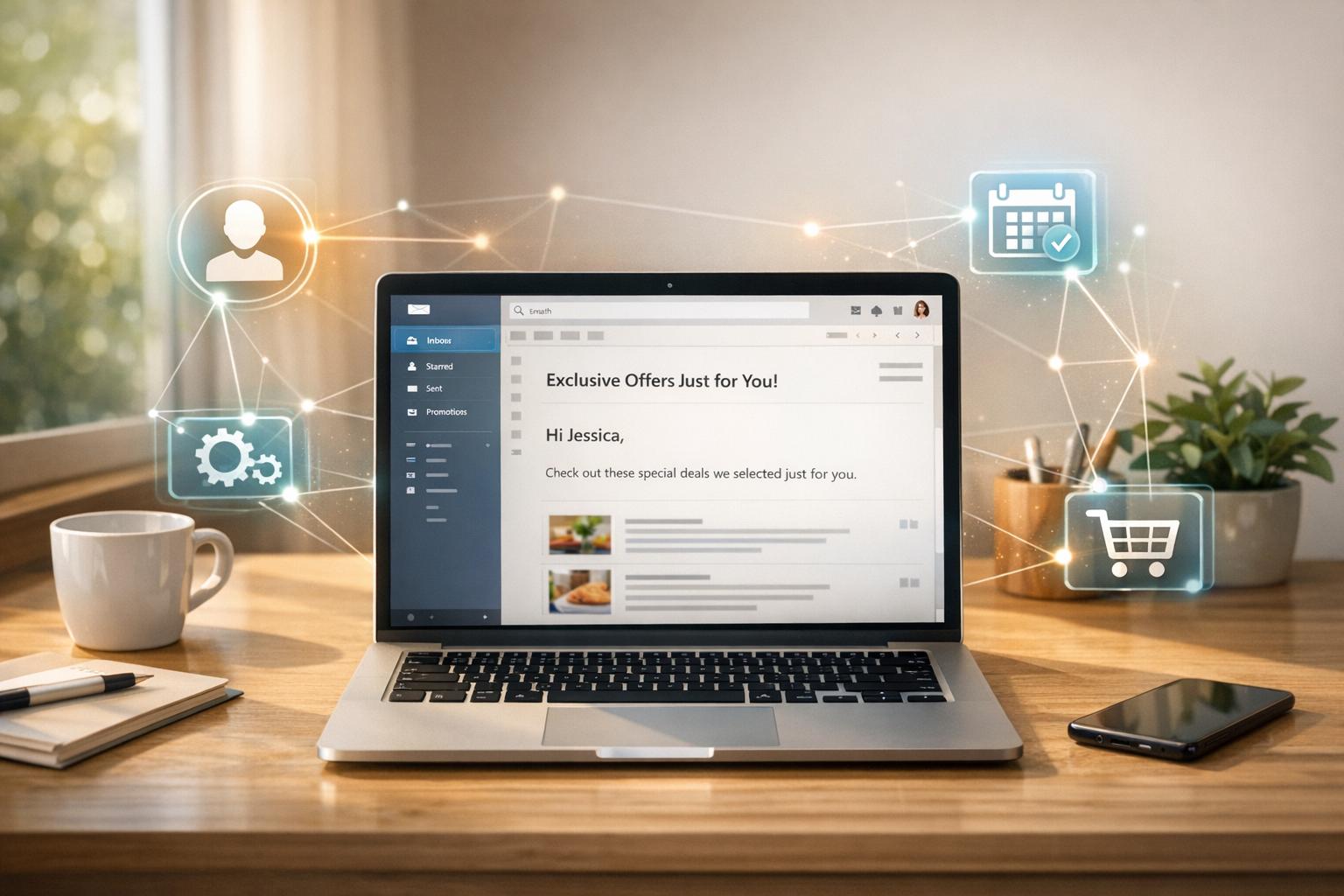
AI email personalization transforms generic email campaigns into targeted, data-driven messages tailored to individual recipients. It leverages machine learning and natural language processing to analyze user behavior, preferences, and demographics, resulting in higher engagement and conversion rates. For local service providers, this approach is essential to stand out in crowded inboxes, save time, and increase ROI.
Key benefits include:
Higher engagement: Personalized emails see up to 6x higher transaction rates.
Time savings: Automates lead research and email crafting, allowing small teams to scale outreach.
Revenue growth: AI-driven campaigns deliver an average ROI of $42 for every $1 spent.
AI tools like Cohesive AI streamline lead generation, optimize email timing, and ensure deliverability. By combining accurate data, human oversight, and continuous testing, businesses can achieve measurable results while reducing manual workload. For local service businesses, this means more bookings, better customer relationships, and consistent growth opportunities.
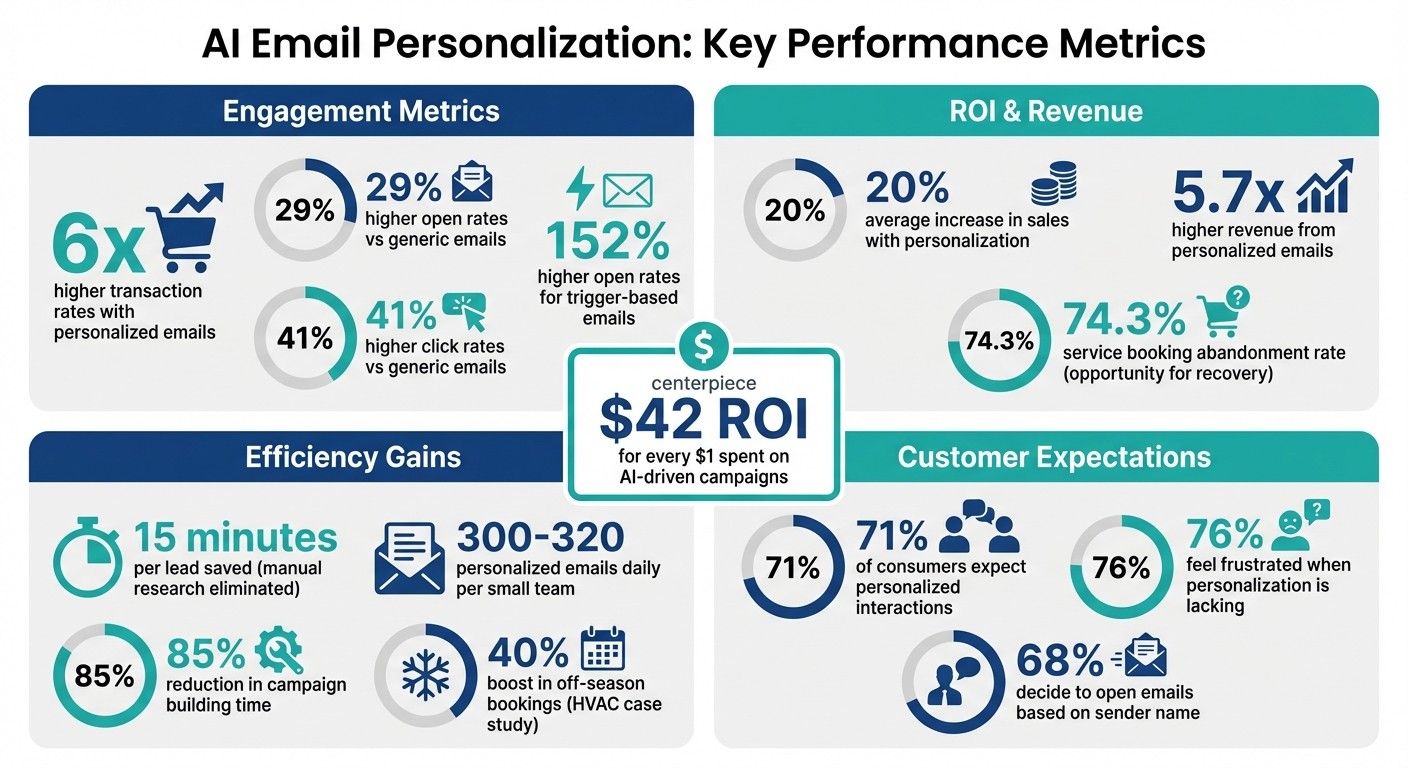
AI Email Personalization ROI and Performance Statistics for Local Service Businesses
How AI Email Personalization Works
Data Analysis and Machine Learning
AI-powered email personalization begins with gathering and analyzing data. For local service businesses, AI tools pull information from sources like Google Maps, LinkedIn, and company websites. This includes details such as business names, categories, review counts, locations, and more. Some tools can even extract up to 70 data points per listing, including specifics like operating hours [11].
Once this raw data is collected, machine learning algorithms process it into usable insights. For example, AI can transform unstructured data - like "5: 284, 4: 123" - into a clear summary, such as "284 five-star reviews." Beyond this, AI studies behavioral patterns, tracking how recipients engage with previous emails, what links they click, and the times they’re most active. This creates a feedback loop, allowing campaigns to improve based on real-world interactions.
To illustrate, in May 2025, a national HVAC company used AI to automate seasonal email campaigns tailored to various climate zones. The system analyzed weather trends and past service schedules to send furnace check-up reminders to Chicago customers in October and AC maintenance tips to Phoenix customers in April. This strategy boosted off-season bookings by 40% [12]. By combining location data and customer history, the AI accurately predicted when services were needed.
This detailed analysis sets the stage for crafting personalized messages using Natural Language Processing.
Natural Language Processing for Better Messaging
Natural Language Processing (NLP) ensures that AI-crafted emails sound natural and relatable. By analyzing how recipients communicate - whether through reviews, support tickets, or social media posts - NLP adjusts the tone of messages to match individual preferences [2]. For instance, a facility manager might receive a more formal email, while a small business owner could get a casual, conversational note.
NLP also uses sentiment analysis to gauge the emotional tone of past interactions, helping guide the tone of future responses [13]. Instead of relying on generic placeholders like {{FirstName}}, AI generates unique, conversational content for each recipient. These messages might reference specific details, such as a recent review or a product the recipient browsed, making the email feel genuinely personal [6].
This approach has proven effective. For example, Amazon’s personalized email campaigns, which use dynamic messaging, achieve a 35% higher open rate compared to standard email blasts [14]. As Salesforce puts it:
"Generative AI is where creativity meets innovation and personalization takes center stage" [1].
Once personalized content is ready, the timing of delivery becomes the next crucial factor.
Automated Email Timing and Delivery
Timing can make or break email engagement. Instead of relying on one-size-fits-all schedules (like the classic Tuesday morning send), AI analyzes each recipient’s habits - when they typically open emails, click links, or take action [2].
AI also fine-tunes email frequency, monitoring for signs of disengagement and adjusting how often messages are sent. For instance, if someone stops opening emails, the system can trigger a reactivation sequence to re-engage them before they unsubscribe [3].
To ensure emails land in inboxes rather than spam folders, advanced systems use strategies like "neural protection." This involves monitoring sending patterns and pacing emails strategically across different providers, maintaining high deliverability rates at scale.
For local service providers aiming to improve their email campaigns, platforms like Cohesive AI utilize these advanced techniques to deliver messages that are not only personalized but also perfectly timed and highly effective.
Benefits of AI Email Personalization for Local Service Businesses
Higher Engagement and Conversion Rates
AI-powered personalization has a proven track record of boosting email engagement. Emails tailored to individual recipients achieve 29% higher open rates and 41% higher click rates compared to generic email blasts [7]. Even more impressive, these personalized emails drive six times higher transaction rates than their non-personalized counterparts [6].
The secret lies in hyper-personalization, which uses real-time data like browsing habits and service history to craft relevant messages. For instance, trigger-based emails - such as a follow-up after a quote request - can achieve 152% higher open rates than standard mass emails [7].
For local service businesses in the U.S., this translates into tangible results: more appointments booked and deals closed. Picture a landscaping company sending timely maintenance reminders based on when a customer last used their service, or an HVAC business targeting homeowners due for a system upgrade. Beyond driving engagement, AI also simplifies workflows, saving time and cutting costs.
Time and Cost Savings
Manually researching leads can eat up as much as 15 minutes per lead [15]. AI eliminates this time drain, enabling small teams to send 300–320 personalized emails daily without compromising quality [15].
Take the example of Bloom & Wild, a UK-based online florist. By using AI content blocks, they slashed the time spent building email campaigns by 85% [16].
For U.S.-based local service businesses, these efficiencies are game-changing. Tasks that once required an entire marketing team can now be handled by a single staff member. AI automates lead research, audience segmentation, and even content creation, freeing up time for employees to focus on their core services [3][15].
Revenue Growth Potential
The time and cost savings AI provides don’t just improve efficiency - they also open the door to significant revenue growth. On average, AI-driven email personalization delivers an ROI of $42 for every $1 spent [14]. Marketers who use personalized experiences report an average 20% increase in sales, while emails featuring personalization generate revenue that’s 5.7 times higher [9].
This revenue boost comes from a combination of AI capabilities. Features like lead scoring and churn prediction help businesses focus on high-conversion prospects while automatically re-engaging customers at risk of leaving [1][2]. AI also identifies upselling opportunities by analyzing purchase patterns and recommending complementary services [2][3].
With an average 74.3% service booking abandonment rate [9], AI recovery emails can reclaim lost revenue by following up with prospects who showed interest but didn’t book. For example, platforms like Cohesive AI offer a flat $500 fee and guarantee at least four interested responses per month. If even one of those responses converts into a customer worth $2,000 or more, the investment pays for itself many times over.
Best Practices for Implementing AI Email Personalization
Start with Clean and Accurate Data
AI email campaigns thrive on clean, reliable data. As Campaign Monitor aptly states:
"Your personalization is only as good as your data" [17].
For local service businesses, this means gathering details like company names, precise locations, business categories, and review metrics [11]. The more specific and accurate your data, the better your results.
To achieve this, collect data from various sources - such as zero-party data from customer forms and first-party data from website interactions - and ensure its accuracy. For prospecting, real-time data extraction can update critical details like operating hours and review scores [1][11]. Tools designed for data extraction can also pull verified emails, social media links, and other key points, with some offering free trials for the first 100 leads [11].
Once you’ve collected your data, use cleaning tools to refine it. For example, you can convert messy text strings into actionable insights, such as isolating five-star review counts into a dedicated column [11]. Filtering your leads is another vital step - target businesses that meet specific criteria, like a minimum number of reviews or a particular price range [11].
With accurate data in hand, you can seamlessly combine automated processes with human expertise to craft more compelling and precise messaging.
Balance AI Automation with Human Oversight
AI can handle repetitive tasks, but it’s the human touch that brings strategy and personality to your campaigns. Think of AI as your assistant - it builds the framework, while you add the finishing touches [1][10]. As Gordon Donnelly, Founder of Powerplay, puts it:
"AI helps get the low-expertise structure done so you can add the high-value content and your specified point of view" [1].
To ensure your emails reflect your brand, define clear tone and style guidelines before launching campaigns. For instance, you might instruct AI to "use a conversational tone" or "keep CTAs as soft asks" [8]. Treat AI-generated content as a draft - refine it with storytelling, context, and insights specific to your business [10]. And don’t forget to set fallback text for personalization fields to avoid embarrassing errors like showing "%FIRSTNAME%" when data is missing [17].
Before hitting send, test your dynamic content across different audience segments. Sending test emails to colleagues can help identify grammar issues or awkward phrasing [17][8]. Also, remember that 68% of Americans decide to open an email based on the "from" name, so verifying sender details is crucial [9].
When you strike the right balance between automation and human oversight, your campaigns will feel both efficient and personal.
Test and Optimize Campaigns Continuously
To improve performance, continuous testing is key. Start with champion-challenger testing, where you compare AI-powered emails against manually crafted ones to measure differences in opens, clicks, and revenue [2]. Don’t limit your tests to subject lines - AI can also help you experiment with user behavior, design elements like images and colors, and variations in tone [1][18].
AI can also optimize send times, ensuring emails are delivered when recipients are most likely to engage [2][14]. Test different combinations of personalized fields - sometimes referencing a recent website visit is more effective than using a job title [8]. Follow the "Golden Rule" of personalization: limit it to three fields per content block to maintain relevance without overwhelming the recipient [8].
To ensure your results are accurate, maintain a control group during A/B tests. Test one variable at a time to gain clear insights. Gordon Donnelly explains it well:
"AI isn't a replacement for good email marketing. But it is rocket fuel. When used strategically, it turns email from a static broadcast channel into a living system that gets better every single week" [10].
Start small - test one element, like subject lines, before expanding to other areas. By refining each piece methodically, you’ll set the stage for scalable, AI-powered email campaigns.
For local service businesses, platforms like Cohesive AI (https://getcohesiveai.com) offer tailored solutions for lead generation and personalized email marketing, making it easier to implement these strategies effectively.
Scaling Outreach with AI Tools
Automating Lead Generation and Email Campaigns
For local service businesses, Google Maps serves as a goldmine for lead generation. AI tools can quickly extract essential details like business names, addresses, categories, review counts, and up to 70 other data points from Google Maps [11].
But AI doesn’t stop at just collecting data - it also helps craft messages that resonate. By analyzing patterns, AI can tailor email content to match the preferences of each recipient. For example, generative AI can pull five-star review counts from complex data sets and seamlessly integrate them into email openings [2][11].
Tools like Cohesive AI (https://getcohesiveai.com) simplify this entire process for local service providers. They scrape data from sources like Google Maps and government filings, use AI to personalize cold emails, and even manage campaigns automatically. For businesses in the U.S., Cohesive AI offers a flat monthly fee of $500, which covers three campaigns and guarantees at least four interested responses each month - or a free month’s credit if that target isn’t met [19]. These automated workflows make scaling outreach both cost-effective and predictable, ensuring consistent results without the guesswork. This kind of scalable personalization also helps maintain high deliverability rates, even when managing large email volumes.
Maintaining Deliverability at Scale
Sending thousands of emails requires more than just good content - it demands a solid infrastructure. As of May 5, 2025, Microsoft Outlook joined Google and Yahoo in enforcing strict email authentication standards, including SPF, DKIM, and DMARC [20].
To avoid spam filters and maintain deliverability, it’s important to distribute emails strategically. For instance, sending 1,000 emails per day could be split across 20–30 mailboxes on 5–10 domains, with each mailbox limited to 30–50 emails daily. New domains should also be “warmed up” over a two-week period to build credibility [21].
AI plays a key role in keeping email lists clean. Validation APIs catch common typos like “gmall.com” instead of “gmail.com,” helping to keep bounce rates below the ideal 2% threshold (bounce rates above 5% can significantly harm deliverability) [21][22].
Denis O'Sullivan, Principal Deliverability Consultant at Twilio, highlights the benefits of these changes:
"Legitimate senders should be thrilled with Google and Yahoo's sender requirements. The majority of spammers won't be able to meet the requirements and your customers' inboxes will be less cluttered as a result." [20]
AI also optimizes send times based on recipient behavior, improving engagement metrics that email providers use to assess sender reputation [1][20]. Strong deliverability is critical to the success of large-scale campaigns, and by automating repetitive tasks, businesses can achieve both efficiency and effectiveness.
Reducing Manual Work While Growing Results
AI takes the grunt work out of data processing. For example, ChatGPT can analyze CSV files to extract key metrics - like five-star review counts - and generate personalized content automatically [11]. Similarly, AI-powered "Blocks" create dynamic content sections that adjust based on buyer data, such as industry, job title, or recent activity [8].
By automating tasks like data extraction and content creation, businesses can increase outbound email volume by 15% while boosting the likelihood of purchase by 75% [1][19]. As Salesforce puts it:
"AI helps get the low-expertise structure done so you can add the high-value content and your specified point of view." [1]
For local service businesses, these advancements mean thousands of personalized emails can be sent each week without adding operational complexity. AI platforms can scrape listings, filter for specific criteria (like businesses with websites or a minimum number of reviews), and generate tailored messages at scale. This allows teams to focus on what matters most - closing deals and driving revenue growth.
Conclusion
Key Takeaways for Local Service Businesses
AI-powered email personalization is changing the way local service businesses, like janitorial companies, HVAC contractors, and landscapers, connect with potential customers. With 71% of consumers expecting tailored interactions and 76% expressing frustration when businesses fail to deliver, this technology offers an opportunity to meet those expectations head-on [24].
One of AI's biggest strengths is its ability to scale personalization without adding complexity. By analyzing data and crafting customized messages, AI allows businesses to focus on what they do best: closing deals and serving clients. Jesse Sumrak from Twilio SendGrid sums it up perfectly:
"AI doesn't replace marketers. Instead, it works alongside them, handling data analysis and optimization so marketers can focus on creative strategy, messaging, and building customer relationships" [23].
This collaboration between human creativity and AI efficiency transforms generic outreach into campaigns that resonate and convert.
The results speak for themselves: AI personalization has been shown to boost sales by at least 10% and improve profit margins by 1-3% [24]. Tools like Cohesive AI make this technology accessible, offering plans at $500 per month with a guarantee of at least four interested responses - or a free month's credit.
Next Steps for Implementation
To make the most of these benefits, a thoughtful approach is essential. Begin by ensuring your data is accurate and up-to-date. AI tools are only as effective as the quality of the information they process, so verify your contact lists and confirm your CRM contains reliable first-party data [1][2].
Start small by automating a single task, like follow-ups or seasonal reminders. Once you've seen measurable results, expand your efforts. With 95% of marketers reporting success using generative AI for email creation [24], there's a clear path to effective implementation. Set achievable goals, such as 40-60% open rates and 2-5% reply rates, to measure your progress [4].
Lastly, pay attention to email design. Maintaining a 60/40 text-to-image ratio can help your messages avoid spam filters and improve deliverability [5].
I Deep Personalized 1000+ Cold Emails Using THIS AI System - FREE DOWNLOAD
FAQs
How does AI customize emails for different customer groups?
AI takes email customization to the next level by diving into data like demographics, purchase history, website activity, and publicly available details such as business listings. It uses this information to group customers into specific segments. For example, it might identify new homeowners who could need HVAC services or small-business owners who recently filed for a license. Each group gets a detailed profile predicting their interests, preferred communication style, and potential actions.
With these profiles in hand, AI generates personalized subject lines, email content, and offers tailored to each segment's needs. Dynamic content adjusts in real time, ensuring that the right message, product suggestions, and calls-to-action are delivered to the right audience. For local service providers, tools like Cohesive AI handle the heavy lifting by automating tasks like lead segmentation, email creation, and campaign management. This makes it easier for businesses to engage with their audience efficiently and on a larger scale.
What are the main advantages of using AI for email personalization in local service businesses?
AI-powered email personalization enables local service businesses to craft highly targeted messages that feel like genuine one-on-one conversations. By analyzing data such as a prospect's location, recent activity, and specific service needs, AI can create emails that truly connect with recipients. The result? Higher open rates, better click-through rates, and more engagement overall - leading to increased conversions and shorter sales cycles.
But the benefits don’t stop at personalization. AI also simplifies the entire email marketing process by automating tasks like list segmentation and predicting customer needs. For instance, it can automatically send reminders for services like HVAC tune-ups or lawn care, triggered by a prospect's past behavior or interactions. This automation not only saves time but also optimizes campaigns on the fly, helping small and mid-sized businesses reduce customer acquisition costs while running smarter, more efficient marketing efforts.
Tools like Cohesive AI take things a step further. By leveraging data from sources like Google Maps and public records, it builds highly targeted lead lists and manages personalized email campaigns designed to meet each prospect's needs. For local service providers, this means a faster, more scalable way to generate leads compared to traditional methods.
How can businesses ensure their data is accurate for successful AI-powered email campaigns?
To get the most out of AI-driven email campaigns, businesses need to focus on keeping their data accurate, current, and well-organized. Start by gathering leads from trustworthy sources like Google Maps or official business registries. Immediately eliminate duplicate entries to avoid clutter. Standardize key details - like addresses, phone numbers, and email formats - to match U.S. conventions (e.g., "(555) 123-4567" for phone numbers and "123 Main St, Anytown, NY 12345" for addresses). Enhance your database by incorporating updated public records, such as government filings or customer reviews. Don’t forget to validate email addresses to remove invalid ones or generic addresses like "info@".
Once your data is clean, ensure consistency by formatting elements like dates (MM/DD/YYYY) and dollar amounts ($) to align with U.S. standards. Map your data fields to match the requirements of your AI platform, enabling accurate segmentation and personalization. Make it a habit to audit your database regularly - whether weekly or monthly, depending on the campaign's size - to catch and correct outdated or incorrect entries. Also, prioritize compliance with privacy laws like CCPA and CAN-SPAM by documenting user consent and offering clear opt-out options.
Clean, verified data does more than improve email deliverability - it allows your AI to craft highly personalized campaigns that truly resonate with your audience.