Why Localization Matters in Lead Generation
Jan 30, 2026
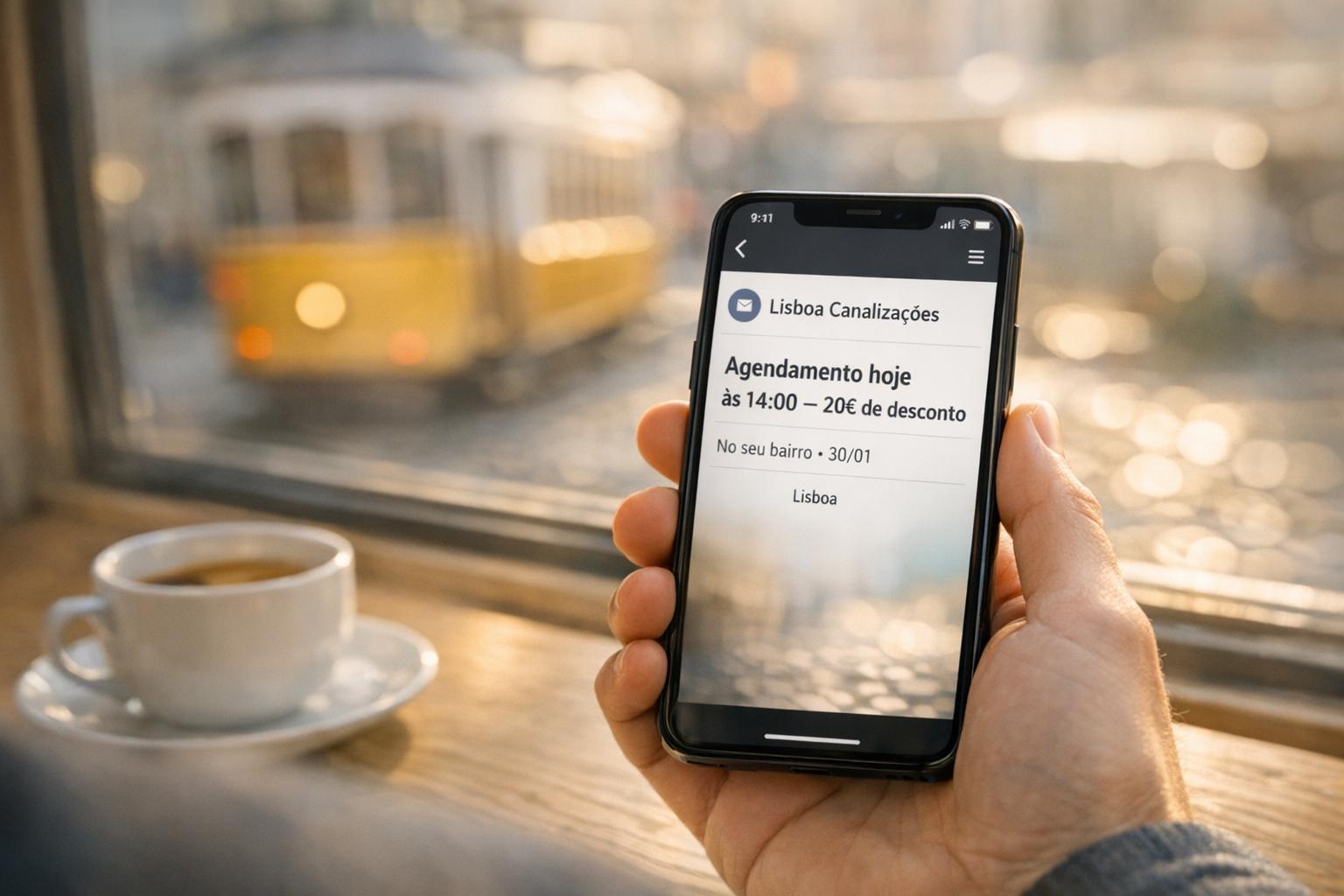
Localization in lead generation is all about tailoring your marketing efforts to match the preferences, language, and context of specific regions. For local service businesses like HVAC, landscaping, or janitorial companies, this approach can significantly boost engagement, open rates, and conversions. Here's why it works:
Personal Connection: Emails that mention local details (like cities, weather, or challenges) feel more relevant and trustworthy.
Higher ROI: Geographically segmented campaigns can increase ROI by up to 760%, earning $25 for every $1 spent.
Improved Engagement: Localized content improves open rates by 26% and click-through rates by over 50%.
Diverse Audiences: With 38% of the U.S. population being multicultural, offering content in languages like Spanish can tap into a $14.8 trillion market.
Localization goes beyond translation - it includes using local formats (currency, dates), aligning with regional norms, and timing emails to match recipients' time zones. Tools like AI-driven platforms can help businesses create hyper-targeted campaigns, ensuring their messaging resonates with local audiences.
Key Takeaway: Tailoring your messaging to local preferences isn't optional - it's a proven way to drive better results and build trust with your audience.
Hyper-Local Lead Generation To Crush It In 2025
Research Data: How Localization Improves Email Campaigns
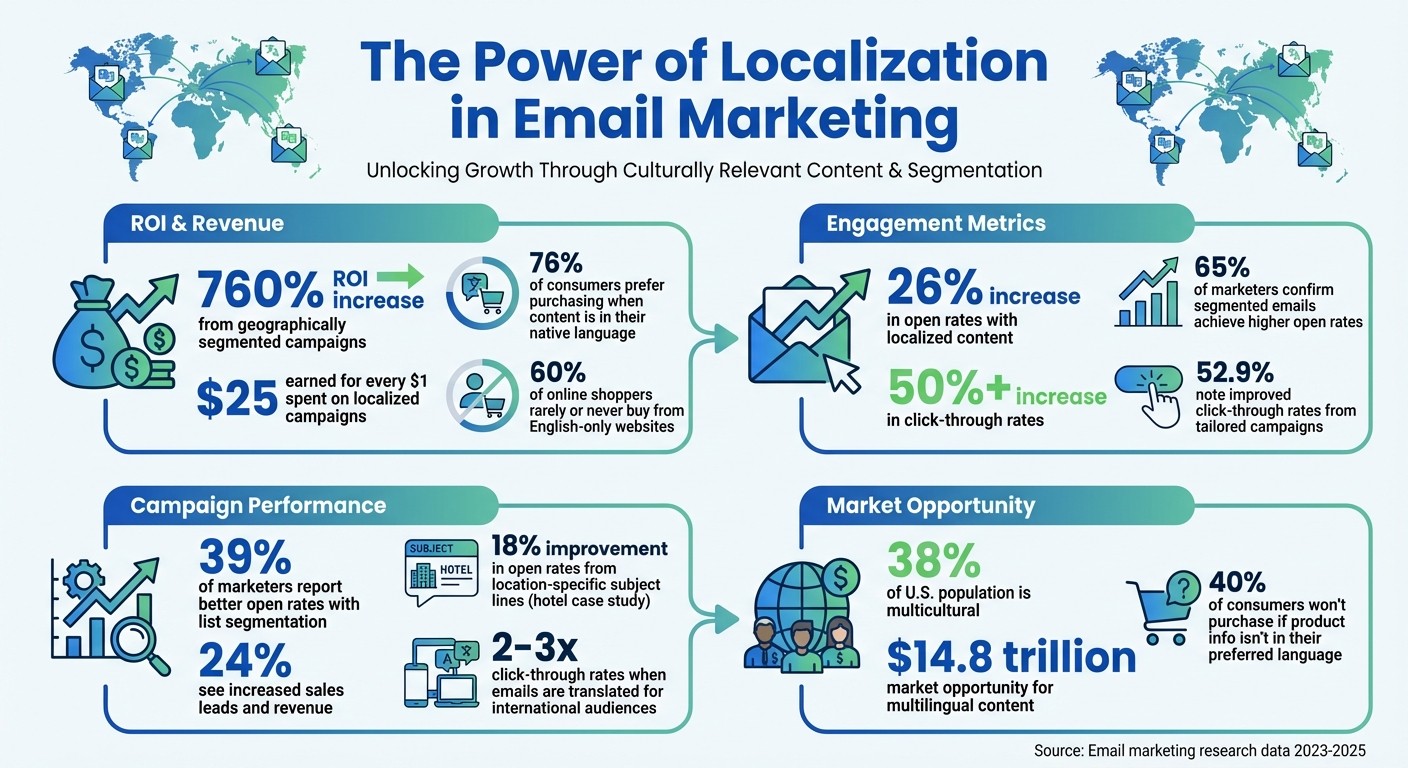
Localization Impact on Email Marketing ROI and Engagement Rates
Localized email campaigns consistently outperform generic ones by tailoring messaging to the audience’s language, preferences, and regional context. This approach significantly boosts key metrics like open rates, click-throughs, and overall engagement.
Better Open and Click-Through Rates
When email content is personalized based on location, open rates can jump by as much as 26% [2]. Translating emails for international audiences or adapting them for regional preferences within the U.S. has been shown to double - or even triple - click-through rates compared to one-size-fits-all campaigns [4]. In fact, 65% of marketers confirm segmented emails achieve higher open rates, while 52.9% note improved click-through rates from tailored campaigns [10]. These gains don’t just stop at clicks - they pave the way for stronger conversions and increased revenue.
Higher Conversion and Revenue Numbers
Segmentation and localization can lead to impressive revenue growth, with studies showing a potential 760% increase, translating to $25 earned for every $1 spent [2][3]. Additionally, 76% of consumers prefer making purchases when content is available in their native language, and 60% of online shoppers rarely - or never - buy from English-only websites [11]. For U.S. companies targeting diverse or regional markets, this highlights a huge opportunity. Even subtle changes, like referencing local landmarks or using familiar regional phrases, can establish trust and drive conversions. These findings make it clear: localized messaging isn’t just a nice-to-have - it’s a must for effective lead generation.
Stronger Campaign Performance
Localization also enhances overall campaign engagement. For example, 39% of marketers practicing list segmentation report better open rates, while 24% see increased sales leads and revenue [8]. A great example comes from a hotel client who improved open rates by 18% by swapping a generic subject line, “Get away this weekend,” for a location-specific one: “Escape to Tepoztlán this Friday” [9]. This small adjustment demonstrates how localization can make a big impact across industries.
Local service businesses can also benefit significantly. Platforms like Cohesive AI help create hyper-targeted campaigns by referencing specific neighborhoods, addressing local challenges, or highlighting regional services. These details not only grab attention but also spark meaningful interactions that lead to real business relationships. The data clearly shows that localization is a game-changer for improving campaign performance and driving measurable results.
Key Components of a Localized Email Campaign
Creating a successful localized email campaign hinges on three main elements: adapting language, following local format standards, and incorporating location-specific content. Each of these plays a vital role in ensuring your message feels relevant and trustworthy to recipients across different regions.
Language and Regional Adjustments
Adapting language is more than just translating words - it’s about understanding regional dialects, local phrases, and communication styles. For instance, Americans say "sneakers", while in the UK, it’s "trainers" [4][7]. These subtle differences can make a big impact on how your audience perceives your brand.
Tone also varies by region. While U.S. audiences often respond well to casual first-name greetings, German recipients may expect formal titles like "Frau" or "Herr" [1]. Similarly, Western audiences tend to prefer direct messaging, but in many African and Asian cultures, a more respectful and reserved tone is appreciated [13]. Even something as simple as your sign-off can matter - "Regards" works well in the U.S., but "Kind Regards" is more common in the UK [1].
Subject lines bring their own challenges. Translations can make them longer, risking truncation on mobile devices [13][1][3]. Colors also carry different meanings: white symbolizes purity in the U.S. but represents mourning in India, while red conveys love in the U.S., luck in China, and negativity in Germany [13][1]. These details are important - 90% of snap purchasing decisions are influenced by color alone [1].
Local Format Standards
Once the language is tailored, following local format standards is essential to build trust. Using region-specific formats - like the dollar sign ($) and MM/DD/YYYY for U.S. audiences - can make interactions feel seamless [12][5].
40% of consumers won’t make a purchase if product information isn’t in their preferred language [12]. This applies to formatting too. Displaying prices in local currencies with the correct symbols and offering preferred payment methods helps streamline decision-making [5][12]. For regions using right-to-left scripts, such as Arabic or Hebrew, emails should be mirrored, though buttons often remain unmirrored for usability [12][1][3].
Technical precision is just as critical. Use UTF-8 (Unicode) character encoding to ensure special characters in non-Latin alphabets display correctly across all email platforms [12][3]. Some countries even have legal requirements for email campaigns. For example, in China, promotional emails must include "AD" (or its Chinese equivalent) in the subject line [6][3]. These adjustments reinforce the importance of catering to regional expectations.
Beyond format, aligning with local timing and context enhances your campaign’s relevance.
Location-Based Content and Timing
Timing can make or break your campaign. Emails sent between 10 AM and 11 AM in the recipient's local time zone perform much better than those arriving at odd hours [12][1]. A 2023 example highlights this: UK-based restaurant La Tasca accidentally sent a "40% off Sunday" offer at 10:39 PM on a Sunday night, rendering the promotion ineffective [15].
Content and imagery should also reflect local seasons and contexts. For instance, New Zealand brand Ashley & Co. replaced snowy Christmas visuals with summer sunsets for its Southern Hemisphere audience in December 2023 [12]. In Middle Eastern markets, conservative imagery with fully covered clothing is preferred, while beachwear or diverse group photos work well in the U.S. and EU [12][13][3].
It’s also important to align campaigns with local holidays and events. For example, Father’s Day is celebrated on different dates worldwide, and regions have unique holidays like Carnival in Germany or Ramadan in the Middle East [6][1][4]. Uber shows how to do this effectively by using localized timestamps in subject lines, such as "Your Saturday morning Uber trip", ensuring messages align with recipients’ schedules [14]. For businesses targeting specific neighborhoods, tools like Cohesive AI can help create hyper-targeted campaigns that address local challenges and resonate deeply with audiences. This kind of precise localization supports broader strategies for generating leads through regional engagement.
Case Studies: Localized Lead Generation Results
Case studies reveal how customized messaging can drive impressive results for global brands, franchise networks, and local service providers. These examples highlight how different strategies succeed in diverse markets.
Airbnb's Regional Campaigns
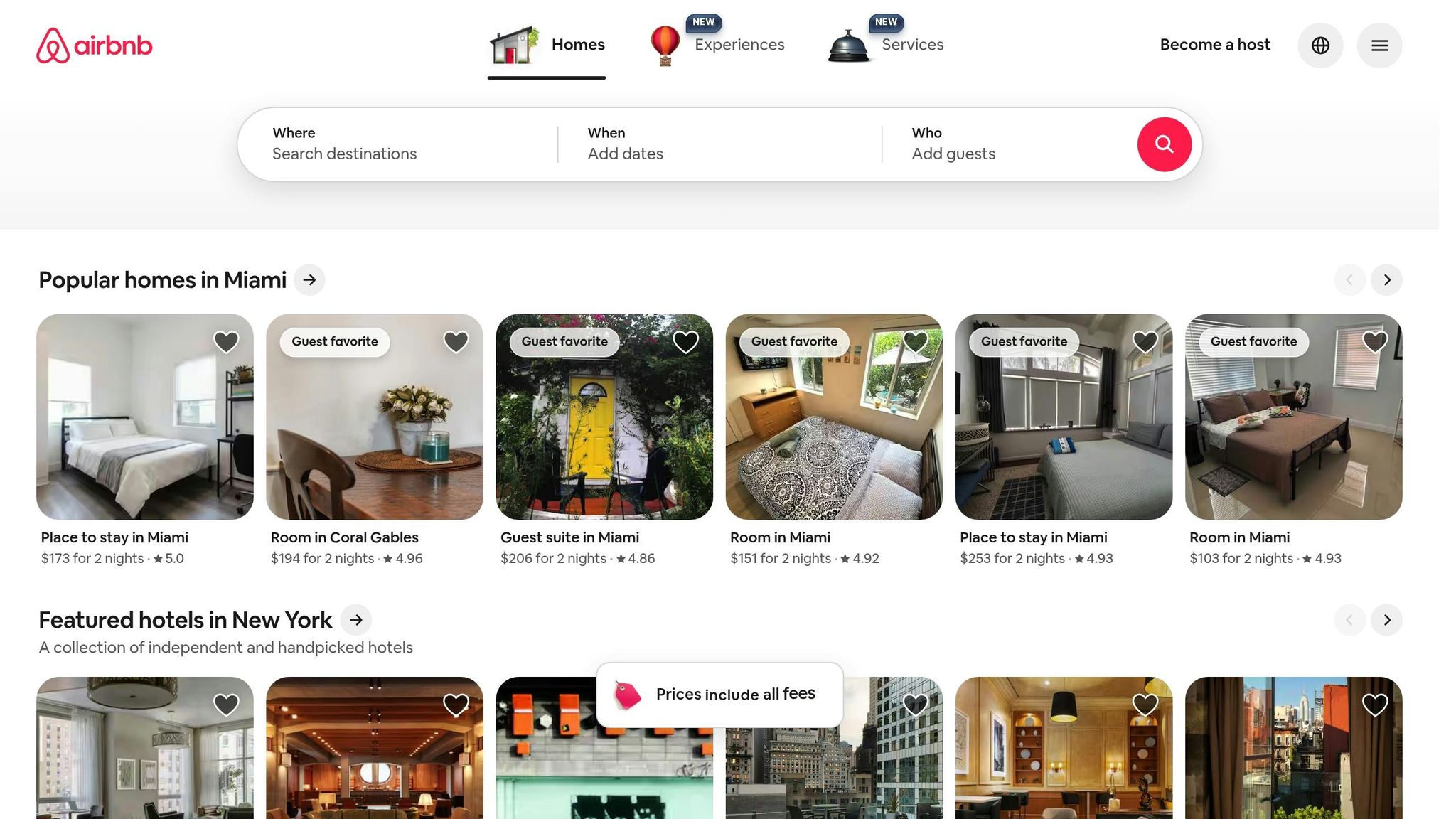
Airbnb showcases the impact of localized marketing through its email campaigns. By tailoring imagery, tone, and references to match specific markets, the company connects with audiences on a deeper level. For instance, in Middle Eastern markets, Airbnb incorporates visuals that align with conservative dress standards, while in the U.S., its campaigns lean toward a more minimalistic look [3]. Even design elements are adjusted - red, which symbolizes negativity in Germany, is used to convey good fortune in China [1]. This approach goes beyond translation, creating a fully localized experience that resonates with different cultural expectations and builds trust [3].
Franchise Networks Using Local Templates
In November 2025, Painting with a Twist, a U.S.-based franchise with over 220 locations, adopted localized email campaigns through ActiveCampaign. The company provided brand-approved templates that local studio owners could customize with regional offers and community-specific messaging. This method kept branding consistent while meeting local needs, resulting in a 95% adoption rate among franchisees, a 65% increase in email volume, and a 25% boost in revenue [17].
Small Businesses Using Local Messaging
Localization isn't just for big brands - it delivers substantial benefits for small businesses too. Geo-targeted and culturally relevant email campaigns can increase ROI by as much as 760% [2], while personalizing content based on location and culture can lift open rates by 26% [2][16]. Small businesses can also use dynamic content blocks to automatically update pricing, promotions, and recommendations based on a subscriber's location, eliminating the need for separate campaigns [17]. For niche service providers like janitorial companies, landscaping businesses, and HVAC contractors, tools like Cohesive AI make it easier to create hyper-targeted campaigns. By pulling local business leads from Google Maps and personalizing outreach with AI, these companies can zero in on specific neighborhoods with precision.
How to Implement Localization in Lead Generation
To make the most of localization in lead generation, consider these strategies to fine-tune your approach.
Use Geo-Targeting and Segmentation
Leverage geographic data in your CRM - like region, city, or zip code - to tailor your messaging. This is especially useful for local service businesses such as HVAC contractors or landscaping companies. Tools like Cohesive AI can pull leads directly from sources like Google Maps or government filings, enabling precise neighborhood-level targeting.
Dynamic content blocks can further enhance personalization. Adjust pricing to reflect local currency, highlight inventory availability, and promote offers specific to each subscriber's location. Even small details, like using a sender's name tied to a local representative, can make a big difference [16][17]. Incorporating visuals of local landmarks or people adds another layer of connection [1][17].
Test Localized Variations with A/B Testing
A/B testing is a powerful way to refine localized elements. Test one variable at a time - like subject lines, images, or calls-to-action - to pinpoint what resonates most [18]. Before starting, set benchmarks such as open and click-through rates to measure improvement.
Keep in mind that translating text can affect its length. For instance, a concise English subject line might grow by over 20 characters when translated into German or French, potentially causing display issues on mobile devices [1][3]. To preserve tone and context, rely on native translators rather than machine translation [12]. If you're targeting Middle Eastern markets, testing right-to-left (RTL) layouts is also essential for a seamless user experience [1][12].
Once you've optimized these elements, align your schedule and messaging for even greater impact.
Optimize Timing and Messaging
With targeting and testing in place, focus on timing and tone to enhance engagement. For emails, scheduling delivery between 10:00 AM and 11:00 AM local time tends to yield the best open rates [1]. Use location-based segmentation to automate delivery across different time zones [17]. Be mindful of local holidays and observances to avoid disruptions in engagement [3][4].
Adjust your tone and formality to match regional preferences [19]. Details like formatting dates, measurements, and currencies according to local norms not only minimize confusion but also show your audience that you understand their needs [5].
Conclusion
Localization is about more than just translation - it's about showing respect for your audience's culture, preferences, and buying habits. For small to medium-sized service businesses like HVAC contractors, landscaping companies, or janitorial services, this strategy can transform overlooked emails into qualified leads. By speaking their language, using their local formats, and referencing their community, you create genuine connections that drive action.
The numbers back it up: localized efforts can deliver up to $25 for every $1 invested and increase open rates by 26%[2]. Segmented campaigns can boost ROI by an impressive 760%[2], and 76% of consumers are more likely to buy when the information is presented in their native language[12].
"Localization turns cultural insight into higher engagement, conversions, and loyalty. By tailoring campaigns to local languages, customs, and preferences, brands can build stronger connections."
– Erin McInrue Savage, ActiveCampaign[17]
This quote perfectly highlights how localization can be applied to create meaningful results. Tools like Cohesive AI make it even easier for local service businesses to implement these strategies. From referencing nearby landmarks to adapting regional dialects or ensuring emails arrive at 10:00 AM in the recipient's time zone, automation simplifies the process while keeping it personal.
FAQs
How does localization boost ROI in lead generation?
Localization plays a key role in boosting ROI for lead generation by tailoring marketing efforts to resonate with specific geographic audiences. When email campaigns are localized, they incorporate language, references, and visuals that align with the preferences of the target audience. This approach makes the content more engaging and relevant, leading to higher open rates, better click-through rates, and increased conversions.
Another benefit of localization is ensuring compliance with regional preferences and legal standards. This not only enhances trust but also reduces potential issues, such as email bounces. By delivering messages that are sensitive to local nuances and directly targeted to the audience, businesses can create stronger connections with potential leads. Ultimately, this strategy helps improve lead conversion rates and ensures a better return on every marketing dollar spent.
What makes a localized email campaign successful?
A localized email campaign thrives when it creates a personalized and culturally relevant connection with its audience. The first step? Go beyond simple translation. Focus on adapting content to reflect local idioms, references, and cultural subtleties. This approach helps recipients feel truly seen and appreciated.
Next, incorporate visual elements that align with the local culture. Whether it’s region-specific imagery or symbols, these details can make your emails feel more relatable and trustworthy. Pair this with messaging, offers, and calls to action tailored to local traditions, buying behaviors, and customs. This level of customization can significantly boost engagement and conversion rates.
Lastly, ensure your campaign complies with local regulations and email laws. Staying within legal boundaries not only protects your brand but also reinforces your credibility. By weaving these strategies together, your email campaign can resonate deeply with your audience and achieve impactful results.
Why is timing crucial for localized marketing strategies?
Timing is everything when it comes to localized marketing. It’s not just about sending emails - it’s about sending them when your audience is most likely to engage. By aligning email campaigns with specific time zones and local habits, businesses can see a noticeable lift in open rates and click-throughs. For instance, knowing when people in a particular region typically check their inbox or take action ensures your message lands at just the right moment.
But there’s more to it than just time zones. Cultural and regional nuances play a huge role too. Sending emails during local holidays, at odd hours, or at times that clash with cultural norms can hurt engagement - and even erode trust. By syncing your campaign schedule with local routines and preferences, you’re not just improving numbers; you’re building stronger connections and generating better leads. Timing isn’t just about the clock - it’s about understanding the rhythm of your audience.