Why Real-Time Location Data Matters for Local Service Marketing
Aug 26, 2025
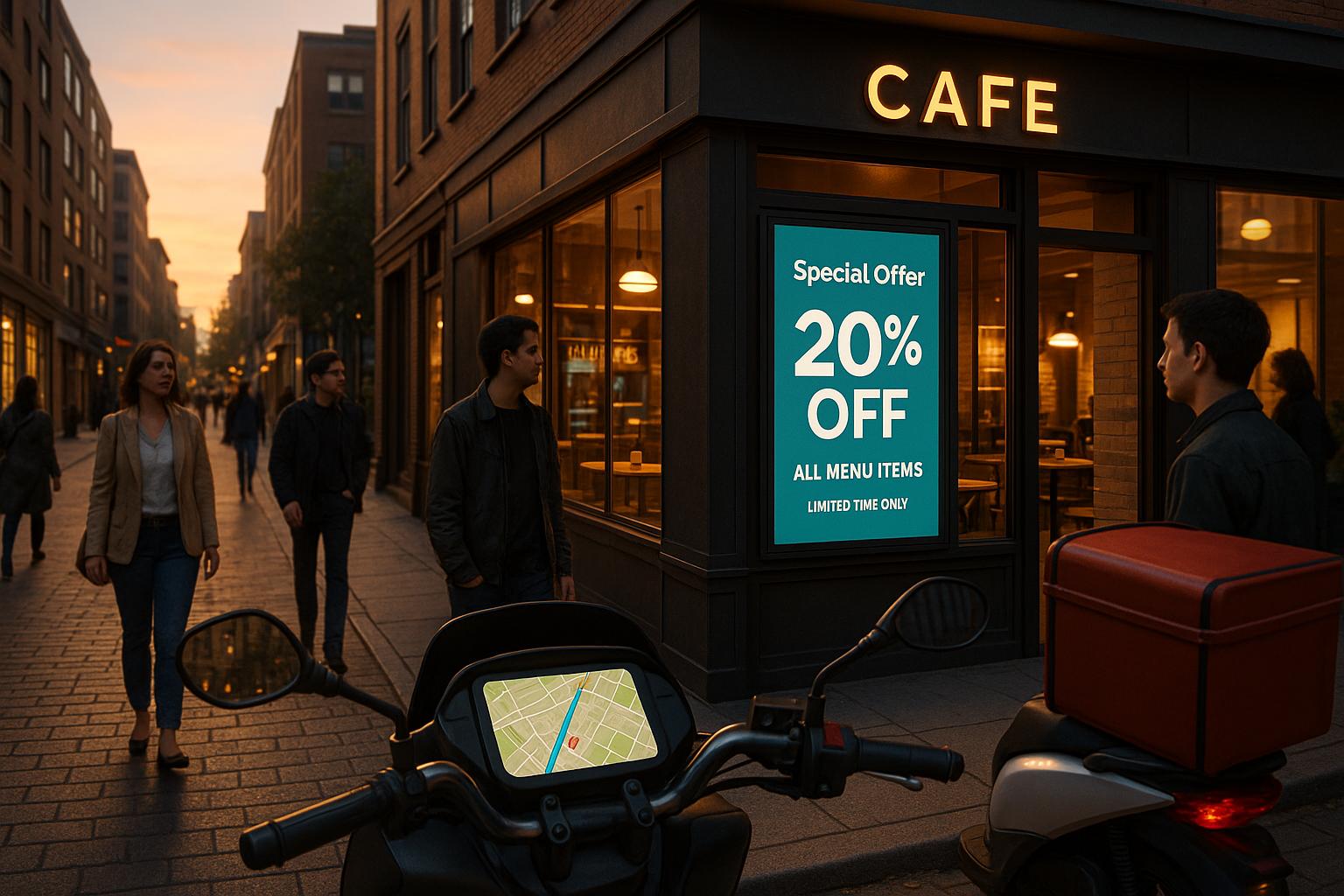
Real-time location data is transforming how local service businesses connect with customers. Instead of wasting money on broad, outdated marketing tactics, businesses can now target people based on their current location and immediate needs. This approach ensures better engagement, higher ROI, and more precise messaging that resonates with customers. Here’s what you need to know:
Traditional Marketing Wastes Money: Old methods like generic ads and outdated customer lists often miss the mark, reaching people who don’t need your services.
Real-Time Data Solves This: By focusing on actual movements and behaviors, businesses can target the right people at the right time.
Proven Results: Location-based ads see double the engagement of standard ads, and over 90% of marketers report increased revenue using this approach.
Dynamic Messaging: Businesses can adapt offers to real-world conditions, like promoting storm cleanup services after bad weather.
Email Campaigns Get Smarter: Using real-time data, emails can be tailored to specific neighborhoods, weather conditions, and customer needs.
Tools like Cohesive AI make it easy to automate location-based marketing, saving time and ensuring every dollar works harder. Whether you're in HVAC, landscaping, or catering, this strategy helps you connect with the right people, boost engagement, and grow your business.
Location-Based Mobile Marketing: How to Reach Consumers at the Right Place and Time
Common Problems in Local Service Marketing
Local service businesses across the United States often encounter hurdles that eat into their budgets and slow down growth. Understanding these challenges is a crucial step toward crafting better local marketing strategies. Let’s take a closer look at some of the key issues that can derail campaign performance.
Outdated or Inaccurate Location Data
Accurate location data is the backbone of effective local marketing. Yet, many businesses rely on information that becomes outdated surprisingly fast. People move, neighborhoods evolve, and customer demographics shift. Even when data seems up-to-date, it might lack the precision needed to target specific areas. For instance, a business might know the city where potential customers are but miss the exact neighborhood or district, making their outreach less effective.
Inefficient Ad Spend and Weak Campaign ROI
When data is off the mark, it doesn’t just mess up targeting - it wastes money. Poor geospatial data leads to misdirected ad spend, which means businesses end up paying for campaigns that don’t deliver results [1]. On top of that, imprecise geofencing can prevent ads from reaching the right audience at the right time, further dragging down the return on investment [1].
Missed Opportunities for Real-Time Offers
Timely engagement is everything in local marketing, but without real-time insights, businesses often miss crucial moments to connect. This means fewer chances to deliver offers that could turn one-time customers into loyal, repeat clients. These missed opportunities can have a long-term impact on customer retention and overall growth.
How Real-Time Location Data Fixes Marketing Problems
Real-time location data is changing the game for local service businesses, helping them tackle marketing challenges that often waste money and hinder growth. Instead of relying on outdated information or guesswork, businesses now have the tools to make smarter, data-driven decisions that deliver results.
Accurate Audience Targeting
With real-time location data, businesses no longer have to rely on broad assumptions. This data provides up-to-the-minute insights about where potential customers are, ensuring that targeting efforts are precise and relevant.
For example, an HVAC company can focus on homeowners living in areas experiencing extreme weather, while landscaping services can zero in on neighborhoods that need seasonal care. This level of precision ensures that businesses are reaching the right people - those who are both present in the service area and likely to need the service. The days of casting a wide net and hoping for the best are over. Instead, marketing becomes about delivering the right message to the right audience at the right time.
Dynamic and Context-Aware Messaging
Real-time location data also allows businesses to craft messages that are tailored to a customer’s current situation. This approach goes beyond generic advertising, offering communications that feel timely and helpful rather than intrusive.
For instance, a catering company can notify event planners about last-minute availability when they’re near popular venues. Similarly, roofing contractors can send emergency service alerts to property owners in areas hit by sudden storms. The ability to act quickly and provide relevant information ensures that these messages are seen as solutions, not interruptions.
Timing plays a huge role here. Real-time data makes it possible to trigger messages based on specific conditions, ensuring that businesses stay one step ahead of customer needs.
Better Campaign Measurement
Real-time location data doesn’t just improve targeting and messaging - it also takes campaign measurement to the next level. By tracking actions like email opens, clicks, service calls, and completed jobs, businesses can calculate ROI with greater accuracy than ever before.
This data reveals which geographic areas generate the most valuable leads, the best times of day for engagement, and which types of location-based triggers drive conversions. For example, a landscaping company might notice that residential clients respond better to weekend messages, while commercial clients prefer weekday outreach. These insights allow businesses to fine-tune their strategies over time.
Campaign measurement becomes an ongoing cycle of improvement. By analyzing how location-based targeting influences customer behavior, businesses can refine their approach, adjust their messaging, and allocate resources to the most profitable opportunities. This shift from intuition to evidence-based marketing ensures that every dollar spent delivers maximum impact.
Using Real-Time Location Data in Email Campaigns
Real-time data has reshaped marketing strategies, and its application in email campaigns takes personalization to another level. By integrating real-time location data, email marketing becomes more than just a tool for communication - it turns into a laser-focused strategy that delivers tailored messages exactly when and where they’re needed. For local service businesses, this means moving away from generic emails and sending highly relevant, location-specific messages that encourage immediate action and foster stronger relationships with customers.
Geo-Targeted Email Campaigns
Using real-time location data, businesses can craft email campaigns that target specific neighborhoods, ZIP codes, or even individual streets. This approach replaces the one-size-fits-all strategy with messages that resonate with the unique conditions of each area.
Take an HVAC company, for example. Instead of sending the same email to all customers, they can use local weather data to send furnace maintenance reminders to homes in neighborhoods where temperatures have dropped below freezing, while skipping areas where the weather remains mild. This makes every email feel timely and relevant.
Landscaping companies can also benefit. They might send spring cleanup reminders to residential areas where the snow has just melted, while promoting irrigation system checks to commercial properties in regions experiencing dry conditions. The idea is simple: match the message to the specific needs of each location.
Similarly, janitorial services can fine-tune their campaigns. For instance, they could promote carpet deep-cleaning services to office buildings in high-traffic areas during winter, while offering window cleaning services in locations where dust levels are lower. When emails reference local landmarks or conditions, they create a connection that generic messaging can’t achieve. This level of targeting also ties into dynamic email list management, allowing businesses to keep their efforts precise and up-to-date.
Dynamic Email List Segmentation
Real-time location data transforms static email lists into dynamic, constantly updated segments that adapt to customer movements and changing conditions. This ensures every email feels relevant and timely without requiring constant manual updates.
Traditional email segmentation might divide lists into broad categories like "residential customers" or "commercial clients." Dynamic segmentation, however, goes several steps further. It uses real-time factors like current location, movement patterns, and local events to create highly specific groups.
For example, a catering company could segment its email list based on proximity to event venues. Event planners near convention centers might receive messages about large-scale catering services, while those near wedding venues get tailored offers for smaller, more intimate events. This ensures that each email aligns with what the recipient is likely to need at that moment.
Business brokers can use similar tactics, targeting entrepreneurs based on their location patterns. If someone frequently visits business districts or spends time near commercial real estate, they can be placed into a segment that receives updates about businesses for sale in those areas. The beauty of dynamic segmentation is that it happens automatically - lists are continuously refined based on real-time data, ensuring that every email reaches the right audience at the right time.
Higher Engagement and Conversion Rates
Emails that incorporate location data consistently outperform generic campaigns in terms of open rates, click-through rates, and conversions. The combination of precise timing and local relevance creates a winning formula for engagement.
Subject lines that reference local conditions or neighborhood-specific offers grab attention. Instead of a generic subject like "HVAC Services Available", a more personalized approach - such as "Emergency AC Repair During Downtown Heat Wave" or "Storm Cleanup Services for Your Neighborhood" - immediately signals relevance to the recipient.
Click-through rates also improve when calls-to-action are tied to local needs. For instance, a landscaping company sending storm damage cleanup offers to areas recently hit by severe weather is far more likely to see engagement than one sending the same email to unaffected regions.
Conversion rates benefit the most. Customers are more likely to act when the email arrives at a moment of need. For example, a janitorial service offering cleaning solutions during a local flu outbreak will likely see better results than one sending out generic promotions. Timing plays a critical role here - emails sent during key moments, like an HVAC company contacting homeowners during extreme weather, result in quicker responses and shorter sales cycles.
Using AI Tools for Real-Time Location Marketing
Real-time location data is a game-changer for local service businesses, but managing tasks like data scraping, personalizing messages, and running multi-channel campaigns can quickly become overwhelming. That’s where platforms like Cohesive AI step in to simplify and supercharge lead generation.
Overview of Cohesive AI
Cohesive AI takes the precision of real-time data and transforms it into a fully automated marketing powerhouse. The platform identifies potential customers in specific areas by scraping sources like Google Maps and government filings. Then, it uses AI to craft highly personalized cold emails that reflect the recipient's local context and service needs.
By automating the entire process - from finding leads to ensuring emails land in the right inbox - Cohesive AI frees business owners to focus on delivering their services. This hands-off approach is especially beneficial for industries like janitorial services, landscaping, HVAC, catering, and business brokers, where being local and timely often makes the difference in winning contracts. With this tool, businesses can efficiently identify and contact prospects based on their location and immediate needs, giving them a real edge over competitors.
Using AI to Automate Location-Based Outreach
Once potential customers are identified, the platform’s AI dives deeper, analyzing location data to create messages that truly resonate. For example, an HVAC company might highlight seasonal weather trends to stress the importance of reliable climate control, while outreach to manufacturers could focus on heating system efficiency during winter months.
But the personalization doesn’t stop at weather. The AI can reference local landmarks, recent developments, or even common industry challenges specific to the area. For instance, a landscaping company targeting a new office complex might receive messaging centered around creating professional outdoor spaces that impress clients. On the other hand, when addressing homeowners, the focus might shift to boosting curb appeal or property value.
Campaign management is another area where the platform shines. It tracks email performance, adjusts sending times to align with local business hours, and even follows up with interested prospects - all automatically. Businesses can run up to three campaigns at once, ensuring operational efficiency without sacrificing personalization. This streamlined approach allows local service providers to immediately see the benefits of targeted, location-aware outreach.
Benefits for Local Service Providers
For just $500 per month, plus a $75 setup fee, Cohesive AI delivers a marketing solution that eliminates the need for a dedicated team. The platform even offers a guarantee: four responses per month, or you get a free month of service. This takes the guesswork - and risk - out of lead generation costs, addressing the challenge of wasted ad spend.
Beyond cost savings, the platform saves time. Business owners can shift their focus from tedious prospecting to improving service quality and strengthening customer relationships. The personalized, location-based messaging drives higher engagement than generic emails, solving the outdated data issues that often undermine traditional marketing efforts.
Cohesive AI’s scalability is another standout feature. A landscaping business, for example, can simultaneously target residential neighborhoods with new construction, commercial properties gearing up for seasonal maintenance, and municipal facilities needing ongoing care. Each segment receives tailored messaging that speaks directly to its unique needs. Managing this level of precision manually would be nearly impossible, but with AI, it’s seamless and effective.
Conclusion: Improving Local Service Marketing with Real-Time Data
Why Real-Time Data Matters
Using real-time location data can completely change how local service businesses connect with their customers. Forget outdated, one-size-fits-all targeting. With real-time data, you can reach the right people at the perfect moment. For instance, a landscaping business can focus on properties needing seasonal upkeep, avoiding wasted efforts on irrelevant leads.
This kind of precision makes your marketing work harder for you. By targeting verified, up-to-date locations, you ensure your budget is spent wisely. Campaigns become more impactful when tailored to specific needs, like preparing for seasonal changes or meeting local regulations. It’s not just about better results - it’s about smarter spending.
And let’s talk about time. Real-time data takes over time-consuming tasks like researching prospects, writing personalized emails, or juggling campaign schedules. Automation handles these, but without losing the personal touch your customers value. This means you can spend more time focusing on what you do best: delivering top-notch service.
Steps to Take Your Marketing to the Next Level
Start by reviewing your current targeting methods. Are you relying on outdated data? If so, it’s time for an upgrade. Real-time data can help you identify prospects who’ve moved or whose needs have shifted. Pinpoint those gaps in your strategy and see how this approach can fill them.
Consider using tools like Cohesive AI to streamline your efforts. This platform is built for local service providers, helping you find qualified leads and craft messages that align with real-time conditions and customer needs. Plus, it works seamlessly with your existing marketing strategy, so you can run location-based campaigns alongside your usual efforts. Compare the results to see how real-time data improves engagement and performance.
At the end of the day, success in local service marketing is all about timing - being there when your customers need you most. Real-time location data gives you the precision to deliver relevant, timely messages, turning your marketing from a guessing game into a strategic tool for steady, profitable growth.
FAQs
How can real-time location data boost the ROI of local service marketing campaigns?
Real-time location data plays a key role in boosting ROI for local service marketing by enabling targeted outreach and personalized messaging. It helps businesses zero in on areas where potential customers are most likely to respond, cutting down on wasted ad spend and ensuring the right message reaches the right people at the perfect moment.
Additionally, this data provides insights into customer behavior, tracks foot traffic patterns, and supports timely promotions that encourage both engagement and sales. By creating more relevant and immediate connections with local prospects, real-time location data transforms casual leads into loyal customers, enhancing marketing efficiency and overall ROI.
How can businesses use real-time location data to improve their email marketing strategies?
Businesses can use real-time location data to craft email marketing campaigns that hit closer to home - literally. Imagine this: a customer is near one of your stores, and they receive an email highlighting the nearest location, its operating hours, and even directions to get there. It’s not just convenient; it’s personal.
On top of that, businesses can take things a step further by offering exclusive discounts or event invites to customers in bustling areas. This kind of targeted approach encourages immediate action, whether it’s visiting the store or attending an event.
By tapping into location-based insights, companies can create emails that feel uniquely relevant to the recipient’s current situation. The result? A more engaged audience and a higher chance of driving conversions.
What challenges might businesses face when using real-time location data in their marketing strategies?
Using real-time location data in marketing comes with its fair share of challenges. One of the biggest concerns is privacy. As people grow more aware of how their data is collected and used, they’ve become cautious, especially when it comes to location tracking. To address this, businesses must prioritize compliance with privacy laws and work hard to maintain user trust.
There are also technical hurdles to consider. For example, ensuring the accuracy of location data can be tricky, and connectivity issues might disrupt data collection or campaign execution. These problems can weaken the impact of marketing efforts, making it essential to have reliable systems in place.
Another critical factor is ethics. Misusing or misinterpreting location data can lead to poorly targeted campaigns that waste resources and even harm a brand’s reputation. To avoid this, businesses need to plan carefully and use tools that minimize bias and errors. With the right approach, these challenges can be managed, allowing companies to make the most of real-time location data.