10 Use Cases for Google Maps Data in Local Lead Generation
Sep 1, 2025

Google Maps isn't just for finding directions - it’s a powerful tool for local businesses to generate leads. By tapping into its real-time data, you can identify potential clients, tailor outreach, and improve ROI. Here's how service providers like janitorial, landscaping, and HVAC businesses can use it effectively:
Pinpoint Ideal Clients: Identify businesses needing specific services, like offices for janitorial work or retail centers for landscaping.
Analyze Business Density: Focus on high-density areas to optimize travel and target clusters of potential clients.
Leverage Seasonal Trends: Use weather patterns to target HVAC needs during extreme seasons.
Personalize Outreach: Combine AI with Google Maps data to craft tailored, relevant cold emails.
Understand Competitors: Map competitor locations to find underserved markets.
Use Reviews for Leads: Analyze negative reviews to identify businesses with immediate service needs.
Expand Service Areas: Use geographic data to find high-growth areas.
Capitalize on Events: Spot businesses with temporary needs, like grand openings or seasonal sales.
Automate Lead Generation: Use scripts to extract real-time data, saving time and improving accuracy.
Simplify with Tools: Platforms like Cohesive AI integrate data scraping, personalization, and email campaigns.
I Built an Automated Lead Gen System Using Google Maps (Free Template)
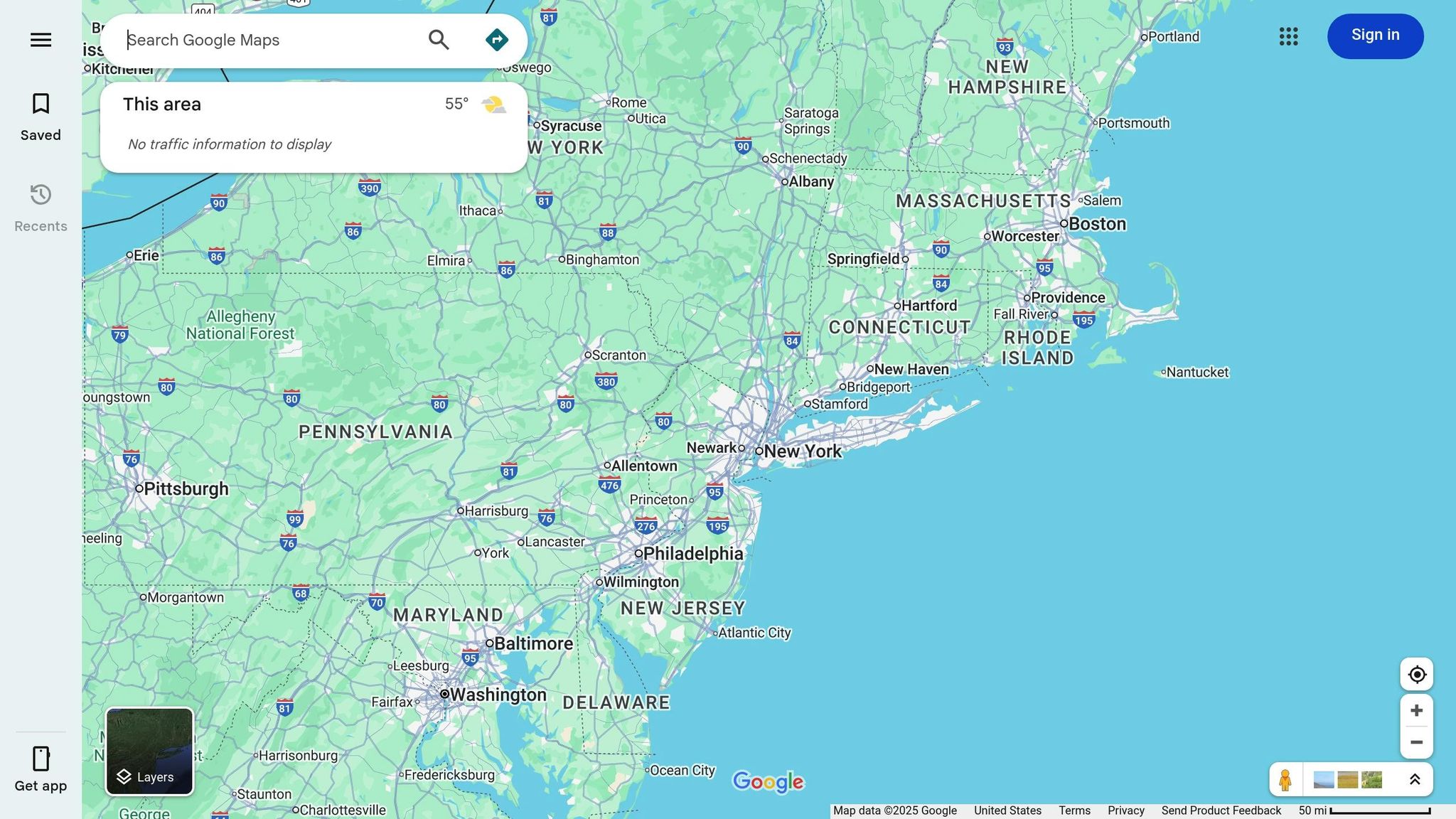
1. Find High-Value Local Businesses for Janitorial Services
Janitorial service providers can tap into the power of Google Maps to pinpoint commercial properties that are a perfect fit for professional cleaning services. By focusing on locations like office buildings, medical facilities, retail centers, and manufacturing plants, companies can zero in on prospects that are more likely to need regular cleaning contracts. This targeted approach lays the groundwork for effective local lead generation.
How Google Maps Supports Local Lead Generation
Google Maps provides detailed, localized information - such as business categories, operating hours, and even customer reviews - that can help janitorial companies identify potential leads within a specific service area. By applying a radius filter, businesses can focus on nearby prospects, cutting down on travel costs while tailoring their outreach efforts to match the unique characteristics of each business, whether it’s their type, location, or specific listing details.
Personalizing Outreach for Better Results
The detailed information available on Google Maps allows for customized outreach. For example, janitorial companies can reference a business's neighborhood, its type, or even unique features mentioned in its listing. This level of personalization not only makes outreach more relevant but also helps scale efforts effectively, whether targeting a single city or expanding into multiple markets.
Scalability and Maximizing ROI
Leveraging Google Maps data offers a scalable way to identify leads. Whether you're targeting a few businesses in a local area or casting a wider net across the country, this strategy helps minimize wasted resources. By focusing on businesses with a higher likelihood of needing comprehensive cleaning services, janitorial companies can aim to boost their return on investment while streamlining their lead generation efforts.
2. Target Landscaping Prospects by Business Density
Landscaping services can effectively identify areas with a high concentration of businesses that require regular grounds maintenance. By analyzing patterns of business density, they can focus on commercial districts, office parks, and retail centers where potential clients are clustered together. This approach creates a solid foundation for strategic and efficient outreach.
Relevance to Local Lead Generation
Tools like Google Maps make it easy to spot business clusters with shared landscaping needs. For example, shopping centers with multiple storefronts, medical complexes with numerous practices, and industrial parks with various companies all represent prime opportunities for landscaping services. These areas often involve property managers or individual business owners who need services like lawn care, seasonal plantings, and general landscape maintenance.
Additionally, clusters of businesses such as law offices, accounting firms, real estate agencies, restaurants, and retail shops tend to have ongoing landscaping needs. Restaurants and retail businesses in particular rely on well-maintained grounds to create a welcoming environment for customers. Commercial strips with these types of businesses are ideal targets for landscaping services.
Personalization and Tailored Outreach
Business density data allows landscaping companies to craft location-specific messages that resonate with local prospects. For instance, when reaching out to a newly developed office park, a service provider can reference the area's growth, highlight their work with nearby businesses, or emphasize their expertise in maintaining properties in that specific area.
This localized knowledge fosters more engaging conversations. A landscaping company can discuss how they've enhanced the curb appeal of other businesses in the same plaza or address unique challenges specific to the area. Such personalized outreach not only builds trust but also supports a scalable strategy for growth.
Expanding Services Through Scalability
Focusing on high-density business areas allows landscaping companies to expand their reach while optimizing travel time and reducing fuel costs. They can start by targeting the most concentrated commercial zones within their current service area and gradually move into secondary areas as their capacity grows.
This approach also scales well for marketing. Success in one dense commercial district can be leveraged to gain traction in similar areas. Testimonials and case studies from one location can become persuasive tools when approaching prospects in comparable business clusters elsewhere.
Boosting ROI for Landscaping Services
Concentrating efforts in business-dense areas significantly improves the return on investment for lead generation. Sales representatives can visit multiple prospects in a single trip, and service crews can efficiently manage multiple accounts within the same vicinity. These operational efficiencies lead to better profit margins.
Moreover, the visible results of landscaping work in one area can spark interest among neighboring businesses. This neighborhood influence often leads to higher conversion rates, as businesses are motivated to maintain a professional appearance comparable to their competitors. This dynamic reduces sales cycles and increases contract opportunities, making it a win-win strategy for landscaping companies.
3. Locate HVAC Leads in High Seasonal Demand Areas
HVAC businesses can tap into Google Maps data to pinpoint areas where seasonal temperature extremes create a surge in heating or cooling needs. By turning predictable weather patterns into actionable insights, companies can generate leads more effectively and focus on regions with the highest demand.
Targeting Local Opportunities
Google Maps data helps identify regions where extreme weather drives a spike in HVAC service needs. For example, heating and cooling make up roughly 48% of the average annual energy consumption in U.S. households[1]. This data allows HVAC companies to zero in on neighborhoods where urgent repairs, routine maintenance, or system upgrades are most likely to be needed.
Crafting Timely and Relevant Campaigns
Seasonal insights empower HVAC companies to create marketing campaigns that align with customer needs during specific weather changes. By timing outreach efforts with these seasonal shifts, businesses can encourage quick action and keep their service teams busy during peak periods[1].
Maximizing ROI During Peak Demand
Focusing marketing efforts during high-demand seasons can lead to better conversion rates, even if the cost of acquiring leads is higher. When customers face urgent heating or cooling problems, they’re more likely to act quickly, resulting in a stronger return on investment for HVAC companies[2].
4. Personalize Cold Outreach with AI and Google Maps Data
Mixing Google Maps data with artificial intelligence can transform cold emails from impersonal messages into tailored communications. By tapping into readily available business details, this technique makes outreach feel relevant and timely rather than like a mass email blast.
Boosting Personalization and Outreach
AI personalization isn’t just about inserting a business name into an email template. When paired with Google Maps data, AI can incorporate specific details like recent customer reviews, business locations, or services listed on a company’s profile. For instance, an HVAC company might mention a glowing review a business recently received, making the email feel more personal.
Google Maps provides a treasure trove of business information - names, addresses, reviews, photos, operating hours, and service descriptions. AI can analyze this data to craft messages that show a deep understanding of a prospect's business. For example, a landscaping company could reference a restaurant’s outdoor seating area visible on Google Maps and suggest how professional landscaping could elevate the customer experience.
Other useful data points include review ratings, social media links, website details, and whether the business has claimed its Google profile. These details allow for precise segmentation, ensuring messages resonate with specific business types. This level of targeting fits seamlessly into local lead generation strategies, making outreach not only more effective but also more efficient.
Scaling the Approach
Traditionally, personalized outreach required hours of manual research and custom-written emails for each prospect. AI changes the game by automating these tasks. Businesses can now pull hundreds of local leads in minutes and generate tailored messages for each one - no advanced technical skills needed [3].
Modern AI tools don’t stop at data collection. They can handle lead list building, message creation, and even campaign management. These systems schedule follow-up emails, track responses, and tweak messaging based on engagement trends. This scalability means small service businesses can maintain consistent, personalized outreach across hundreds - or even thousands - of prospects, significantly improving the efficiency of their campaigns.
Driving Better ROI for Service Businesses
Personalized outreach that’s up-to-date and specific leads to higher open and response rates. Emails that reference details like a business’s location or recent customer reviews grab attention and encourage engagement. This approach minimizes wasted efforts on unqualified leads while boosting conversion rates throughout the sales process [3][4].
Small, local businesses - like those in HVAC, landscaping, or janitorial services - are often overlooked in traditional B2B databases. However, they’re easy to find through Google Maps scraping [3]. This opens up new prospect pools that competitors relying on outdated lead generation methods might miss entirely.
Cohesive AI is a great example of how this works in practice. They use Google Maps and government filings to build targeted lead lists, AI to craft personalized cold emails referencing specific business details, and automation to manage entire email campaigns. This all-in-one approach not only replaces traditional lead generation agencies but also offers better scalability and return on investment for local service businesses.
5. Map Competitor Locations for Better Market Positioning
Understanding where your competitors operate can give you a serious edge in local lead generation. Tools like Google Maps can help you uncover competitor locations, service areas, and even market gaps - giving you the insight needed to refine your market strategy.
Relevance to Local Lead Generation
Mapping out where your competitors are located can reveal untapped opportunities. For instance, areas like suburban neighborhoods might lack HVAC services, presenting a clear opening to step in [6].
It can also show where demand is concentrated. Take office parks with several janitorial services - this could indicate a strong need for cleaning companies. On the flip side, areas with fewer cleaning services might highlight underserved markets. Armed with this knowledge, you can target areas with little competition but significant demand, helping you lower customer acquisition costs while improving conversion rates.
Personalization and Outreach Benefits
Competitor mapping doesn’t just help with strategy - it can also make your outreach efforts more personal. By understanding the local competitive landscape, you can tailor your messaging to resonate with prospects. For example, a landscaping company could emphasize being the only certified organic lawn care provider in a specific area, making their pitch more relevant and memorable.
Additionally, knowing how competitors position themselves allows you to stand out. If others are focused on being the cheapest option, you can highlight your quality, unique services, or quicker response times. This approach not only strengthens your value proposition but also helps you connect with potential customers on a deeper level.
Scalability Across Markets
Using Google Maps for competitor analysis is scalable, whether you’re focusing on a single city or branching out across multiple states. Instead of researching each area manually, you can gather competitor data for entire regions, spotting patterns and opportunities across a wide geographic range.
Regular updates to your mapping efforts can also keep you informed about new players in the market, service expansions, or even closures - allowing you to adjust your strategy as needed.
Boosting ROI for Service Businesses
At the end of the day, this approach can significantly improve ROI. By concentrating on underserved markets, you’re more likely to attract higher-quality leads while keeping acquisition costs low. In smaller, highly competitive markets, less competition means a better chance of success [7]. Competitor mapping helps service businesses strategically expand their reach while driving better results for their efforts.
6. Use Google Reviews to Qualify Leads and Prioritize Outreach
Google Reviews are a goldmine of information for qualifying leads and sharpening your outreach strategy. By analyzing reviews, you can uncover actionable insights that go beyond basic demographic or geographic data. This approach helps you identify businesses with immediate service needs, making your outreach efforts more targeted and effective.
Relevance to Local Lead Generation
Customer reviews often highlight specific pain points that can translate directly into sales opportunities. For example, if a restaurant has multiple reviews complaining about "dirty restrooms" or a "messy dining area", it’s a clear signal that they could benefit from janitorial services. Similarly, office buildings with reviews mentioning "broken air conditioning" or "inconsistent temperatures" are prime candidates for HVAC companies.
Businesses with 2-3 star ratings often struggle with operational issues, making them more receptive to offers from service providers. A landscaping company, for instance, could target retail locations where customers complain about "overgrown weeds" or "dead plants" in parking lots.
Recent negative reviews are especially valuable - they point to businesses that are actively dealing with problems. For example, a company receiving complaints about cleanliness just last week is far more likely to be open to a janitorial service pitch than one with no recent feedback.
Personalization in Outreach
One of the best ways to stand out in outreach is by referencing specific issues mentioned in reviews. Instead of sending generic emails, you can tailor your message to address real customer concerns.
For instance, an HVAC company could approach a dental office with this message: "I noticed some of your patients mentioned temperature issues in your waiting room. We specialize in creating comfortable environments for medical facilities."
This kind of personalized outreach demonstrates that you’ve taken the time to understand their challenges, positioning you as a problem-solver rather than just another salesperson. It’s a simple yet powerful way to increase response rates and build trust.
Scalability of Review Analysis
The beauty of this approach is that it can be scaled across multiple markets and industries. By systematically scanning businesses in your target area, you can filter for keywords related to your services - terms like "maintenance", "repairs", "cleanliness", or "landscaping."
Automated tools make this process even more efficient, flagging businesses with relevant negative reviews or low ratings. Whether you’re in HVAC, landscaping, or janitorial services, this method works across the board. For example:
HVAC companies can search for complaints about inconsistent temperatures.
Landscaping businesses can look for mentions of neglected outdoor areas.
Janitorial services can focus on cleanliness-related grievances.
This systematic approach allows you to quickly identify qualified leads without wasting time on businesses that don’t need your services.
Boosting ROI for Service Businesses
Focusing on businesses with documented service issues can significantly improve your conversion rates. These prospects already know they have problems, so they’re more likely to be receptive to your solutions.
This targeted strategy also reduces wasted effort. Instead of reaching out to 100 random businesses and hoping for a response, you can focus on 25 businesses with clear, documented needs. Not only does this save time, but it also makes conversations about pricing easier. When a business is already dealing with customer complaints, they’re more likely to see the value in investing in quality services to address those issues.
7. Expand Service Areas Through Geographic Data Analysis
Geographic data analysis is reshaping how local services grow by providing insights into business density, demographics, and competitor locations. By leveraging this information, businesses can pinpoint untapped, high-growth areas, cutting down on guesswork and focusing efforts where they matter most. This approach lays the groundwork for identifying specific opportunities and effectively expanding service areas.
Relevance to Local Lead Generation
Analyzing geographic patterns can uncover hidden opportunities within your market. For instance, business districts packed with office buildings often need janitorial services, while suburban neighborhoods experiencing new residential growth may increase demand for landscaping. Similarly, HVAC companies might target regions with older commercial buildings that are due for system upgrades or ongoing maintenance contracts. By combining population density data with business listings, you can identify underserved markets - like areas where businesses outnumber available service providers or industrial zones with specialized cleaning needs.
Seasonal trends also play a role in shaping your strategy. For example, regions with harsh winters might see a spike in HVAC service demand during colder months, while areas with strict HOA regulations could provide steady, year-round opportunities for landscaping services. Geographic analysis helps you align your services with these patterns, ensuring you're in the right place at the right time.
Scalability of the Approach
One of the biggest advantages of geographic data analysis is its ability to scale. Once you've identified local trends, the same insights can be applied to multiple markets. Instead of spending weeks evaluating new areas, you can analyze factors like density, property values, and competitor presence across metropolitan regions in just hours.
Layering demographic data adds even more precision. For example, areas with higher median household incomes often attract clients willing to pay premium rates for top-tier services. Similarly, commercial zones near affluent residential neighborhoods are likely to include businesses that prioritize professional appearance and cleanliness.
This systematic framework ties seamlessly into targeted outreach strategies. Whether you're expanding within your current city or breaking into entirely new markets, the same data-driven approach ensures your efforts are efficient and effective.
Potential to Improve ROI for Service Businesses
Expanding service areas based on geographic data analysis can significantly boost return on investment by directing resources to high-potential locations. Instead of randomly choosing new territories, you can focus on areas where demand outpaces supply.
Optimizing travel time is another critical factor for profitability. By mapping your existing clients and nearby underserved areas, you can expand your reach without inflating costs. For example, a janitorial company already servicing downtown offices might find that nearby medical complexes lack adequate cleaning services, creating an opportunity to extend routes efficiently.
Timing also matters. Staying ahead of trends - like new business developments, upcoming construction projects, or zoning changes - can help you position your services in high-demand areas before competitors do. This proactive approach often leads to securing long-term contracts on favorable terms.
Balancing market potential with operational efficiency is key. High-density areas might look promising, but oversaturation or excessive travel distances could eat into profits. A well-rounded analysis ensures you're targeting the right areas without stretching your resources too thin.
8. Use Google Maps Data for Event-Based Lead Generation
Event-based lead generation taps into Google Maps data to pinpoint businesses with temporary or specific service needs. Instead of waiting for leads to come your way, this strategy helps you actively find businesses experiencing increased demand or operational shifts. By leveraging this data, you can uncover service opportunities and craft outreach that feels timely and relevant.
Why It Works for Local Lead Generation
Google Maps data can reveal activity patterns that hint at event-driven opportunities. For instance, when a restaurant promotes a special event or posts about a new menu on its Google My Business profile, it often leads to higher foot traffic - potentially signaling a need for additional cleaning services. Similarly, retail stores advertising grand openings or seasonal sales might require extra help, like enhanced landscaping or janitorial services, to keep their spaces looking sharp. These updates act as early signals, helping you identify businesses with immediate needs.
Personalization Made Easy
Using event-specific data allows you to tailor your outreach with precision. Instead of sending a generic email, you can mention a specific event or update from a business’s profile. For example, if a restaurant recently expanded its patio, you could offer outdoor cleaning services tailored to their new setup. Addressing these timely updates not only makes your messaging more relevant but also positions your services as the perfect solution to their current challenges.
Scaling the Strategy
What’s great about event-based lead generation is that it scales well across different markets and industries. Once you recognize that certain updates - like a retail store’s grand opening - signal a need for services, you can apply this insight broadly. By automating the process of tracking keywords or updates in business profiles, you can efficiently capture these time-sensitive opportunities without adding extra workload.
Boosting ROI for Service Businesses
This approach doesn’t just generate leads - it helps maximize ROI. Event-driven opportunities often come with a sense of urgency, which means businesses are more likely to pay a premium for reliable and fast service. For example, a restaurant preparing for a health inspection or a store gearing up for a big sale will prioritize quality and timeliness, making them willing to invest more. This urgency can speed up sales cycles, improve cash flow, and open doors for upselling. A successful event-related service can even lead to long-term contracts, turning a one-time opportunity into a lasting business relationship.
9. Automate Data Extraction with Custom Scripts
Custom scripts take the hassle out of manual Google Maps research, saving you hours of effort. Instead of spending days combing through data, these scripts can extract hundreds of potential leads in minutes. For local service businesses - like janitorial, landscaping, and HVAC companies - this automation transforms lead generation from a tedious task into a smooth, efficient process. The result? A system that’s faster, more scalable, and better suited for personalized outreach.
Why This Matters for Local Lead Generation
Many niche businesses don’t show up in big B2B databases, making Google Maps a goldmine for finding leads[3]. Custom scripts tap into this resource, pulling real-time business data to create detailed and targeted prospect lists.
The real advantage lies in accessing businesses your competitors might miss. While others rely on outdated purchased lists, automated scripts gather fresh, real-time data from active local businesses. In just one session, you can extract dozens or even hundreds of leads, giving you a competitive edge[5].
How It Boosts Personalization and Outreach
These scripts don’t just grab contact details - they also collect valuable digital insights. For example, they can identify businesses running Facebook or LinkedIn ads, those with active social media profiles, or those keeping their Google My Business pages up to date[5]. With this information, you can tailor your outreach to align with each prospect’s current marketing efforts.
Customer reviews are another key tool for personalization. By analyzing recent feedback, you can customize your pitch to address specific needs or pain points, making your message far more relevant to potential clients.
Scaling Made Simple
Custom scripts are incredibly flexible, letting you scale your efforts across multiple markets and locations. Once you’ve built a script to gather HVAC leads in one city, you can easily tweak it to cover other areas. With minimal adjustments, you can run extractions for multiple territories at once, creating a robust database of leads across your entire target market.
The best part? You don’t need to be a tech expert to use these tools. Whether you opt for custom Python scripts, browser extensions, or specialized SaaS platforms, many solutions are user-friendly and accessible even for non-technical users[3][5].
How It Improves ROI for Service Businesses
By automating lead generation, you not only save time but also improve the quality of your leads. A single export can deliver up to 97 leads, complete with phone numbers, emails, review scores, and social media links[5]. This data allows you to prioritize leads based on factors like recent activity, growth signals, or specific service needs.
Compared to manual research or outdated lists, automation delivers fresher, more actionable data[3][9]. You can immediately act on hyperlocal insights, leading to higher conversion rates and more effective campaigns. The time saved alone often makes the initial investment in automation worthwhile[8][9].
10. Simplify Lead Generation with Cohesive AI
When it comes to generating leads, relying on custom scripts or manually sifting through Google Maps can be both time-consuming and technically demanding. Cohesive AI eliminates these hurdles by combining Google Maps scraping, government data, and AI-powered personalization into one seamless platform.
How It Helps with Local Lead Generation
Cohesive AI is designed to tackle the unique challenges of local lead generation, particularly for service-based businesses. Whether you're in janitorial services, landscaping, HVAC, catering, or business brokering, this platform has you covered. It automatically scans Google Maps to identify local businesses that could benefit from your services. But it doesn’t stop there - it cross-references this information with government filings to create detailed prospect profiles. This dual-data approach allows you to better understand your potential clients, making your outreach more targeted and effective. Instead of spending hours researching, you can focus on building relationships and closing deals.
Boosting Personalization and Outreach
One standout feature of Cohesive AI is its ability to craft highly personalized cold emails. By analyzing the data it collects, the platform tailors messages to address the specific needs of each prospect. Plus, it ensures your emails land in inboxes, not spam folders, by managing deliverability for you. This combination of personalization and reliability makes your outreach efforts far more impactful.
Flexible and Scalable Campaigns
Cohesive AI allows you to run up to three campaigns at the same time, making it easy to target different market segments or geographic areas without losing the personal touch. And the best part? There are no long-term contracts. You pay month-to-month, giving you the flexibility to scale up during busy seasons or tweak your strategy based on performance. This adaptability ensures you’re always getting the most out of your investment.
A Clear Path to Better ROI
For just $500 per month - plus a $75 setup fee - Cohesive AI guarantees at least four interested responses every month. This guarantee provides a measurable baseline for success, helping you justify your investment. By automating time-intensive lead generation tasks, you can focus on serving your current clients and pursuing high-value opportunities. It’s a smart, efficient way to grow your service business without overextending your resources.
Conclusion
The ten use cases discussed highlight how Google Maps data has become a game-changer for local lead generation in service-based businesses. Whether it’s pinpointing janitorial opportunities in office-heavy areas or aligning HVAC outreach with seasonal trends, this geographic intelligence makes targeting more precise and efficient.
Understanding where your ideal customers are, how they’re distributed, and what their online presence reveals allows for smarter decision-making. Instead of relying on broad, untargeted marketing tactics, you can focus your efforts on strategies that genuinely resonate with your audience. This shift not only saves time but also respects your prospects’ attention by delivering messages that feel relevant and timely.
Google Maps also provides real-time insights that give you an edge over competitors. For example, when a new restaurant opens or an office building switches management, having immediate access to this data allows you to act quickly - often before others are even aware of the opportunity.
By combining location data with details like reviews or operating hours, you can create outreach that feels personal. Imagine a landscaping company referencing a prospect’s recent expansion or their proximity to a bustling shopping center. That level of research shows you understand their unique needs and local market dynamics.
To tackle the manual effort involved, automation becomes essential. Tools like Cohesive AI streamline the process by integrating Google Maps scraping, AI-driven personalization, and managed email campaigns. This lets you focus on delivering top-notch service while maintaining a steady flow of leads in the background.
The future of local lead generation lies in combining data-driven strategies with personalized outreach. Google Maps provides the foundation, but the real success comes from using that data to build meaningful connections with the people who need your services most.
FAQs
How can service businesses like janitorial or landscaping companies use Google Maps data to find new leads?
Service businesses - think janitorial services or landscaping companies - can tap into Google Maps data to pinpoint potential leads in specific local areas. By gathering details like business names, addresses, phone numbers, and operating hours, they can create a customized list of prospects that fits their target market.
Using advanced tools to automate this process not only saves time but also ensures precision. This means businesses can channel their outreach efforts toward the most relevant leads, boosting the effectiveness of their lead generation and building stronger connections with local clients.
How does personalization improve outreach, and how can AI and Google Maps data help achieve it?
Personalization transforms outreach into a more engaging and effective effort by tailoring messages to match the specific needs and characteristics of each prospect. With the help of AI and Google Maps data, businesses can create messages that feel relevant and specific by tapping into details like a company’s location, services, customer reviews, and local market trends.
For example, AI can craft tailored emails for a landscaping company by factoring in its proximity to certain neighborhoods or recent customer feedback available on Google Maps. This kind of targeted communication allows local service providers - like janitorial, HVAC, or catering businesses - to connect with potential clients in a way that resonates, improving response rates and building stronger relationships.
How can analyzing competitor locations using Google Maps data benefit local lead generation efforts?
Analyzing competitor locations using Google Maps data provides a smart way to spot areas with strong demand but minimal competition. For local service providers like janitorial, landscaping, or HVAC companies, this means pinpointing underserved regions where their services could make a bigger impact.
Focusing on these gaps helps businesses fine-tune their marketing efforts, drawing in better-quality leads, boosting local visibility, and getting more value from their lead generation investments.