AI in Lead Nurturing: Workflow Best Practices
Jul 31, 2025
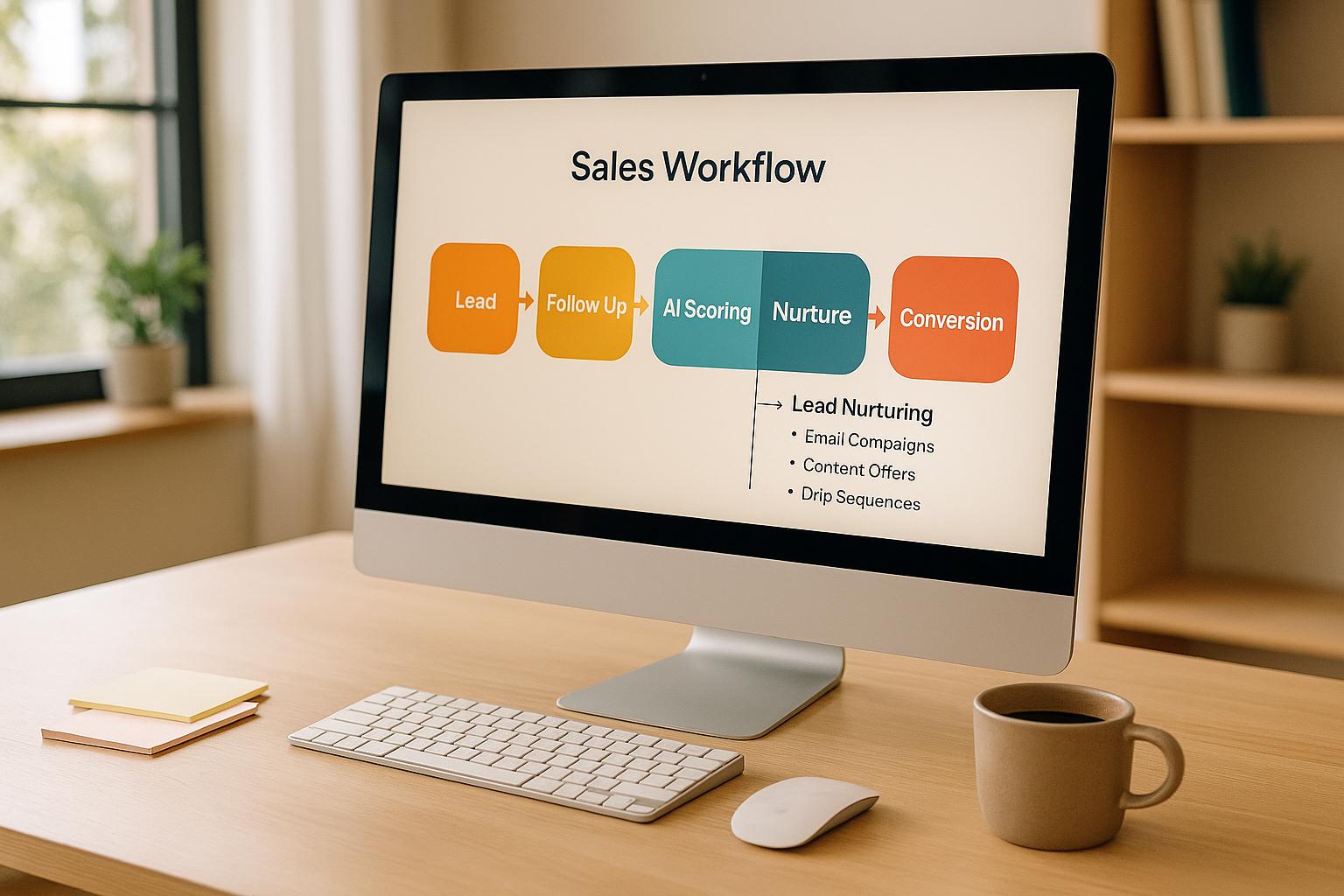
AI is changing the way businesses handle lead nurturing, making workflows faster, more precise, and effective. For local service businesses like janitorial, landscaping, and HVAC, this shift is crucial to stay competitive. Here's why AI matters for lead nurturing:
Saves time: Automates repetitive tasks like lead scoring and follow-ups, freeing up sales teams to focus on closing deals.
Boosts personalization: Creates messages tailored to each lead's behavior and preferences, improving engagement and conversion rates.
Improves efficiency: Handles large volumes of leads consistently, reducing errors and missed opportunities.
Enhances decision-making: Uses predictive analytics to prioritize leads most likely to convert.
For example, an HVAC company can use AI to send targeted messages about kitchen ventilation to a restaurant owner while addressing tenant comfort for a property manager - all without manual effort. Businesses using AI report a 50% increase in lead generation and customer retention, along with a 33% reduction in costs.
If you're struggling with manual workflows, inconsistent messaging, or outdated data, AI tools can help you solve these issues and deliver better results. By integrating AI with your CRM and marketing platforms, you can streamline processes, personalize outreach, and gain a competitive edge in converting leads into customers.
How to Automate Lead Nurturing with AI Agents Using Pabbly for Maximum Impact
Common Lead Nurturing Problems
For local service businesses, managing lead nurturing workflows manually often feels like an uphill battle. These struggles only intensify as businesses expand and deal with larger volumes of prospects. Recognizing these challenges is key to understanding why many companies are turning to AI-driven solutions to stay competitive. Let’s dive into some of the most pressing issues.
Manual Lead Scoring and Follow-ups
Manually scoring leads and managing follow-ups can be a massive time drain. Sales teams often spend hours trying to evaluate prospects without clear criteria. This not only leads to wasted effort on low-priority leads but also creates bottlenecks when high-value opportunities don’t get the attention they deserve. In fact, automating these processes can save sales teams up to 20 hours per week [5].
"The biggest lift in lead scoring is not defining how many points something is worth, it's making sure everyone internally is aligned." - Ryan Durling, Inbound Consultant for HubSpot [2]
Another issue? Inconsistent messaging. Without automation, different team members may send mixed messages to similar prospects, leading to confusion and missed opportunities [3]. On top of that, manually keeping lead information accurate and up to date becomes nearly impossible when new leads are constantly flowing in [4].
The competitive landscape makes these problems even more urgent. According to a B2B sales expert, 53% of salespeople say selling has become harder in the past year [2]. Why? Competitors have gotten better at identifying and quickly acting on the best opportunities.
"Savvy competitors have learned to swarm on the best opportunities as soon as they identify them, giving those prospects the highest level of personalized attention and service to win those crucial deals." - Mark Osborne, B2B sales expert and founder of Modern Revenue Strategies [2]
Generic Messaging
A one-size-fits-all approach to communication simply doesn’t cut it anymore. For example, a janitorial service sending the same email template to a small retail store and a large office complex misses the chance to address their unique needs, such as differing budgets or cleaning requirements.
This problem is especially damaging for local service businesses, where trust and an understanding of specific challenges are often the deciding factors. When prospects receive generic messages, they’re more likely to delay their decisions - or worse, turn to competitors who show they understand their situation better. Industries like HVAC or landscaping, where service needs vary greatly depending on property size, seasonal demands, and budget, are prime examples of how generic messaging can hurt.
Data Integration Problems
Disconnected systems make lead nurturing even harder. Over 53% of SMB leaders report inconsistencies in their business tools [6], which makes it nearly impossible to maintain a clear view of each prospect’s journey.
Manual data entry only adds to the chaos, leading to errors, outdated information, and duplicate records. For instance, a landscaping company might collect leads from Google Maps, their website, and referrals. Keeping all this data synchronized manually is overwhelming, often resulting in incomplete prospect profiles that hinder effective follow-ups.
Data silos - where teams can’t access all customer information - further complicate things. Without a complete view of a lead’s interactions and preferences, businesses are forced to rely on generic messaging, which lowers engagement and conversion rates.
The impact of poor data integration doesn’t stop there. It also affects decision-making. A staggering 55% of collected data goes unused [7], representing lost opportunities to better target leads and improve results. For local service businesses that rely heavily on building relationships and trust, these data challenges can be particularly damaging.
Despite these hurdles, the potential for improvement is huge. Companies that excel at lead nurturing generate 50% more sales-ready leads at a 33% lower cost [3]. Additionally, 66% of growing SMB leaders rely on integrated tech tools to keep their operations running smoothly [6]. The solution lies in moving away from manual processes and addressing these core problems with smarter, more systematic approaches - like AI-powered tools designed to streamline lead nurturing.
How AI Fixes Lead Nurturing Problems
AI transforms the often tedious process of lead nurturing into a streamlined, automated system. Instead of juggling repetitive tasks and sending out one-size-fits-all messages, businesses can now use AI to simplify workflows and boost efficiency. Here's a closer look at how AI tackles the common challenges of traditional lead nurturing.
Automating Repetitive Tasks
One of AI's standout advantages is its ability to handle repetitive, time-consuming tasks automatically. Activities like lead scoring, follow-ups, data entry, and CRM updates no longer require manual effort.
"AI takes over these repetitive tasks, automating personalized lead nurturing at scale. This speeds up the rate at which qualified leads fly through the sales funnel." [8]
With these tasks off their plate, sales teams can focus on closing deals and building meaningful client relationships.
AI also automates the creation of personalized outreach sequences, segments leads based on behavior, and ensures communication happens at the right time. For example, one study showed that optimizing follow-up timing and tailoring messages in real time led to a 30% increase in qualified leads and a 20% reduction in follow-up time.
Consistency is where automation truly shines. Unlike human-led processes, which can vary depending on workload or approach, AI ensures every lead gets timely and precise attention, reducing the chances of missed opportunities.
Creating Personalized Messages at Scale
AI solves the long-standing challenge of balancing personalization with scalability. Traditionally, businesses had to choose between sending generic messages to a large audience or crafting highly personalized communications for only a handful of prospects. AI changes the game by analyzing behavioral data - like website visits, link clicks, and content engagement - to create messages that connect on a personal level.
This approach works. Personalization has been shown to drive engagement, with 96% of marketers reporting its positive impact on sales. In fact, AI has helped cut email volume in half while doubling response rates [8][1].
For local service businesses, this capability is especially useful. Take an HVAC company, for instance: AI can send a restaurant owner messages focused on kitchen ventilation while targeting a property manager with content about tenant comfort - all without manual effort. AI also supports multi-channel personalization, integrating email and social media communications. By adapting outreach based on prior interactions, it delivers a seamless and cohesive experience.
Predictive Analytics and Real-Time Engagement
AI doesn’t just automate and personalize - it also predicts and responds to customer behavior. Predictive analytics enhances lead prioritization by analyzing historical data and identifying patterns that signal conversion potential. With machine learning-powered predictive lead scoring, businesses can pinpoint the traits of successful leads and prioritize them more effectively. This approach has led to 98% of sales teams reporting better lead prioritization [9], and the use of predictive lead scoring in B2B organizations has grown nearly 14 times since 2011 [10].
Real-time engagement is another major benefit. AI can instantly recognize when a prospect takes a high-intent action - like visiting a pricing page or downloading a resource - and trigger an immediate, tailored follow-up. Advanced AI platforms use this data to predict account engagement and recommend the best next steps, ensuring high-value prospects receive attention right when it matters most.
"AI lead scoring is your route to success, making things work better, faster, and ensuring that customers are delighted." - Dharvi Sharma, Author [11]
Best Practices for AI Lead Nurturing
AI can revolutionize lead nurturing by automating repetitive tasks and creating more personalized, meaningful connections. To make the most of it, here are some key strategies to streamline your approach.
Use Data-Driven Personalization
AI thrives on data, and you can harness it to deliver tailored outreach at the right time. By analyzing behavioral data - like link clicks or page visits - you can craft messages that speak directly to a prospect’s interests. For example, if a lead engages with a specific piece of content, AI can follow up with messaging that highlights benefits related to that topic.
Segmentation is another critical step. Group leads by their stage in the buying process or by persona to ensure they receive content that resonates. AI can even adjust the timing of communication, sending emails when engagement is most likely. These personalized tactics can lead to significant revenue growth - up to 133% - by leveraging AI’s ability to connect in a meaningful way [8][12].
Set Up Automated Multi-Step Campaigns
Once your messaging is personalized, you can create multi-step campaigns that guide prospects through their journey. Success here starts with clear goals. Are you trying to generate leads, onboard new users, re-engage dormant contacts, or upsell existing customers? Define your objective, then set up triggers - like signing up for a newsletter, downloading a resource, or visiting a specific page - to initiate the campaign.
Behavioral triggers, such as following up after a lead visits your testimonials page or abandons a quote request, keep your outreach relevant. Using if-then logic, AI can send the right content at each stage, ensuring your messages align with the prospect’s movements through the funnel [14].
Connect AI with CRM and Marketing Tools
Integrating AI with your CRM and marketing platforms is essential for seamless lead nurturing. This connection ensures data stays updated, giving AI a complete picture of each lead. With access to detailed histories, AI can craft more personalized and timely outreach, avoiding redundant or outdated messaging.
This integration also addresses common challenges around data silos and automation gaps. Businesses that excel in lead nurturing see 50% more sales-ready leads at 33% lower costs. When paired with AI, these strategies can increase qualified leads by 451% and shorten sales cycles by 30% [15][16]. Monitoring metrics like open rates, reply rates, and conversions is vital, especially since only 4% of website visitors are ready to buy on their first visit [12].
Workflow Example: Using Cohesive AI for Local Service Businesses
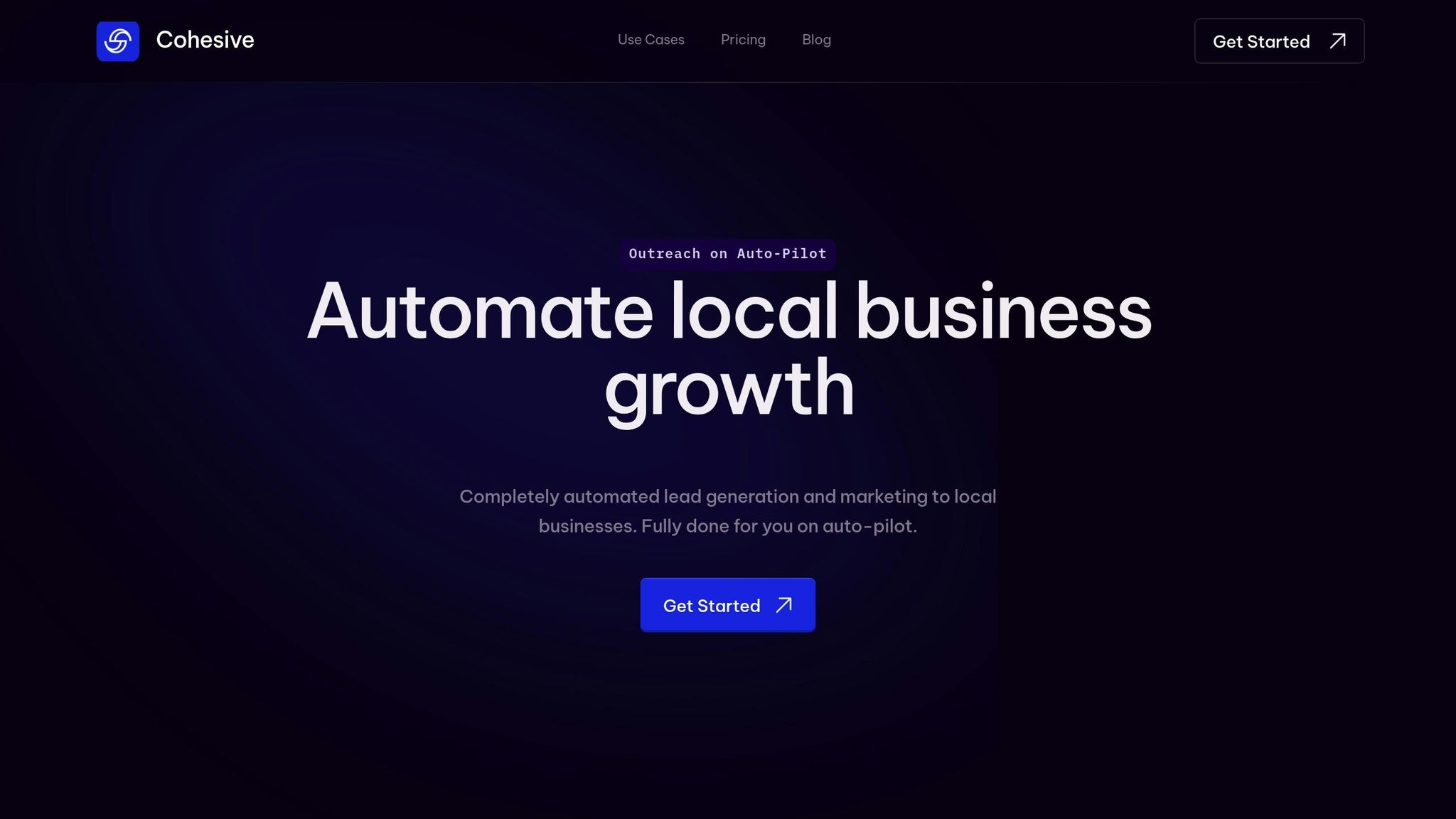
Local service businesses - such as janitorial companies, landscaping firms, and HVAC contractors - often face tough challenges when it comes to nurturing leads. Tight budgets, limited marketing resources, and the need to connect directly with decision-makers make the process even trickier. To tackle these issues, Cohesive AI offers a streamlined, AI-powered workflow tailored specifically for these industries. This system automates lead generation, personalizes outreach, and simplifies follow-ups, making it easier to achieve consistent results.
Automated Lead Generation
The process kicks off with smart prospecting that removes the need for time-consuming manual research. Using tools like Google Maps, Cohesive AI identifies local businesses that match your ideal customer profile. It then digs deeper, pulling decision-maker email addresses from reliable sources like government filings [17][18]. For instance, a landscaping business targeting commercial properties can connect directly with property managers or business owners responsible for maintenance budgets. As the system continuously updates your prospect database, it delivers a steady stream of qualified leads, ready for outreach.
AI-Personalized Outreach
Once the leads are identified, Cohesive AI takes personalization to the next level. It crafts tailored cold emails that address each business's specific needs, factoring in details like their industry, location, and size. These messages are designed to follow best practices, bypass spam filters, and encourage responses. The platform also automates follow-up sequences, ensuring no lead slips through the cracks. Plus, it supports up to three campaigns at the same time, allowing you to target different market segments or test varied messaging strategies [17][18].
Guaranteed Results and ROI
One of the standout features of this workflow is its performance guarantee. Cohesive AI promises at least four interested responses per month - if not, you get the next month free. The service costs $500 per month, with a one-time $75 setup fee, and operates on a month-to-month basis with no long-term contracts [18]. This pricing model allows local service businesses to try the system without a significant upfront commitment. Whether you're dealing with emergency service requests or seasonal demand shifts, this automated solution helps maintain steady growth, breaking the cycle of unpredictable lead generation.
Manual vs. AI-Driven Lead Nurturing: A Comparison
When it comes to lead nurturing, the differences between manual processes and AI-driven systems are striking. Manual methods rely heavily on human effort and intuition, while AI systems use data and automation to deliver consistent results at scale.
Manual lead nurturing often demands a significant time investment from sales teams. On average, salespeople spend about 65% of their time on non-selling activities, such as updating CRMs and scheduling follow-ups[21]. This approach focuses on managing leads one at a time, which can make it tough to maintain consistent communication, especially when dealing with a large pool of prospects. As a result, high lead volumes can lead to missed opportunities.
AI-driven systems, on the other hand, completely change the game. Businesses using AI in their sales processes report a 50% increase in lead generation and customer retention[21]. These systems can handle multiple leads simultaneously, sending personalized messages within minutes of initial contact. This ensures that every prospect gets timely, relevant communication, no matter how many leads are in the pipeline.
When it comes to conversion rates, AI-driven approaches clearly outshine manual methods. Companies using AI for lead scoring have seen a 51% boost in lead-to-deal conversion rates. Additionally, McKinsey highlights that organizations investing in AI experience a 3% to 15% increase in revenue and a 10% to 20% improvement in sales ROI[20].
Comparison Table
Here’s a breakdown of the key differences between manual and AI-driven lead nurturing:
Factor | Manual Workflow | AI-Driven Workflow |
|---|---|---|
Speed & Efficiency | Slow and time-intensive, handling one lead at a time | Fast and automated, managing multiple leads at once |
Personalization | Highly tailored but limited by time and effort | Scaled personalization across all leads |
Data Processing | Relies on manual updates and slower analysis | Performs instant data analysis |
Consistency | Prone to errors and delays | Delivers consistent and automated follow-ups |
Scalability | Requires more team members to handle growth | Scales effortlessly without additional resources |
Adaptability | Changes are manual and slow | Learns and evolves continuously based on user behavior |
This table highlights the clear advantages of AI-driven systems, particularly in scalability. Growing businesses often struggle to handle increased lead volumes with manual methods, as this typically requires hiring more staff. By contrast, AI systems can accommodate a surge in prospects without additional resources. This efficiency is one reason why businesses using AI for lead generation report a 40% reduction in acquisition costs[13].
However, manual methods still have their strengths. They shine in situations requiring a deep understanding of context, critical thinking, and emotional intelligence[19]. For example, complex B2B negotiations or high-value service contracts often benefit from the human touch, where relationship-building and nuanced decision-making play a key role.
For many businesses, a hybrid approach works best. AI can handle tasks like initial prospecting, lead scoring, and automated follow-ups, while human expertise is reserved for qualified prospects who need tailored advice or solutions to complex problems. This blend of automation and human insight highlights how AI can transform lead nurturing, boosting efficiency while preserving the personal connections that drive long-term success.
Conclusion and Key Takeaways
Let’s recap the key insights to strengthen your lead nurturing strategy with AI.
AI has revolutionized lead nurturing, shifting it from a time-consuming manual process to a data-powered system. Studies show that AI-driven lead nurturing can increase qualified leads by an impressive 451%, while generating 50% more sales-ready leads at 33% lower costs [15].
The real game changer? Personalization. With 80% of customers more likely to buy when offered tailored experiences [16], leveraging AI to deliver these experiences isn’t just smart - it’s necessary. AI doesn’t stop at automation; it builds connections at scale, creating real value for both businesses and customers.
Take local service industries like janitorial, landscaping, and HVAC. Platforms such as Cohesive AI are already making waves by automating lead generation through tools like Google Maps scraping, AI-personalized cold emails, and fully managed campaigns. These platforms essentially replace traditional lead generation agencies with a more efficient, data-driven alternative, demonstrating the practical applications of AI in optimizing workflows and boosting personalization.
The most successful businesses approach AI strategically. They segment audiences by behavior and preferences, set clear goals tied to conversion rates, and use A/B testing to fine-tune their efforts. Why does this matter? Because leads who feel understood are three times more likely to engage or make a purchase [16]. Personalization isn’t just a perk - it’s a competitive edge.
"AI helps businesses work smarter, not harder. It's like having a superpower to find, understand, and connect with leads in ways that weren't possible before. For companies that want to grow, AI isn't just an option - it's the future."
Switching from manual to AI-driven lead nurturing unlocks growth opportunities that were once out of reach. Nurtured leads not only engage more but also make larger purchases compared to non-nurtured ones [15]. The return on investment from AI technology is clear - it drives better results while cutting costs.
To get started, pinpoint your biggest lead nurturing challenges and explore AI tools that address those specific needs. Whether it’s automating follow-ups, personalizing outreach, or improving lead scoring, the solutions are already here. The real question isn’t if AI will transform lead nurturing - it’s whether you’ll act early enough to secure a lasting edge over your competitors.
FAQs
How can AI enhance lead scoring and streamline follow-up efforts?
AI takes lead scoring to the next level by processing massive amounts of data to pinpoint high-potential leads with impressive precision. What’s more, it updates these scores in real-time, helping businesses stay agile and respond swiftly to shifts in lead behavior.
When it comes to follow-ups, AI steps in to handle tasks like routing leads to the right team members, prioritizing outreach efforts, and even creating tailored messages. This not only speeds up response times but also ensures consistent and personalized communication. The result? A more efficient lead management process. By tapping into AI's capabilities, businesses can increase conversion rates while cutting down the time spent sorting and qualifying leads.
How can AI improve lead nurturing for local service businesses like HVAC or landscaping?
AI can play a game-changing role in lead nurturing for local service businesses by simplifying processes and boosting productivity. With AI, businesses can ensure quicker response times, delivering timely communication to potential customers. It also automates lead qualification, helping identify and prioritize the most promising prospects. This way, companies can concentrate their energy on leads that are more likely to convert, cutting down on customer acquisition expenses.
Another major advantage is AI’s ability to personalize outreach on a large scale. By tailoring messages to match customer behavior and preferences, businesses can create a more engaging experience. Automated follow-ups keep leads interested, while behavior-driven messaging builds deeper connections. These features not only help improve conversion rates but also strengthen customer relationships, paving the way for increased sales and long-term growth for businesses like HVAC providers, landscapers, and other local services.
How can businesses use AI with their CRM and marketing tools to improve lead nurturing?
Businesses can take their lead nurturing efforts to the next level by incorporating AI into their CRM and marketing tools. With AI, data sharing becomes effortless, repetitive tasks are automated, and communication can be personalized on a large scale. This makes it easier for companies to connect with leads in a way that’s both effective and efficient.
AI also shines when it comes to predictive analytics, helping businesses score and prioritize leads. This ensures that teams spend their time on the opportunities most likely to convert. On top of that, AI enables real-time adjustments and automated follow-ups, keeping interactions timely and highly relevant. By simplifying workflows, AI allows businesses to manage leads with more accuracy and impact.