AI Targeting for Local Service Businesses
Feb 1, 2026
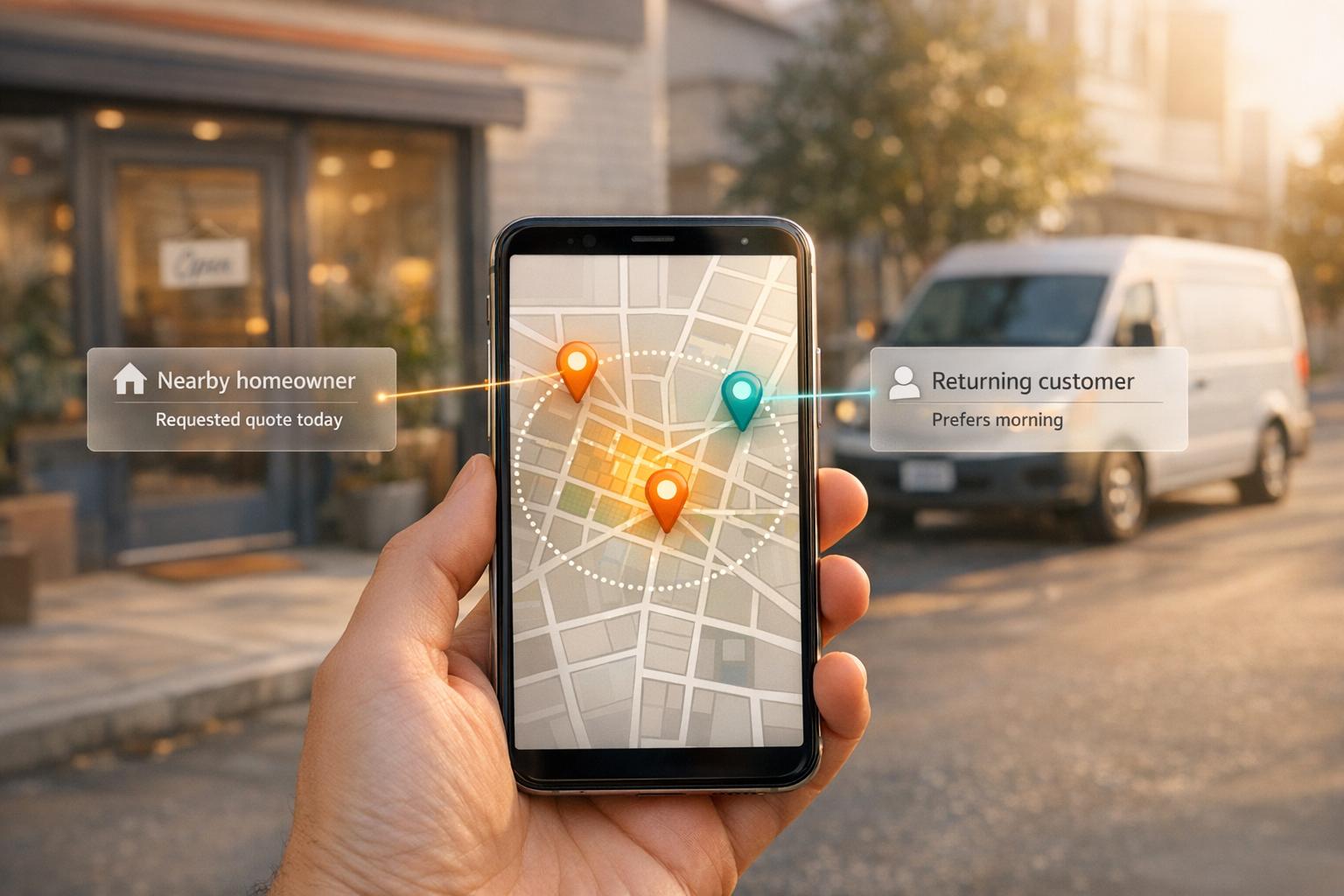
AI targeting can help local service businesses find customers faster and more efficiently. Instead of relying on outdated methods, AI uses real-time data to identify and prioritize high-quality leads in your area. This means less time spent on manual research and more focus on connecting with the right people.
Key Takeaways:
What It Does: AI analyzes real-time data like Google Maps listings and government records to identify local prospects.
Why It Works: AI minimizes outdated or incorrect data, ensuring accurate and up-to-date leads.
Benefits:
Saves time by automating lead generation.
Reduces costs by up to 60%.
Improves customer engagement by 37%.
How It Works: Combines location data, behavioral patterns, and intent scoring to target high-converting prospects.
Tools to Use: Platforms like Cohesive AI streamline the process for $500/month.
By automating lead generation and personalizing outreach, AI helps businesses grow without requiring large budgets or extra manpower.
Scrape Local Business Data With This AI Lead Generation Tool
How AI-Driven Audience Targeting Works
AI-powered targeting systems take a modern approach to identifying potential clients by combining various data sources in real time, moving beyond outdated spreadsheets. These systems continuously scan the web for fresh signals - like new business listings on Google Maps or recent government filings - that indicate a company might need your services. This method tackles a major issue: around 25% of the average B2B database contains inaccuracies [2]. By constantly updating its data, the system ensures precise targeting, which is explored further below.
Using Behavioral and Location Data
AI leverages both location data and online behavior to craft detailed prospect profiles. For example, it can spot a newly opened restaurant near your catering business or detect an office building in your HVAC service area searching for "emergency heating repair tonight" [1][5]. This technology has advanced to enable hyperlocal targeting, allowing businesses to focus on specific neighborhoods rather than broad zip codes [2]. This precision matters because 71% of potential lead-generation customers report that Google properties simplify their decision-making process [5]. Such data forms the foundation for dynamic segmentation, discussed next.
Dynamic Segmentation and Intent Scoring
Instead of lumping prospects into broad categories, AI dynamically creates micro-segments based on real-time behavior. For instance, a landscaping company might identify segments like "recently opened retail stores" or "property managers overseeing multiple sites." AI also assigns intent scores to prospects, ranking them by their likelihood to convert. High-intent leads might include those who visited a "Request a Quote" page or downloaded a service guide [7]. This approach has tangible benefits: small businesses using AI marketing often see a 37% boost in customer engagement and a 23% drop in acquisition costs [6]. These insights feed directly into optimizing campaigns as they run.
Real-Time Data Sources for Local Targeting
To make targeting even more effective, AI systems rely on current, real-time data. Tools like Cohesive AI pull in information from sources such as Google Maps for new business listings and government filings for recent business registrations or ownership changes. This real-time approach outpaces static databases that quickly become outdated. As John Nicoletti, VP of Customer Solutions at Google, puts it:
"The most crucial step is connecting your rich, first-party signals with the invaluable offline data stored in your CRM" [5].
By integrating CRM data - like past conversions and customer lifetime value - AI systems learn to identify patterns and continuously improve targeting accuracy.
Data Source | Extracted Data | How It Helps Your Targeting |
|---|---|---|
Google Maps | New business listings, location changes, hours | Spots fresh prospects in your area before competitors do |
Government Filings | Business registrations, ownership changes | Targets decision-makers during key transitional periods |
Search Signals | Keywords, voice queries, AI Overviews | Scores leads based on immediate intent (e.g., "emergency" needs) |
CRM Data | Past conversions, service history, lifetime value | Trains AI to recognize profitable customer profiles |
Setting Up AI Targeting Systems
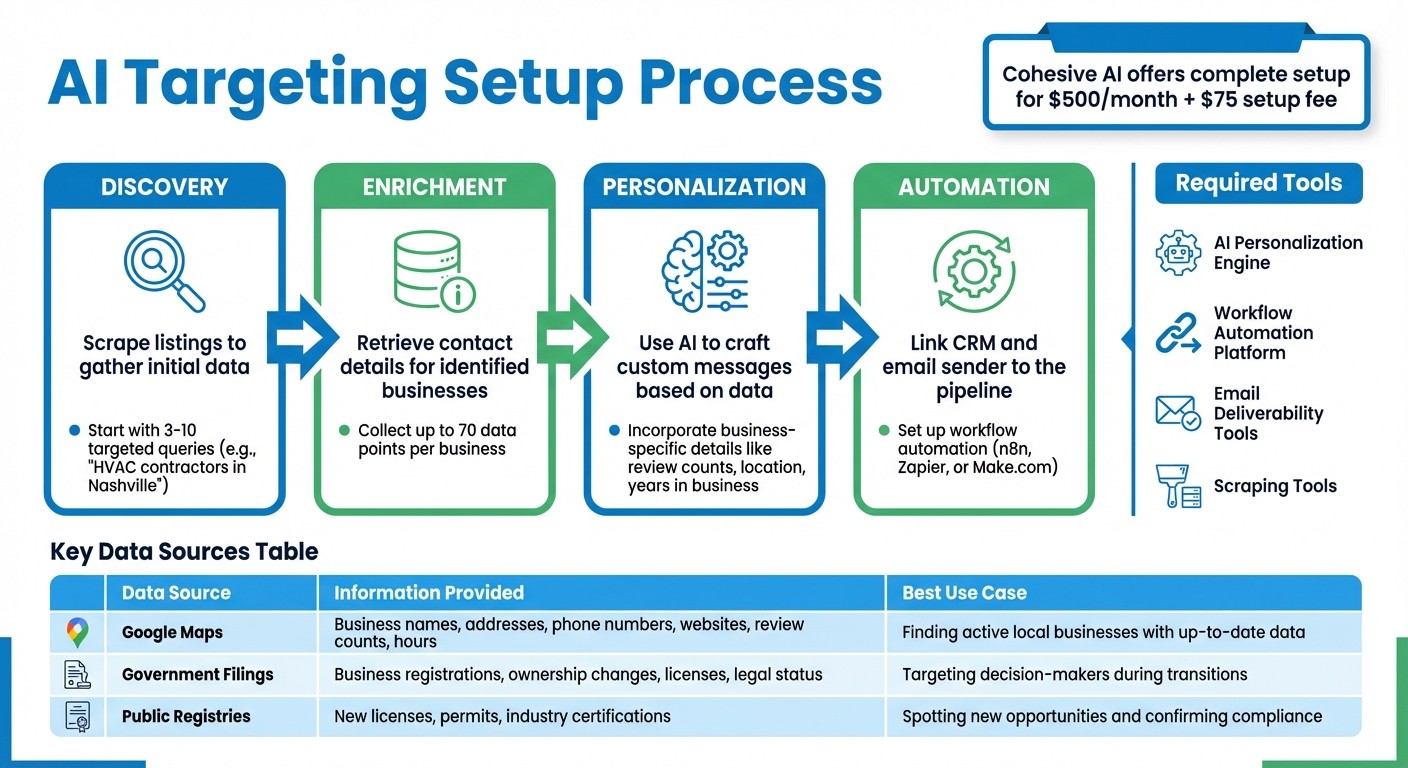
AI Targeting Setup Process for Local Service Businesses
To set up AI targeting systems, you'll need the right combination of tools and processes. The goal is to create a pipeline where data from scrapers is cleaned, personalized by AI, and delivered via email - running automatically around the clock once properly configured [10][11].
What You Need Before Starting
Before diving into your first campaign, you'll need three essential tools working together:
AI Personalization Engine: Platforms like Cohesive AI can transform raw data into personalized outreach messages. These messages are tailored using details such as review counts or neighborhood locations [8][12].
Workflow Automation Platform: Tools like n8n, Zapier, or Make.com are critical for connecting scrapers to CRMs and email systems. Think of them as the "nervous system" for your operation, ensuring smooth data flow [10][11].
Email Deliverability Tools: These tools maintain your sender reputation, ensuring your automated emails land in inboxes rather than spam folders [8].
To personalize outreach effectively, you'll also need scraping tools to gather key business details like names, phone numbers, and review counts. Start with free or trial versions of these tools to validate data quality before committing to larger-scale operations.
Once these tools are in place, you're ready to move on to integrating your data pipeline step by step.
Step-by-Step Setup Process
Start by validating your data structure with a small number of targeted queries - typically 3–10. For example, if you're an HVAC contractor in Nashville, search for "HVAC contractors in Nashville" instead of broader terms like "businesses." This approach improves the quality of your leads significantly [10][14].
The setup process generally follows four stages:
Discovery: Scrape listings to gather initial data.
Enrichment: Retrieve contact details for the businesses you've identified.
Personalization: Use AI to craft custom messages based on the data.
Automation: Link your CRM and email sender to the pipeline [8][10][12].
Using tools like n8n, you can create this workflow with a simple sequence: Manual Trigger → HTTP Request (Scraper API) → Split Out (Individual Records) → Google Sheets or CRM [11].
Once data is flowing, AI tools like ChatGPT can help clean and organize it. For example, you can process raw CSV files to extract specific details like the number of five-star reviews or sort businesses by neighborhood. These details become the variables for personalized messaging [12]. Always inspect a sample of 20–50 rows to ensure your data is aligned correctly [14].
If you'd rather skip the technical setup, Cohesive AI offers a complete solution for $500 per month, with an additional $75 setup fee. They even guarantee at least four interested responses per month or provide a free month as compensation [13].
Once your pipeline is configured, the next step is selecting the best data sources for precise targeting.
Selecting the Right Data Sources
Different data sources can serve different roles in your targeting strategy. Here's how to make the most of them:
Data Source | Key Information Provided | Best Use Case |
|---|---|---|
Google Maps | Business names, addresses, phone numbers, websites, review counts, opening hours | Ideal for finding active local businesses with up-to-date operational data [12][14]. |
Government Filings | Business registrations, ownership changes, professional licenses, legal status | Useful for targeting decision-makers during transitions or verifying lead quality [9]. |
Public Registries | New licenses, permits, industry certifications | Great for spotting new business opportunities and confirming compliance [9]. |
Advanced scraping tools can collect up to 70 data points per business, allowing for highly tailored outreach [12]. To improve efficiency, focus on smaller geographic areas - search by city or ZIP code instead of scraping entire states. This approach enhances both lead coverage and precision [14].
Running AI-Driven Outreach Campaigns
Create campaigns that deliver results. AI-driven outreach stands apart from traditional cold email methods by personalizing messages at scale while keeping the human element intact - something local business owners value. The idea is to send emails that feel like they were written specifically for each recipient, even when you're reaching out to hundreds of prospects every week.
AI-Powered Email Personalization
Personalization in outreach isn’t just about adding a first name to an email. AI takes it further by crafting messages that incorporate industry trends and specific business details. For example, if you're reaching out to HVAC contractors, AI might highlight a unique business metric, like: "I noticed you’ve earned 284 five-star reviews in Nashville" [12]. Instead of generic compliments, the messaging can address relevant challenges, such as: "Many teams your size face lead generation bottlenecks once they grow past 10 employees" [15].
What makes this personalization so effective is how AI seamlessly integrates business-specific data. By pulling details like review counts, location, years in business, or licensing information from your database, AI creates compelling openers that grab attention. But personalization alone isn’t enough - targeting the right audience is equally important.
Targeting by Location and Industry
For campaigns aimed at local services, geographic targeting is critical. AI can segment prospects in real time, factoring in location, population density, and service area compatibility. The table below breaks down how different targeting levels align with specific business goals:
Targeting Level | Benefits | Best For |
|---|---|---|
City/County | Broad reach for building brand awareness | New businesses entering a market |
Neighborhood | Precision in high-density areas | Established services with local reputations |
Radius-based | Optimized for travel efficiency | Mobile services like plumbing or landscaping |
To refine your outreach further, go beyond basic demographics. Effective targeting in 2026 means identifying industries, company sizes, revenue ranges, and specific pain points [15]. For example, a catering company might focus on tech firms with 50–200 employees in a specific district that frequently host events.
AI ensures precision by using verified business details - like confirmed names and addresses - instead of relying on guesswork [17]. This ensures your message reaches the right decision-maker. To amplify your results, consider a multi-channel approach that complements email outreach.
Automating Multi-Channel Campaigns
Once your messaging and targeting are on point, the next step is integrating multiple communication channels into your strategy. Email alone won’t cut it. Combining email with phone and LinkedIn outreach can boost response rates by 287% compared to single-channel campaigns [16]. The challenge is managing these touchpoints without overwhelming your team - or the prospect. AI platforms simplify this with automated workflows. For instance, if a prospect doesn’t reply to an initial email, the system might trigger a LinkedIn connection request three days later [15]. If they open the email but don’t respond, the AI could schedule a follow-up call to ensure no lead slips through the cracks.
Platforms like Cohesive AI handle these processes for $500 per month, supporting up to three campaigns simultaneously. They also manage technical essentials like domain authentication (SPF, DKIM, and DMARC), inbox warm-up, and sending reputation. These factors are key, as around 17% of cold emails end up in spam due to poor technical setup [16].
Start small - send 5–10 emails per inbox daily using a secondary domain (e.g., trycompany.com) to protect your primary brand [15]. Keep in mind that 80% of sales require five or more follow-ups, yet nearly half of sales reps quit after the first attempt [16]. AI automation solves this by ensuring consistent, persistent follow-ups. It tracks engagement across channels and adjusts timing based on how prospects interact with your messages, keeping your outreach effective without becoming intrusive.
Measuring and Improving Campaign Performance
Tracking results is what separates successful campaigns from those that miss the mark. For local service businesses, the key lies in identifying which AI-driven messages convert prospects into customers - and then replicating that success.
A/B Testing and Performance Tracking
Experimentation is essential. Test subject lines and calls-to-action to pinpoint what drives better open and click-through rates [18][19]. For example, HVAC contractors might test whether mentioning specific performance metrics resonates more than generic local references [12]. Pay close attention to hard and soft bounce rates - high bounce rates can harm your domain reputation and push future emails into spam folders [18]. To avoid this, keep your email list clean by regularly removing inactive or invalid addresses, which improves overall deliverability [18].
Key Metrics to Track
Every metric tells a different part of your campaign's story. Here’s a quick breakdown of the most important ones for local service businesses:
Metric Category | Specific KPI | Why It Matters |
|---|---|---|
Outreach | Open Rate | Indicates if subject lines catch the attention of local prospects. |
Engagement | Click-Through Rate (CTR) | Shows whether the AI-generated offers are engaging enough. |
Efficiency | Cost Per Lead (CPL) | Ensures lead generation remains cost-effective. |
Conversion | Conversion Rate | Tracks how many leads actually turn into paying customers. |
Quality | Lead Quality Score | Helps focus on high-intent prospects who are more likely to convert. |
Deliverability | Bounce Rate | Protects your email domain reputation by flagging list quality issues. |
Beyond these, financial metrics like Return on Ad Spend (ROAS) and Marketing ROI are critical for assessing overall profitability [19][20]. Assigning specific dollar values to different conversion actions allows AI Smart Bidding to focus on revenue rather than just lead volume [20][3]. With customer acquisition costs rising by 60% since 2020, these metrics are essential for maintaining profitability [6]. They not only evaluate current performance but also guide future strategy.
Improving AI Targeting Over Time
Metrics are more than just numbers - they fuel your AI system to perform better over time. By uploading offline and first-party data daily, you enable AI bidding algorithms to stay updated and optimize based on the latest results [3][20]. For AI Smart Bidding to work effectively, aim for at least 15 conversions within a 30-day period [3][20]. A great example of this is Mitsubishi Motors Canada, which saw a 107% boost in ROAS by shifting to value-based bidding that used online signals to predict offline sales [20].
"Innovating on how we bid using conversion values helps us reach customers more effectively and turn potential into actual results" [20].
You can refine bids even further by using conversion value rules, applying multipliers based on factors like geographic location or device type to prioritize high-value actions [3][20]. To ensure the data feeding your AI is accurate, implement tools like reCAPTCHA or double opt-in for lead verification [3][4]. This real-time feedback loop not only sharpens initial targeting but also drives ongoing improvement. When optimized correctly, AI marketing strategies can yield impressive results - boosting customer engagement by 37% and cutting customer acquisition costs by 23% [6].
Conclusion
AI-powered targeting has reshaped how local service businesses approach lead generation. By adopting the strategies discussed earlier, businesses can achieve a level of precision and efficiency that manual methods simply can’t match. Instead of spending hours sifting through directories or paying hefty fees to agencies, companies can now automate the entire process - from collecting data to sending personalized messages tailored to each potential client.
For local service providers, the benefits are clear: reduced costs and continuous lead generation. AI targeting can cut lead generation expenses by up to 60% while working 24/7. It enables businesses to handle hundreds of prospects at once, respond to inquiries in real-time, and customize outreach at scale - all without breaking a sweat.
Platforms like Cohesive AI make these capabilities accessible. From data scraping to ensuring emails land in inboxes, the platform supports up to three campaigns running simultaneously, giving businesses a powerful tool to streamline their efforts.
Looking ahead, advancements in automation promise even more opportunities - think autonomous booking systems, hyper-localized marketing, and optimization for voice search. By starting with focused targeting in a high-value niche, using real-time data, and automating follow-ups, your business can stay ahead of the curve and be ready to embrace these future innovations.
FAQs
How does AI enhance lead targeting for local service businesses?
AI helps local service businesses refine their lead targeting by analyzing customer data to pinpoint high-potential prospects. It prioritizes leads based on their chances of converting and adjusts messaging to better connect with specific audiences. This allows businesses to focus their time and energy on the opportunities most likely to yield results.
By using AI, local service providers can target more accurately, engage more effectively, and see higher conversion rates. It streamlines marketing efforts, making them both more efficient and impactful.
What are the key tools needed to set up an AI targeting system for local service businesses?
Creating an effective AI targeting system for local service businesses requires a few essential tools to get the job done right. One of the most important is an AI-powered platform like Cohesive AI. This type of platform helps simplify lead generation by pulling data from sources such as Google Maps and government filings. It identifies leads with the highest potential and also personalizes outreach efforts while managing email campaigns to improve targeting precision.
You'll also need tools for data analysis and understanding customer behavior. These tools help you zero in on high-value prospects and fine-tune your targeting strategies. On top of that, automation tools for managing campaigns are a must. Features like email sequencing and performance tracking make it easier to stay organized and efficient. Many of these tools also offer AI-driven lead scoring, customized messaging, and predictive insights, which can take your marketing efforts to the next level.
By combining these resources, local service businesses can simplify their processes, focus on the most promising leads, and see better results from their marketing campaigns.
How does AI personalization improve customer engagement in outreach campaigns?
AI-driven personalization takes customer engagement to the next level by crafting messages that feel tailored and relevant to each individual. By diving into customer data - like preferences, past behavior, and interactions - AI enables businesses to create outreach that feels personal and genuine. This is especially critical for local service industries, where building trust and fostering connections can make or break relationships.
What’s more, AI doesn’t just stop at analyzing past data. It can tweak and adapt messages in real-time based on ongoing interactions. This ensures that the right person gets the right message at the perfect moment. The result? Communication that feels more meaningful, boosts response rates, and nurtures stronger relationships - all of which contribute to higher conversion rates.