Scaling Multi-Channel Outreach for Healthcare Services
Sep 10, 2025

In today's healthcare landscape, relying on a single communication method is no longer effective. Patients expect timely, personalized communication across multiple platforms. Multi-channel outreach strategies allow healthcare providers to connect with patients through their preferred channels, improving engagement and outcomes. By leveraging AI tools, providers can automate tasks, target specific audiences, and manage high communication volumes efficiently - all while maintaining compliance with strict healthcare regulations like HIPAA.
Key Takeaways:
Challenges with Traditional Outreach: Phone calls and direct mail are labor-intensive, costly, and often fail to engage younger, tech-savvy patients.
Benefits of Multi-Channel Outreach: Automates routine tasks (e.g., appointment reminders), reduces costs, and improves patient targeting.
Technology's Role: AI-powered tools like Cohesive AI help generate leads, personalize communication, and manage campaigns, saving time and resources.
Compliance: Adhering to HIPAA regulations is critical to safeguarding patient data.
Patient Engagement Funnel: Guides patients from awareness to loyalty by tailoring communication at each stage.
Marketing Automation: Helping Your Healthcare Practice Grow
Planning Your Multi-Channel Outreach Strategy
Crafting a successful multi-channel outreach strategy in healthcare requires meticulous planning and adherence to strict regulations. It starts with setting clear goals, understanding your audience, and ensuring compliance with healthcare industry standards. Without this foundation, even the best technology won’t deliver the results you’re aiming for. Thoughtful planning not only helps you avoid compliance risks but also improves patient engagement and overall outcomes. Below, we’ll explore how defining goals, maintaining compliance, and selecting the right communication channels come together to create an effective outreach plan.
Setting Goals and Identifying Target Audiences
Every successful outreach campaign begins with well-defined objectives. Are you looking to increase preventive care visits, improve medication adherence, or expand your service offerings? Each goal requires a unique approach in terms of messaging, timing, and the channels you use.
Start by segmenting your audience. Consider factors like age, location, insurance type, and health history. For example, patients managing chronic conditions may need more frequent and specific communications compared to those coming in for routine wellness checkups. If you serve local communities through occupational health services or corporate wellness programs, geographic targeting becomes essential.
Don’t forget to incorporate behavioral preferences. For instance, some patients may prefer text messages over emails. By mapping out the patient journey, you can tailor your outreach - offering new patients educational materials and providing established patients with timely appointment reminders or follow-up care instructions. And while setting these targets, ensure every step aligns with regulatory guidelines to stay compliant.
Following Healthcare Industry Regulations
Compliance with healthcare regulations, especially HIPAA, is non-negotiable in any outreach strategy. As a healthcare provider, you are responsible for safeguarding Protected Health Information (PHI) and Electronic Protected Health Information (ePHI) under federal law[1]. The HIPAA Privacy Rule governs how PHI can be used and shared, making patient privacy a cornerstone of your campaigns.
Before launching any outreach efforts, audit your communication systems and conduct a HIPAA risk assessment. Provide role-specific HIPAA training to all team members handling ePHI, ensuring they know how to manage sensitive information securely. Partnering with third-party vendors? Secure Business Associate Agreements (BAAs) with all service providers, such as telemedicine platforms or communication tools. Additionally, implement role-based access controls to limit PHI access and maintain detailed documentation of compliance-related activities for at least six years.
Choosing the Right Channels for Healthcare Needs
Selecting the right communication channels depends on your audience and outreach goals. For example, email is ideal for appointment confirmations, educational content, and follow-ups, while text messages are increasingly popular among younger patients for quick updates and reminders.
For sharing sensitive health information, secure patient portals are your best bet - they ensure privacy while meeting HIPAA requirements. Phone calls remain essential for older patients or when discussing complex medical issues. Social media platforms can be a great way to share community health updates or practice news, but they should only be used for general information - not individual patient communications.
If your practice serves local businesses, tools like Cohesive AI can help identify potential clients by analyzing local business data. Additionally, webinars and virtual events are excellent for patient education, specialist consultations, or community health initiatives, offering valuable engagement data to fine-tune your future strategies.
When using text messaging for appointment reminders or medication alerts, keep messages free of PHI and ensure they’re sent only to patients who have explicitly opted in. The ultimate goal is to match the right message with the right medium for each patient group, creating a coordinated and compliant multi-channel outreach strategy.
Using Technology to Scale Your Outreach
Technology is reshaping how healthcare providers connect with patients and grow their practices. With tools like artificial intelligence (AI), tasks can be automated, communications can be tailored, and insights that were once out of reach can now be accessed. For local providers aiming to grow while staying compliant, building a strong tech stack is essential. As discussed earlier, effective multi-channel outreach relies heavily on leveraging modern technology.
How AI Improves Outreach Campaigns
AI is changing the game in healthcare outreach by taking over time-intensive tasks and creating more personalized experiences. By analyzing patient data, AI can determine the best time to send communications, identify the preferred channels for each patient, and craft messages that resonate. Its ability to recognize patterns in data helps uncover strategies that work for specific patient groups [5].
The results speak for themselves: healthcare organizations using AI report a 45% drop in patient readmission rates and a 40% reduction in wait times [5]. AI also plays a critical role in identifying high-risk patients who may need extra care, such as more frequent follow-ups or specialized coordination [5]. By tracking patient data over time, AI can spot health trends that might otherwise go unnoticed. These insights set the stage for advanced tools that can further expand outreach efforts.
Scaling with Tools like Cohesive AI
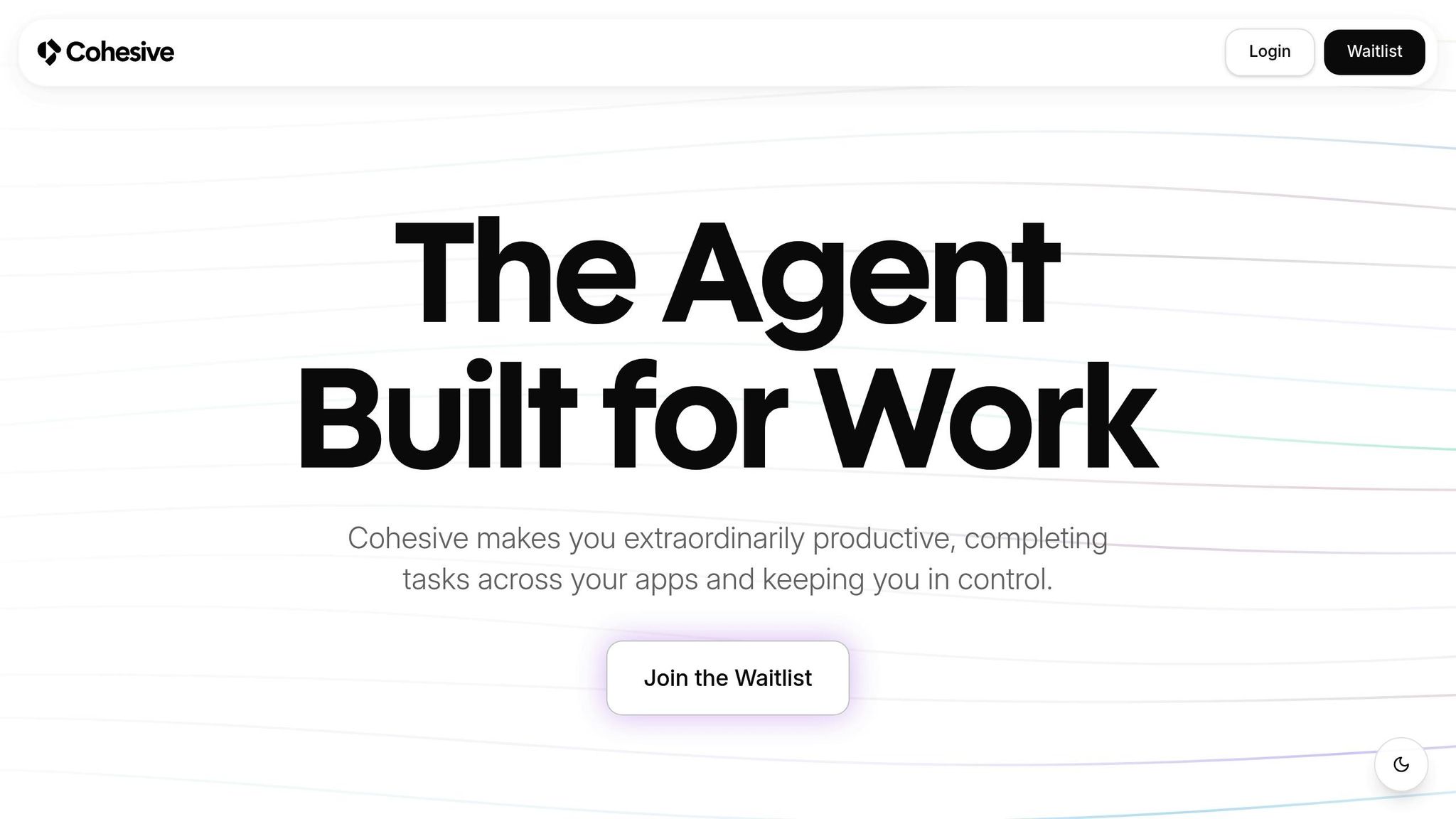
For providers working in areas like occupational health or corporate wellness, tools such as Cohesive AI simplify lead generation and campaign management. This platform uses AI to identify potential leads, such as local business owners, by analyzing sources like Google Maps and government filings. It then personalizes outreach communications, ensuring messages are relevant and engaging.
Cohesive AI also handles email deliverability and automates campaign management, allowing your team to focus on patient care. The platform supports up to three simultaneous campaigns, making it easier to target different business segments. The pricing is straightforward: a monthly fee of $500, a one-time setup cost of $75, and no long-term contracts. Plus, there’s a performance guarantee - if you don’t get at least four interested responses per month, you’ll receive a free month of service.
Connecting with CRM and Analytics Platforms
AI’s benefits don’t stop at outreach; integrating AI tools with CRM and analytics platforms can take your efforts even further. AI-powered CRM systems streamline workflows by automating tasks like patient intake, billing, follow-ups, retention campaigns, and referral tracking [2]. The healthcare CRM market is projected to grow to $26.35 billion by 2027, with an annual growth rate of 13.6% [5].
Modern CRM systems enhanced with AI centralize patient data from multiple sources - such as electronic medical records, patient portals, and wearable devices - into one user-friendly interface [5]. Pre-built connectors and APIs allow AI tools to sync seamlessly with CRM and business intelligence platforms, enabling smarter treatment recommendations and better resource allocation [3][5].
Automation also lightens the load for clinicians. Tasks like documentation, scheduling, and billing can be handled by AI, giving providers more time to focus on patient care. For example, Innovaccer’s AI model, Sara, helps call center agents save around 10 hours per week on documentation, which increases their call-handling capacity by 25% [4]. Additionally, Sara boosts first-call resolution rates by 25%, speeds up call handling by 20%, and increases outreach capacity by 20% [4].
When adopting these technologies, it’s critical to prioritize data privacy, ensure HIPAA compliance, and actively work to prevent bias in AI systems. By doing so, providers can maximize the benefits of these tools while maintaining trust and ethical standards.
Creating an Effective Patient Engagement Funnel
Once you’ve established a multi-channel outreach strategy, the next step is creating a patient engagement funnel that turns interactions into lasting relationships. This funnel maps out the patient journey - from their first encounter with your practice to becoming loyal advocates - while focusing on trust, education, and retention [9][6].
Each stage of the funnel plays a unique role. A full-funnel approach ensures you’re connecting with patients at every step, building your practice’s reputation, and driving both engagement and retention [7][8]. It’s a way to ensure no potential patient slips through the cracks while maximizing the impact of your outreach efforts.
Understanding Engagement Funnel Stages
The patient engagement funnel mirrors how people make healthcare decisions, with tailored messaging guiding them through each stage.
Awareness: This is where potential patients first recognize a health concern and discover your practice [6][7][8][9][10][11]. They may be experiencing symptoms but haven’t yet identified the cause or sought treatment. Your goal here is visibility - be present when they search for information about their symptoms or concerns.
Interest and Education: At this stage, patients are actively seeking information but aren’t ready to commit. They’re exploring their symptoms and learning about potential solutions. Providing educational content builds trust and positions your practice as a reliable source of guidance [6][10].
Consideration: Patients now compare their options, researching providers based on factors like location, insurance compatibility, credentials, and reviews. Here, they need detailed information about your services and what sets your practice apart.
Conversion: This is the action stage - patients decide to schedule an appointment, call, or request a consultation. Make the process simple and remove any barriers that might discourage them.
Retention and Advocacy: In these final stages, satisfied patients become loyal supporters, recommending your practice to others and continuing to rely on your care. These patients are invaluable, as they not only return but also help grow your patient base through word-of-mouth referrals.
By clearly defining these stages, you can craft messaging that guides patients seamlessly through their journey.
Customizing Content for Each Funnel Stage
To move patients through the funnel, your content must match their stage in the decision-making process. Generic content won’t cut it.
For awareness, create materials that address common symptoms or health concerns. Blog posts, short videos, and social media updates can help establish your presence while offering helpful information.
During interest and education, dig deeper into specific conditions or treatments. Email newsletters, health tips, and videos introducing your medical team can help patients feel more connected to your practice.
In the consideration stage, focus on providing practical details - what services you offer, insurance policies, and patient testimonials. Social proof, like reviews and success stories, can be particularly persuasive here.
For conversion, streamline the process. Use clear calls-to-action, offer online scheduling, and make your contact information easy to find. Options like live chat or online forms can also help patients take the next step.
At the retention and advocacy stage, keep patients engaged with follow-up care reminders, post-appointment surveys, and referral incentives. Regular updates and health check-ins show that you value their ongoing care.
Improving Funnel Performance
To refine your engagement funnel, you need to measure its performance at each stage. Without tracking data, it’s impossible to know where improvements are needed.
Start by establishing baseline metrics, such as website traffic, email open rates, social media engagement, appointment bookings, and retention rates. Use these benchmarks to track progress and identify weak points.
Awareness metrics: Monitor website visits, social media reach, and content views. If numbers are low, consider boosting your content output, improving SEO, or expanding your social media efforts.
Interest and education metrics: Look at engagement indicators like email click-through rates, time spent on pages, and video completion rates. Low engagement might mean your content isn’t addressing patient concerns effectively.
Consideration metrics: Track actions like contact form submissions, brochure downloads, and time spent on service pages. If patients aren’t moving forward, you may need to clarify your services or highlight your practice’s strengths.
Conversion metrics: Measure appointment bookings and consultation requests. If these are lagging, examine whether your scheduling process is too complicated or if patients are unclear about pricing and insurance.
Retention metrics: Assess follow-up compliance, patient satisfaction scores, and referral rates. Low retention often points to gaps in communication or the patient experience.
A/B testing is a valuable tool for optimizing your funnel. Experiment with different email subject lines, call-to-action buttons, landing page layouts, and content types to see what resonates most with your audience. Even small adjustments can lead to noticeable improvements.
Regular analysis of your funnel can reveal bottlenecks and opportunities. For instance, if you’re attracting plenty of website traffic but few bookings, focus on refining your consideration and conversion strategies. If patients aren’t returning for follow-ups, strengthen your retention efforts. By continuously fine-tuning your funnel, you can make the most of your outreach and build stronger patient relationships.
Tracking Results and Making Improvements
Effective outreach hinges on precise tracking and constant refinement. Without solid tracking systems in place, you miss opportunities to fine-tune your campaigns and improve your return on investment (ROI). Healthcare practices that actively monitor their outreach performance can figure out what’s working, drop ineffective strategies, and replicate successful ones across different channels.
Think of tracking as regular maintenance for your outreach engine. By consistently reviewing key metrics and making data-driven adjustments, you ensure your campaigns run smoothly and deliver results. This ongoing process connects the dots between planning and execution, reinforcing the groundwork covered earlier.
Important Metrics for Outreach Campaigns
Patient Acquisition Cost (PAC):
PAC tells you how much it costs to bring in a new patient, factoring in all your marketing and advertising expenses across channels [16–20]. It’s a straightforward way to measure your campaign’s efficiency - a lower PAC means you’re getting more bang for your buck. To calculate it, divide your total marketing spend by the number of new patients acquired in the same period. For instance, if you spend $500 to gain a new patient and that patient brings in $2,000 in revenue, your strategy is clearly paying off.
Patient Lifetime Value (PLV):
PLV estimates the total revenue a patient will generate over the course of their relationship with your practice [16, 19, 21]. This metric helps you decide how much to spend on acquiring new patients while staying profitable. It also highlights the value of retaining high-revenue patients, guiding your resource allocation decisions.
Conversion Rates:
Conversion rates measure the percentage of potential patients who take specific actions - like booking an appointment, completing a form, or signing up for a webinar - after engaging with your campaigns [16–21]. Even small increases in conversion rates can have a meaningful impact if they consistently lead to more appointments or inquiries.
Healthcare Marketing ROI:
This metric evaluates how much revenue your marketing efforts generate compared to their cost [16, 17, 18, 20, 21]. Calculate it by subtracting your marketing costs from the revenue generated, then dividing by the marketing costs and multiplying by 100 to get a percentage. This tells you which campaigns are worth continuing and which need adjustment.
Patient Satisfaction and Net Promoter Score (NPS):
These metrics gauge the quality of your patient relationships and how likely patients are to recommend your practice. While they may seem subjective, they’re crucial for fostering patient loyalty and driving referrals, which are essential for long-term growth.
By tracking these metrics, you can quantify the success of your outreach efforts and pinpoint areas for improvement.
Using Data to Improve Your Campaigns
Data analytics transforms raw numbers into actionable strategies. By identifying patterns, trends, and correlations in patient behavior and preferences, healthcare organizations can fine-tune their outreach efforts [12]. Start by establishing baseline measurements for all key metrics so you can track progress over time. Analyze performance across different channels, demographics, and timeframes to uncover insights that might otherwise go unnoticed.
For example, you might find that email campaigns perform best on certain days, while social media posts get more engagement at specific times. Seasonal trends can also reveal valuable insights - a dermatology clinic might see a surge in interest for cosmetic treatments during summer, while urgent care centers may experience higher demand during flu season. These insights help you optimize your timing, targeting, and resource allocation.
It’s also important to examine the patient journey. If your website gets plenty of traffic but few appointment bookings, the issue could be with your scheduling process or lack of pricing transparency. Similarly, if patients book appointments but fail to show up, implementing better confirmation and reminder systems could help.
A/B testing is another powerful tool. By testing different versions of your campaigns, you can learn what resonates most with your audience. Over time, these small adjustments can lead to big improvements. Additionally, cohort analysis allows you to track how different groups of patients behave over time, helping you focus on the most effective acquisition channels.
Expanding Outreach for Future Growth
As your practice grows and your data collection improves, scaling your outreach becomes more strategic. Automation tools, like Cohesive AI, can handle larger volumes of leads while maintaining a personal touch. These tools can identify high-priority leads, customize communications, and manage campaigns efficiently.
Predictive analytics can also play a key role. By identifying which leads are most likely to convert, you can focus your efforts where they’ll have the greatest impact. Armed with data on what works in your current market, you can confidently explore geographic or service line expansions. Start with small tests in nearby markets, measure the results, and scale gradually based on performance.
Technology integration is crucial as you expand. Ensure your outreach tools sync seamlessly with systems like practice management software, electronic health records, and billing platforms. This prevents leads from falling through the cracks and ensures comprehensive tracking of patient interactions.
Lastly, invest in your team. As your outreach efforts grow, your staff needs the skills to manage increasingly complex campaigns. Provide training and support to help your team navigate the technical and regulatory aspects of healthcare marketing. With the right preparation, your team can handle larger campaigns without compromising quality or compliance.
Scaling outreach is not a one-time task - it’s an ongoing process. By continuously refining your strategies based on data, you build stronger patient relationships and maintain a competitive edge.
Conclusion: Growing Your Healthcare Practice with Multi-Channel Outreach
Expanding your healthcare practice requires more than just word-of-mouth referrals or basic advertising. Patients today expect timely, personalized communication through the channels they prefer. This is where multi-channel outreach becomes a game-changer.
The foundation of growth lies in strategic planning. By clearly defining your audience, setting measurable goals, and staying aligned with healthcare regulations, you create a roadmap for success. A well-thought-out strategy ensures every action you take is purposeful and effective.
Technology plays a crucial role in scaling patient connections. AI tools simplify lead generation, personalize communication, and manage campaigns efficiently. For example, platforms like Cohesive AI use local data to identify potential patients and create tailored outreach messages. This kind of tech integration supports a patient engagement funnel that guides individuals from awareness to loyalty.
A well-designed patient engagement funnel ensures your messaging aligns with each step of the patient journey. From introducing your services to nurturing long-term relationships, every touchpoint matters. This targeted approach not only attracts new patients but also strengthens retention.
Continuous improvement is key to staying ahead. Tracking metrics like PAC (Patient Acquisition Cost) and conversion rates provides valuable insights into what’s working and what needs adjustment. Practices that embrace a data-driven mindset can refine their strategies, test new ideas, and allocate resources more effectively.
Ultimately, multi-channel outreach isn’t about being everywhere - it’s about being where it matters most. Start with a strong strategy, use technology to amplify your efforts, and stay committed to analyzing and improving your results. With this approach, you can strengthen patient relationships, boost appointment bookings, and position your practice for long-term success.
FAQs
What steps can healthcare providers take to ensure HIPAA compliance in a multi-channel outreach strategy?
To stay compliant with HIPAA, healthcare providers must rely on secure, encrypted communication channels that align with HIPAA standards. This includes using email platforms equipped with role-based access controls to manage who can access sensitive information.
Another critical requirement is obtaining explicit patient consent before using any protected health information (PHI) for marketing purposes. Without this consent, such actions could lead to privacy violations.
Providers should also adopt strict data handling policies to limit access to sensitive data. Equally important is ensuring that all staff members are thoroughly trained on HIPAA regulations. These measures not only protect patient privacy but also help maintain compliance throughout all communication and outreach activities.
How does AI improve patient engagement and healthcare outreach efforts?
AI plays a crucial role in improving patient engagement by customizing communication, streamlining access to healthcare, and refining workflows. These advancements help foster stronger connections between patients and healthcare providers, leading to improved treatment results and greater satisfaction.
When it comes to outreach, AI steps up by enabling real-time monitoring, predictive analytics, and targeted messaging. These tools empower healthcare organizations to deliver timely and relevant interventions, strengthening relationships with patients and promoting better health outcomes.
How can healthcare providers track and enhance the effectiveness of their patient engagement strategies?
Healthcare providers can measure how well they’re engaging with patients by keeping an eye on key metrics like patient satisfaction scores, appointment attendance rates, and response times to inquiries or concerns. Diving deeper into the data by segmenting patient groups and gathering real-time feedback can help uncover trends and pinpoint areas that need attention.
Boosting patient engagement often starts with personalized communication - tailoring messages to individual needs and preferences goes a long way. Making patient portals simple and intuitive to navigate is another game-changer, as it encourages more frequent use. Adding automated outreach tools to share timely updates or reminders can keep patients informed and connected. Together, these approaches not only enhance the patient experience but also contribute to better health outcomes, creating a positive feedback loop for ongoing improvement.