Customer Journey Mapping for Lead Generation
Aug 24, 2025
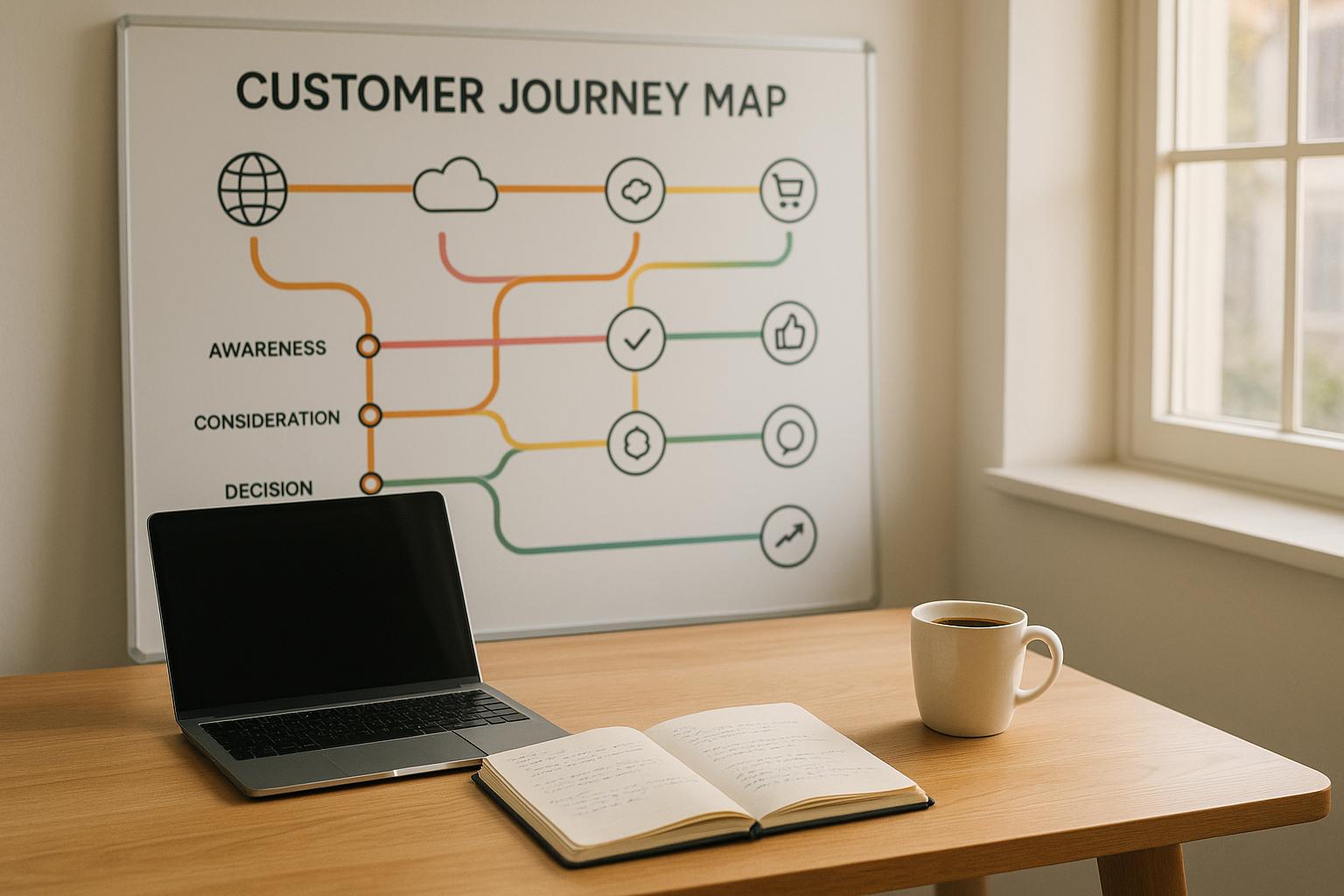
Customer journey mapping helps businesses understand how potential customers interact with their brand - step by step. For local service providers like HVAC or landscaping companies, this means identifying key touchpoints, addressing customer concerns, and optimizing each stage of the buying process.
Here’s the takeaway: When you know what your customers need at each stage, you can deliver the right message at the right time. This approach leads to higher-quality leads, better conversion rates, and long-term customer loyalty.
Key Points:
Awareness Stage: Focus on visibility through local SEO, updated profiles (like Google My Business), and content marketing (e.g., tips or guides).
Consideration Stage: Build trust with reviews, transparent pricing, and personalized communication.
Decision/Post-Purchase: Follow up quickly, offer loyalty programs, and maintain engagement for repeat business.
Tools That Help:
AI-Driven Outreach: Tools like Cohesive AI automate personalized email campaigns, helping you target local prospects effectively.
CRM Systems: Platforms like HubSpot or Salesforce Essentials keep leads organized and track interactions.
Visualization Tools: Tools like Lucidchart map customer journeys to identify gaps and improve processes.
By combining journey mapping with smart tools, local businesses can streamline their lead generation efforts and improve customer experiences.
Customer Journey Mapping (+ FREE Template & Examples)
Key Stages of the Customer Journey in Local Lead Generation
When it comes to local service businesses, understanding the customer journey is crucial. This journey can be broken down into three key phases, each requiring specific strategies to turn potential leads into loyal customers.
Awareness Stage: Sparking Initial Interest
The awareness stage is where potential customers first come across your business. Often, this happens when they’re dealing with an immediate need, like a broken air conditioner or an overgrown lawn.
To stand out, focus on tools that improve visibility. Local directories and neighborhood platforms are great starting points. And never underestimate the power of word-of-mouth - recommendations from satisfied customers can quickly turn a curious neighbor into a new client.
Marketing efforts here should prioritize accessibility. For example, ensure your Google My Business profile is updated with accurate hours, detailed descriptions of your services, and current contact info. Geo-targeted ads are another effective way to grab the attention of local searchers.
Content marketing also plays a big role. If you’re a landscaping company, posting seasonal maintenance tips can position you as a go-to expert. Similarly, an HVAC contractor sharing energy-saving advice can attract homeowners looking for solutions. These efforts not only generate awareness but also lay the groundwork for trust in the next phase.
Consideration Stage: Earning Trust and Building Engagement
Once people know about your business, they’ll start evaluating whether you’re the right fit for their needs. This is the consideration stage, where trust becomes the name of the game.
Social proof is a powerful tool here. Positive reviews can make a huge difference. For instance, a janitorial service with glowing five-star reviews will likely outshine competitors with few or poor ratings. Clear service descriptions, transparent pricing, and easy access to customer testimonials also help build confidence.
Personalized communication can set you apart. Tools like Cohesive AI allow businesses to identify potential customers by analyzing data from Google Maps or government filings. With this info, you can craft personalized emails that resonate with your prospects, addressing their specific needs and concerns.
Decision and Post-Purchase Stages: Sealing the Deal and Keeping Customers
The decision stage is all about removing any remaining doubts and making it easy for prospects to choose your business. Quick follow-ups are key. Whether it’s responding to a quote request or scheduling a consultation, fast communication shows professionalism and reliability.
Some businesses lose leads simply because they’re slow to respond or unclear about next steps. Avoid this by streamlining your process - offer detailed proposals, flexible scheduling, and multiple ways for customers to get in touch.
Once the service is complete, the focus shifts to retention. Follow-ups after the job is done help maintain engagement. Loyalty programs are especially effective for businesses with recurring services. Discounts for repeat customers or referral bonuses can encourage long-term relationships and spark new word-of-mouth recommendations.
Staying proactive with updates - like sending reminders about seasonal services or alerting customers to potential delays - adds value and often leads to positive reviews and more referrals.
Stage | Primary Goals | Key Metrics | Effective Strategies |
|---|---|---|---|
Awareness | Increase visibility and attract interest | Website visits, map views, social reach | Local SEO, Google My Business updates |
Consideration | Build trust and stand out | Review engagement, email opens, quote requests | Testimonials, personalized outreach |
Decision/Post-Purchase | Convert leads and retain customers | Conversion rates, repeat business, satisfaction scores | Quick follow-ups, loyalty programs |
Each stage feeds into the next, creating a cycle of growth. A strong post-purchase experience - marked by excellent follow-ups, reliable service, and loyalty incentives - does more than retain customers; it strengthens your reputation and attracts new prospects, keeping the cycle going strong.
Tools for Journey Mapping and Lead Generation Automation
Having the right tools can completely change the way local service businesses approach customer journey mapping and lead generation. Instead of relying on guesswork or tedious manual work, these platforms take over key tasks and provide insights into customer behavior that are hard to gather otherwise.
Cohesive AI for Smarter Lead Generation
Cohesive AI is tailored for local service businesses like janitorial services, landscaping, HVAC, catering, and business broker services. It solves a common pain point: efficiently finding and connecting with potential customers. By scraping Google Maps and government filings, it identifies local business owners who might need your services, allowing you to target decision-makers directly.
What makes Cohesive AI stand out is its AI-driven email personalization. Using data analysis, it crafts personalized and targeted emails, which tend to get better responses than generic mass emails.
Another key feature is email deliverability management. This ensures your emails actually reach inboxes, maintaining a good sender reputation. Poor deliverability can ruin even the most well-thought-out campaign, so automating this aspect removes a big technical headache for small business owners.
The pricing is straightforward: $500/month with a $75 setup fee, and it's a month-to-month plan. They even guarantee at least four interested responses per month, offering a free month if that target isn’t met. This predictable pricing makes it a solid option for small businesses without requiring long-term commitments.
While AI tools like this are great at generating leads, managing and tracking those leads is just as important.
CRM Systems to Keep Everything on Track
Once leads start coming in, a good CRM system ensures every interaction is logged and organized. These platforms act as a centralized hub for storing contact details, communication history, and service information.
For local service businesses, HubSpot CRM is a great starting point. Its free version includes tools for contact management, deal tracking, and basic email marketing. Plus, it integrates easily with other business tools, giving you a clear view of where each prospect is in the sales process.
Another option is Salesforce Essentials, designed for small businesses. It offers features like lead scoring, automated follow-up reminders, and mobile access - perfect for field service businesses where team members need customer info while on-site.
The real strength of CRM systems is their ability to track the entire customer journey. Take a landscaping business, for example. A CRM can log everything from the initial website inquiry to follow-up calls, quote requests, and the final decision. This data can reveal what works in converting leads and where prospects tend to drop off.
Many CRMs also include automation tools. For instance, if a prospect opens multiple emails but doesn’t reply, the system can flag them for a follow-up call or move them into a different email sequence.
Once you’ve got your leads organized, visualization tools can help you see the bigger picture.
Tools for Visualization and Listing Management
Visualizing the customer journey can help businesses pinpoint gaps and opportunities in their lead generation process. Platforms like Lucidchart and Miro are digital whiteboards that let teams map out customer touchpoints, decision points, and potential pain points.
These tools are even more effective when paired with real customer data, showing trends in conversions and areas for improvement.
Another must-have is Google Business Profile, which acts as both a listing management tool and a source of insights into customer behavior. It shows how customers find your business, what actions they take (like calling or visiting your website), and when they’re most likely to engage.
Regularly reviewing Google Business Profile analytics can reveal useful patterns. For instance, an HVAC company might notice a spike in service requests during extreme weather, while a landscaping business could see increased interest in spring cleanup services in late February.
Tools like BirdEye go a step further by combining listing management with customer feedback collection. They ensure your business information is consistent across directories while gathering reviews that can influence potential customers during their decision-making process.
Strategies for Multi-Channel Outreach Based on Journey Insights
Once you’ve pinpointed where your prospects are in their journey, the next step is connecting with them through the right channels and delivering messages that resonate. Multi-channel outreach isn’t just about being present on multiple platforms - it’s about coordinating efforts to guide leads smoothly from awareness to conversion.
Tailor your outreach to match the channels your customers prefer. The journey map you’ve created will help you decide which methods and messages best address their needs. For instance, a business owner looking for HVAC contractors might start with a Google search, browse reviews, and then respond to a personalized email before making a phone call. By aligning your outreach with these behaviors, you create a seamless path from discovery to decision.
AI-Personalized Cold Email Outreach
Cold emails remain a powerful tool for direct engagement, especially when infused with AI-driven personalization. Platforms like Cohesive AI take this to the next level by analyzing data from sources like Google Maps and government filings to find local business owners and craft highly tailored messages as part of a larger outreach strategy.
This approach moves beyond generic "Dear Business Owner" emails. AI leverages recipient-specific data - such as their location, industry, or unique business challenges - to create messages that feel personal. For example, an email to a restaurant owner might reference local health department updates, while one to a retail store could focus on seasonal maintenance tips. This level of customization increases open rates by up to 26% compared to standard campaigns[3].
Cohesive AI also automates key processes like email deliverability, ensuring your messages land in inboxes without damaging your sender reputation. Plus, its scalability means local service businesses can expand their outreach while maintaining that personal touch.
Geo-Targeted Digital Ads and Local SEO
While email is great for direct engagement, digital ads and local SEO are essential for capturing prospects actively searching for services. Geo-targeting ensures your ads reach people within your service area, making them more relevant and effective.
Platforms like Google Ads allow you to target specific ZIP codes, cities, or even a set radius around your business. For example, an HVAC company could run winter ads for "emergency furnace repair" that only appear to homeowners within a 25-mile radius during peak demand hours. This kind of precise targeting often results in higher conversion rates because it addresses immediate needs.
Local SEO complements paid ads by boosting organic visibility. Optimizing for local search can increase your presence in search results by up to 50%[2]. Key steps include completing your Google Business Profile, using location-specific keywords on your website, and ensuring consistent information across online directories.
Timing is another factor to consider. A landscaping business might ramp up ad spending in late February as homeowners start planning for spring cleanups, while a catering company could focus its efforts around wedding season or corporate event planning. Managing reviews effectively is also critical, as many prospects check reviews before reaching out.
Consistent Messaging Across Channels
To build trust and recognition, your messaging needs to stay consistent across all channels. This means aligning your email campaigns, social media posts, website content, and even phone conversations to reflect the same value proposition and brand identity.
When a prospect encounters your brand through a Facebook ad, follows up with a visit to your website, and later receives an email, they should experience a unified presence. Research shows that 80% of consumers are more likely to buy from brands that deliver personalized experiences[1]. This isn’t just about using someone’s name - it’s about understanding their preferences, past interactions, and current stage in the decision-making process.
Cross-channel reinforcement amplifies your message. For example, a catering company might send an email highlighting its corporate lunch packages, retarget engaged recipients with a Facebook ad featuring client testimonials, and then follow up with decision-makers on LinkedIn who visited the website.
Consistency doesn’t mean identical content. Adapt your format to suit each platform’s strengths while maintaining the same tone, visual branding, and core message. Automation tools can help you scale this effort by setting up workflows for follow-up emails, retargeting ads, and timely sales outreach based on how prospects engage with your content. This way, your audience experiences a professional and cohesive brand identity at every touchpoint.
Challenges and Best Practices in Customer Journey Mapping for Lead Generation
Local service businesses often face hurdles when trying to implement customer journey mapping for lead generation. Pinpointing these challenges and addressing them effectively can make all the difference between a thriving campaign and wasted effort.
Common Challenges in Mapping and Outreach
Data collection remains a major roadblock for many smaller businesses. Unlike large companies with dedicated analytics teams, local operations - think HVAC services or landscaping businesses - often struggle to gather meaningful customer insights. While basic contact details may be on hand, deeper knowledge about customer preferences, pain points, or decision-making habits is often missing.
Shifting customer behaviors add another layer of complexity. The way people research and purchase services has changed dramatically over time, meaning strategies that worked in the past can quickly become irrelevant.
Small teams face alignment issues across roles. In many cases, the same person might juggle sales, marketing, and customer service responsibilities. This overlap can lead to inconsistent messaging and conflicting outreach strategies, as different interpretations of the customer journey emerge.
Technology integration challenges are also common. Many businesses rely on separate tools for email marketing, CRM, and social media, but without proper integration, these systems can create data silos. This makes it difficult to track customer interactions cohesively and fully understand their journey.
Budget limitations often force tough decisions. Businesses may feel they need to prioritize immediate lead generation efforts over investing in a thorough journey mapping process. Skipping this step, however, can lead to campaigns that miss the mark, as they lack a clear understanding of customer needs and preferences.
To tackle these challenges, it’s essential to adopt practical strategies that are grounded in real customer insights.
Best Practices for Effective Journey Mapping
Start with real customer data and update your maps regularly. Talk to recent customers about their experience - ask how they discovered your service, what information they found helpful, and what ultimately led them to choose you. Make it a habit to review and refine your maps based on fresh feedback and campaign results.
Include everyone who interacts with customers in the process. From field technicians to sales reps and customer service teams, each touchpoint offers unique insights. Bringing these perspectives together creates a more complete and accurate customer journey map.
Leverage automation tools to streamline outreach. Platforms like Cohesive AI can help personalize communication based on where a prospect is in their journey. By automating this process, you can ensure the right message reaches the right person at the right time, all while saving time and effort.
Focus on one customer segment at a time. Avoid the temptation to create a one-size-fits-all map. Instead, develop tailored maps for different customer groups. For instance, a restaurant owner choosing a commercial cleaning service will likely have different needs and priorities than a retail store owner.
Measure specific metrics at each stage of the journey. Don’t rely solely on overall conversion rates. Instead, track indicators like email open rates during the awareness stage, website engagement during consideration, and response times during the decision phase. This detailed tracking helps pinpoint where prospects drop off and identifies areas that need improvement.
Continuously test and refine your messaging. What resonates with your audience can change over time. Use A/B testing to experiment with email subject lines, ad copy, or call-to-action buttons. This approach helps you uncover what works best for different segments of your audience.
The Role of Journey Mapping in Driving Lead Generation Success
Customer journey mapping has reshaped how local service businesses approach lead generation. Instead of relying on broad, one-size-fits-all outreach tactics, businesses now have the ability to target prospects more accurately by understanding exactly where they are in their buying journey.
The key to effective lead generation isn't about reaching the largest audience possible - it’s about understanding what customers need at each stage of their journey and delivering exactly the right message at the right time. Journey mapping helps identify the critical touchpoints where potential customers decide to move forward - or walk away. These insights are invaluable, but to put them into action efficiently, leveraging the right technology is essential.
Technology is central to scaling these insights. Tools like Cohesive AI showcase how AI-driven platforms can enhance journey mapping efforts. By identifying local business leads and automating personalized email outreach, such platforms remove much of the manual effort. With transparent pricing and performance guarantees, they offer a structured, efficient way to tackle lead generation.
This integration of technology addresses common hurdles faced by local service businesses: limited resources, small teams, and the pressure to deliver consistent results. When businesses combine a clear understanding of their customer journey with automated, personalized outreach, they build a growth system that’s not only efficient but sustainable.
Research supports this approach. Companies that map their customer journeys and align their outreach strategies accordingly report more qualified leads, faster sales cycles, and stronger conversion rates. They focus on engaging customers who are ready to buy, rather than wasting resources on less likely prospects.
For industries like HVAC, landscaping, janitorial services, and catering, this marks a shift from reactive to proactive lead generation. Instead of waiting for customers to come to them, businesses can pinpoint and connect with prospects who fit their ideal customer profile and are actively searching for their services. By combining journey mapping insights with AI-powered automation, these businesses gain a competitive edge, leading to better conversion rates and long-term success.
FAQs
How does customer journey mapping help generate leads for local service businesses?
How Customer Journey Mapping Can Help Generate More Leads
Customer journey mapping is a powerful tool for local service businesses looking to attract more leads. By visually mapping out how potential customers interact with your business, you can pinpoint key moments that matter most - both the positive touchpoints and the pain points that might be holding people back.
When you identify these moments, you can fine-tune your marketing strategies to align with what your customers need at every step of their journey. This means creating personalized and targeted outreach that speaks directly to their interests and challenges.
The result? Better customer experiences, stronger engagement, and higher conversion rates. When you focus on optimizing these interactions, you make it easier to not just attract leads but also nurture them effectively, paving the way for long-term business growth.
What are the best tools to automate personalized outreach and manage leads efficiently?
AI-powered tools are transforming how local service businesses handle personalized outreach and lead management. Take Cohesive AI, for example. This platform comes packed with features like gathering local business data, creating customized cold emails, and managing email campaigns. These capabilities make the lead generation process smoother and more efficient. By automating these tasks, businesses can save valuable time and connect with potential clients in a more meaningful way, ultimately increasing productivity and driving better outcomes.
Why is it important to adapt your outreach strategy to different stages of the customer journey?
To make your outreach truly effective, it’s important to align your strategy with the different stages of the customer journey. Whether someone is just learning about your services or is on the brink of making a decision, tailoring your messaging to meet their specific needs and concerns can make all the difference.
When your communication feels relevant and well-timed, it doesn’t just boost engagement and conversion rates - it also helps build trust and loyalty. This kind of personalized interaction lays the foundation for stronger, long-term relationships that not only encourage customer retention but also fuel overall business growth.