How Google Maps Data Powers AI Cold Email Tools
Sep 3, 2025

Google Maps data is transforming how local service businesses generate leads. By integrating AI with Google Maps, businesses like HVAC contractors, landscaping companies, and catering services can automate prospect research and send highly personalized cold emails. Here's how it works:
Accurate, Up-to-Date Data: Google Maps provides real-time business details like contact info, reviews, and photos.
AI-Driven Personalization: AI tools craft tailored email messages based on business size, location, and customer reviews.
Automation: AI handles data collection, email creation, follow-ups, and performance tracking, saving time and effort.
Localized Targeting: Businesses can focus outreach on specific geographic areas to improve relevance and response rates.
Cost-Effective: Tools like Cohesive AI offer flat-rate pricing (e.g., $500/month), making lead generation more affordable compared to traditional methods.
Secret to Cold Emails that Convert with n8n & OpenAI Automation
How AI Tools Use Google Maps Data for Cold Email Outreach
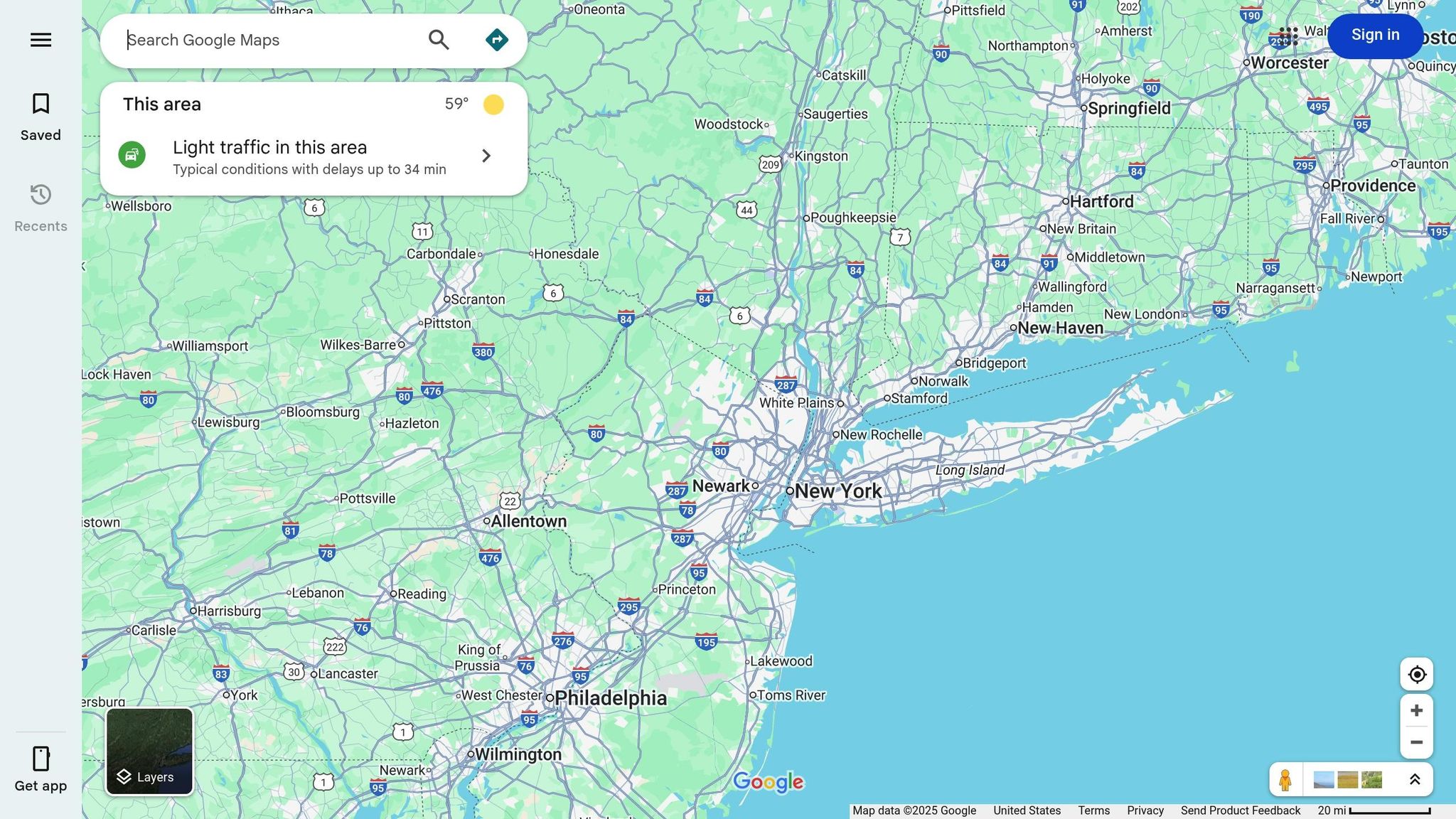
AI-driven tools have made cold email outreach more efficient by leveraging Google Maps data. These tools simplify the process of creating targeted campaigns by gathering accurate business information, crafting tailored messages, and automating campaign management. Here's how it works:
Data Collection and Enrichment
The first step is gathering reliable data. AI tools can extract essential details from Google Maps, such as business names, addresses, phone numbers, and websites within specific geographic areas. To ensure accuracy, platforms like Cohesive AI enhance this data by cross-referencing it with government filings, verifying ownership and registration. This dual approach builds a solid foundation of trustworthy prospect profiles, helping to target the right businesses.
Personalization with AI
Once the data is verified, AI steps in to create highly personalized email content. Using the collected details, the system tailors messages to align with the unique characteristics of each business. This customization ensures the emails feel relevant and resonate with local businesses, increasing engagement and response rates.
Automated Campaign Management
Finally, automation handles the heavy lifting. AI tools manage the entire outreach process, from sending emails to scheduling follow-ups and tracking performance metrics. This seamless automation allows businesses to connect with quality leads efficiently, saving time while maintaining a consistent, professional approach.
Benefits of Google Maps Data for Local Service Providers
Google Maps data, combined with AI-driven tools, offers a range of benefits that help local service providers thrive in competitive markets. These advantages are particularly impactful for generating leads and streamlining outreach efforts.
Precise and Localized Targeting
With Google Maps data, service providers can zero in on prospects based on their exact location and business details. Instead of casting a wide net, businesses can focus their efforts on specific neighborhoods, commercial zones, or service areas where they’re likely to be most effective. For instance, an HVAC company might prioritize targeting commercial buildings in a particular local area, while a landscaping business could aim its efforts at nearby office parks or retail centers. The detailed information available in Google Maps listings allows for campaigns tailored to the unique needs of each prospect.
This level of targeted outreach minimizes wasted efforts and increases the chances of connecting with the right audience. Businesses can also segment campaigns by factors like industry type, company size, or geographic location, ensuring their messaging is relevant and impactful.
Scalable Personalization
AI tools make it possible to use Google Maps data to create personalized outreach at scale, solving the common challenge of maintaining a personal touch when reaching a large number of prospects. By leveraging detailed data, AI tools can craft messages that reference specific business details, local contexts, and industry needs.
For example, emails can include references to a prospect’s location or business type, making the communication feel tailored and relevant. This method avoids the pitfalls of traditional cold emailing, where businesses often have to choose between sending high volumes of generic emails or spending significant time on individualized messages.
Cost and Time Efficiency
Using AI tools that integrate Google Maps data can significantly reduce both costs and time spent on lead generation. These tools automate the entire process - from collecting and enriching data to drafting personalized emails and managing campaigns. This automation helps lower labor costs while improving the quality of leads.
Take Cohesive AI as an example. Their flat-fee pricing model of $500 per month covers automated lead generation, personalized email creation, and campaign management. This predictable pricing allows businesses to scale their outreach efforts without a corresponding rise in operational costs.
Tasks that used to require manual effort, like researching prospects, drafting emails, and monitoring campaigns, are now managed by AI systems. This frees up service providers to focus on engaging with customers and closing deals while the technology handles follow-ups and progress tracking. These efficiencies pave the way for even more advanced features in AI-powered cold email tools.
Key Features of AI Cold Email Tools for Local Service Providers
Choosing the right AI-powered cold email platform can make or break your outreach efforts as a local service provider. The ideal tool combines automation, personalization, and compliance to help you connect with potential clients while staying within legal boundaries. Let’s dive into the standout features that can elevate your campaigns.
Automated Google Maps Data Scraping
Successful cold email campaigns start with accurate and up-to-date data. Automated Google Maps data scraping takes the legwork out of prospect research by pulling essential details like business names, addresses, phone numbers, and industry classifications straight from Google Maps listings. Some tools even go further, gathering insights on business size and operating hours to better inform your outreach.
For example, if you’re targeting businesses like office parks needing landscaping or commercial buildings requiring HVAC services, this feature ensures your prospect list is both precise and current. The automation keeps your database refreshed without requiring staff to manually update leads. Tools like Cohesive AI excel here, pulling data not just from Google Maps but also from government filings to create a thorough and always-relevant lead list.
AI-Powered Email Personalization
Generic emails are a thing of the past. AI-powered personalization takes cold outreach to the next level by crafting messages tailored to each prospect’s unique situation. This goes beyond simply adding a company name - it’s about analyzing local context, business details, and industry trends to deliver messages that truly resonate.
The results speak for themselves: AI-driven email campaigns boast 50% higher open rates compared to traditional methods [1]. Businesses using AI automation report up to 14.5% higher open rates and 59% higher click-through rates [1]. Imagine sending an email that references a prospect’s proximity to a recent construction project or highlights seasonal maintenance needs based on local weather patterns. AI tools also fine-tune subject lines using past performance data and avoid spam-triggering phrases, ensuring your emails land in inboxes. Plus, they can determine the best times to send emails by analyzing recipient behavior.
Compliance and Campaign Management Tools
Staying compliant with U.S. privacy laws is non-negotiable, especially when running cold email campaigns. The best tools come equipped with features like automatic opt-out management, suppression list handling, and compliance with the CAN-SPAM Act.
On top of that, these platforms offer robust campaign management tools to track metrics like open rates, click-through rates, and responses. Real-time analytics highlight what’s working and what’s not, enabling you to tweak your strategy on the fly. Businesses leveraging AI for email marketing have reported a 41% increase in revenue from these campaigns [1], thanks to the continuous learning and optimization AI provides.
Look for tools that can manage multiple campaigns at once, allowing you to test different approaches or target various market segments. Deliverability features are also crucial, ensuring your emails avoid spam folders and reach their intended recipients. Many platforms integrate seamlessly with CRM systems, creating a smooth workflow from initial outreach to client conversion. This integration eliminates data silos, ensuring no lead slips through the cracks.
Best Practices for Implementing AI Cold Email Tools
To get the most out of AI-powered cold email tools, you need a well-thought-out strategy that simplifies lead generation and ensures compliance with regulations.
Define Your Ideal Customer Profile and Target Area
Start by outlining the characteristics of your ideal customers. Think about factors like business size, industry, location, and specific challenges they might face. For example, an HVAC company might target office buildings between 5,000–50,000 sq ft within a 25-mile radius, while a janitorial service might focus on certain ZIP codes.
It’s also helpful to define your service area based on drive time or local market conditions. Concentrating on a few industries where your expertise shines will allow for more relevant data and personalized outreach.
Key criteria to record include annual revenue, employee count, property types, and seasonal trends. These details help guide the AI in gathering data that aligns with your goals. With a clear target in mind, maintaining accurate and up-to-date data is crucial for ongoing campaign success.
Maintain Clean and Updated Data
Accurate data is the backbone of effective campaigns. Set up automated refresh cycles to regularly update your contact lists. Before launching a campaign, verify contact details and remove entries that don’t respond after three or four attempts. Segment your leads based on their engagement levels and how recently they interacted with your outreach.
Keep an eye on the quality of your data sources. If you notice higher bounce rates or outdated information in specific areas or industries, it might be time to tweak your data collection methods. Some industries update their online profiles more frequently than others, so adjust accordingly.
Once your data is clean, use campaign metrics to fine-tune your approach even further.
Monitor and Optimize Campaign Performance
For local service businesses, certain metrics are more telling than others. While open rates and click-through rates provide a starting point, response rates and the number of qualified leads are the metrics that truly matter. For instance, a 2% response rate that brings in three qualified prospects is far more valuable than a 15% open rate with no actionable results.
Experiment with subject lines and sending times to see what resonates most with your audience. You might find, for example, that restaurants are more likely to respond to emails sent on Monday mornings, while office buildings engage more on Wednesday afternoons. Use these patterns to schedule your campaigns for optimal impact.
Track what works and build on it. AI tools make personalization easier, but consistent monitoring ensures long-term success. Many successful businesses create libraries of proven email templates, subject lines, and targeting criteria to streamline future campaigns.
Set clear performance benchmarks. For example, platforms like Cohesive AI offer a guarantee of at least four interested responses per month for a $500 fee. This gives you a baseline to measure your success.
Finally, review your campaigns regularly - ideally on a monthly basis. Look for trends in successful responses. Are certain types of businesses responding better to specific messages? Are some areas consistently more engaged than others? Use these insights to refine your customer profile and improve your messaging strategy for the next round of outreach.
Conclusion: Transform Your Lead Generation with AI and Google Maps Data
The pairing of Google Maps data and AI technology is reshaping how local service businesses tackle lead generation. Instead of relying on expensive agencies or time-consuming manual prospecting, businesses now have access to automated tools that gather detailed business information, create tailored outreach messages, and handle entire email campaigns with minimal effort. As outlined earlier, AI turns Google Maps data into a powerful tool for targeted outreach.
For industries like HVAC, janitorial services, landscaping, and catering, this technology addresses long-standing challenges in finding and connecting with potential clients. By focusing on specific geographic areas, crafting personalized messages using local data, and maintaining consistent outreach at scale, businesses gain a clear competitive edge.
Success with these tools hinges on a few key practices: defining clear customer profiles, ensuring data accuracy, and refining strategies based on performance metrics. Companies that integrate these elements into their approach will see more impactful results, outperforming traditional lead generation methods. This streamlined, data-driven strategy not only enhances efficiency but also positions businesses for long-term growth.
Platforms such as Cohesive AI showcase how this approach works in action. They offer a complete solution, including Google Maps scraping, AI-driven personalization, and campaign management - delivering these tools at a fraction of the cost of traditional lead generation services, while giving businesses more control and visibility over their efforts.
Adopting these AI-powered tools means more qualified leads, improved conversion rates, and a significant reduction in the time spent on manual prospecting. For businesses ready to embrace this technology, the opportunities are immense.
FAQs
How does Google Maps data improve AI-powered cold email campaigns?
Google Maps data is a game-changer for AI-powered cold email campaigns, providing detailed, real-time information about local businesses. With access to accurate business locations, industry details, and local context, AI tools can pinpoint ideal prospects with ease.
This data enables AI to create tailored and relevant emails that align with the recipient's specific needs or circumstances. The result? Higher engagement and response rates. By targeting the right leads with precision, businesses can streamline their outreach efforts, save valuable time, and see better results in their campaigns.
What are the key benefits of using AI tools for cold email outreach over traditional methods?
AI tools for cold email outreach have transformed the way businesses connect with potential leads. By automating tasks like gathering data and drafting emails, these tools save time and energy while delivering messages that feel personal and relevant.
What sets them apart is their ability to use advanced data analysis to create emails that truly speak to recipients. This approach can lead to response rates that are up to 30.5% higher than traditional manual methods. The result? Not only do businesses see better conversions, but they also get to spend more time nurturing relationships instead of getting bogged down by routine outreach tasks.
How can local service businesses stay compliant with privacy laws when using AI-powered cold email tools?
Local service businesses can navigate privacy laws effectively by adhering to important regulations like the CAN-SPAM Act. This law mandates that emails include clear opt-out options, accurate sender details, and truthful subject lines. It's also crucial to keep your email lists current and ensure recipients have provided consent when required.
AI tools can be a helpful ally in managing compliance. They can automate tasks such as tracking consent, handling opt-outs, and organizing audiences based on location. Additionally, staying updated on state-specific privacy laws and being upfront about how you collect and use data are critical for maintaining customer trust and avoiding legal issues.